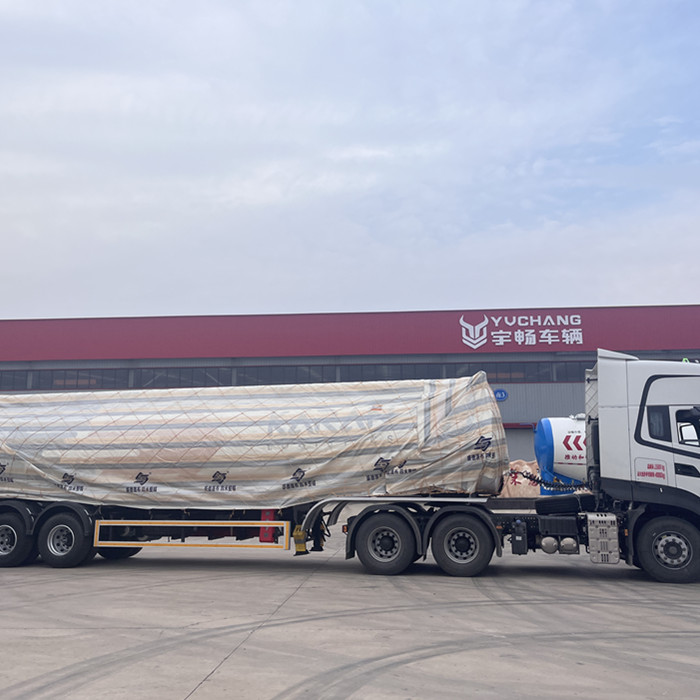
What Is the Difference Between a Fuel Tank Trailer and a Cement Tank Trailer?
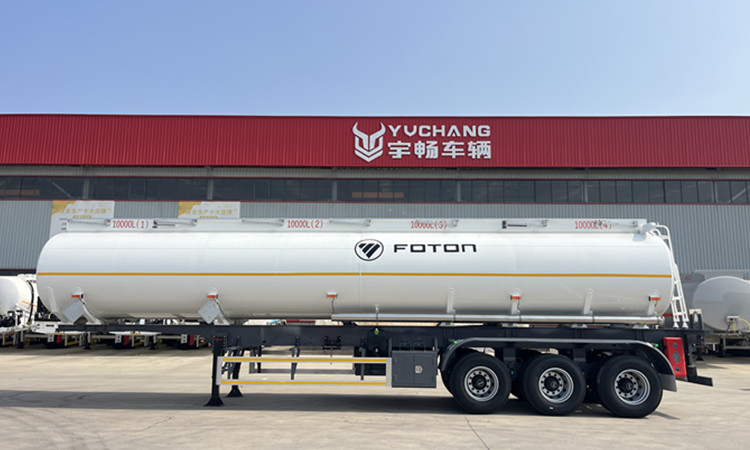
When building or expanding a logistics fleet, choosing the right tanker is critical. At first glance, a fuel tank trailer and a cement tank trailer might look similar—they are both long, cylindrical vessels mounted on a semi-trailer chassis. However, they are engineered for completely different physical states, safety protocols, and unloading mechanisms.
Understanding the difference is essential for buying the right equipment, avoiding costly downtime, and ensuring regulatory compliance. YOUCAN Trailer has over 28 years of engineering experience; we break down the core differences between these two specialized trailers to help you make the right choice.
What is a Fuel Tank Trailer?
A fuel tank trailer is a highly specialized vehicle designed to transport liquid fuels and chemicals, such as gasoline, diesel, jet fuel, and crude oil. Because it carries hazardous, flammable, and liquid materials, its design is heavily focused on stability, corrosion resistance, and anti-explosion measures.
Internal Structure & Stability
To prevent the massive weight of the liquid from sloshing back and forth (which can cause a truck to tip over), fuel tankers are divided into multiple compartments (often 3 to 6). Inside each compartment, anti-wave plates (baffles) are installed. These plates have holes that allow liquid to pass through slowly, significantly reducing the shifting of the center of gravity during braking and cornering.
Safety & Material
Fuel trailers are typically made from carbon steel, stainless steel, or lightweight aluminum alloy. They are equipped with pneumatic emergency shut-off valves at the bottom of each compartment. If a rollover or accident occurs, these valves automatically seal to prevent massive spills. The electrical systems are also sealed and explosion-proof to prevent sparks from igniting fumes.
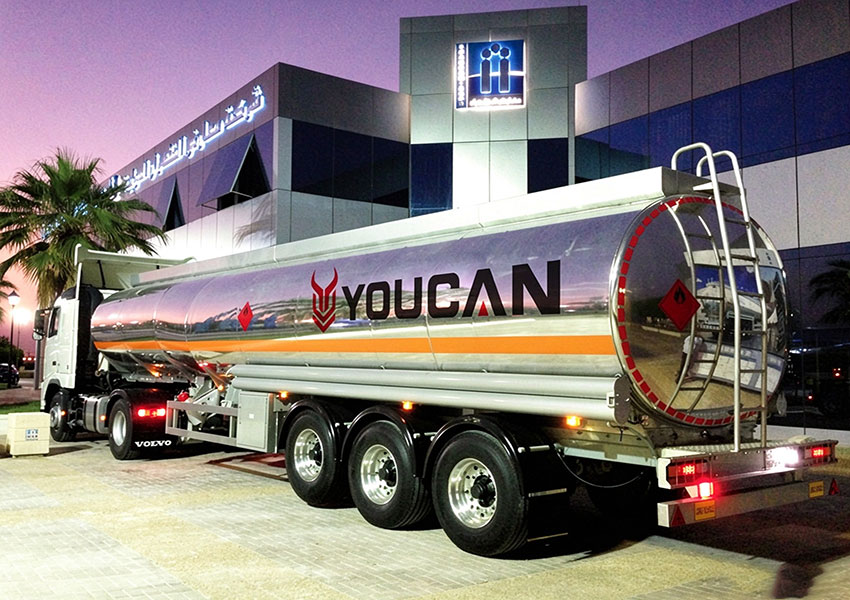
What is a Cement Tank Trailer?
A cement tank trailer (also known as a pneumatic bulk powder trailer) is engineered to transport dry, granular powders such as Portland cement, fly ash, lime powder, and mineral dust.
Internal Structure & Fluidization
Unlike liquid tankers, cement trailers usually feature a V-shaped or W-shaped bottom hopper. More importantly, the bottom of the tank is equipped with porous aeration pads (fluidized beds). These pads are made of specialized, wear-resistant breathable fabrics. Because cement is a solid powder, it does not slosh; therefore, cement trailers do not need anti-wave plates. Instead, their internal geometry is designed to prevent the powder from bridging or getting stuck inside the tank.
Pressure & Weight
Cement trailers are heavily built with high-strength carbon steel (like Q345B) to withstand internal air pressure during unloading. They also carry an onboard air compressor, which adds significant tare weight to the front of the trailer.
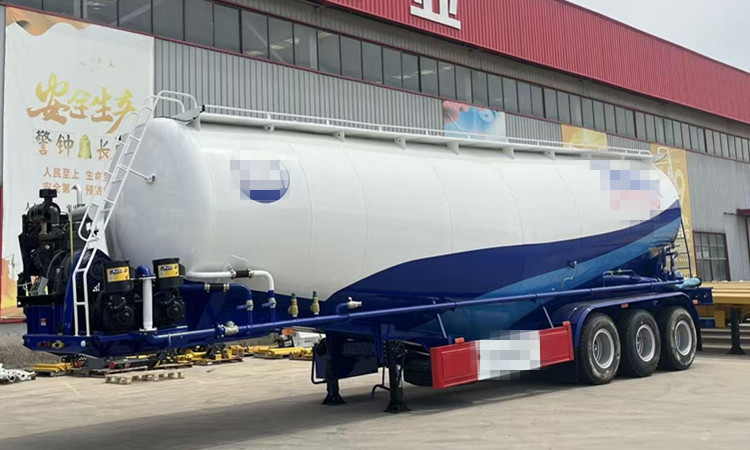
Key Differences: Structure, Weight, and Safety
While both are classified as tank trailers, their engineering priorities are entirely different. Here is a quick comparison:
| Feature | Fuel Tank Trailer | Cement Tank Trailer |
|---|---|---|
| Cargo State | Liquid (Diesel, Gasoline, Jet Fuel) | Dry Powder (Cement, Fly Ash, Lime) |
| Internal Design | Multi-compartment with anti-wave baffles | V-shaped or W-shaped with fluidized beds |
| Tank Material | Carbon steel, Stainless steel, or Aluminum | High-strength Carbon Steel (e.g., Q345B) |
| Safety Focus | Anti-explosion, bottom emergency shut-off valves | Pressure relief valves, airtight seals |
| Additional Weight | Relatively balanced, no onboard power | Heavy onboard air compressor and diesel engine |
| Discharge Method | Gravity or mechanical pump | Pneumatic air pressure (fluidization) |
How Does the Unloading Process Differ?
The most dramatic difference between the two is how they unload their cargo. This dictates the infrastructure required at the destination.
Unloading a Fuel Tank Trailer
Fuel is unloaded using gravity or mechanical pumps. The trailer is parked at a gas station, airport, or depot, and a hose is connected to the bottom API valve. Gravity drains the liquid, or the truck's PTO (Power Take-Off) drives a pump to push the fuel into underground storage tanks. The process requires careful monitoring to prevent overfilling, spills, and static electricity buildup.
Unloading a Cement Tank Trailer
Powder cannot be pumped like a liquid, so a pneumatic system is used. The trailer has an independent diesel engine and a high-volume air compressor onboard. During unloading, the compressor injects high-pressure air into the bottom of the tank. The air passes through the fluidized beds, aerating the dense powder and turning it into a fluid-like state. The pressure inside the tank forces the powder to flow out through a hose and up into elevated silos at a concrete plant. This process is fast, enclosed, and dust-free.

How to Choose the Right Tank Trailer for Your Fleet?
To make the right investment, fleet managers must analyze their operational requirements:
Cargo Type: This is the obvious starting point. If it is liquid, you need a fuel tanker. If it is dry bulk powder, you need a pneumatic cement trailer.
Destination Infrastructure: If you are delivering fuel to a gas station with underground tanks, a fuel trailer is required. If you are delivering to a concrete batching plant with tall silos, you must have the pneumatic blowing power of a cement trailer.
Regulatory Compliance: Transporting hazardous liquids requires strict adherence to dangerous goods (Hazmat) regulations, including specialized fire extinguishers, specific tank thickness, and ABS braking systems.
Weight Limits: Because cement trailers carry heavy air compressors, their tare weight is higher. You must ensure your tractor and local road laws can handle the gross vehicle weight when fully loaded with dense powder.
Common Buyer Mistakes
When sourcing tank trailers, avoid these common and costly pitfalls:
Assuming they are interchangeable: You cannot safely use a cement trailer for fuel or vice versa. The internal structures, valves, and safety features are completely incompatible.
Ignoring local regulations: Hazardous materials transport (fuel) has strict laws regarding tank thickness, braking, and certification. Always confirm the trailer meets the destination country's standards.
Underestimating the compressor size for cement: A powerful air compressor is the heart of a cement trailer. Under-specifying it will lead to slow unloading, blocked lines, and too much residual material left in the tank.
Skipping maintenance: Fluidized beds need regular cleaning to prevent powder clogging, and anti-wave plates must be inspected for structural fatigue. Buy from a manufacturer that offers reliable spare parts support.
Why YOUCAN Trailer is Your Ideal Supplier
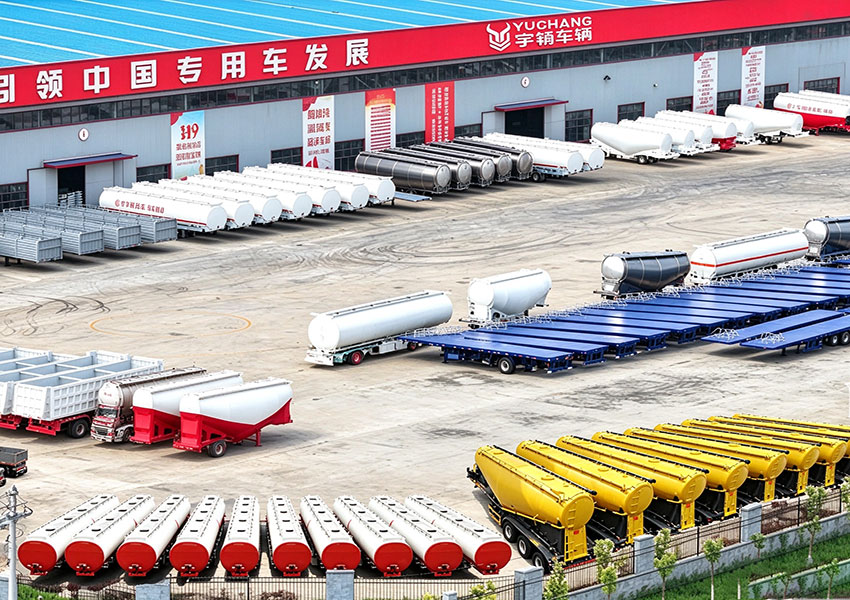
As a leading professional semi-trailer manufacturer established in 1999, YOUCAN Trailer brings over 28 years of engineering expertise to the global market. We specialize in providing tailored transport solutions to customers across Africa, the Middle East, South America, and Southeast Asia.
Our diverse portfolio covers every aspect of heavy haulage, including tank trailers, flatbed trailers, lowbed trailers, and dump trailers. Whether you need a highly customized multi-compartment fuel tanker or a heavy-duty pneumatic bulk trailer, our engineering team will design the perfect solution for your cargo and local road conditions.
We invite you to take a factory tour to see our advanced submerged-arc welding lines and rigorous testing procedures. We strictly adhere to ISO 9001 quality standards to ensure every unit we ship is safe, compliant, and built to last.
Ready to upgrade your fleet? Contact the YOUCAN Trailer team today to get a quote and technical drawings within 12 hours!
FAQ
Can a cement tank trailer carry liquids?
No. Cement tank trailers are designed to hold internal air pressure and use fluidized beds. They lack the anti-wave plates and liquid-tight seals required for safe liquid transport.
How many compartments can a fuel tank trailer have?
Fuel tankers can be customized with 1 to 6 or more compartments. This allows you to transport different grades of fuel (e.g., diesel and gasoline) in a single trip without mixing them.
Does a cement tank trailer require a separate tractor to power it?
No. Most pneumatic cement trailers are equipped with their own independent diesel engine and air compressor mounted on the front of the trailer, allowing them to unload completely independently of the tractor.
What is the typical capacity of these trailers?
Fuel tank trailers generally range from 30,000L to 55,000L. Cement tank trailers typically range from 30m³ to 50m³, depending on the material density and local road weight limits.
Are these trailers suitable for cross-border transport?
Yes, provided the trailer meets the safety and customs regulations of the countries involved. YOUCAN customizes lighting, braking, and dimensions to comply with local destination laws.
How Does a Semi Trailer Braking System Work?
A semi trailer braking system uses the tractor connection, air or control lines, valves, chambers or actuators, brake mechanisms, and wheel-end compon...
Read More →
What Is a Container Chassis Trailer?
Discover what a container chassis trailer is, how it works, and how to choose the right skeletal trailer for your fleet.
Read More →