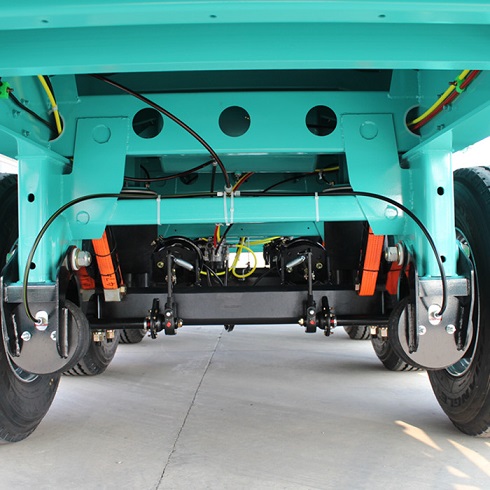
How Does a Semi Trailer Braking System Work?
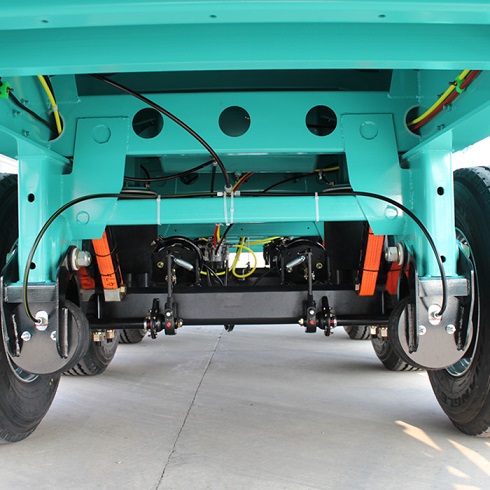
Heavy-duty commercial transportation relies on precision engineering to keep drivers, cargo, and public roadways safe. When a fully loaded tractor-trailer combination weighs upwards of 40 to 60 metric tons, bringing that massive kinetic energy to a controlled, predictable halt requires far more than standard automotive braking technology. Understanding how a semi trailer braking system operates is essential for fleet operators, procurement managers, and logistics professionals evaluating equipment durability, safety compliance, and long-term maintenance costs.
What is a semi trailer?
A semi trailer is an unpowered commercial freight vehicle without a front axle, engineered to be coupled to and towed by a motorized tractor unit (prime mover). A large portion of the trailer's total weight rests directly on the rear of the tractor via a heavy-duty kingpin and fifth-wheel coupling, while the remaining weight is supported by the trailer's rear axles—typically configured in tandem (two-axle), tridem (three-axle), or multi-axle layouts depending on regional payload regulations.
Because they offer exceptional payload-to-weight ratios and operational flexibility, semi trailers form the backbone of global freight logistics. Depending on the specific cargo requirements, fleets deploy specialized configurations ranging from versatile
Regardless of body style, every

The Core Principle: Why Semi-Trailers Use Air Brakes
Unlike passenger cars and light-duty trucks that rely on closed hydraulic fluid circuits, heavy-duty commercial trailers utilize compressed air brake systems. While hydraulic systems transmit force instantly via incompressible brake fluid, they are poorly suited for articulated commercial vehicles that frequently couple and uncouple. Connecting and disconnecting hydraulic lines between tractors and trailers would inevitably introduce air bubbles into the fluid, leading to spongy brake pedals, fluid leaks, and total braking failure.
Compressed air solves these operational challenges through two fundamental principles:
Unlimited Supply Medium: Atmospheric air is abundant and free. Even if a pneumatic line develops a minor leak, the tractor's engine-driven air compressor continuously replenishes the system, maintaining sufficient operating pressure until repairs can be performed.
Built-In Fail-Safe Design: Commercial semi-trailer brake chambers feature a dual-compartment design containing both a service diaphragm and a massive, high-tension mechanical coil spring. Under normal driving conditions, compressed air holds these heavy springs compressed, keeping the emergency/parking brakes released. If an airline ruptures, a gladhand disconnects, or system pressure drops below a critical threshold (typically around 20 to 45 psi), the air pressure holding the springs vanishes. The springs immediately snap outward, mechanically forcing the brake shoes against the drums to lock the wheels and bring the trailer to a safe, automatic stop.
Furthermore, air brake systems handle extreme thermal loads far better than hydraulic setups. Descending long mountain grades with a 40-ton payload generates immense heat. Hydraulic brake fluid can boil under sustained friction, causing vapor lock and complete loss of stopping power. Pneumatic systems eliminate fluid boiling entirely, relying instead on robust mechanical leverage and heavy cast-iron brake drums to dissipate heat safely.
Key Components of a Semi Trailer Braking System
A semi trailer's braking architecture translates pressurized air from the tractor into physical friction at the wheel ends. This process depends on the seamless coordination of several heavy-duty components:
Gladhand Couplers and Air Lines: Two color-coded flexible hoses connect the tractor to the front bolster of the trailer via interlocking metal fittings called gladhands. The blue line serves as the service line, delivering modulated air pressure whenever the driver steps on the brake pedal. The red line acts as the emergency (supply) line, continuously feeding compressed air to charge the trailer's storage tanks and keep the spring brakes released.
Air Reservoirs (Tanks): Mounted beneath the trailer chassis, these high-strength steel cylinders store reserve compressed air supplied through the red line. Having dedicated air reservoirs directly on the trailer ensures immediate air availability at the rear axles without waiting for air to travel all the way from the tractor's tanks.
Relay Valves and Emergency Relay Valves: Because compressed air travels at the speed of sound, sending air from the cab to a 40-foot or 53-foot trailer's rear axles would normally create a dangerous braking lag. Relay valves act as local pneumatic amplifiers. When the driver presses the pedal, a small control signal travels down the blue line to trigger the relay valve, which immediately opens a large port to dump high-volume air directly from the trailer's local air reservoir into the brake chambers.
Brake Chambers and Pushrods: Bolted directly to the axle housing, dual-diaphragm spring brake chambers convert pneumatic pressure into linear mechanical force. When compressed air enters the chamber, it pushes against a reinforced rubber diaphragm, driving a steel pushrod outward.
Slack Adjusters: Attached to the end of the pushrod, the slack adjuster acts as a mechanical lever arm that converts the pushrod's linear motion into rotational torque on the S-cam shaft. Modern trailers use automatic slack adjusters (ASAs) that continuously measure the clearance between the brake shoes and the drum, self-adjusting incrementally to compensate for friction lining wear.
S-Cam, Brake Shoes, and Brake Drums: Inside the wheel hub assembly, the rotating shaft turns an S-shaped steel cam. As the S-cam rotates, its lobes push two crescent-shaped brake shoes outward. High-friction composite brake linings riveted to these shoes press firmly against the inner surface of a spinning cast-iron brake drum, generating the friction required to slow and stop the wheels.

Step-by-Step: What Happens When the Driver Presses the Brake Pedal?
To understand how these components work together in real time, trace the sequence of events during a routine braking application on the highway:
Signal Initiation: The driver depresses the foot brake valve (treadle valve) in the tractor cab. The valve meters compressed air proportional to pedal pressure into the blue service line.
Relay Valve Activation: The air signal travels through the blue gladhand into the trailer's service relay valve. Sensing the incoming control pressure, the relay valve opens its supply port, drawing compressed air directly from the trailer's on-board air tanks.
Chamber Pressurization: High-pressure air floods the service compartments of the brake chambers on all trailer axles simultaneously. Within milliseconds, the diaphragms flex forward, extending the pushrods outward.
Torque Multiplication: Each extending pushrod pulls on its corresponding slack adjuster, rotating the camshaft at roughly a 90-degree angle to the pushrod stroke for maximum mechanical leverage.
Friction Engagement: The S-cam twists inside the wheel assembly, forcing the upper and lower brake shoes apart until their friction linings clamp tightly against the rotating brake drum. Kinetic energy converts rapidly into thermal energy, decelerating the wheels smoothly.
Brake Release: When the driver lifts their foot from the brake pedal, pressure in the blue line drops. The relay valve immediately closes its supply port and opens an exhaust port, venting air from the brake chambers into the atmosphere. Return springs inside the brake chambers and between the brake shoes pull the linings away from the drums, allowing the wheels to spin freely again.
Advanced Safety Technologies in Modern Trailers
While basic pneumatic S-cam drum brakes remain the global standard due to their rugged simplicity and ease of service in remote regions, modern commercial trailers increasingly integrate electronic safety layers to enhance stability and prevent accidents:
Anti-Lock Braking Systems (ABS): Sudden panic braking on wet, icy, or gravel roads can cause trailer wheels to lock up and skid. A locked trailer wheel loses all lateral traction, causing the trailer to swing sideways into adjacent lanes. Trailer ABS uses wheel-speed sensors and toothed tone rings mounted on the hubs to monitor rotational velocity continuously. If an electronic control unit (ECU) detects that a wheel is about to lock, rapid-fire modulator valves pulse air pressure up to several times per second, allowing the wheel to keep rotating while maintaining maximum stopping traction.
Electronic Braking Systems (EBS): Going a step beyond standard ABS, EBS replaces pneumatic control signals with high-speed electronic signals. When the driver touches the brake pedal, an electronic command reaches the trailer's EBS modulator instantaneously, eliminating pneumatic signal lag completely. EBS also incorporates load-sensing proportioning, automatically adjusting braking force based on real-time axle weight measured via air suspension pressure sensors. Furthermore, integrated Roll Stability Control (RSC) monitors lateral acceleration during sharp turns or evasive maneuvers, automatically applying individual wheel brakes and reducing engine torque if the trailer approaches its rollover threshold.
Air Disc Brakes: Increasingly specified on high-utilization highway fleets, air disc brakes replace the S-cam and drum assembly with a caliper, brake pads, and a ventilated rotor. Disc brakes offer superior heat dissipation, virtually zero brake fade on steep descents, and significantly faster pad replacement times during scheduled maintenance.
Routine Maintenance and Troubleshooting for Fleet Operators
Even the most robust braking system requires disciplined preventive maintenance to ensure safe operation and avoid costly roadside inspections or out-of-service violations. Fleet managers and drivers should prioritize four core inspection routines:
Pushrod Stroke Measurement: Over time, brake linings wear down, increasing the distance the pushrod must travel before the shoes contact the drum. If pushrod travel exceeds the chamber's maximum rated stroke limit (for example, exceeding 2 inches on a standard Type 30 chamber), braking force drops dramatically. Technicians must check pushrod travel regularly and verify that automatic slack adjusters are ratcheting properly rather than manually over-tightening them, which can strip internal clutch gears.
Daily Air Tank Draining: Compressing atmospheric air concentrates water vapor and microscopic compressor oil. As warm compressed air cools inside the trailer's air reservoirs, moisture condenses at the bottom of the tanks. If left undrained, this water causes internal rust, washes away valve lubrication, and freezes solid in sub-zero temperatures, blocking air passages. Drivers should pull the manual drain cables on all trailer air tanks at the end of every shift, or fleets should equip trailers with automated heated moisture ejectors.
Audible Air Leak Checks: During daily pre-trip walkarounds, drivers should charge the system to full pressure (100–120 psi), apply the service brakes with the engine off, and listen carefully around gladhand seals, air hoses, brake chambers, and relay valves for any hissing sounds. Chafed nylon air lines rubbing against crossmembers are a leading cause of sudden pressure loss.
Drum and Lining Inspection: Through inspection ports in the dust shields, technicians should verify that brake shoe linings retain at least 1/4 inch (6.4 mm) of friction material above the rivets. Brake drums should also be inspected for deep scoring, out-of-round wear, or structural heat cracks extending across the friction surface.
Why YOUCAN Trailer is Your Ideal Supplier
Selecting a semi-trailer supplier requires looking beyond initial purchase price to evaluate structural integrity, component pedigree, and long-term operational safety. At YOUCAN Trailer, every chassis is engineered to perform reliably under demanding international transport conditions—from paved highways to rugged mining and construction corridors.
We build our trailers using high-tensile Q345B and T700 structural steels, utilizing automated submerged-arc welding processes to ensure uniform main-beam strength. Crucially, we never compromise on safety-critical running gear. Every YOUCAN semi-trailer is outfitted with proven international braking and axle configurations—featuring genuine WABCO emergency relay valves, dual-line pneumatic circuits, heavy-duty T30/30 spring brake chambers, and precision-matched FUWA or BPW axles—ensuring fast braking response, full regulatory compliance, and straightforward access to replacement
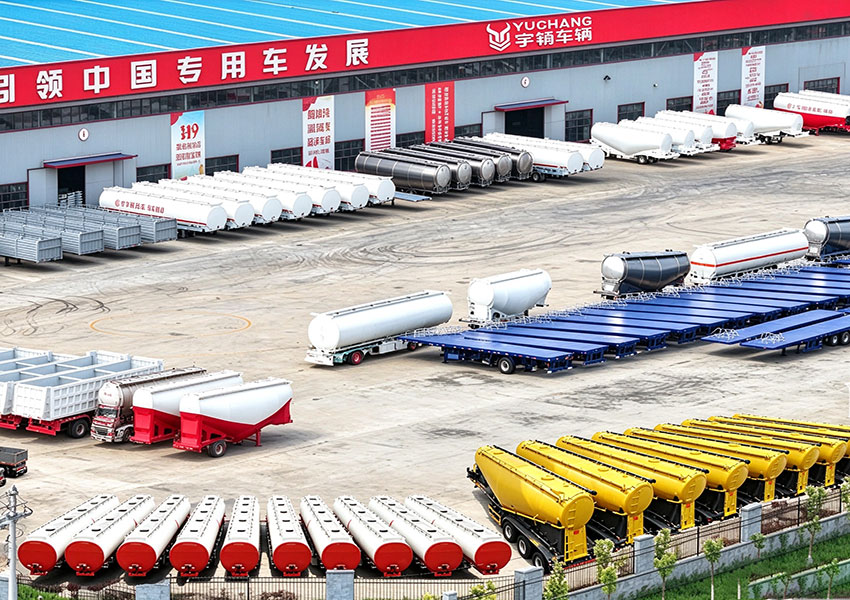
Before any unit leaves our facility, it undergoes comprehensive pneumatic pressure-retention testing, brake stroke calibration, and multi-point quality inspections. Visitors exploring our
Ready to upgrade your fleet with durable, safety-engineered semi-trailers? Contact the YOUCAN Trailer engineering team today! Send us your payload and route specifications to receive a customized technical proposal and factory-direct quotation within 24 hours.
FAQs
1. Why do semi-trailers use air brakes instead of hydraulic brakes?
Semi-trailers use air brakes because compressed air provides an unlimited operating medium that eliminates the risk of fluid depletion from minor leaks during coupling and uncoupling. Additionally, air brake systems feature spring-loaded emergency brakes that automatically lock the trailer wheels if air pressure is lost, creating a vital fail-safe mechanism for heavy commercial loads.
2. What do the red and blue air lines on a semi-trailer do?
The blue line is the service line; it delivers modulated air pressure from the tractor's foot pedal to apply the trailer's service brakes during normal driving. The red line is the emergency (supply) line; it continuously supplies compressed air to fill the trailer's air tanks and keep the spring brakes released, triggering immediate emergency braking if the line disconnects or loses pressure.
3. How often should semi-trailer brake linings and drums be inspected?
Drivers should perform visual and audible checks of air lines, chambers, and visible linings during daily pre-trip inspections. Detailed mechanical measurements—including pushrod stroke travel, exact lining thickness, and brake drum condition—should be conducted during scheduled preventive maintenance intervals every 15,000 to 25,000 miles (25,000 to 40,000 km), or more frequently in severe mountainous or heavy-stop-and-go operations.
4. What causes semi-trailer brakes to lock up unexpectedly while driving?
Unexpected wheel lockup is typically caused by a sudden pressure drop in the red emergency line (such as a severed hose or leaking gladhand seal), a malfunctioning emergency relay valve, frozen moisture blocking an air passage in cold weather, or a faulty ABS wheel-speed sensor failing to modulate braking on a slick surface.
5. Can YOUCAN Trailer customize braking systems to meet specific regional regulations?
Yes. YOUCAN Trailer customizes pneumatic braking configurations, valve brands (such as WABCO or Knorr-Bremse), ABS/EBS integration, air disc or S-cam drum setups, and axle specifications to comply fully with regional transport regulations across Africa, Southeast Asia, South America, the Middle East, and Australia.
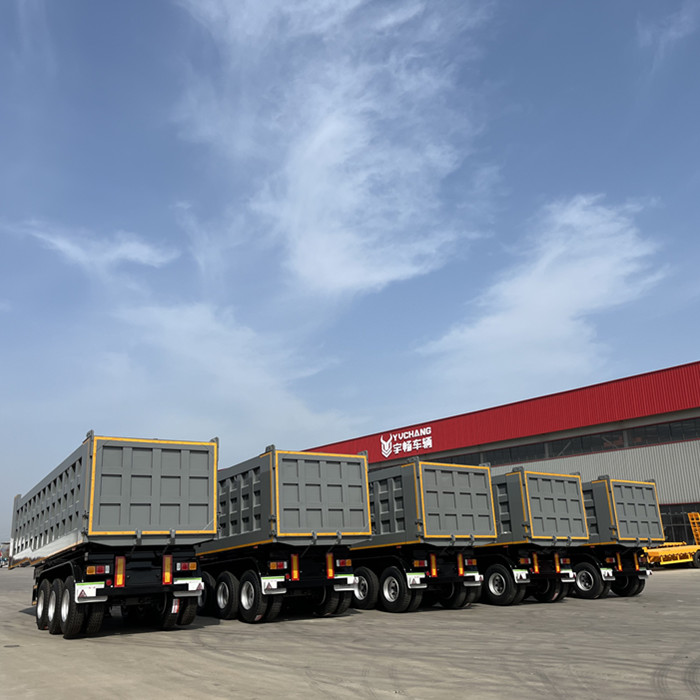
End Dump vs Side Dump Trailer: What's the Difference?
An end dump trailer discharges cargo over the rear, while a side dump trailer discharges to the side. End dumping can suit a clear rear unloading area...
Read More →
What Is the Difference Between a Fuel Tank Trailer and a Cement Tank Trailer?
A fuel tank trailer carries liquid fuel in a tank system designed around liquid containment, compartmenting, vapour control, grounding, emergency equi...
Read More →