
Haul Tall Equipment with a Lowboy Semi Trailer
1. Introduction and Overview
A lowboy semi trailer is a heavy-haul platform with a deck set close to the road. It lets operators move tall, dense machinery under legal height limits without special permits for every trip. It is used in construction, mining, power and industrial manufacturing.
It is not the right tool for every load. Palletized or light freight is usually better served by other platforms. Tracked excavators, dozers, transformers, press frames and similar high-mass cargo are where a low deck earns its place.
| Target Industry | Primary Material / Component | Key Benefit / Value Delivered |
|---|---|---|
| Heavy Construction | Excavators, dozers, wheel loaders, cranes | Legal transport height and fewer permit restrictions |
| Mining and Quarrying | Haul-truck components, drills, crushers | High axle capacity for dense, concentrated loads |
| Energy and Power | Transformers, generators, turbine sections | Stable carriage of tall, high-value assets |
| Industrial Manufacturing | Presses, CNC frames, process vessels | Controlled loading and lower damage risk |
| Oil, Gas and Infrastructure | Skids, compressor packages, bridge girders | Modular configuration for project cargo |
2. Core Functional Capabilities and Compatible Materials
How the low-deck design works
The trailer drops its cargo deck between the gooseneck and the rear axles. This "well" can sit roughly 450 to 600 mm above the ground, depending on tire size and suspension. A tall machine is carried lower, which keeps total height inside typical road limits.
Most units use a detachable gooseneck. The front lowers to the ground so machines can drive straight onto the deck. Others use hydraulic ramps or a folding rear section. Multi-line axle groups spread the weight across the road surface.
Compatible cargo and working environments
- Tracked and wheeled earthmoving machinery, including steel-track equipment up to the rated deck load
- Dense cast or fabricated steel assemblies such as transformer tanks and press frames
- Oversized project cargo that needs a flat, load-bearing deck with lashing points
- Rough access roads, quarry haul routes and unpaved construction sites, with suitable suspension and ground clearance
- Cold, hot and coastal climates, with coating systems matched to the route
- Main beams in high-tensile structural steel, commonly in the Q345 to Q690 range, for strength-to-weight efficiency
3. Industry-by-Industry Breakdown
Heavy Construction
Contractors use low-deck trailers to move excavators, bulldozers, motor graders and compact cranes between sites. The low loading angle makes driving heavy tracked machinery on and off safer. Rear ramps with anti-slip surfaces support excavator transport without extra loading docks.
Main advantages are shorter loading time, lower center of gravity and fewer rerouting issues under bridges.
Mining and Quarrying
Mine operators move drilling rigs, crusher modules and large haul-truck components. Here, axle capacity, frame stiffness and tire selection matter most. Reinforced decks and extra cross-members resist concentrated point loads from tracks and outriggers.
Operators value lower maintenance cost on abrasive routes. Hardened wear plates and sealed wheel ends help extend service intervals.
Energy and Power
Utilities and EPC contractors ship power transformers, generator sets and turbine components. These items are tall, heavy and sensitive to shock, so the low deck helps with both height clearance and stability. Transformer transport often calls for multi-axle configurations and hydraulic suspension to control load distribution.
Lashing-point layout and deck strength should match the cargo's documented center of gravity. Related platforms such as Lowbed Trailers are worth comparing for the heaviest components.
Industrial Manufacturing
Plants relocating production lines move press frames, injection molding machines, large CNC units and process vessels. A low deck allows machinery to travel without partial disassembly. This reduces re-commissioning time at the destination.
Where cargo is lighter or longer, Flatbed Trailers may cost less per trip. For standard boxed freight, Container Chassis are the more efficient option.
Oil, Gas and Infrastructure
Project fleets carry compressor skids, pipe-rack modules, pressure vessels and precast or steel bridge girders. Extendable decks and modular axle groups handle varied length and weight. Corrosion protection is critical in coastal and desert projects, where salt and sand speed up wear.
4. Real-World B2B Case Study Scenario
The following is a representative scenario based on common project conditions rather than a named customer.
- Problem: A regional earthmoving contractor needed to move 30-ton tracked excavators between sites about 400 km apart. The existing flat deck put machine height above the legal limit, so each move needed route surveys and escorts.
- Technical challenge: The loaded height had to fall below the legal limit. The deck also needed to take concentrated track loads, and the trailer had to suit rough site entrances.
- Solution: The contractor switched to a 3-axle low-deck trailer with a detachable gooseneck, a reinforced well and anti-slip ramps. Lashing rings were positioned to match the excavators' tie-down points.
- Result: Loaded height dropped by roughly 400 mm. Most trips no longer needed escorts or special routing. Loading time fell from about 45 minutes to 25, and the contractor ran fewer relocation days per month.
5. Application-Based Selection and Specification Matrix
Matching the trailer to the cargo
Start with three numbers: gross cargo weight, overall cargo height, and the footprint of its tracks or base. Then check local axle-load and dimension rules. The matrix below is a general starting point, not a replacement for a project-specific check.
| Application | Typical Cargo Weight | Suggested Axle Configuration | Deck / Loading Feature |
|---|---|---|---|
| Compact and mid-size construction machines | 10 to 30 t | 2 to 3 axle lines | Detachable gooseneck or hydraulic ramps |
| Large excavators, dozers, cranes | 30 to 60 t | 3 to 4 axle lines | Reinforced well, anti-slip steel deck |
| Mining equipment and modules | 60 to 100 t | 4 to 6 axle lines | Heavy-duty beams, hydraulic suspension |
| Transformers and power equipment | 50 to 150 t+ | Multi-axle modular configuration | Load-spreading deck, hydraulic leveling |
| Extended or oversized project cargo | Varies | Matched to load plan | Extendable deck, widening sections |
Other specification factors
- Deck height: Lower is better for tall cargo, but ground clearance drops.
- Suspension: Mechanical for general use, hydraulic for uneven loads and rough terrain.
- Tires: Wide-base or standard dual, chosen for load rating and route.
- Brakes: Air brakes with ABS or EBS where local regulations require them.
6. Customization and OEM/ODM Capabilities
Standard models do not suit every project. Typical custom options include:
- Axle count, spacing and capacity tailored to a specific payload
- Deck length, well length and extendable or widening sections
- Ramp type and angle, including hydraulic or mechanical folding systems
- Lashing-point patterns, winch mounts and chain-hook positions
- Anti-corrosion treatments such as shot blasting, epoxy primer, polyurethane topcoat or hot-dip galvanized components
- Lighting, plug and brake system standards for the destination market, including left- or right-hand traffic requirements
- Hydraulic power packs with voltage options such as 12V/24V or external power input for ramp and suspension functions
- Branding, color schemes and toolbox, spare-wheel carrier or tie-down storage layouts
If you already know the cargo, sharing drawings helps engineers verify deck strength and axle spacing early. Spare and replacement items can be sourced through Trailer Parts support.
7. Export Packaging, Logistics and Global Shipping Guidance
Packaging and protection
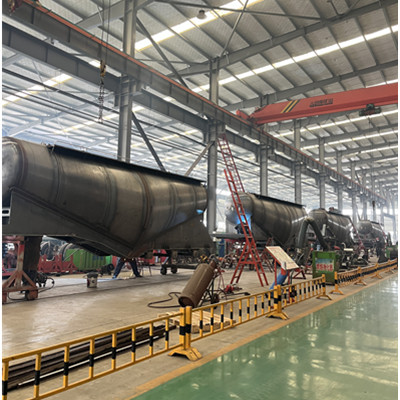
Trailers are usually shipped by RoRo, flat rack or open-top container, depending on size. Wheels, axles and exposed hydraulics are protected against moisture and salt. Loose parts, tools and documents are packed separately.
- Components and accessories go in ISPM-15 compliant wooden crates or pallets
- Bare machined surfaces receive rust-inhibiting oil or VCI wrapping
- Electrical connectors and lamps are sealed against moisture
- Lashing and blocking secure the unit to prevent movement during sea transport
Shipping terms and compliance
Common trade terms include FOB, CFR, CIF and, for selected destinations, DDP. The exact scope should be agreed in the quotation. Dimensions, weights and axle loads should be listed on shipping documents so that destination ports and road authorities can verify them. Related heavy-haul equipment such as Interlink Trailers can be shipped on the same consolidated schedule when projects require multiple units.
8. Quality Assurance, Compliance and International Standards
Certifications and standards
Buyers typically ask for an ISO 9001 quality system, welding procedures aligned with recognized standards, and market-specific type approval such as ECE, DOT or local equivalents. Requirements differ by destination, so confirm them before ordering.
Factory testing before dispatch
- Material verification: mill certificates for main beam steel and key structural plates
- Weld inspection: visual checks plus ultrasonic or magnetic particle testing on critical joints
- Load test: static deck loading at or above the rated capacity, with deflection measured
- Brake and air-system test: leak, response and ABS function checks
- Hydraulic test: pressure and cycle verification for ramps, suspension and gooseneck systems
- Axle alignment and coating inspection: track alignment, paint thickness and adhesion checks
9. Frequently Asked Questions and Call to Action
How is a low-deck trailer different from a standard flatbed?
A flatbed has a high, flat deck and suits general cargo. A low-deck trailer drops the deck so tall machinery stays within legal height. It also offers a detachable or ramped loading method for self-propelled equipment.
What maintenance schedule is typical?
Inspect tires, brakes, lights and lashing points before each trip. Lubricate pivot points, check wheel-end oil and torque wheel nuts at regular intervals. A full structural, suspension and hydraulic inspection is usually done every 6 to 12 months, depending on duty.
How long does a custom build take?
Standard configurations ship faster than custom designs. Custom work such as special axle layouts or deck extensions requires drawing approval first. Lead time depends on specification, so ask for a schedule with your quotation.
Can the trailer be adapted to my country's regulations?
Yes. Lighting, plugs, brake systems, axle spacing and dimensions can be adjusted to match local rules. Provide the destination country and the applicable standards early so the design can be checked.
What warranty and after-sales support is available?
Warranty terms are defined in the contract, usually covering structural and component defects under normal use. Spare parts and technical guidance can be supplied remotely, and documentation is provided with each shipment.
If you are planning to move tall or heavy equipment, send us your cargo dimensions, weight and destination, and our engineers will provide selection advice and a quotation.
How to Choose a Lowboy Semi Trailer for Excavators?
Learn how to choose a lowboy semi trailer for excavators: payload, deck height, axles, TCO and export packing. Submit your machine specs for selection...
Read More →
What Is a Rear Tipping Trailer Used For?
Discover the industrial uses, key features, and types of a rear tipping trailer. Learn how these robust dump trailers improve efficiency in constructi...
Read More →