What Is a Rear Tipping Trailer Used For?
In heavy industry, construction, and bulk logistics, efficiency and reliability are paramount. The ability to move large volumes of loose materials quickly and safely is a core operational requirement. A rear tipping trailer, often called an end dump trailer, is a specialized semi-trailer engineered specifically for this purpose. Its fundamental design, featuring a hydraulically-powered tipping mechanism, makes it an indispensable asset for transporting and unloading materials like sand, gravel, soil, and aggregates with minimal labor and time.
These trailers are the workhorses of job sites and supply chains around the world, providing a robust solution for hauling everything from construction debris to agricultural products. Understanding their capabilities, types, and features is crucial for any procurement manager or logistics operator looking to optimize their fleet.
Types of Rear Tipping Trailers
While all serve the same primary function, these dump trailers come in several designs, each optimized for different materials and operating conditions. Choosing the right type is critical for maximizing payload, ensuring safety, and prolonging the equipment's service life.
- Rectangular (Box-Type) Body: This classic design features a rectangular cargo box with straight sides. It maximizes internal volume, making it ideal for hauling lower-density bulk materials like coal, grain, or general construction waste. The flat floor is also suitable for carrying some solid items when not used for tipping.
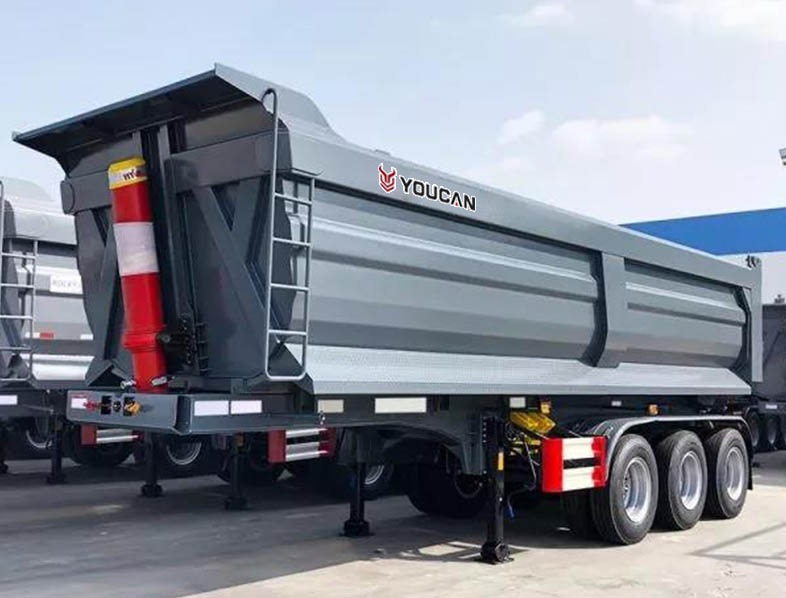
- U-Shape (Half-Pipe) Body: This modern design has a curved, U-shaped body. This shape provides superior structural strength with less weight and, crucially, has a lower center of gravity for better stability. The smooth, curved interior prevents sticky materials like wet clay, sludge, or asphalt from clinging, ensuring a faster and more complete discharge.
- Frameless Design: In a frameless tipper, the dump body itself is a structural component, and the hoist is mounted at the very front of the trailer. This design is lighter, allowing for a greater legal payload, but it requires more skill to operate and must be on perfectly level ground to tip safely.
- Frame Design: A full-frame design features a separate, rigid chassis that supports the dump body. This type is heavier but significantly more stable during the tipping cycle, making it more forgiving on uneven terrain.
Key Features and Business Benefits
The performance of a rear dump trailer is defined by its engineering and components. Key technical features translate directly into operational advantages for your business.
- High-Tensile Steel Construction: We utilize high-strength, wear-resistant steel (such as NM450/HARDOX) for the trailer body. Benefit: This ensures exceptional durability against abrasive materials like rock and scrap metal, reduces maintenance costs, and extends the trailer's operational lifespan.
- Reliable Hydraulic Hoist System: The trailer is equipped with a premium, multi-stage telescopic hydraulic cylinder from a world-renowned brand like HYVA. Benefit: This guarantees powerful, fast, and stable lifting, reducing unloading cycle times and improving overall project efficiency.
- Heavy-Duty Axle and Suspension: Our trailers feature robust axles from trusted brands like BPW or FUWA, paired with heavy-duty mechanical or air suspension systems. Benefit: This provides high load-bearing capacity, excellent stability on rough terrain, and reliable performance under demanding conditions.
- Optimized Tipping Angle: The geometric design allows for a high tipping angle (typically 45-50 degrees). Benefit: This ensures a quick and complete discharge of all materials, preventing carry-back and eliminating the need for manual clean-out.
Industry Applications
The versatility of the rear dump trailer makes it a vital tool across numerous sectors for bulk material handling. Its robust design is well-suited for the toughest jobs.
- Construction and Infrastructure: Essential for hauling sand, gravel, crushed stone, soil, and asphalt for road building, foundation work, and large-scale construction projects.
- Mining and Quarrying: Used extensively for transporting ore, coal, and other extracted minerals from the mine site to processing plants or stockpiles.
- Agriculture: Efficiently transports large volumes of grain, sugar beets, potatoes, and other bulk crops from the field to storage silos or processing facilities.
- Waste Management and Demolition: Ideal for moving large quantities of construction and demolition (C&D) debris, scrap metal, and municipal solid waste to recycling centers or landfills.
Rear Tipping Trailers for Sale
We offer a comprehensive range of rear dump trailers to meet diverse international requirements. Our standard models are available in various configurations to suit your specific payload and volume needs.
- Load Capacities: From 30 tons to over 100 tons.
- Volume Capacities: From 25 cubic meters (m³) to 70 m³.
- Axle Configurations: 2-axle, 3-axle, and 4-axle models to comply with local road regulations and weight limits.
Beyond our standard lineup, we specialize in creating custom solutions. For a complete overview of available models, please request our official product catalog.
Buying Guide for Your Tipper Trailer
Making the right investment requires careful consideration of your specific operational needs. Use this checklist to guide your purchasing decision.
Purchasing Checklist
- Material Analysis: What is the primary material you will be hauling? Abrasive rock requires thicker, harder steel (e.g., Hardox) than sand or grain. Sticky materials are best handled by a U-shape body.
- Payload and Volume: Determine your required payload in tons and volume in cubic meters. This will dictate the trailer's size and the number of axles needed.
- Operating Terrain: Will the trailer operate primarily on paved roads or rough, off-road sites? This choice influences the selection between more durable mechanical suspension and a smoother-riding air suspension.
- Key Components: Scrutinize the brands of the hydraulic system, axles, and suspension. Opting for reputable brands ensures reliability and easier access to Trailer Parts.
- After-Sales Support: Verify the manufacturer's warranty policy, technical support availability, and spare parts logistics.
Common Mistakes to Avoid
- Underestimating Abrasiveness: Choosing standard steel for highly abrasive loads will lead to premature wear and costly repairs.
- Ignoring Local Regulations: Failing to consider local laws on axle weight, overall length, and height can result in fines or an inability to register the equipment.
- Focusing Solely on Price: A lower upfront cost may hide inferior components that lead to higher long-term maintenance expenses and costly downtime.
Working Principle of a Rear Tipper
The mechanism behind a rear dump trailer is a straightforward application of hydraulic power. The system is driven by the tractor truck's engine via a Power Take-Off (PTO) unit. When engaged, the PTO drives a hydraulic pump, which draws hydraulic oil from a reservoir. The pump then forces this oil under high pressure into a large, multi-stage telescopic cylinder mounted underneath the front of the trailer's cargo body. As the cylinder fills with oil, it extends, pushing the front of the body upward and causing it to pivot on hinges at the rear of the chassis. Gravity then takes over, causing the load to slide out from the back.
How Does a Rear Tipping Trailer Work?
The operational workflow is designed for efficiency and safety. An experienced operator follows a clear, step-by-step process for each unloading cycle.
- Positioning: The driver carefully parks the truck and trailer on firm, level ground. Tipping on soft or uneven surfaces is extremely dangerous and can lead to a rollover.
- Engaging the System: The driver engages the truck's PTO and sets the parking brakes on both the tractor and trailer.
- Unlatching the Tailgate: The operator unlatches the rear tailgate's safety locks to allow it to swing open as the body lifts.
- Raising the Body: Using controls in the cab, the driver activates the hydraulic pump to begin raising the dump body. The ascent should be smooth and controlled.
- Discharging the Load: The body is raised to the required angle to ensure all material slides out. The driver may need to move the truck forward slightly to spread the material or fully clear the pile.
- Lowering the Body: Once empty, the hydraulic control is reversed, and the body is slowly lowered back onto the chassis.
- Securing for Transit: The driver re-latches the tailgate, disengages the PTO, and conducts a walk-around inspection before leaving the site.
Customization Options (OEM/ODM)
We understand that standard models do not fit every application. As an experienced manufacturer, we offer comprehensive OEM/ODM services to build a trailer that precisely matches your operational needs. Our flexible production allows for a range of customizations.
- Custom Dimensions: We can adjust the length, width, and sidewall height to achieve your target volume.
- Material Specification: Choose the steel type and thickness for the floor and sidewalls based on your cargo's abrasiveness.
- Component Selection: Specify your preferred brands for axles, suspension, landing gear, and tires. We offer a range of options, including various Tipper Trailers configurations.
- Paint and Branding: We provide custom paint services in any RAL color and can apply your company's logo and livery.
- Accessory Integration: Add features like automated tarp systems, ladders, toolboxes, or extra lighting.
Packaging and Shipping
We have extensive experience in shipping heavy equipment globally. Our logistics team ensures your trailer arrives safely and in perfect condition.
Trailers are typically shipped via bulk cargo vessels or Ro-Ro (Roll-on/Roll-off) ships to minimize transit risk. To protect against corrosion during sea transport, each unit is thoroughly cleaned and coated with a layer of wax. For certain destinations or to reduce shipping costs, we can also offer Semi-Knocked-Down (SKD) solutions where trailers are partially disassembled and loaded into containers. We handle all export documentation to ensure smooth customs clearance.
Why Choose Us as Your Trailer Manufacturer?
Selecting the right manufacturing partner is as important as selecting the right equipment. Our commitment to quality, innovation, and customer support sets us apart.
- Manufacturing Excellence: Our factories are ISO 9001 certified and utilize advanced technologies like robotic welding and plasma cutting for superior precision and strength.
- Engineering Expertise: Our dedicated R&D team can design custom trailers, from simple modifications to entirely new concepts like a specialized Car Carrier Trailer.
- Global Experience: We have successfully delivered trailers to clients in over 50 countries across Africa, South America, the Middle East, and Southeast Asia.
- Quality Assurance: Every trailer undergoes a rigorous quality control inspection at each stage of production, from raw material verification to final testing.
- Responsive Support: We provide 24/7 technical support and a robust supply chain for spare parts to keep your fleet operational.
To discuss your specific hauling requirements and receive a detailed technical proposal, please send us your project specifications.
Frequently Asked Questions (FAQ) about Rear Tipping Trailers
What is the typical price range for a rear tipping trailer?
The price varies significantly based on specifications such as capacity, steel type (e.g., standard vs. Hardox), and component brands (axles, hydraulics). Prices can range from $15,000 to over $40,000 USD. For an accurate price, please request a formal quotation based on your needs.
What is your standard production lead time?
For standard models, the lead time is typically 30-45 days after order confirmation and deposit. Highly customized projects may require a longer lead time, which will be specified in our proposal.
What is the expected service life of your dump trailers?
With regular maintenance and proper operation, our heavy-duty tipper trailers are designed for a service life of 10-15 years or more, even in demanding environments.
What warranty do you provide?
We offer a standard 12-month warranty covering the main frame and key structural components against manufacturing defects. Specific warranties for third-party components like axles and hydraulic systems are subject to their respective manufacturers' policies.
Is the U-shape body better than the rectangular one?
It depends on the application. The U-shape is superior for sticky materials and offers better stability due to a lower center of gravity. The rectangular body maximizes volume and is often preferred for lighter, non-sticky materials like grain or coal.
Do you offer training for operators?
We provide comprehensive operation manuals and instructional videos with every trailer. For large fleet orders, on-site operator and maintenance training can be arranged as part of the sales agreement.
Haul Tall Equipment with a Lowboy Semi Trailer
Learn how a lowboy semi trailer handles tall, heavy equipment, with specs, industry uses and export guidance. Send your cargo details for selection ad...
Read More →