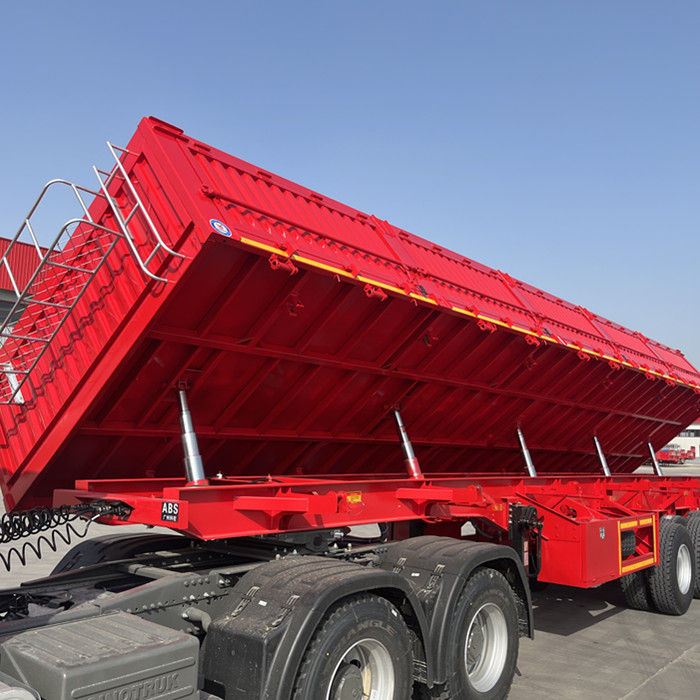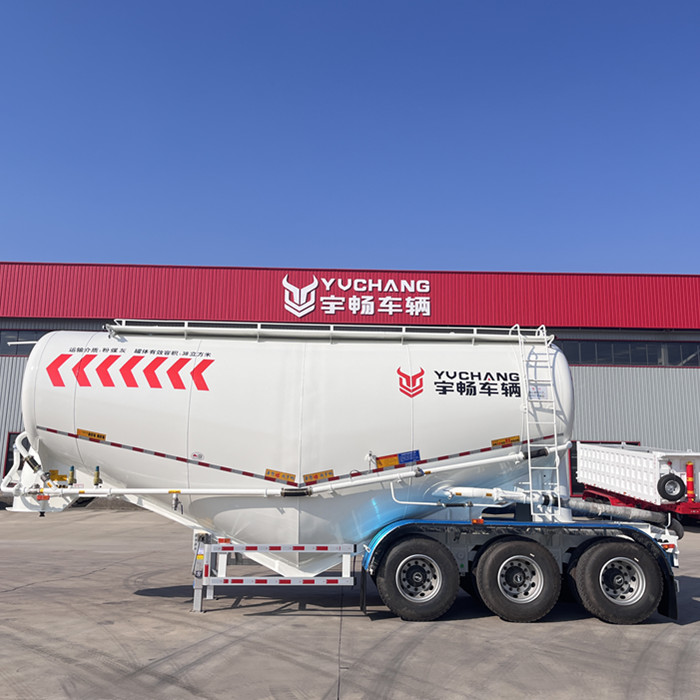
What Is a Tipper Semi Trailer?
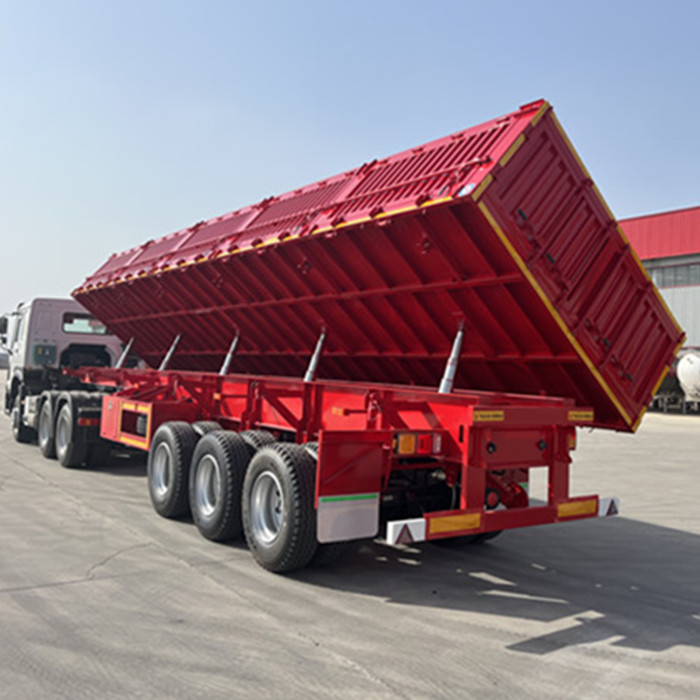
What Is a Tipper Semi Trailer?
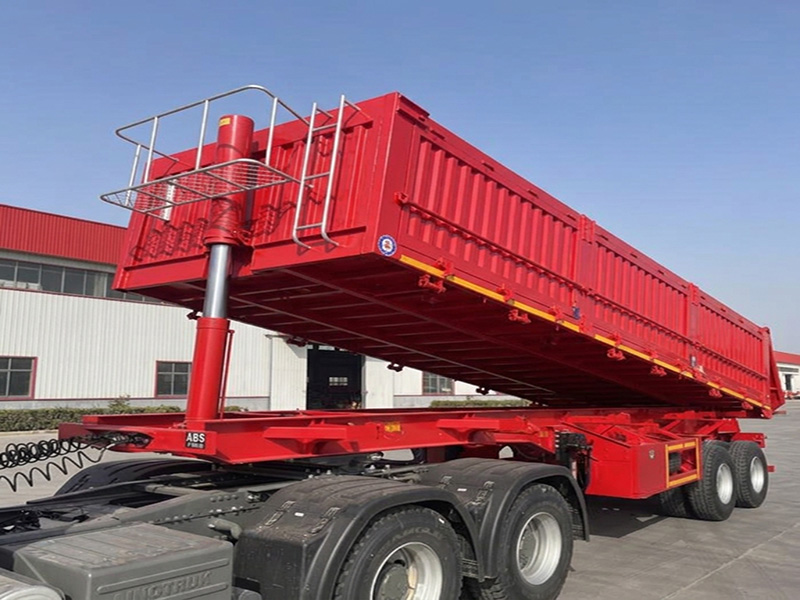
A tipper semi trailer (also called a dumper trailer) is a semi-trailer that can self-dump and save the labor of unloading. A tipper semi trailer is designed for users who transport solid aggregates, coal, earthmoving materials, wheat, and similar bulk cargoes.
Instead of relying on forklifts or manual labor to empty the cargo, a tipper semi trailer uses a powerful hydraulic cylinder to lift the heavy dump box into the air. Once raised, the material inside simply slides out the back or side through gravity. This design makes it the most efficient equipment for hauling and discharging loose, heavy loads.
Important Parts of a Tipper Trailer
A tipper trailer is a large trailer that usually lifts when dumping its haul in a chosen location. It is similar to the dump truck trailer and is used synonymously to mean the same thing. However, there are small tweaks here and there that make each one of them unique. While there are different tipping options, the main ones are the rear and the side tippers.
Tipper trailers will help you to carry and offload bulk goods in a very easy and efficient manner. At the end of the day, your operations will be highly affordable. They have become a wonderful solution, especially in handling big jobs. Safety in operations is well taken care of through a well-designed mechanism for offloading your goods.
To achieve this, several critical parts work together:
The Dump Box (Carriage): The heavy-duty container that holds the cargo. It is typically made of high-strength, wear-resistant steel to withstand impacts from heavy rocks.
Hydraulic Cylinder: The powerhouse of the trailer. It pushes the dump box up. It can be front-mounted for rear tippers or side-mounted for side tippers.
Hydraulic Pump and PTO: The Power Take-Off (PTO) connects to the tractor's engine to drive the hydraulic pump, generating the immense pressure needed to lift a fully loaded box.
Chassis and Main Beams: The structural backbone. Because the center of gravity shifts dramatically during tipping, the chassis must be heavily reinforced to prevent twisting or bending.
Tailgate and Side Doors: Hydraulically or manually locked doors that keep the cargo contained during transit and open automatically or manually when tipping.
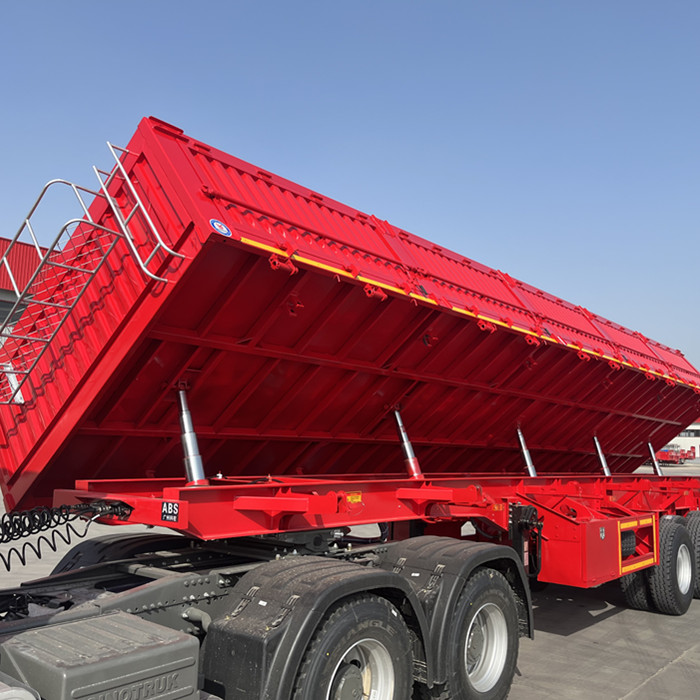
How Does a Tipper Semi Trailer Work?
The unloading process is simple but powerful. Once the trailer is safely parked on level ground at the destination, the driver engages the PTO system. High-pressure hydraulic oil is pumped into the cylinder, pushing the dump box upward at a steep angle. As the box tilts, gravity takes over, and the solid aggregate or earthmoving materials slide smoothly out the rear or side. Once empty, the hydraulic pressure is released, and the box lowers back down, ready for the next load.
Advantages of a Tipper Semi Trailer
Fleet operators choose a tipper semi trailer for its significant operational and financial benefits:
Exceptional Unloading Speed: The hydraulic tipping mechanism allows a massive payload to be emptied in a matter of minutes, drastically reducing turnaround times at construction sites and quarries.
Labor Cost Reduction: It eliminates the need for manual labor or expensive equipment (like excavators) to unload bulk cargo.
High Payload Capacity: Built with thick steel plates, these trailers can carry immense loads of dense materials like wet sand or heavy ores.
Versatility: While primarily for bulk materials, they can also transport scrap metal, agricultural products, and large construction rubble.
Main Types of Tipper Semi Trailers
When choosing a tipper semi trailer, buyers must understand the two primary types of tipping mechanisms, as they dictate how and where the trailer can be unloaded:
1. Rear Tipper Semi Trailers
A rear tipping trailer works by offloading cargo towards the back area. Once the back of your trailer is locked, you can load your cargo. On arriving at the destination, the front side of the tipper trailer gets raised, causing your cargo to drop off from the back.
2. Side Tipper Semi Trailers
A side tipper is an alternative to the rear tipper. This type allows you to offload your goods from the side. The side tipper makes use of hydraulic pumps, motors, and a dump bucket to one side. The design is meant to allow side dumping in areas where there isn’t sufficient space (lateral offloading saves space).
| Feature | Rear Tipper | Side Tipper |
|---|---|---|
| Unloading Direction | Drops cargo from the back | Drops cargo from the side |
| Material Suitability | Cargo with a large rest angle (flows easily) | Cargo with a small rest angle (sticks slightly) |
| Length Limit | Cannot exceed 12m (stability risk) | No strict length limit |
| Payload Capacity | Standard capacity | Can load more than rear tippers |
| Best For | Open construction sites, quarries | Tight spaces, narrow roads, spreading material |
Applications of Tipper Semi Trailers
With tipper trailers, they are applicable in the construction, agriculture, and recycling industries, among many other areas. They come in different shapes and types; therefore, you will have a variety based on your specific needs and requirements.
Construction & Infrastructure: Hauling sand, gravel, and crushed stone to concrete batching plants and highway sites.
Mining & Quarrying: Transporting coal, iron ore, and mineral aggregates from the mine face.
Agriculture: Moving bulk harvests such as wheat, grain, and fertilizers.
Municipal Waste & Recycling: Transporting construction debris, soil, and solid waste.
Common Buyer Mistakes
When evaluating a manufacturer, avoid these common pitfalls regarding welding quality:
Judging weld quality only by bead appearance or a single production photograph.
Asking for a certificate without asking which joint or process it covers.
Ignoring fit-up, distortion, and structural geometry because the welds look smooth.
Demanding NDT everywhere without matching the method to the joint and risk profile.
Failing to define how repaired or rejected welds will be handled, documented, and re-inspected before shipment.
What Buyers Should Ask the Manufacturer
To ensure your investment is protected, smart buyers should ask these critical questions before placing an order:
Which approved drawing or configuration is the quotation based on?
Which dimensions, functions, and interfaces are critical for my operation?
How will the welding be inspected before shipment, and what records will be provided?
Which parts require destination-specific confirmation?
What changes would require an engineering review after order approval?
Why YOUCAN Trailer is Your Ideal Supplier
As a leading professional semi-trailer manufacturer established in 1999, YOUCAN Trailer brings over 28 years of engineering expertise to the global market. We specialize in providing tailored transport solutions to customers across Africa, the Middle East, South America, and Southeast Asia. Beyond our heavy-duty dump trailers and side tippers, we offer a comprehensive portfolio of equipment, including flatbed trailers for general cargo and lowbed trailers for oversized machinery.
We invite you to take a factory tour to see our advanced CNC cutting and submerged-arc welding lines in person. Our strict quality control protocols ensure every chassis and dump box is built to withstand extreme stress. What sets YOUCAN apart is our commitment to material-driven customization; our engineering team reviews your specific cargo type, road conditions, and local regulations to recommend the best tipper configuration and steel thickness.
Ready to optimize your bulk material logistics? Contact the YOUCAN Trailer team today to get a quote and technical drawings within 12 hours!
FAQ
What is the difference between a rear tipper and a side tipper?
A rear tipper unloads material from the back by raising the front of the box. A side tipper unloads from the side using lateral hydraulics, which is ideal for tight spaces and specific job sites.
Why shouldn't a rear tipper be longer than 12 meters?
A rear tipper raises its entire front end to a very high angle. If the trailer is too long, the raised center of gravity and leverage can make the vehicle highly unstable and prone to tipping over.
Can a tipper semi trailer be used for wet or sticky materials?
Yes, but sticky materials like wet clay are better suited for U-shaped tipper boxes, which have smoother internal curves to prevent the cargo from getting stuck during unloading.
What kind of steel is used for the dump box?
Manufacturers typically use high-strength, wear-resistant steel (such as NM450 or Q345B) for the base and side walls to withstand the heavy impact and scratching of rocks and gravel.
Are these trailers suitable for off-road mining conditions?
Yes. For mining, we recommend heavy-duty reinforced chassis, thicker steel plates, and specialized off-road suspension to handle the extreme terrain and heavy payloads.
20ft vs 40ft Container Chassis: How to Choose?
Choose a 20ft or 40ft container chassis according to the container formats handled, terminal workflow, cargo distribution, route, and fleet utilizatio...
Read More →
How to Choose the Right Cement Tank Trailer Capacity?
Choose cement tank trailer capacity from the material density, loading and unloading sites, tractor and axle limits, route regulations, delivery frequ...
Read More →