
 WhatsApp
 sales@youcantrailer.com
 +8615203709888
How to Choose the Right Cement Tank Trailer Capacity?
How to Choose the Right Cement Tank Trailer Capacity?
Quick Answer
Choose a cement tank trailer by both cargo mass and usable volume. Start with the bulk density of the material, then check the legal gross and axle limits, the tractor match, loading and unloading system, route conditions, and the service plan. A larger tank is not automatically more productive if the trailer cannot be filled legally or discharged efficiently.
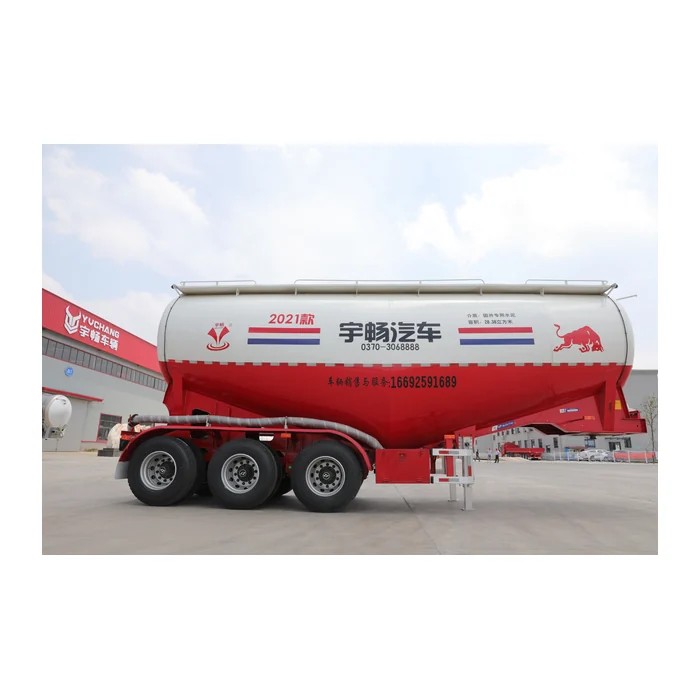
Why Capacity Is More Than a Cubic-Meter Number
Buyers often compare cement tanker trailers by nominal volume alone. That can create a mismatch because the same tank volume can carry very different cargo masses depending on the material's bulk density, moisture condition, and loading practice.
Capacity also has a legal side. The trailer must work within the permitted combination weight and axle distribution for its destination market and route. The useful question is not how much air the tank can hold. It is how much product the complete vehicle can carry, load, discharge, and return to service safely.
The Basic Capacity Calculation
Use the buyer's real cargo data as the starting point. A simple planning formula is: required tank volume = target cargo mass divided by the design bulk density. The density should come from the actual material, a reliable laboratory or site test, or a confirmed engineering design basis.
| Question | What to confirm | Why it changes the choice |
|---|---|---|
| Cargo | Cement, fly ash, lime powder, mineral powder, or another dry bulk material | Different materials flow and weigh differently |
| Design density | The density used for the buyer's operating calculation | It converts mass demand into volume demand |
| Target payload | Typical load, not only the maximum hoped-for load | It prevents an oversized tank from becoming dead weight |
| Vehicle limits | Tractor, trailer, combination, and axle distribution limits | The tank must work within the complete vehicle |
| Loading method | Plant loading point, filling rate, and top access | It affects cycle time and compatibility |
| Unloading method | Pneumatic discharge system, hose route, distance, and receiving silo | A tank is useful only when it can discharge at the job site |
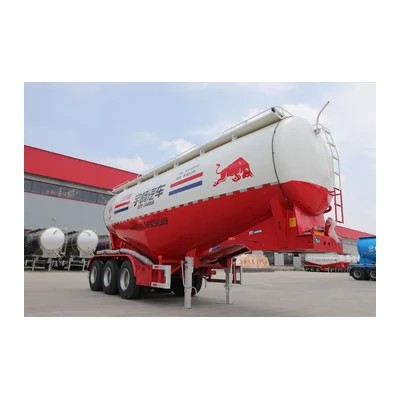
Five Checks Before You Choose a Capacity
1. Check the Material, Not Just the Product Name
Bulk cement is a category, not a single operating condition. Ask whether the material is fine or coarse, dry or moisture-prone, abrasive, easy to aerate, or likely to bridge in the tank. The tank and discharge package should be reviewed around the actual material handled by the fleet.
2. Check the Payload You Can Legally Use
A high-volume tanker can be useful for a low-density product, but it may be unable to carry the same volume when the material is denser. Review the expected payload together with the tractor's available combination weight and the axle load distribution. A nominal tank size without this check is an incomplete buying decision.
3. Check the Route and Loading Cycle
Short plant-to-site routes may reward faster loading and unloading, while long routes place more emphasis on payload efficiency, tire wear, stability, and service access. Rough roads can also change how much attention the buyer should give to frame stress, suspension, and protection of the discharge equipment.
4. Check the Compressor and Discharge System as a Package
Tank capacity, aeration layout, compressor performance, valves, hoses, and receiving silo conditions work together. A larger tank does not solve a slow or poorly matched discharge system. Ask the supplier to explain the complete operating sequence rather than quoting the tank shell alone.
5. Check How the Trailer Will Be Serviced
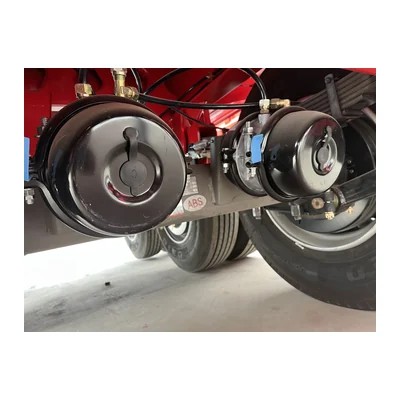
The best capacity is one the fleet can keep productive. Confirm access to wear parts, valves, hoses, pressure-related components, tires, brakes, and suspension service in the destination market. Service downtime can erase the benefit of a larger load cycle.
Capacity Decision Matrix
| Operating situation | Capacity priority | Buyer focus |
|---|---|---|
| Low-density powder | Enough volume to reach the planned mass | Tank geometry, filling level, and cycle time |
| High-density powder | Payload and legal weight may limit volume | Axle load, tare weight, and route rules |
| Mixed materials | Flexible operating basis | Material data and cleaning or changeover plan |
| Rough or remote routes | Balanced capacity with durable operation | Suspension, protection, service access, and spare parts |
| High-frequency plant delivery | Fast and repeatable cycle | Loading compatibility, discharge time, and turnaround |
For buyers comparing dry-bulk equipment, a bulk cement trailer should be specified around the material and operating cycle, not selected from a volume label alone. The same buyer-first method used for flatbed trailers and lowbed trailers also applies: define the route and load before comparing options.
Ask the supplier to connect the capacity recommendation with the factory overview and the quality control plan, including how the tank, discharge components, welding, and final checks are controlled.
Engineering Note: The right cement tanker capacity is the largest practical load cycle that the complete vehicle can carry, discharge, service, and operate within the destination market's limits.
Common Buyer Mistakes
Choosing by tank volume without calculating the cargo's bulk density.
Confusing geometric tank volume with legally usable payload.
Ignoring the tractor, axle distribution, and route when comparing capacities.
Treating the compressor and discharge system as optional details.
Buying a larger tank without checking local service and spare-part support.
Using one capacity assumption for several materials with different flow behavior.
Key Takeaways
Start with cargo mass and bulk density, then calculate the required volume.
Check the complete vehicle weight and axle distribution before choosing a larger tank.
Capacity must work with loading, pneumatic discharge, and the receiving silo.
Route conditions and service access can matter more than nominal volume.
Ask for a complete operating basis, not only a tank-size quotation.
FAQ
Should I choose the biggest cement tank trailer available?
No. Choose the capacity that matches the cargo density, legal weight, tractor, route, unloading system, and service plan.
What is the most important input for capacity selection?
The actual material and its design bulk density. Without that, a volume comparison can be misleading.
Can one tanker carry different powders?
It may be possible, but the buyer should review flow behavior, contamination risk, cleaning, aeration, and discharge compatibility before changing materials.
Does a larger tank always reduce transport cost?
Not necessarily. If the vehicle reaches its weight limit before the tank is full, extra volume may add tare weight without adding usable payload.
What should the supplier provide before order confirmation?
Ask for the proposed capacity basis, payload assumptions, axle distribution, discharge package, and the operating conditions used for the recommendation.
How do I compare two tanker quotations?
Compare the same cargo basis, payload target, tank volume definition, discharge configuration, running gear, documents, and acceptance criteria.
Conclusion
Choosing cement tank trailer capacity is an engineering and operating decision, not a simple size contest. When the buyer connects material density, legal payload, route, discharge performance, and service support, the selected tanker is much more likely to earn its place in the fleet.