




Petrol Tanker Trailer: An Application & Selection Guide for Global Fleets
In the intricate network of global commerce, the reliable and efficient transport of liquid fuels is a foundational requirement. From powering heavy industry to fueling transportation networks, the timely delivery of petroleum products is non-negotiable. The modern petrol tanker trailer stands as the critical asset in this supply chain, engineered for safety, high capacity, and operational versatility across a wide range of demanding environments.
| Target Industry | Primary Material / Component | Key Benefit / Value Delivered |
|---|---|---|
| Oil & Gas Logistics | Aluminum Alloy 5083 / Carbon Steel Q345B | High-volume, safe bulk transport from refineries to depots |
| Aviation | High-purity aluminum tank, dedicated filtration | Contamination-free transfer of jet fuel |
| Construction & Mining | Reinforced chassis, heavy-duty suspension | Reliable on-site refueling for heavy machinery |
| Commercial Fleet Mgmt. | Multi-compartment design, metering systems | Reduced operational costs and vehicle downtime |
This comprehensive guide provides procurement managers, fleet operators, and system integrators with the technical knowledge required to select, specify, and deploy these essential vehicles for maximum return on investment and operational safety.
Core Functional Capabilities & Compatible Materials
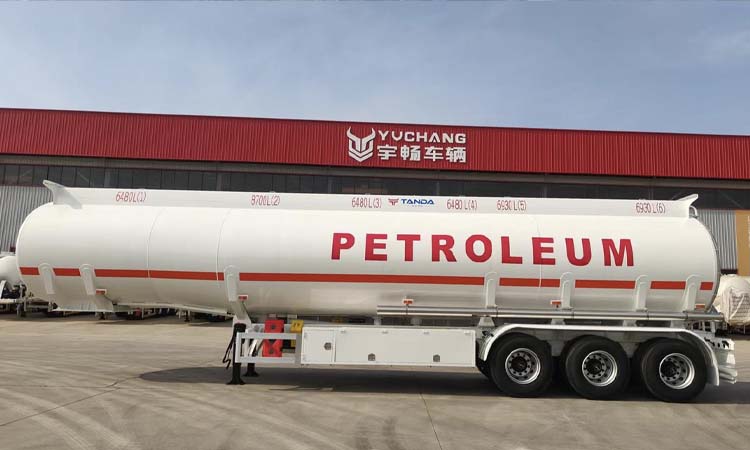
A fuel tanker trailer's primary function is the safe containment and transport of volatile liquids. This is achieved through sophisticated engineering that balances structural integrity, payload optimization, and regulatory compliance. The core of the unit is the tank, typically constructed with an elliptical profile to lower the center of gravity and enhance stability during transit.
Key functional systems include top-loading manholes with vapor recovery systems, emergency bottom valves for immediate shut-off, and integrated pumping and metering systems for precise dispensing. Safety is paramount, with features like anti-lock braking systems (ABS), roll stability control, and ADR-compliant wiring and lighting as standard for international operations.

Compatible Liquid Fuels
These tankers are engineered to be compatible with a range of petroleum-based products. Material selection for the tank and seals is critical to prevent corrosion and contamination. Compatible materials include:
- Gasoline (Petrol) of various octane ratings
- Diesel Fuel (including biofuels)
- Kerosene
- Jet Fuel (Jet A, Jet A-1)
- Ethanol and other fuel additives
Industry-by-Industry Breakdown
The adaptability of fuel tanker trailers makes them indispensable across numerous sectors. Each application has unique demands met by specific design configurations.
Oil & Gas Downstream Distribution
In the downstream sector, these trailers are the workhorses that move refined products from refineries and major storage terminals to regional distribution centers and large-scale gas stations. High-capacity units (40,000 to 60,000 liters) with multiple compartments allow for the transport of different fuel grades (e.g., regular, premium, diesel) in a single journey, maximizing logistical efficiency.
Aviation Fueling Operations
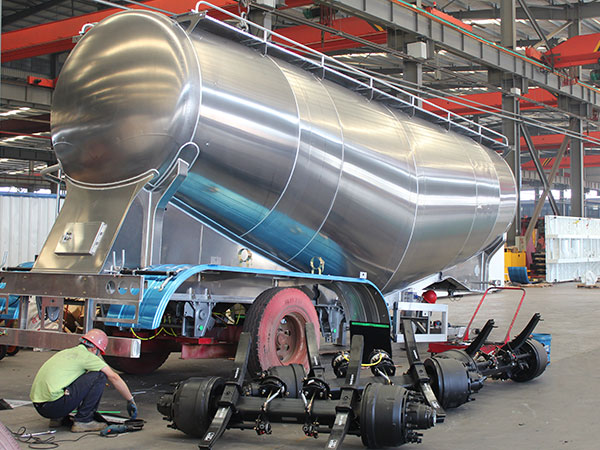
Transporting jet fuel requires the highest standards of cleanliness and material purity to prevent contamination. An Aluminum Fuel Tanker is the industry standard for this application due to its corrosion resistance and light weight. These specialized tankers feature dedicated filtration systems, water sumps, and specific couplings to interface with airport ground support equipment.
Construction and Mining Sites
Remote construction and mining operations depend on a constant supply of diesel for heavy machinery. Tanker trailers designed for this purpose feature ruggedized construction, heavy-duty off-road suspension (mechanical or bogie), and reinforced chassis to withstand harsh terrain. They serve as mobile refueling stations, eliminating the need for equipment to travel long distances for fuel.
Commercial Fleet and Logistics Hubs
Large trucking companies, bus operators, and logistics firms leverage on-site fuel tankers to reduce costs and minimize downtime. By purchasing fuel in bulk and dispensing it at their own depots, they gain significant cost savings and control over their fueling operations, avoiding time lost at public service stations.
Real-World B2B Case Study Scenario
- Problem: A regional agricultural cooperative with over 150 large farming machines experienced significant operational delays and high fuel costs during the critical planting and harvesting seasons.
- Technical Challenge: They needed a way to efficiently deliver diesel fuel across a wide geographic area to various farms without relying on smaller, inefficient bowsers.
- Solution: The cooperative invested in a 45,000-liter, 3-compartment petrol tanker trailer equipped with a high-flow pump and metering system. This allowed them to purchase fuel in bulk at a lower price and schedule direct-to-farm deliveries.
- Measurable ROI: The solution resulted in a 15% reduction in overall fuel costs due to bulk purchasing. More importantly, it eliminated an average of 4 hours of machinery downtime per week per farm, directly increasing harvest productivity by an estimated 7%.
Application-Based Selection & Specification Matrix
Choosing the correct specifications is crucial for performance, safety, and compliance. This matrix serves as a general guide for technical buyers.
| Application / Industry | Recommended Capacity | Tank Material | Compartments | Key Features/Options |
|---|---|---|---|---|
| Long-Haul Distribution | 42,000 - 55,000 L | Aluminum Alloy | 3 to 5 | Air suspension, vapor recovery, lightweight design |
| Local Fleet Refueling | 30,000 - 40,000 L | Carbon Steel / Aluminum | 1 to 3 | PTO pump, metering system, hose reel |
| Aviation Fueling | 35,000 - 50,000 L | Aluminum Alloy | 1 | API standard fittings, filtration, water sump |
| Remote Site Supply | 38,000 - 48,000 L | Carbon Steel | 1 to 2 | Heavy-duty mechanical suspension, reinforced chassis |
Customization & OEM/ODM Capabilities for Niche Applications
Standard models serve many needs, but unique operational or regional requirements often demand custom engineering. We offer extensive OEM/ODM capabilities to tailor each tanker to your exact specifications. Customization options include:
- Tank Configuration: Specific compartment sizes and numbers to match your product mix.
- Pumping Systems: Selection of Power Take-Off (PTO) driven pumps, or systems with independent diesel engines for standalone operation.
- Suspension and Axles: Air suspension for highway use, or heavy-duty mechanical bogie suspension for rough terrain, with axle brands like BPW or FUWA.
- Dispensing Equipment: Integration of specific flow meters, ticket printers, and hose reels for retail or private fleet delivery.
- Regional Compliance: Modifications to meet specific regional standards, including lighting, braking systems (EBS), and safety markings for various global markets.
Our engineering team works closely with clients to develop solutions, from a single specialized unit to an entire fleet of custom Tank Trailers.
Export Packaging, Logistics & Global Shipping Guidance
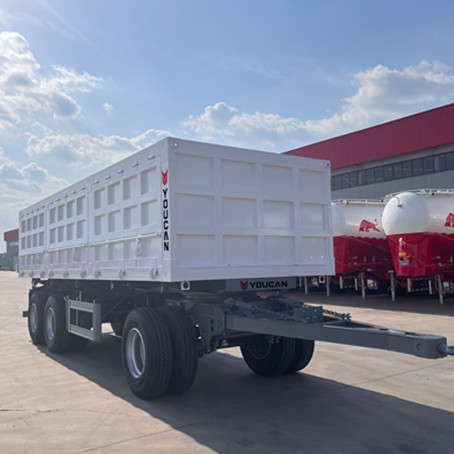
Shipping large equipment like a tanker trailer internationally requires specialized logistics. We ensure every unit is prepared for transit according to global standards. Trailers are typically shipped via Roll-on/Roll-off (Ro-Ro) vessels or as break-bulk cargo. To prevent corrosion during ocean transit, sensitive components are coated with wax or protective films.
We are proficient in managing various shipping incoterms to suit your procurement strategy, including FOB (Free On Board), CIF (Cost, Insurance, and Freight), and DDP (Delivered Duty Paid), ensuring a smooth process from our factory to your destination port.
Quality Assurance, Compliance & International Standards
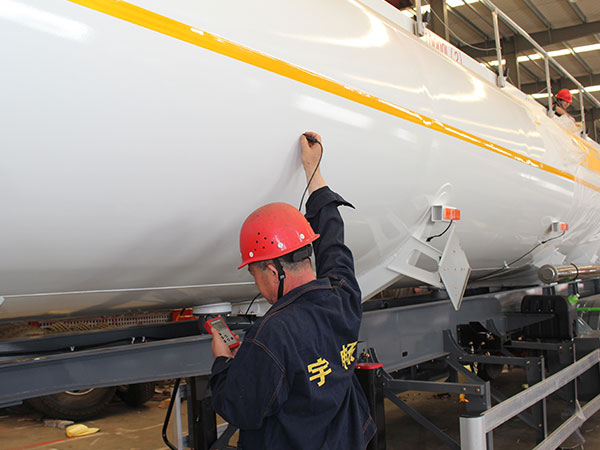
Every tanker trailer we manufacture is subject to a rigorous quality assurance protocol to guarantee safety, reliability, and compliance with international regulations. Our facilities are ISO 9001 certified, and our products can be built to meet stringent standards such as ADR for European road transport.
Key Factory Testing Procedures:
- Weld Integrity Testing: Non-destructive testing (NDT), such as X-ray and ultrasonic inspection, is performed on all critical tank welds.
- Hydrostatic Pressure Test: The tank is filled with water and pressurized to 1.5 times its working pressure to verify structural integrity and a leak-free seal.
- System Functionality Check: All pneumatic, electrical, and braking systems are tested for proper operation before dispatch.
- Final Inspection: A comprehensive pre-dispatch inspection covers all aspects of the trailer, from paint quality to compliance with the customer's order specifications.
Frequently Asked Questions (FAQ)
What are the main advantages of an aluminum tank over a carbon steel one?
Aluminum tanks are significantly lighter, which allows for a larger payload capacity and can lead to fuel savings for the tractor unit. They also offer superior corrosion resistance, making them ideal for a wider range of products, including jet fuel. Carbon steel tanks are typically more cost-effective upfront and offer excellent durability and impact resistance.
What is the typical lead time for a customized tanker trailer?
Lead times vary based on the complexity of the customization and current production schedules. A standard configuration may take 30-45 days, while a highly customized unit with special components can take 60-90 days. We provide a detailed timeline upon order confirmation.
What after-sales support and spare parts are available?
We offer a comprehensive international warranty on all our trailers. We also maintain a large inventory of genuine Tank Trailer Parts, from valves and gaskets to suspension and braking components, ensuring you can keep your fleet operational with minimal downtime.
Can the trailer carry different types of fuel simultaneously?
Yes. Our multi-compartment designs allow for the safe transport of different fuel grades in the same trailer. Each compartment has its own dedicated loading and unloading system to prevent cross-contamination.
To receive a detailed specification sheet or discuss your fleet's unique transport requirements, please submit your inquiry for a formal quote.

How to Choose a Petrol Tanker Trailer for Your Fleet?
A comprehensive guide for B2B buyers on choosing the right petrol tanker trailer. Learn about capacity, materials, safety, and TCO. Request a quote to...
Read More →
Stainless Steel vs Aluminum for a Liquid Tank Trailer
Compare stainless steel and aluminum for a liquid tank trailer by cost, payload, corrosion resistance and cargo. Submit your cargo details for selecti...
Read More →