




Specify a Chemical Tank Trailer for Corrosive Cargo
Selecting the correct chemical tank trailer is a critical investment that directly impacts operational safety, regulatory compliance, and profitability. The right tanker ensures the integrity of your cargo, minimizes risks during transport, and delivers a strong return on investment through durability and efficiency. Choosing incorrectly can lead to catastrophic failures, product contamination, and significant financial loss. This guide provides the essential knowledge for procurement managers and technical directors to make an informed decision.
Buyer's Quick Checklist
- Identify Chemical(s): List every chemical to be transported and obtain their Material Safety Data Sheets (MSDS).
- Verify Material Compatibility: Match the chemical properties (corrosiveness, temperature) with the appropriate tank material (e.g., 316L Stainless Steel, lined carbon steel).
- Determine Capacity & Compartments: Define the required volume and whether you need multiple compartments for different products.
- Check Regulatory Compliance: Ensure the design meets local, national, and international transport regulations (e.g., ADR, DOT).
- Evaluate Safety Features: Confirm the presence of emergency shut-off valves, pressure relief systems, and vapor recovery options.
Key Factors & Technical Parameters to Consider
A detailed technical specification is the foundation of a successful purchase. When evaluating a chemical transport solution, focus on these core parameters to ensure it meets your operational demands.

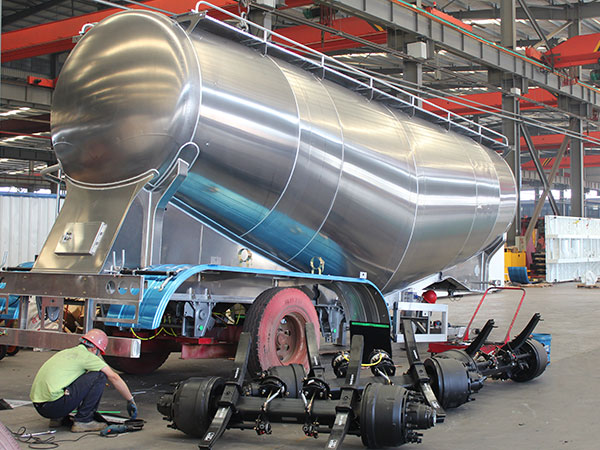
- Tank Material and Grade: This is the most critical factor. Stainless steel (304, 316, 316L) is common for its corrosion resistance. For highly aggressive acids, specialized alloys or tanks with linings (e.g., PE, rubber) are necessary. Aluminum is suitable for fuels and less corrosive chemicals but not for most acids or alkalis.
- Capacity and Compartments: Standard capacities range from 20,000 to 60,000 liters. The decision depends on product density and regional road weight limits. Multiple compartments allow for the transport of different chemicals in a single journey, increasing operational flexibility.
- Pressure Rating: Determine if you need a non-pressurized (gravity discharge), low-pressure, or high-pressure (ASME-rated) vessel. This depends entirely on the chemical's properties and the loading/unloading process.
- Suspension and Axle Configuration: Air suspension provides a smoother ride, protecting the tank structure and sensitive components from road shock. Mechanical suspension is more robust for rough terrain. Axle configuration (number of axles, lift axles) must comply with local gross vehicle weight regulations.
- Loading and Discharge System: Specify top-loading versus bottom-loading configurations. The valve system (e.g., ball valves, butterfly valves), pump type, and piping material must be compatible with the cargo and offer reliable, leak-free performance.
- Insulation and Heating: For temperature-sensitive chemicals that may solidify or become viscous at ambient temperatures, insulation is essential. Steam coil heating or electric heating systems can be integrated to maintain the required product temperature during transit.
Types of Chemical Tank Trailers: Which One Fits Your Needs?
Chemical tankers are not one-size-fits-all. They are specialized assets designed for specific product families. Understanding the primary categories helps narrow down your selection from the broader market of tank trailers.
| Trailer Type | Key Specs | Price Level | Best Used For |
|---|---|---|---|
| Stainless Steel Tanker | SS304, SS316, or SS316L; 2-5 compartments; optional insulation. | High | A wide range of corrosive acids, food-grade products, and industrial chemicals. |
| Aluminum Tanker | Lightweight aluminum alloy; multiple compartments common. | Medium-High | Petroleum products (gasoline, diesel), ethanol, and non-corrosive liquids. Similar to a specialized Aluminum Fuel Tanker. |
| Lined Carbon Steel Tanker | Carbon steel shell with a bonded internal lining (rubber, PE, glass). | Medium | Highly specific and aggressive chemicals like hydrochloric acid or sodium hypochlorite, where stainless steel is unsuitable. |
| Insulated / Jacketed Tanker | Outer cladding over insulation layer; can include steam or electric heating. | High | Molten sulfur, asphalt, waxes, and chemicals requiring temperature control. |
Essential Features & Quality Standards
The difference between a reliable, long-lasting tanker and a low-tier alternative lies in the details of its construction and components. High-quality manufacturing adheres to strict international standards.
- Welding Quality: Look for automated, consistent welding seams. Poor welds are stress points that can lead to cracks and leaks, especially under pressure or vibration. X-ray and hydrostatic pressure testing are signs of a diligent manufacturer.
- Running Gear: The quality of axles, suspension, and braking systems is paramount for safety. Reputable manufacturers use components from globally recognized brands like BPW, FUWA, and WABCO to ensure reliability and parts availability.
- Valves and Gaskets: All wetted parts, including valves, gaskets, and seals, must be made from materials (e.g., PTFE, Viton) that are chemically resistant to the cargo. A failure here can cause a dangerous leak.
- Safety Systems: Features like emergency foot valves, vapor recovery systems, overfill protection, and clearly marked safety controls are non-negotiable for hazardous material transport.
- Certifications: A trustworthy manufacturer will operate under an ISO 9001 quality management system. Depending on the target market, tankers may need to be built to specific codes like ADR (European) or DOT 407/412 (North American).
Total Cost of Ownership (TCO) & Budgeting Guide
The initial purchase price is only one part of the equation. A smart buyer evaluates the Total Cost of Ownership to understand the true long-term investment.
Upfront Costs: This is the purchase price of the trailer, including any customizations, specific components, and initial delivery charges.
Ongoing/Hidden Costs:
- Maintenance: Regular inspections, tire replacement, brake servicing, and valve maintenance. Higher quality components reduce the frequency and cost of these activities.
- Cleaning: The cost and time required to clean the tank between different loads can be significant. A smooth, high-quality interior finish facilitates faster and more effective cleaning.
- Downtime: A trailer out of service due to a breakdown is a trailer not generating revenue. Reliability is a direct contributor to your bottom line.
- Insurance and Compliance: A well-built, certified tanker may lead to lower insurance premiums and fewer compliance-related fines.
To calculate ROI, consider the trailer's lifespan, its operational availability (uptime), and its resale value. A higher-quality build may cost more upfront but often delivers a lower TCO and higher ROI through superior durability and safety.
Top Common Buying Mistakes & How to Avoid Them
Navigating the procurement process can be complex. Here are common pitfalls that buyers encounter and how you can sidestep them.
- Specifying the Wrong Material: The most dangerous mistake is choosing a tank material that is not compatible with the chemical cargo. Always consult a corrosion chart and provide your supplier with a complete list of products to be transported.
- Ignoring Tare Weight: An overly heavy trailer reduces your maximum payload, directly impacting the profitability of every trip. Balance durability with lightweight design where possible.
- Focusing Solely on the Lowest Price: Extremely low prices often indicate compromises in material grade, component quality, or welding standards. This can lead to higher maintenance costs and serious safety risks.
- Overlooking After-Sales Support: Your relationship with the manufacturer shouldn't end after delivery. Ensure they have a clear process for warranty claims and can readily supply essential tank trailer parts to minimize downtime.
- Neglecting Regional Regulations: Failing to account for local road laws concerning axle weight, overall length, and specific safety equipment can result in a trailer that is illegal to operate in your region.

Customization & OEM/ODM Options
Standard models serve many purposes, but often a custom solution is required for maximum efficiency and safety. A capable manufacturer can offer extensive OEM/ODM (Original Equipment Manufacturer / Original Design Manufacturer) services.
Common customizations include:
- Compartment Configuration: Tailoring the number and size of compartments to your specific delivery routes and customer needs.
- Pumping and Metering Systems: Integrating specific pumps, filters, and metering equipment for precise loading and unloading.
- Safety and Access: Adding custom handrails, fall protection systems, or specific ladder designs to meet your company's safety protocols.
- Branding: Applying your company's logo, color scheme, and branding for a professional fleet appearance.
Inspection, Packaging & Shipping
For international buyers, understanding the logistics process is key to receiving your asset in perfect condition. We ensure a transparent and secure process from factory to port.
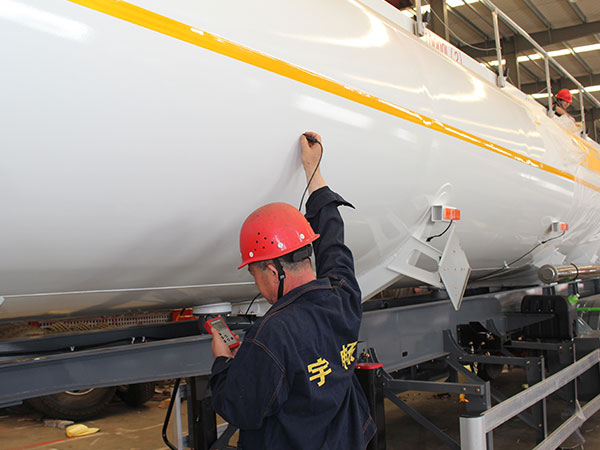
Pre-Shipment Inspection: We welcome third-party inspections (e.g., SGS, Bureau Veritas) at our facility before dispatch. Every trailer also undergoes a rigorous internal multi-point quality control check, including pressure testing and functional checks.
Packaging: To protect against corrosion during sea transit, sensitive parts like valves and running gear are carefully waxed or wrapped. The main body of the trailer is robust enough for shipment as-is.
Shipping Methods: The most common method for a fully built trailer is via Ro-Ro (Roll-on/Roll-off) vessel or as bulk cargo. This is more efficient than shipping via a standard Container Chassis. We handle all export documentation and can provide quotes based on various Incoterms, such as:
- FOB (Free On Board): We deliver the trailer to the designated port of loading.
- CIF (Cost, Insurance, and Freight): We arrange and pay for shipping and insurance to your destination port.
Why Partner with Us as Your Manufacturer?
We specialize in the engineering and production of high-performance chemical tank trailers for the global market. Our commitment to quality, safety, and customer satisfaction sets us apart. By partnering with us, you gain access to:
- Engineering Expertise: Our technical team works with you to design a trailer that precisely matches your chemical transport requirements and regulatory environment.
- Strict Quality Control: From raw material inspection to final pressure testing, we enforce stringent QC protocols at every stage of production, all under our ISO 9001 certified system.
- Global Component Sourcing: We utilize trusted, world-class components for critical systems to ensure maximum reliability and ease of maintenance in your home market.
- Comprehensive Support: We provide a robust warranty, lifetime technical support, and a reliable supply of spare parts to keep your fleet running.
Contact our engineering team to discuss your specific chemical transport needs and receive a detailed quotation.
Frequently Asked Questions (FAQ)
What is the minimum order quantity (MOQ)?
The minimum order quantity for our custom-built chemical tank trailers is one (1) unit. We specialize in tailoring each trailer to the unique needs of our clients.
What is the typical production lead time?
Production lead time generally ranges from 45 to 90 days, depending on the complexity of the design, material availability, and the current production schedule. We will provide a more precise timeline with your formal quotation.
What are your payment terms?
Our standard payment terms are 30% T/T (Telegraphic Transfer) deposit to begin production, with the 70% balance due upon completion and before shipment. For larger orders, a Letter of Credit (L/C) may be negotiable.
What warranty do you offer?
We provide a comprehensive 12-month warranty from the date of shipment, covering the main structure of the tank and chassis against manufacturing defects. Key components are covered by their original manufacturer's warranty.
Do you provide after-sales service and spare parts?
Yes, we offer lifetime technical support via email and phone. We maintain a stock of common spare parts and can quickly dispatch them globally to ensure your trailer has maximum uptime.
Specialized Liquid Tanker: Insulation and Lining Trends
Explore the latest market trends for specialized liquid tanker insulation and linings. Our analysis helps procurement directors make future-proof deci...
Read More →
Choosing Your Chemical Tank Trailer Stainless Steel vs FRP
Compare stainless steel vs. FRP chemical tank trailer options. This guide covers performance, cost, and maintenance to help you choose the right tanke...
Read More →