





Stainless Steel vs Aluminum for a Liquid Tank Trailer
1. Executive Summary and Quick Comparison Table
Choosing the tank material is the most consequential specification decision for any liquid tank trailer. It sets payload, cargo compatibility, service life and total cost of ownership.
In short, aluminum suits fuels and light petroleum products where low tare weight means more payload per trip. Stainless steel suits chemicals, food-grade liquids and heated or high-purity cargo, where corrosion resistance matters more than weight.
| Criteria | Stainless Steel Tank | Aluminum Tank |
|---|---|---|
| Key specs | Typically 304 or 316L; density about 7.9 g/cm³ | Typically 5083 or 5454 alloy; density about 2.7 g/cm³ |
| Working mechanism | Chromium oxide passive layer resists corrosion | Natural aluminum oxide film protects the surface |
| Weight and payload | Heavier shell, lower payload | Much lighter shell, higher payload |
| Cost level | Higher material cost | Generally lower upfront cost and lower fuel cost per tonne-km |
| Maintenance | Low; periodic passivation and cleaning | Low; avoid incompatible cleaners and cargoes |
| Ideal application | Chemicals, acids, edible oils, milk, juice, heated cargo | Diesel, gasoline, kerosene, light oils, some water-based products |
2. Understanding Stainless Steel Tank Trailers
Overview
A stainless steel tank is rolled and welded from austenitic grades such as 304 or 316L. Its chromium content forms a self-healing passive layer, so the shell resists a wide range of corrosive and hygiene-sensitive products.
Pros
- Excellent resistance to many acids, alkalis and cleaning agents, especially in 316L.
- Suitable for food-grade and pharmaceutical-grade liquids with smooth, easily sanitized interiors.
- Handles heated cargo and higher operating temperatures well.
- Strong, dent-resistant shell with a long service life.
Cons
- Higher tare weight reduces legal payload.
- Higher raw material and fabrication cost.
- Chloride-rich cargoes can still cause pitting if the wrong grade is chosen.
3. Understanding Aluminum Tank Trailers
Overview
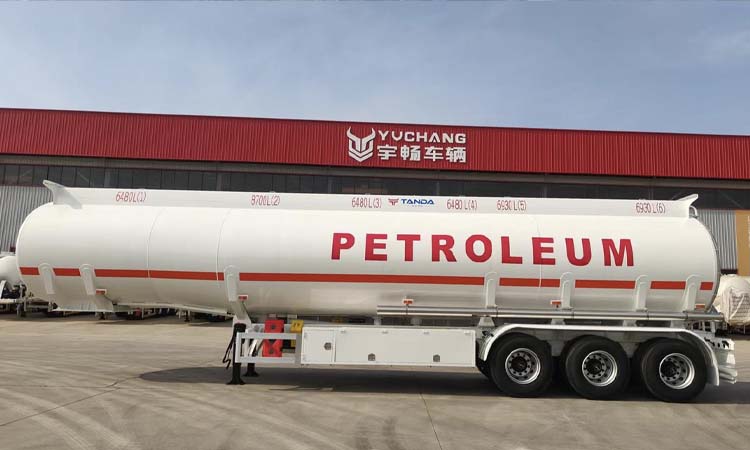
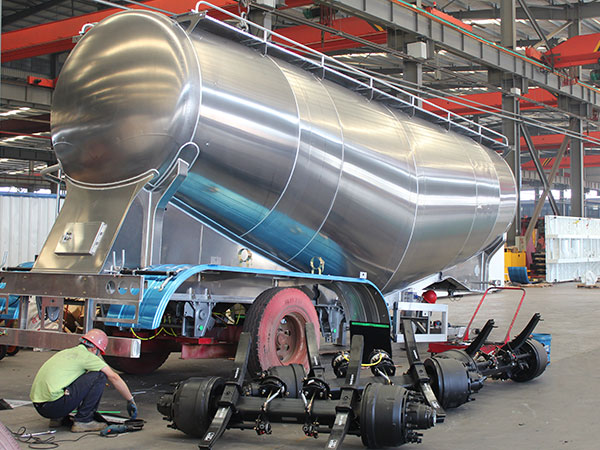
Aluminum tanks use marine-grade alloys that offer good strength and weldability at roughly one third of steel's density. They are the standard choice for road fuel distribution across many markets. See our aluminum fuel tanker range for typical configurations.
Pros
- Significantly lower tare weight, so more product per trip.
- Good corrosion resistance against hydrocarbons.
- Better thermal conductivity, which helps dissipate heat from sun exposure.
- Lower purchase price in most size classes.
Cons
- Not suitable for strong alkalis, many acids or some solvents.
- Softer surface is more vulnerable to dents and abrasion.
- Welding and repair require qualified aluminum welders.
4. Core Differences: Head-to-Head Analysis
a) Performance and Output Quality
Aluminum gives an operational advantage through payload. A lighter shell can allow several hundred kilograms or more of additional cargo, depending on tank volume and axle configuration.
Stainless steel delivers superior product purity and resistance to aggressive media. For cargo where contamination or tank attack is a risk, performance is measured in safety rather than weight.
b) Versatility and Industry Suitability
Stainless steel covers the broadest range of liquids: chemicals, edible oils, dairy, beverages and many industrial fluids. Aluminum is more specialized and is best matched to refined fuels and similar products. For mixed-cargo operators, our Specialized Liquid Tanker options can be configured around compartments, linings and fittings.
c) Cost Analysis
Upfront, stainless steel is usually the more expensive option. Over the operating life, the picture depends on duty cycle.
- High-mileage fuel haulage: aluminum's payload and lower fuel burn often recover the price difference quickly.
- Chemical or food service: stainless steel avoids the cost of cargo restrictions, early corrosion and contamination claims.
d) Lifespan and Daily Maintenance
Both materials need little routine maintenance when used with compatible cargoes. Stainless steel benefits from periodic passivation and chloride-free cleaning. Aluminum requires pH-appropriate washing and regular inspection for dents and weld cracks. Either way, scheduled replacement of valves, seals and gaskets from reliable tank trailer parts supply keeps downtime low.

5. Decision Matrix: How to Choose
Choose stainless steel if...
- You carry chemicals, acids, edible oils, milk or other hygiene-sensitive liquids.
- Cargo is heated or requires insulation and steam or thermal-oil heating.
- You need a long service life across changing cargo types.
- Regulations or customer audits demand food-grade or high-purity surfaces.
Choose aluminum if...
- You haul diesel, gasoline, kerosene or similar refined products.
- Payload per trip and fuel economy drive your margins.
- Your cargo list is stable and fully compatible with the alloy.
- Capital budget is limited and the route is long-haul.
6. Customization Options (OEM/ODM)
Both versions can be engineered to market and cargo requirements. Typical options include:
- Capacity and compartments: single or multiple compartments, with custom volumes and axle layouts.
- Tank design: cross-section shape, baffles and surge plates, wall thickness, insulation and heating coils.
- Fittings: top or bottom loading, vapor recovery, API couplings, pumps, flow meters and overfill protection.
- Branding: paint colors, logos and reflective markings.
- Local standards: lighting voltage (12V or 24V), braking systems, coupling height and regional dangerous-goods requirements.
Operators with several body types in one fleet can also review our complete range of tank trailers for chassis commonality.
7. Packaging and Shipping Guidance
Large tankers are normally shipped by Ro-Ro, flat rack or breakbulk, while smaller units and components go in containers. Export protection typically includes:
- Rust-proof wrapping and protective film on exposed metal and fittings.
- Sealed manways, valves and pipe ends to prevent debris and moisture ingress.
- Wheel chocks, lashing points and anti-vibration padding for fixed components.
- Fumigation-free wooden cases or crates for loose parts, documented for customs clearance.
Photographs and a packing list are normally provided before dispatch, so receiving teams can verify condition on arrival.
8. Why Source From Us as Your Manufacturing Partner
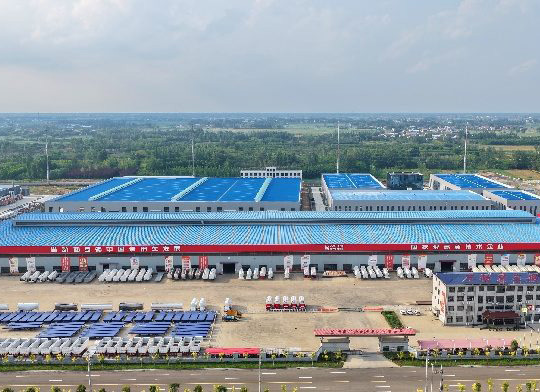
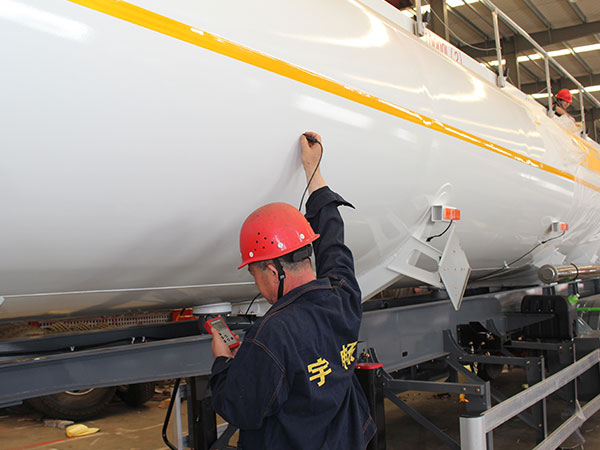
As a specialist trailer manufacturer, we build tank, flatbed, tipper and bulk-cargo trailers on multiple production lines. This lets us support both material options with consistent weld quality, pressure and leak testing, and documented inspection before delivery.
- Engineering support: material selection, tank sizing, axle and weight-law checks for the destination market.
- Quality control: managed processes and certification documentation available on request.
- After-sales support: technical guidance, drawings and spare parts for export customers.
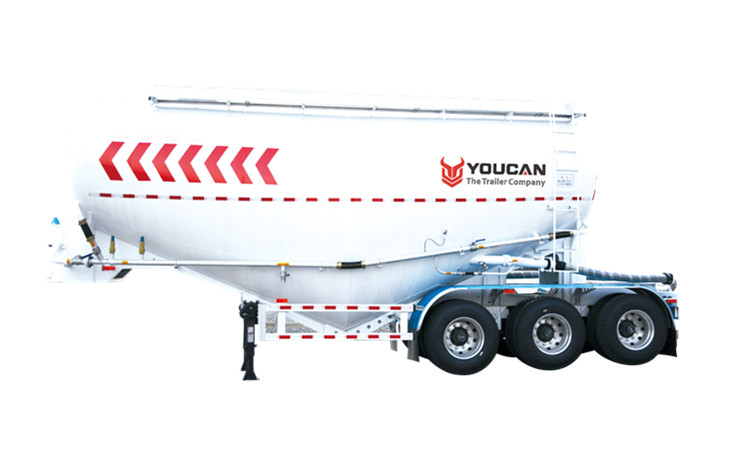
Buyers expanding beyond liquids can also review our aluminum bulk cement models for dry-bulk logistics.
9. Frequently Asked Questions
Which is better for fuel transport, stainless steel or aluminum?
Aluminum is usually preferred for fuel. It offers lower tare weight, good hydrocarbon compatibility and a lower purchase price, so payload per trip improves.
Which material is better for chemicals and food liquids?
Stainless steel is the safer choice. Grades such as 304 and 316L resist corrosion and meet hygiene requirements that aluminum cannot meet for many products.
Which option offers a faster return on investment?
For fuel distribution, aluminum often pays back faster through higher payload and lower fuel use. For chemical or food cargo, stainless steel protects revenue by avoiding contamination and corrosion damage.
Can I switch cargo types later?
Stainless steel offers more flexibility, though each new product should be checked for grade compatibility and cleaned properly. An aluminum tank should only carry products confirmed as compatible with its alloy.
How much weight does an aluminum tank save?
The saving depends on tank volume, wall thickness and design, but it is typically significant. Your supplier should provide estimated tare weights for both materials so you can compare legal payloads.
To compare tare weight and payload for your cargo and route, send us your product list and destination requirements for selection advice or a tailored quote.

Petrol Tanker Trailer: An Application & Selection Guide
Explore the industrial applications of a petrol tanker trailer. This guide covers selection criteria, compatible materials, and customization for glob...
Read More →
Specialized Liquid Tanker: Insulation and Lining Trends
Explore the latest market trends for specialized liquid tanker insulation and linings. Our analysis helps procurement directors make future-proof deci...
Read More →
