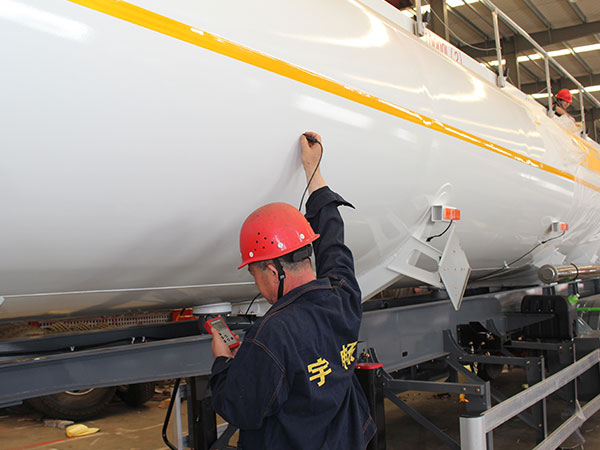
Choosing the right chemical tank trailer means comparing stainless steel vs FRP
Selecting the appropriate material for a chemical tank trailer is one of the most critical decisions for any logistics or chemical transport operation. The choice between stainless steel and Fiber-Reinforced Polymer (FRP) directly impacts safety, operational efficiency, maintenance costs, and the types of products you can transport. A well-chosen chemical tank trailer ensures product integrity and regulatory compliance, while the wrong choice can lead to costly downtime and safety hazards. This guide provides a detailed, head-to-head comparison to help procurement managers and engineers make an informed investment.
Executive Summary and Quick Comparison Table
For busy buyers, the primary distinction is this: Stainless steel offers versatility, superior structural durability, and high-temperature resistance, making it an all-around workhorse for a wide variety of chemicals. FRP, conversely, is a lightweight specialist, providing unparalleled corrosion resistance for a specific range of highly aggressive chemicals, particularly acids, while offering significant payload advantages.
| Feature | Stainless Steel Tank Trailer | FRP Tank Trailer |
|---|---|---|
| Key Specs | Made from alloys like 304, 316L, or 2205. High tensile strength and impact resistance. | Composite material of polymer resin (e.g., vinyl ester) and reinforcing fibers (e.g., glass). |
| Working Mechanism | Inert metal vessel relies on a passive chromium oxide layer for corrosion resistance. | Corrosion-proof resin barrier directly resists chemical attack. The structure is built layer by layer. |
| Corrosion Resistance | Excellent for a broad range of chemicals, solvents, and food-grade products. Vulnerable to certain chlorides and strong acids. | Superior for specific highly corrosive substances like hydrochloric acid, sulfuric acid, and sodium hypochlorite. |
| Cost Level | Higher initial investment. High resale value. | Lower initial investment. Lower resale value. |
| Maintenance | Easily repaired through standard welding procedures. Scratches can be polished out. | Repairs are more specialized, requiring composite patching and curing. Susceptible to abrasion and impact damage. |
| Ideal Application | Multi-purpose fleets, food-grade transport, flammable liquids, general chemicals, and solvents. | Dedicated transport of specific, highly corrosive acids and chemicals where weight savings are critical. |
Understanding Stainless Steel Tank Trailers: Overview, Pros & Cons
A stainless steel chemical tanker is a robust and highly versatile solution for liquid bulk transport. Constructed from specific steel alloys containing chromium (typically 10.5% or more), these trailers form a passive, self-repairing oxide layer on the surface that protects the steel from corrosion. The most common grades for chemical transport are 316L (for its enhanced resistance to chlorides) and 304.
Pros of Stainless Steel Tankers
- High Durability and Impact Resistance: Stainless steel possesses excellent tensile strength, making it highly resistant to punctures, impacts, and road stress.
- Broad Chemical Compatibility: It can safely transport a vast range of products, from industrial chemicals and solvents to food-grade liquids and petroleum products, offering great fleet flexibility.
- Temperature Tolerance: Stainless steel performs well across a wide temperature range, making it suitable for products requiring heating or those loaded at high temperatures.
- Ease of Repair and Maintenance: Dents, cracks, and damage can be repaired using standard welding techniques available in most regions, minimizing downtime.
- High Resale Value: Due to their longevity and versatility, stainless steel tankers retain a significantly higher value in the secondary market.
Cons of Stainless Steel Tankers
- Heavier Weight: Steel is denser than composites, resulting in a heavier trailer. This reduces the maximum legal payload, potentially impacting revenue per trip.
- Higher Initial Cost: The raw material and fabrication costs for stainless steel are generally higher than for FRP.
- Vulnerability to Specific Chemicals: While broadly resistant, stainless steel can be susceptible to pitting and corrosion from certain strong acids (like hydrochloric acid) and high-concentration chloride solutions.
Understanding FRP Tank Trailers: Overview, Pros & Cons
Fiber-Reinforced Polymer (FRP) tank trailers are composite structures made by combining a polymer resin (like vinyl ester or polyester) with reinforcing fibers (usually glass fibers). The resin provides the chemical resistance and acts as a binder for the fibers, which in turn provide the structural strength. The result is a lightweight yet strong material that is chemically inert to specific corrosive substances.
Pros of FRP Tankers
- Exceptional Corrosion Resistance: For their intended chemical service (e.g., bleach, ferric chloride, sulfuric acid), FRP trailers offer superior corrosion resistance compared to most metals, leading to a long service life in dedicated applications.
- Lightweight Construction: FRP is significantly lighter than stainless steel. This weight saving can be converted into a higher payload capacity, maximizing profitability for weight-sensitive cargo.
- Lower Initial Investment: Generally, the upfront cost to manufacture an FRP tanker is lower than for a comparable stainless steel unit.
- Good Thermal Insulation: The composite material has natural insulating properties, which can be beneficial for temperature-sensitive products.
Cons of FRP Tankers
- Limited Chemical Versatility: An FRP tanker is typically specified for a narrow range of chemicals. It is not suitable for many solvents, which can attack and degrade the polymer resin.
- Lower Impact and Abrasion Resistance: The composite shell is more susceptible to damage from impacts, punctures, and abrasion than steel.
- Specialized Repair Procedures: Repairing damage to an FRP tank requires specialized knowledge of composite lamination and curing, and repairs may not be as readily available.
- Lower Temperature Limits: FRP has a much lower maximum operating temperature compared to steel, limiting its use for hot products.
Core Differences: Stainless Steel vs. FRP (Head-to-Head Analysis)
Performance and Product Integrity
Stainless steel offers robust, reliable performance across a wide range of operating conditions. Its smooth, non-porous surface is easy to clean, preventing cross-contamination between loads—a critical factor for multi-purpose fleets. FRP's performance is exceptional but specialized. It provides ultimate peace of mind when hauling highly corrosive loads it is designed for, as there is virtually no risk of tank degradation. However, its performance drops significantly if used outside its specified chemical and temperature range.
Versatility and Industry Suitability
This is a key differentiator. A stainless steel Specialized Liquid Tanker is a generalist. A single unit can be used to transport chemicals one day, food-grade oils the next, and solvents the day after (with proper cleaning). This makes it ideal for commercial carriers and logistics companies with diverse client needs. FRP is a specialist, best suited for manufacturers or dedicated haulers that transport the same corrosive product repeatedly. An FRP acid tanker cannot be repurposed to carry gasoline or acetone.
Cost Analysis: Upfront vs. Total Cost of Ownership (TCO)
While FRP often has a lower upfront purchase price, a TCO analysis is more telling. The lighter weight of an FRP trailer can lead to fuel savings and/or increased revenue from larger payloads over its lifespan. However, stainless steel's higher resale value, longer potential lifespan, and lower-cost, more widely available repair options can offset its higher initial cost. The operator's business model—high-volume, weight-sensitive cargo versus flexible, multi-product hauling—will determine which offers a better return on investment.
Lifespan and Daily Maintenance Requirements
With proper care, a stainless steel tank can last for decades. Maintenance involves regular inspections for leaks, passivation to restore the protective layer, and polishing out any surface damage. FRP tanks also have a long service life in their intended application but require more careful handling to avoid impacts and abrasion. Inspections should focus on finding any crazing, blistering, or delamination of the composite structure. All Tank Trailer Parts, like valves and gaskets, require regular checks on both types.
Decision Matrix: How to Choose Between Stainless Steel and FRP
Use these guidelines to simplify your selection process:
Choose a Stainless Steel Chemical Tank Trailer if...
- Your fleet requires versatility to transport a wide variety of chemicals, solvents, and food-grade products.
- You need to transport products at elevated temperatures.
- Durability, impact resistance, and ease of repair are top priorities.
- Long-term asset value and high resale value are important factors in your financial model.
- You operate in rugged environments where physical damage is more likely.
Choose an FRP Chemical Tank Trailer if...
- You are hauling a dedicated, highly corrosive product like hydrochloric acid, sulfuric acid, or sodium hypochlorite.
- Maximizing payload is your primary operational goal, and the product's density makes weight savings critical.
- The initial purchase price is a major deciding factor.
- Your transport routes are on well-maintained roads, minimizing the risk of impact damage.
Customization Options (OEM/ODM Capabilities)
Regardless of material choice, modern tank trailers can be extensively customized to meet specific operational and regional requirements. As an OEM/ODM manufacturer, we offer a range of options:
- Capacity and Compartments: Single or multi-compartment designs to transport different products simultaneously.
- Lining and Coatings: Specialized internal linings (e.g., rubber, PTFE) can be added to steel tanks for enhanced resistance to specific chemicals.
- Insulation and Heating: Insulation jackets and steam/glycol heating systems for temperature-sensitive cargo.
- Piping and Valve Systems: Custom configurations for loading/unloading, including specific valve materials (e.g., Hastelloy) and pump installations.
- Running Gear: Axle configurations, suspension types (air or mechanical), and braking systems tailored to regional regulations and road conditions.
Packaging and Shipping Guidance
Ensuring your tank trailer arrives in perfect condition is paramount. For international sea transport, trailers are typically shipped via Roll-on/Roll-off (Ro-Ro) vessels or secured onto flat rack containers. We ensure all sensitive components like valves, manlids, and piping are protected with heavy-duty wrapping. The entire unit is thoroughly inspected and secured to prevent any movement or damage during transit, complying with all international shipping standards for oversized cargo.
Why Source from Us as Your Manufacturing Partner?
Choosing the right manufacturing partner is as important as choosing the right material. With years of experience in producing specialized transport equipment, we offer more than just a product. Our facilities are ISO 9001 certified, and our designs comply with international standards such as ADR and DOT where applicable. Our engineers have deep expertise in material science and can provide a free, no-obligation consultation to analyze your specific chemical transport needs. We operate multiple production lines for both stainless steel and composite tankers, ensuring quality control and timely delivery for global clients.
Frequently Asked Questions (FAQ)
Which tank trailer type has a better resale value?
Stainless steel tank trailers consistently have a much higher resale value. Their durability, long lifespan, and ability to be repurposed for many different types of cargo make them a more valuable long-term asset in the used equipment market.
Can an FRP tank be used to carry flammable solvents like gasoline or ethanol?
Generally, no. Most standard resins used in FRP tanks are not compatible with hydrocarbon solvents, which can cause the resin to swell, soften, or dissolve, leading to catastrophic failure. A stainless steel tanker is the correct choice for such products.
What is the typical weight difference between a stainless steel and an FRP trailer?
An FRP tank trailer can be 20-30% lighter than a stainless steel trailer of the same capacity. For a standard 7,000-gallon (approx. 26,500-liter) trailer, this can translate into a payload increase of several thousand pounds, which is a significant economic advantage.
Which material is safer in a rollover accident?
Stainless steel is generally considered safer in a rollover or impact scenario due to its superior ductility and puncture resistance. It is more likely to dent or deform under stress, whereas a composite material like FRP is more brittle and can crack or shatter upon severe impact.
For detailed specifications or to discuss which material is best suited for your application, please contact our engineering team to request a quote.
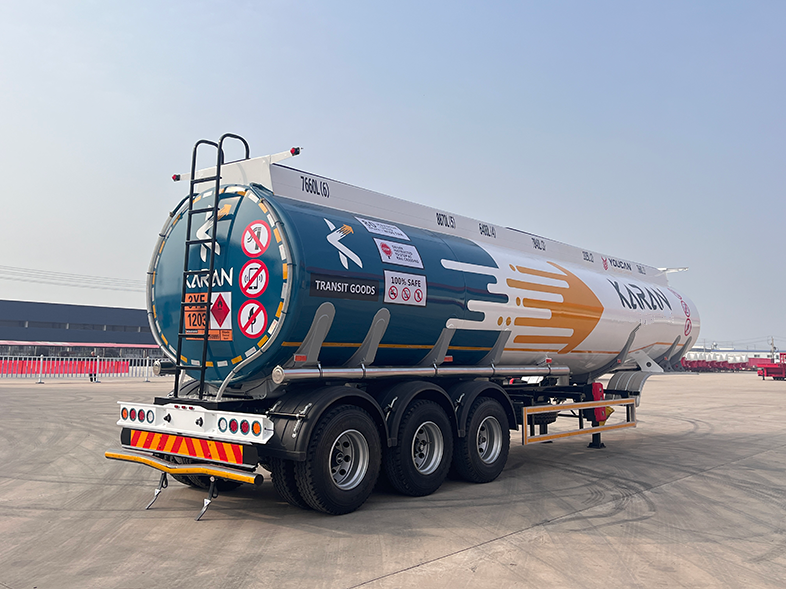
Specify a Chemical Tank Trailer for Corrosive Cargo
A complete buying guide to specifying the right chemical tank trailer for corrosive and hazardous materials. Learn about materials, specs, and TCO. Re...
Read More →