




Choosing an Oil Tanker Trailer in Carbon Steel or Aluminum
Tank material is one of the biggest decisions when buying an oil tanker trailer. It affects payload, purchase price, service life, and the products you can haul. This guide compares carbon steel and aluminum tanks objectively, so procurement teams can match the material to their routes, cargo, and budget.

1. Executive Summary and Quick Comparison Table
Aluminum tanks are roughly one-third the density of steel. They suit light fuels such as gasoline and diesel on routes where payload is limited by weight. Carbon steel tanks cost less upfront, tolerate heat and rough handling better, and are easier to repair. They are the usual choice for heavier or heated cargo and for budget-driven fleets.
| Item | Carbon Steel Tank | Aluminum Alloy Tank |
|---|---|---|
| Key specs | Density about 7.85 g/cm³; high tensile strength; thinner walls possible | Density about 2.7 g/cm³; marine-grade alloys such as 5083 or 5454; thicker walls |
| Construction mechanism | Rolled steel plate, welded shell, internal baffles, protective coating | Rolled alloy plate, MIG/TIG welded shell, baffles, natural oxide layer |
| Speed / precision | Faster, more forgiving fabrication | Needs tighter welding control and skilled operators |
| Cost level | Lower purchase price | Typically higher purchase price |
| Maintenance | Coating inspection and rust control | Low corrosion upkeep; careful dent and crack inspection |
| Ideal application | Heavy fuel oil, heated cargo, rough roads, cost-focused fleets | Gasoline, diesel, kerosene, long-haul routes where payload matters |
2. Understanding the Carbon Steel Tanker: Overview, Pros and Cons
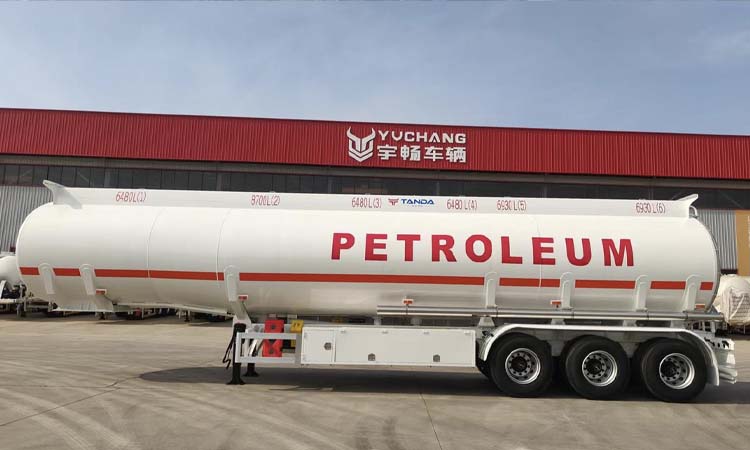
A carbon steel tanker uses rolled steel plate formed into an elliptical or circular shell and welded to the frame. Internal baffles control surge, and coatings protect the shell inside and out.
Advantages
- Lower upfront cost for the same capacity.
- High strength and resistance to impact and road debris.
- Heat tolerance, which suits heated cargo such as heavy fuel oil or bitumen with insulation.
- Simple repair, since welders in most regions can fix steel.
Limitations
- Higher tare weight, which cuts net payload under axle limits.
- Needs protective coatings and regular rust checks, especially in humid or coastal regions.
- Heavier loads raise fuel use per trip.
3. Understanding the Aluminum Tanker: Overview, Pros and Cons
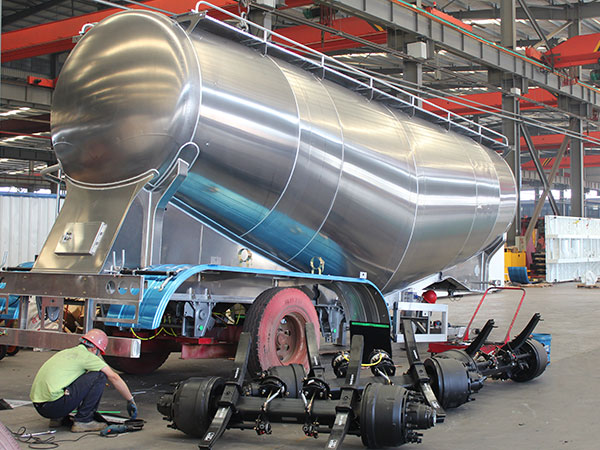
An aluminum tanker uses alloy plate, commonly 5000-series, welded into a lightweight shell. It resists corrosion through a stable oxide surface, and our aluminum fuel tankers follow this design approach.
Advantages
- Weight saving of often 2 to 3 tonnes on a large semi-trailer, depending on volume and design.
- Corrosion resistance for light petroleum products.
- Better payload per trip and lower fuel use per tonne-kilometer.
- Strong resale value in many markets.
Limitations
- Higher purchase price because of material and welding requirements.
- Strength drops at elevated temperatures, so it is unsuitable for many heated cargoes.
- Dents and cracks need specialist welding repair.
- Not recommended for strongly alkaline or certain aggressive chemicals.
4. Core Differences: Carbon Steel vs Aluminum (Head-to-Head Analysis)
a) Performance and Output Quality
Steel gives a robust shell with strong fatigue resistance on poor roads. Aluminum gives a lighter vehicle, so the same prime mover can carry more product within legal gross weight. Where road limits are strict, this difference often decides the specification.
b) Versatility and Industry Suitability
Aluminum works well for gasoline, diesel, and kerosene distribution. Steel covers a wider range, including heated and heavier products. For mixed cargo programs, review our wider range of tank trailers or a specialized liquid tanker for non-fuel liquids.
c) Cost Analysis
Aluminum often carries a premium of 20% to 40% at purchase, though this varies with alloy prices and specification. The extra cost can be recovered through added payload, lower fuel use, and less corrosion maintenance. Steel suits operators with short routes, limited capital, or no weight constraint.
d) Lifespan and Daily Maintenance
A well-maintained steel tank can last many years, but coating failures need prompt attention. Aluminum tanks usually need less surface care, though welded seams, fittings, and valves still need regular inspection. For both, keep stock of tank trailer parts such as manhole covers, vapor recovery fittings, and bottom valves.
5. Decision Matrix: How to Choose Between Carbon Steel and Aluminum
Choose carbon steel if...
- Your capital budget is tight and payload is not the limiting factor.
- You haul heated or heavy petroleum products.
- Roads are rough and impact resistance matters.
- Local workshops can repair steel but not aluminum.
Choose aluminum if...
- You distribute gasoline, diesel, or kerosene over long distances.
- Axle load or gross weight limits restrict your cargo volume.
- You want lower corrosion maintenance and higher resale value.
- Fuel savings and payload gains justify the higher price.
6. Customization Options (OEM/ODM Capabilities)
Both versions can be configured to the destination market. Common options include:
- Capacity and compartments: custom volumes and multi-compartment layouts.
- Axle and suspension: two-, three-, or four-axle setups with mechanical or air suspension.
- Discharge systems: bottom loading, top loading, pumps, meters, and vapor recovery.
- Safety fittings: rollover protection, emergency shutoff valves, and fire extinguisher boxes.
- Branding: customer colors, logos, and reflective markings.
- Electrical standards: local voltage, plug types, and lighting requirements.
If you operate other equipment, we can align specifications across Interlink trailers and other platforms in your fleet.
7. Packaging and Shipping Guidance
Tankers are usually shipped by RoRo, flat rack, or open-top container, depending on size. Key protection steps include:
- Sealed openings and secured valves, with fittings wrapped against damage.
- Rust-proof wrapping or protective coating on bare steel parts.
- Fumigation-free wooden cases or crates for loose parts such as hoses, landing gear, and electrical items.
- Anti-vibration padding and lashing points designed to match shipping loads.
Aluminum tanks need padding at contact points to avoid scratches, and steel tanks need moisture protection during ocean transit. Documentation should include packing lists, tank test records, and manuals.
8. Why Source from Us as Your Manufacturing Partner?
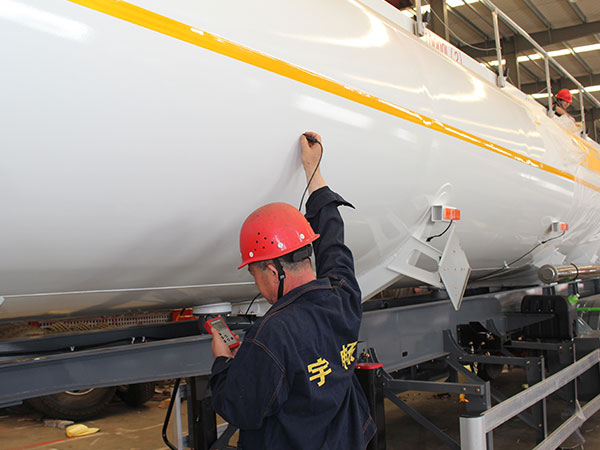
We build semi-trailers across several product lines, so tank design, chassis, and components can be coordinated by one team. Production covers both steel and aluminum tanks, with welding procedures, pressure and leak testing, and final inspection records for each unit. Quality systems and compliance documents can be arranged to match the requirements of your destination market, and our engineers support overseas customers with drawings, parts guidance, and after-sales assistance.
Next step: Send us your cargo type, tank volume, axle limits, and destination country, and our engineers will provide a free selection consultation and a custom quote.
9. Frequently Asked Questions (FAQ)
Which material is better for an oil tanker trailer?
Neither is better in every case. Aluminum is better for light fuels where payload and fuel economy matter. Carbon steel is better for lower purchase price, heated cargo, and rugged operating conditions.
How much lighter is an aluminum tank?
Aluminum is about one-third the density of steel. In practice, a full tanker is often 2 to 3 tonnes lighter, depending on volume, wall thickness, and design.
Which option gives a faster return on investment?
Aluminum can pay back faster on high-mileage, weight-limited routes through extra payload. Steel usually gives a faster return when annual mileage is low or capital is limited.
Can aluminum tanks carry heated products?
Generally not for high-temperature cargo, because strength drops as temperature rises. Heated products such as heavy fuel oil or bitumen are normally carried in insulated steel tanks.
Is aluminum harder to repair?
Yes, in many regions. Aluminum needs skilled welders and proper equipment, while steel can be repaired more widely. Check local repair capability before choosing.
If you are comparing specifications for a new fuel transport fleet, contact our engineers with your cargo and route details and we will recommend a suitable configuration and quotation.

Secure Oversize Freight on a 40ft Flatbed Trailer
Learn how to properly select and secure loads on a 40ft flatbed trailer. This guide covers types, applications, and buying criteria for industrial tra...
Read More →
How to Choose a Petrol Tanker Trailer for Your Fleet?
A comprehensive guide for B2B buyers on choosing the right petrol tanker trailer. Learn about capacity, materials, safety, and TCO. Request a quote to...
Read More →