





Secure Oversize Freight on a 40ft Flatbed Trailer
Background
In the world of global logistics and heavy industry, efficiency and versatility are paramount. The evolution of supply chains has driven a persistent need for transport solutions that can adapt to a vast array of cargo types, from standard pallets to cumbersome, indivisible machinery. This demand highlighted the limitations of enclosed trailers, paving the way for more flexible designs. The 40ft flatbed trailer emerged as a cornerstone of modern freight, offering an open-deck platform that provides unparalleled access and capability for hauling oversized, heavy, and irregularly shaped goods that are fundamental to construction, manufacturing, and energy sectors worldwide.
What is a 40ft Flatbed Trailer?
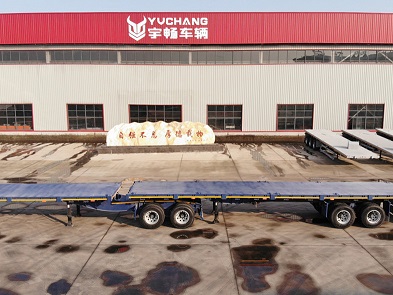
A 40ft flatbed trailer is a type of semi-trailer characterized by a completely flat, open-deck body without a roof or sides. Measuring approximately 12.2 meters in length, its primary technical identity lies in its structural simplicity and robustness. This design allows for cargo to be loaded and unloaded from the top, sides, or rear using cranes, forklifts, or other lifting equipment.
Its fundamental role is to provide a versatile and accessible platform for transporting goods that cannot be accommodated by standard dry vans or container chassis. This includes long items like steel beams and pipes, wide loads such as industrial machinery, and heavy materials like precast concrete sections, making it an indispensable asset in commercial and industrial workflows.

Types of 40ft Flatbed Trailers
While the basic concept remains consistent, 40ft flatbeds are engineered in several configurations to meet specific weight, terrain, and regulatory requirements. Understanding these differences is key to selecting the right equipment for your operational needs.
- Tandem Axle: The most common configuration, featuring two axles at the rear. It offers a good balance between load capacity and maneuverability, suitable for a wide range of general freight applications.
- Tri-Axle: Equipped with three axles, this type provides a significant increase in legal payload capacity by distributing the load over a larger area. It is the preferred choice for transporting heavier cargo like dense building materials or heavy equipment.
- Spread Axle: This design features two axles spaced further apart (typically 10 feet) than a standard tandem axle. This configuration allows for higher weight limits per axle in certain regions, enhancing overall payload capacity while meeting specific bridge law formulas.
- Extendable (Telescopic): For specialized applications involving extra-long cargo, extendable flatbeds can be stretched beyond their standard 40-foot length, offering greater flexibility for transporting items like wind turbine blades or long structural beams.
For operations requiring even greater capacity or modularity, exploring options like our Interlink Flatbed Trailer systems can provide enhanced logistical solutions.
Industry Applications of 40ft Flatbed Trailer
The adaptability of the 40-foot flatbed makes it a vital tool across numerous sectors. Its ability to handle diverse loads ensures its place in complex supply chains.
- Construction: Transporting structural steel, rebar, scaffolding, precast concrete panels, and large-diameter pipes to job sites.
- Manufacturing: Moving heavy machinery, industrial components, and raw materials like metal sheets and coils between facilities.
- Oil & Gas: Hauling drilling equipment, long sections of pipeline, and large-scale infrastructure components for energy projects.
- Agriculture: Transporting farming equipment, hay bales, and other bulky agricultural products.
- Lumber & Forestry: Moving processed lumber, logs, and other building materials from mills to distribution centers.
Why Does This Trailer Matter? (Value & Business Benefits)
Investing in the right flatbed trailer translates directly into tangible business advantages. The value extends far beyond simply moving goods from one point to another.
- Unmatched Versatility: A single flatbed can handle a wider variety of loads than an enclosed trailer, reducing the need for a diverse and expensive fleet. This flexibility maximizes asset utilization.
- Loading and Unloading Efficiency: The open-deck design allows for quick loading and unloading from any angle, significantly reducing terminal turnaround times and labor costs associated with manual handling.
- Capacity for Oversize Cargo Transport: Flatbeds are the standard for loads that exceed the dimensions of standard trailers. This capability opens up revenue streams from specialized freight that competitors with enclosed fleets cannot service.
- Durability and Long Service Life: Built with high-strength steel frames and robust decking materials, these trailers are designed to withstand harsh operating conditions, offering a strong return on investment through years of reliable service. While flatbeds are ideal for solid goods, specialized loads may require different solutions, such as Specialized Liquid Tanker units for fluids.

Buying Guide: Selection & Buying Criteria
Procuring a 40ft flatbed trailer requires careful consideration of technical specifications to ensure it aligns with your operational demands and safety standards.
- Gross Vehicle Weight Rating (GVWR): Determine the maximum payload you intend to carry. Select a trailer with a GVWR that safely exceeds your heaviest typical load. A tri-axle model is often necessary for heavier applications.
- Deck Material and Construction: Decks are typically made of high-tensile steel for maximum durability or apitong/hardwood for a combination of strength and grip. Assess the main beam construction and cross-member spacing, as this dictates the frame's rigidity and strength.
- Suspension System: Choose between mechanical spring suspension, which is robust and low-maintenance, or air-ride suspension, which provides a smoother ride to protect fragile or sensitive cargo.
- Tie-Down Points and Lashing: The quantity, type, and placement of flatbed trailer tie down points are critical for safety. Ensure the trailer has sufficient stake pockets, D-rings, and rub rails to meet diverse 40ft flatbed trailer load securement needs.
- Regulatory Compliance: Verify that the trailer meets all lighting, braking (ABS), and dimensional regulations for the regions in which you will operate.
- Manufacturer Reputation: Partner with a manufacturer known for quality materials, advanced welding techniques, and comprehensive after-sales support, including the availability of Trailer Parts.
Step-by-Step Guide on How to Secure Loads on a Flatbed
Proper load securement is not just a best practice; it is a legal and safety imperative. Following a systematic process minimizes risk and ensures cargo integrity.
- Step 1: Inspect Equipment: Before loading, thoroughly inspect the trailer deck for damage. Check all tie-down points, chains, binders, and straps for wear, cracks, or defects. Discard any compromised equipment.
- Step 2: Position Cargo Correctly: Place the load on the trailer to ensure proper weight distribution over the axles. Keep the center of gravity as low as possible and centered. Use blocking and bracing to prevent any forward, backward, or lateral movement.
- Step 3: Choose Appropriate Securements: Select the right type and number of tie-downs based on the cargo's weight, shape, and surface. Use heavy-duty chains and binders for machinery and steel, and synthetic webbing straps for more finished or fragile surfaces. The total working load limit (WLL) of all securements must be at least 50% of the cargo's weight.
- Step 4: Apply and Tension Securements: Attach tie-downs to the trailer's anchor points and the cargo. Apply tension evenly to prevent shifting. For 40 foot flatbed trailer lashing, ensure straps or chains are protected from sharp edges with corner protectors.
- Step 5: Final Inspection: After securing the load, perform a thorough walk-around to check every tie-down. Pull and push on the cargo to ensure it is completely immobile. It is critical to re-check all securements within the first 50 miles of a trip and periodically thereafter.
Why Choose Us as Your 40ft Flatbed Trailer Manufacturer?
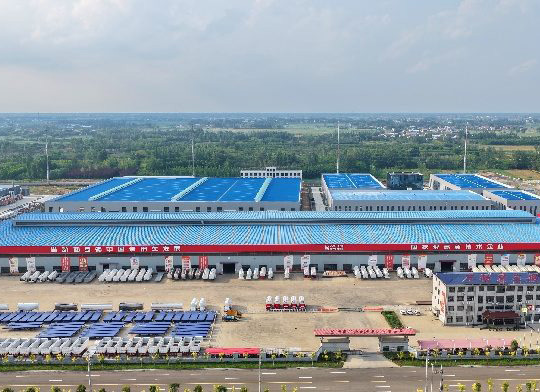
We combine advanced engineering with robust manufacturing processes to deliver trailers that excel in performance and reliability. Our commitment to quality is evident in every component, from the high-tensile steel chassis to the precision-welded frame.
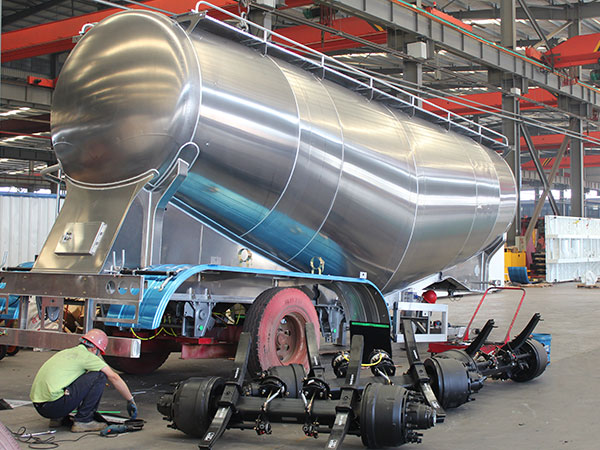
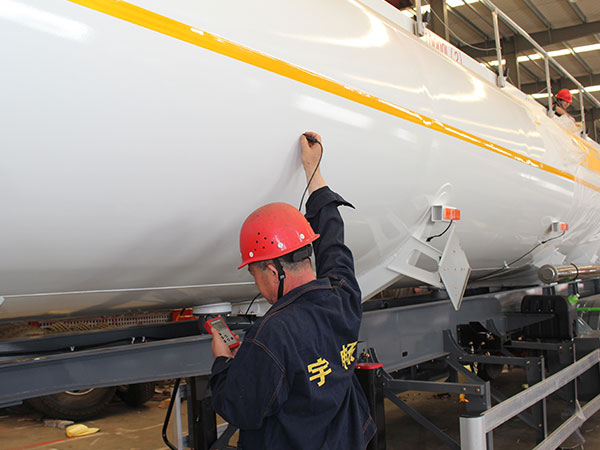
Our facilities are ISO 9001 certified, ensuring that every trailer meets stringent international quality standards. We utilize robotic welding for consistency and strength, and our multi-stage anti-corrosion treatment process guarantees a long service life, even in harsh environments. We offer extensive OEM/ODM customization, allowing you to specify axle configurations, deck materials, and the precise number and location of tie-down points to create a trailer perfectly suited to your application. Our extensive catalog of Flatbed Trailers showcases our versatile capabilities.
Frequently Asked Questions (FAQ) about 40ft Flatbed Trailers
What is the typical payload capacity of a 40ft flatbed trailer?
The payload varies based on configuration. A standard tandem-axle flatbed typically handles around 20-25 tons, while a tri-axle version can legally carry 30-40 tons or more, depending on regional regulations and trailer specifications.
What are the main advantages of air-ride suspension over spring suspension?
Air-ride suspension offers a smoother, cushioned ride, which is ideal for protecting sensitive cargo from road shocks and vibrations. It also allows for ride height adjustment for easier loading/unloading. Spring suspension is generally more rugged, less expensive, and requires less maintenance, making it suitable for severe-duty applications.
Can the number and type of tie-down points be customized?
Yes, as a manufacturer, we offer full customization of tie-down points. You can specify the number and placement of stake pockets, D-rings, and chain slots to meet your specific load securement requirements.
How do I maintain the wooden deck of a flatbed trailer?
Regularly sweep the deck to remove debris. Inspect for and replace any cracked or rotting boards promptly. Applying a quality wood sealant or treatment periodically can help protect the deck from moisture and extend its lifespan.
What is the standard deck height of a 40ft flatbed?
The standard deck height is typically between 58 to 62 inches (1.47 to 1.57 meters). For applications requiring a lower loading height, a drop-deck or Lowbed Trailers would be a more suitable option.
What are your lead times for international orders?
Lead times vary based on customization and order volume, but we pride ourselves on efficient production cycles. Standard models can often be ready for shipment within 4-6 weeks. Contact our sales team for a precise schedule based on your specific needs.
For detailed specifications or to discuss your custom trailer requirements, please request a quote from our engineering team.
A Guide to 40ft Flatbed Trailer Payloads and Applications
Explore the diverse applications and payload capacities of the 40ft flatbed trailer. Our guide covers industries, specs, and customization. Request a ...
Read More →