 WhatsApp
 sales@youcantrailer.com
 +8615203709888
How to Verify a Chinese Trailer Factory Before Ordering in 2026
How Can You Verify a Chinese Trailer Factory Before Ordering?
Quick Answer
To verify a Chinese trailer factory before ordering, check whether the supplier has a real registered company, a real manufacturing site, production equipment, engineering capability, quality control records, export experience, and transparent inspection options. Do not rely only on a website, a low quotation, or attractive trailer photos. Ask for a live video call from the factory, business license details, workshop evidence, product drawings, material and component specifications, inspection records, loading photos, and references from similar export projects. For larger orders, combine remote verification with a customer visit or third-party factory inspection before paying the final balance.
What Is Chinese Trailer Factory Verification?
Chinese trailer factory verification is the process of confirming that a semi trailer supplier is a real manufacturer with the legal identity, production site, technical ability, quality control process, and export experience needed to build the trailer you plan to buy. It is more than checking whether a company can send a quotation. A buyer should verify whether the supplier can actually design, manufacture, inspect, and ship the trailer according to the agreed specification.
This matters because the words "factory," "manufacturer," and "supplier" are often used loosely in international trade. Some companies own production facilities. Some are trading companies working with several factories. Some are small workshops that can build simple trailers but cannot manage customized export orders. Others may have good sales communication but limited control over welding, painting, assembly, or inspection.
A practical verification process gives the buyer evidence before money is committed. It helps confirm the address, production scope, engineering documents, material choices, axle and suspension configuration, paint process, inspection workflow, export documents, and after-sales support. For importers, fleet owners, construction companies, cement companies, and logistics operators, this evidence is often the difference between a controlled purchase and an expensive mistake.
Why Is Factory Verification Important Before Paying a Deposit?
A semi trailer order usually starts with remote communication. The buyer may be in Saudi Arabia, the UAE, Africa, Central Asia, South America, or Southeast Asia, while the trailer is manufactured in China. Because the buyer cannot easily walk into the workshop every week, the early verification work must replace what local buyers would normally see with their own eyes.
The first risk is supplier identity. A company may use factory photos that do not belong to it, display products it does not manufacture, or give a registered address that is different from the production site. The second risk is technical capability. A supplier may quote a flatbed trailer, lowbed trailer, cement tank trailer, or tank trailer without fully understanding the cargo, road conditions, axle load rules, or import requirements of the destination market.
The third risk is quality evidence. Two trailers can look similar in a finished photo but be very different in steel thickness, beam structure, weld quality, surface preparation, axle brand, brake layout, tire rating, wiring protection, and pre-shipment inspection. If the buyer verifies only the price, the missing details may appear later as cracks, rust, brake problems, customs delays, or warranty disputes.
Good verification also protects the supplier. When the buyer gives clear requirements and asks for real evidence, the factory can confirm the design before production. This reduces misunderstandings, late changes, and arguments about what was included in the original price.
How Does YOUCAN Help Buyers Verify Trailer Factory Capability?
At YOUCAN Trailer, factory verification is treated as part of professional export communication. A serious buyer should be able to see who they are working with, what will be produced, how production is controlled, and what evidence can be provided before shipment. The following process is the way we recommend buyers verify a Chinese trailer factory before confirming an order.
1. Start with legal identity and company consistency
Begin with the supplier's official company name, business license, registered address, export contact details, bank account name, and invoice information. These details should be consistent. If the quotation uses one company name, the bank account uses another, and the website shows a third name, the buyer should ask for an explanation before paying any deposit.
Legal identity does not prove manufacturing quality by itself, but it gives the buyer a clear contractual counterparty. For larger projects, buyers may ask their local import agent, bank, or inspection company to help review the documents. The goal is not to create paperwork for its own sake. The goal is to make sure the company that receives payment is the company responsible for production and after-sales support.
2. Confirm the real factory address, not only the sales office
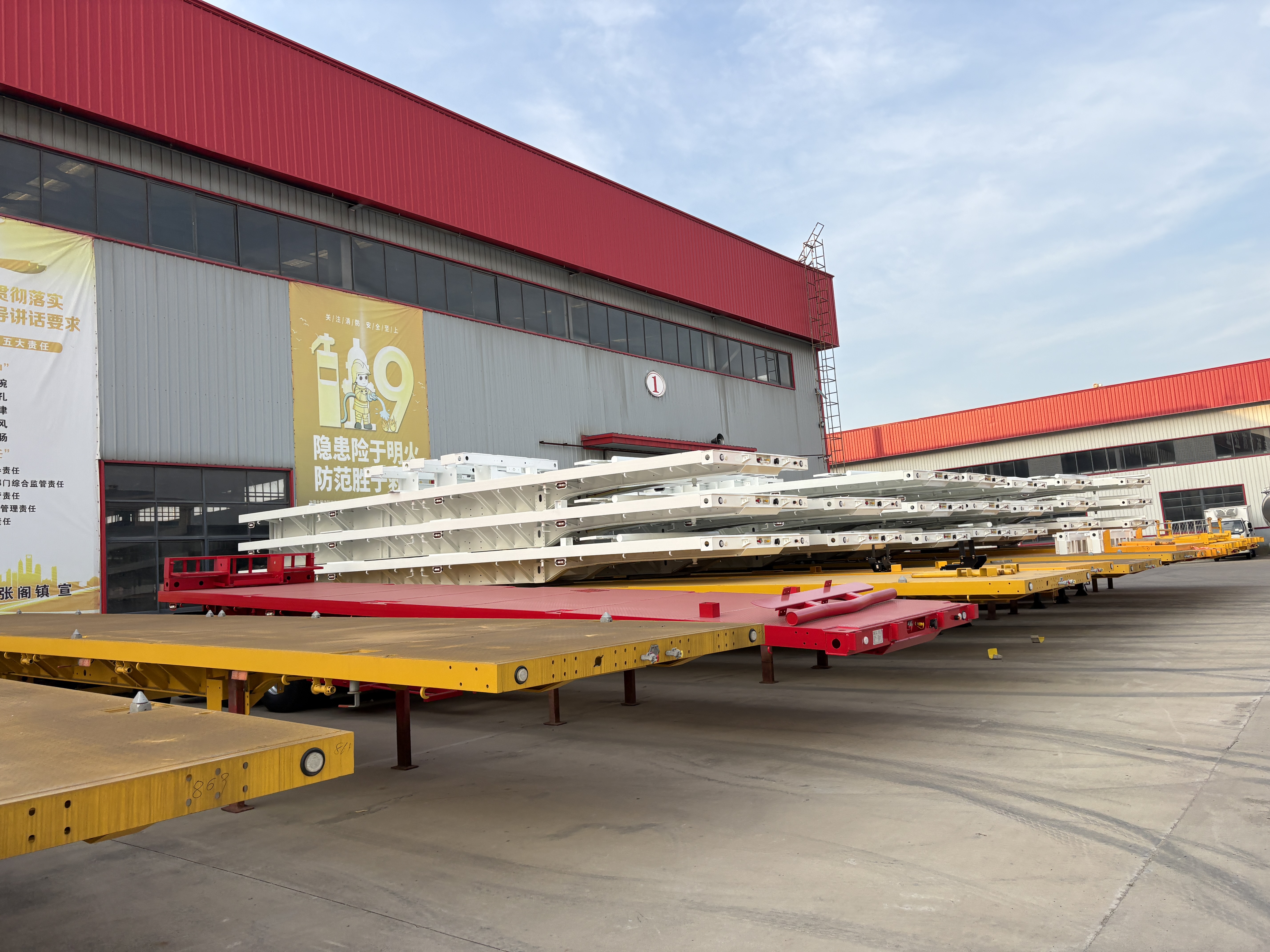
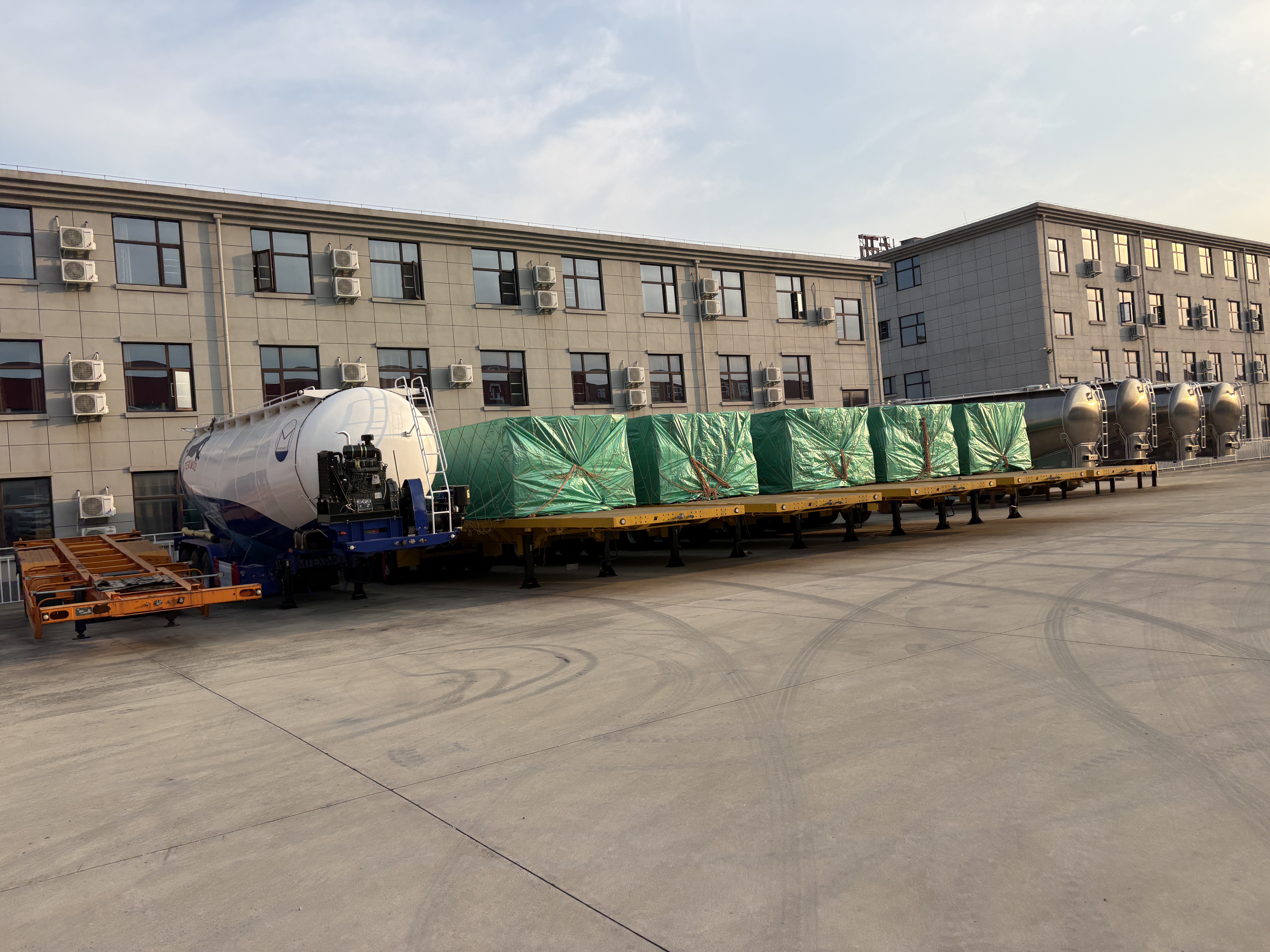
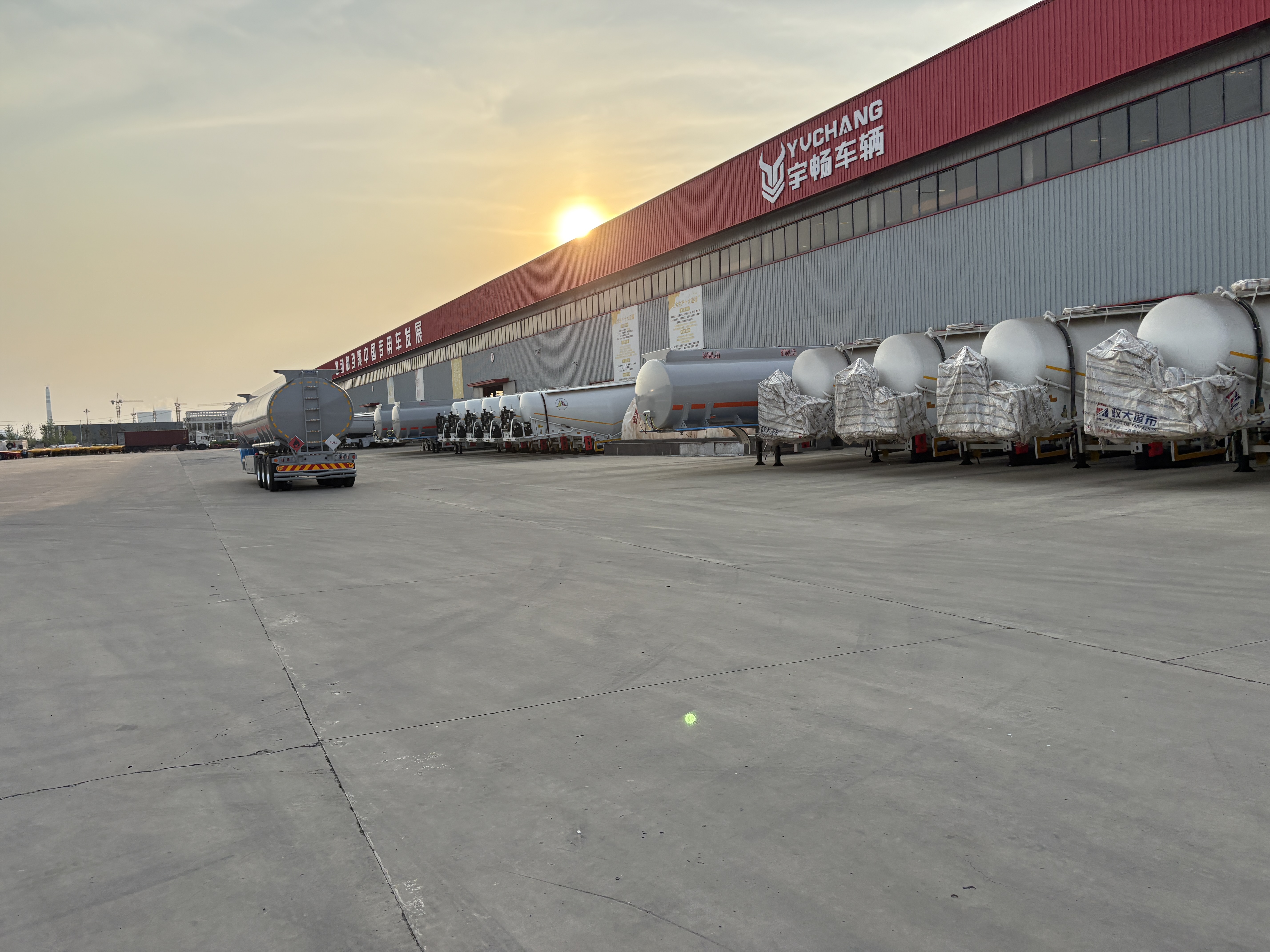
Many trailer buyers ask, "Can you show me your factory?" A better question is, "Can you show me the factory address, gate, workshop, production line, finished trailer yard, and the product area related to my order?" A live video call is more useful than a pre-edited promotional video because the buyer can ask the supplier to walk through specific areas in real time.
During a live call, ask to see the factory gate, signage, production equipment, semi-finished frames, welding areas, painting or surface treatment area, assembly area, inspection area, and finished trailers waiting for shipment. If the supplier is preparing your type of trailer, ask to see a similar trailer in production. This helps confirm whether the supplier is familiar with the product, not only with sales language.
3. Check whether the production scope matches the trailer you need
A factory may be strong in one trailer type and weak in another. Verification should therefore connect factory capability to your actual project. A buyer ordering a lowbed trailer for excavators should look for evidence of reinforced gooseneck structures, ramp design experience, suspension configuration, and heavy-duty frame welding. A buyer ordering a cement tanker should check tank forming, welding, discharge system layout, air compressor matching, valves, pipeline routing, and pressure-related safety considerations.
Do not accept a general statement such as "we can make all trailers" without support. Ask for similar production photos, drawings, export cases, and component specifications. If your order is customized, the factory should be able to explain how the design differs from a standard unit.
4. Ask for engineering documents before production
Factory verification becomes more reliable when the discussion moves from photos to documents. A professional supplier should be able to provide a written specification and, when appropriate, a general arrangement drawing or technical drawing for confirmation. This is especially important for custom length, width, axle number, king pin position, loading height, tank volume, compartment design, discharge layout, side wall height, container lock layout, or special accessories.
Drawings help both sides find mistakes early. For example, a buyer may request a low loading height but also need large tires for rough roads. The factory must then explain the tradeoff between ground clearance, deck height, tire selection, ramp angle, and frame strength. This type of engineering discussion is a good sign. It shows the supplier is not simply copying a quotation template.
5. Verify material and component details
Steel, axles, suspension, tires, landing gear, valves, brake chambers, ABS options, electrical fittings, paint, and accessories all affect trailer value. When comparing suppliers, ask for a component list with brands, models, sizes, and quantities. If a quotation says "high quality axle" or "heavy duty steel" but does not identify the specification, the buyer cannot compare it fairly.
For chassis trailers, buyers should ask about main beam material, flange and web thickness, cross member spacing, side beam structure, reinforcement points, suspension type, axle capacity, tire size, braking layout, and wiring protection. For tank trailers, buyers should also ask about tank material, thickness, compartment design, manhole, valve, pipeline, pressure or discharge requirements, and relevant destination rules. The correct details depend on the product and market, so the supplier should explain why the specification fits the job.
6. Look for quality control evidence throughout production
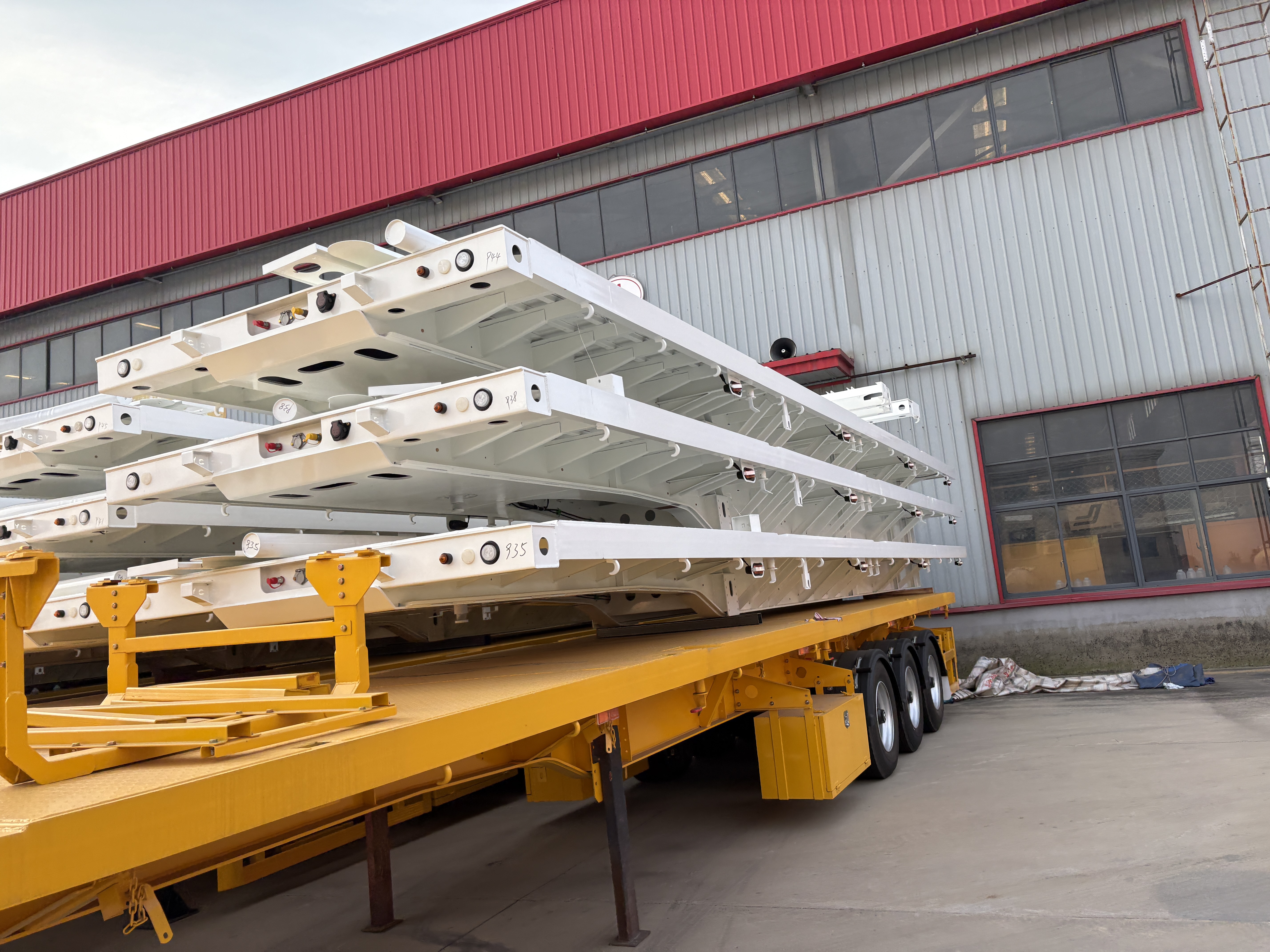
A real factory should be able to explain its quality control process before, during, and after production. Buyers should ask how the factory checks incoming materials, cutting dimensions, frame assembly, welding appearance, critical weld areas, axle alignment, brake system, lighting system, paint surface, accessories, and final shipment condition.
Inspection evidence can include production photos, dimension checks, component photos, weld close-ups, paint checks, assembly records, final inspection photos, and loading photos. The evidence should match the trailer being ordered. General pictures from another project are useful for understanding capability, but order-specific inspection records are more valuable before final payment.
7. Separate real evidence from easy-to-copy marketing material
Brochures, catalog photos, and short videos can introduce a supplier, but they are not enough for factory verification. They are easy to reuse across websites and sales accounts. Stronger evidence is harder to fake: a live video call from the workshop, production photos with the buyer's order details, drawings connected to the quotation, component labels, inspection steps, container loading photos, and shipping documents after production.
Buyers should also watch for answers that avoid specifics. If the supplier cannot explain steel thickness, axle selection, paint process, welding inspection, or shipment method, the issue may not be language. It may be a lack of production control. A reliable factory does not need to reveal confidential pricing details to prove capability, but it should be willing to explain the manufacturing process behind the product.
8. Review export experience in your market
Export experience is part of factory verification because semi trailer trade does not end at production. The supplier must prepare the trailer for ocean shipping, arrange loading protection, provide commercial documents, and understand common destination requirements. Buyers should ask whether the factory has shipped similar trailers to markets with comparable road conditions, customs procedures, and documentation needs.
Common export documents may include commercial invoice, packing list, bill of lading, certificate of origin, product specification, and other documents requested by the buyer or destination market. For Saudi Arabia, buyers may need to discuss SASO/SABER-related conformity procedures with their local importer. For certain tank trailers or dangerous goods applications, local regulations and recognized safety requirements should be checked before production, not after the trailer arrives at port.
9. Use customer inspection or third-party inspection for higher-risk orders
Remote verification is often enough for a repeat order, a standard model, or a buyer who already knows the supplier. For first cooperation, large quantities, customized trailers, or high-value projects, customer inspection or third-party inspection can reduce risk further. The inspection should be planned before production is complete, so the factory knows which checkpoints matter.
A practical inspection plan may include confirming the final specification, measuring key dimensions, checking weld appearance, verifying axle and tire configuration, reviewing brake and lighting systems, checking paint appearance, confirming accessories, and inspecting loading preparation. The buyer should define what evidence is required before paying the final balance.
10. Confirm payment terms, contract details, and after-sales responsibility
Factory verification should end with clear commercial documents. The purchase contract or proforma invoice should identify the trailer model, quantity, key specification, included components, price terms, payment schedule, delivery time, inspection arrangement, warranty terms, export documents, and shipment method. If a detail is important to the buyer, it should be written down before the deposit is paid.
After-sales responsibility also matters. Ask how the factory supports spare parts, technical questions, maintenance guidance, drawings, warranty discussion, and future orders. A trustworthy manufacturer understands that international buyers need support after the trailer leaves China.
Factory Verification Checklist for International Buyers
The table below summarizes the evidence a buyer can request before ordering. It is not necessary to request every item for every small order, but the more customized or expensive the project is, the more evidence should be collected.
| Verification Area | Evidence to Request | Why It Matters |
|---|---|---|
| Company identity | Business license, company name, address, bank account consistency | Confirms the legal counterparty and reduces payment confusion |
| Factory reality | Live video call, factory gate, workshop, production line, finished yard | Shows whether the supplier has real manufacturing space |
| Technical capability | Drawings, specification sheet, similar project photos | Proves the supplier understands the trailer design |
| Production control | Cutting, welding, painting, assembly, and inspection evidence | Helps the buyer evaluate manufacturing discipline |
| Components | Steel grade, axle, tire, suspension, brake, valve, and accessory details | Allows fair comparison between quotations |
| Export support | Loading photos, shipment method, document list, similar export cases | Reduces the risk of port, customs, and delivery problems |
Specification Verification Example: 40ft 3 Axle Flatbed Trailer
One practical way to verify a trailer factory is to ask the supplier to explain a real specification line by line. For example, a 40ft 3 axle flatbed semi trailer is a common configuration for container transport and general cargo work in parts of Africa and South America. The table below shows how a buyer can use this type of specification to check whether a quotation is complete.
This example should not be treated as the only correct design for every market. Road conditions, legal axle loads, tractor height, container type, cargo weight, port rules, and customer operating habits may change the final configuration. The value of the example is that it shows what buyers should verify instead of accepting a general phrase such as "standard flatbed trailer."
| Item to Verify | Example Configuration | Buyer Verification Point |
|---|---|---|
| Trailer type and model | 40ft 3 axle flatbed semi trailer, model YCH9400TPB | Confirm that the drawing, quotation, and proforma invoice use the same model and trailer type. |
| Overall dimensions | 12,400 mm length x 2,480 mm width x 1,580 mm height | Check compatibility with local road rules, container loading, port access, and tractor height. |
| Payload and wheelbase | 40,000 kg payload, 7,480 mm wheelbase | Confirm whether the rating matches the planned cargo and destination axle load requirements. |
| Main beam | Submerged arc welded beam with 12/8/14 mm plate configuration | Ask which dimensions refer to upper flange, web plate, and lower flange, and confirm the steel grade. |
| Side beam and floor | 16# channel steel side beam and 2.5 mm anti-skid base plate | Check whether the deck is suitable for containers, pallets, steel, bags, or mixed general cargo. |
| Axles, suspension, and springs | FUWA 13T axles x 3, mechanical or air suspension option, 90 x 16 mm leaf springs with 8 pieces | Verify the selected suspension type, axle brand, axle capacity, and spare parts availability in the destination market. |
| Tires and rims | 12R22.5 tires, 13 pieces including one spare; 9.0V-22.5 rims, 13 pieces | Make sure the tire quantity includes the spare tire and matches the operating road condition. |
| King pin and landing gear | 2 inch or 3.5 inch king pin adjustable to tractor requirement; 28T landing gear | Confirm the tractor fifth wheel requirement before production, especially for mixed fleets. |
| Brake and electrical system | Air brake system with 30 type chamber on one axle and 30/30 type chambers on two axles; ABS option; 24V LED lights | Ask which ABS brand is included and whether the brake and lighting layout matches local inspection expectations. |
| Container locks and accessories | 12 twist locks for 1 x 40ft, 2 x 20ft, or 1 x 20ft container loading; steel tool box; two spare tire carriers; rear light protective cover | Check whether the twist lock layout matches the containers and whether accessories are included in the price. |
| Painting | Customer color, primer plus polyurethane top coat | Discuss surface preparation, paint thickness expectations, and corrosion resistance for coastal or high-humidity markets. |
When a factory can explain this type of configuration clearly, it is easier for the buyer to compare quotations. For example, two suppliers may both offer a 40ft flatbed trailer, but one quotation may include FUWA 13T axles, 13 tires, 12 twist locks, tool box, spare tire carriers, LED lights, and polyurethane top coat, while another quotation may exclude some of these items. A low price is only meaningful when the specification is complete.
This is also why YOUCAN recommends confirming the specification sheet before production. In African and South American projects, buyers often need a practical balance between frame strength, maintenance convenience, tire availability, spare parts supply, and container loading flexibility. The best configuration is not the heaviest possible trailer. It is the configuration that matches the buyer's cargo, road condition, tractor, and import requirements.
Industry Standards and Best Practices
Standards should be used carefully during factory verification. A supplier should not claim every certification in order to sound impressive. Instead, the buyer should ask which standards are relevant to the specific trailer, market, and cargo.
ISO 9001:2015 is often used as a quality management reference because it focuses on process control, documentation, responsibilities, and continual improvement. It does not prove that one trailer is perfect, but it helps buyers ask better questions about how a factory controls production.
ISO 3834-2:2021 is relevant when welding quality requirements for metallic materials are important. For semi trailer buyers, this standard can guide questions about welding procedures, operator control, inspection, and documentation. It should be discussed as a quality reference unless the supplier can provide specific certification evidence.
UN Regulation No. 13 may be relevant when discussing braking requirements for heavy vehicles in markets that recognize UNECE vehicle regulations. For Saudi-related imports, SASO/SABER procedures may matter depending on product category and importer requirements. For tank trailers carrying hazardous goods, the buyer should verify destination rules and any dangerous goods transport requirements before confirming design.
The best practice is to connect each standard to a real purchasing risk: braking safety, welding reliability, paint durability, import conformity, or hazardous cargo operation. Standards are useful when they clarify requirements. They are not useful when they become unsupported marketing claims.
Common Buyer Questions About Verifying a Trailer Factory
Is a live factory video call enough to verify a supplier?
A live video call is useful, but it should be combined with documents, drawings, production evidence, component details, and inspection records. For larger or customized orders, a customer visit or third-party inspection gives stronger confidence.
How can I tell whether a supplier is a factory or a trading company?
Ask for the registered company information, factory address, live workshop video, production equipment, similar product evidence, and engineering documents. A trading company may still be useful, but the buyer should know who controls production and after-sales responsibility.
What should I verify before paying a deposit?
Before paying a deposit, verify the company identity, quotation details, trailer specification, payment account, production address, delivery time, inspection plan, warranty terms, and export document responsibilities.
What should I verify before paying the final balance?
Before final balance payment, check finished trailer photos or videos, dimensions, key components, paint condition, brake and lighting systems, accessories, markings, loading preparation, and required shipment documents.
Can I verify a Chinese trailer factory without visiting China?
Yes. Many buyers use remote verification through live calls, production photos, drawings, inspection records, and third-party inspection. A physical visit is still valuable for large orders or long-term cooperation.
What is the biggest mistake buyers make during factory verification?
The biggest mistake is checking only the price and finished product photos. Buyers should verify the production process, specification details, component quality, inspection method, and export support behind the quotation.
Why YOUCAN Trailer?
YOUCAN Trailer, Henan Yuchang Vehicle Manufacturing Co., Ltd., has manufactured semi trailers since 1999. For international buyers, this long production background matters because factory verification is easier when the manufacturer can show real workshops, product experience, engineering communication, quality control steps, and export support.
YOUCAN works with buyers on trailer type selection, cargo analysis, custom dimensions, component options, production photos, inspection confirmation, shipment preparation, and after-sales technical support. The factory produces different trailer types for logistics, construction, cement transport, fuel transport, heavy equipment, and general cargo applications.
More importantly, YOUCAN encourages buyers to ask detailed questions before ordering. A serious project should be discussed with drawings, specifications, production evidence, and inspection expectations. This helps the buyer reduce purchasing risk and helps the factory build the trailer according to the real working condition.
Conclusion
Verifying a Chinese trailer factory before ordering is not about mistrust. It is about making the purchase clear, documented, and technically correct before production begins. A buyer should verify legal identity, factory reality, product experience, engineering documents, material and component specifications, quality control evidence, export capability, inspection options, payment terms, and after-sales responsibility.
If you are planning to import semi trailers in 2026, build your verification process before you compare the final price. A reliable manufacturer should be able to show how the trailer will be designed, built, inspected, and shipped. YOUCAN Trailer can review your project requirements, explain suitable trailer specifications, and provide practical evidence to support your purchasing decision.
FAQ
How do I verify a Chinese trailer factory before ordering?
Verify the business license, factory address, live workshop evidence, production equipment, drawings, material specifications, component list, quality control records, export experience, and inspection options.
What documents should I request from a Chinese trailer manufacturer?
Request the quotation, proforma invoice or contract, business license details, technical specification, drawing when needed, component list, inspection plan, warranty terms, and expected export document list.
Should I use a third-party inspection company?
Third-party inspection is recommended for first orders, large quantities, high-value trailers, customized designs, or buyers who cannot visit the factory before shipment.
Can factory photos prove that a supplier is reliable?
Factory photos are helpful but not enough. Buyers should request live video, order-specific production evidence, drawings, inspection records, and consistent company information.
How do I reduce risk when importing semi trailers from China?
Use a clear specification, verify the supplier, confirm payment account details, define inspection requirements, request production evidence, and check export documents before shipment.
What should be included in a trailer factory audit?
A practical audit should review company identity, production equipment, workshop organization, welding process, painting process, assembly quality, inspection workflow, export experience, and after-sales support.
Is the cheapest trailer supplier usually risky?
Not always, but a very low quotation should be checked carefully. It may exclude stronger steel, branded components, better paint, inspection support, spare parts, or export services.
References
ISO 9001:2015: Quality management systems - Requirements.
ISO 3834-2:2021: Quality requirements for fusion welding of metallic materials - Part 2: Comprehensive quality requirements.
UN Regulation No. 13: Uniform provisions concerning braking for vehicles of categories M, N and O where applicable.
SASO/SABER: Saudi product conformity and import-related conformity procedures where applicable.