 WhatsApp
 sales@youcantrailer.com
 +8615203709888
Semi-Trailer Market Size and Scope in the Year 2022-2030
Global Semi-Trailer Market Overview (2022–2030)
The global semi-trailer market includes the manufacturing and sale of trailers used for freight transportation, industrial logistics, construction, agriculture, and specialized cargo operations. Semi-trailers are designed to connect to tractor units, allowing transport operators to move different types of goods using equipment suited to specific loading and road conditions.
Between 2022 and 2030, the market is expected to be influenced by freight demand, infrastructure development, industrial activity, and investment in transportation equipment.
The industry covers several major product categories, including dry vans, refrigerated trailers, flatbed trailers, lowbed trailers, tank trailers, and other specialized configurations. Each category serves different transportation requirements.
Market performance also varies by region. North America and Europe have established commercial trailer industries, while markets in Asia-Pacific, Africa, the Middle East, and Latin America present different combinations of infrastructure needs, industrial demand, and fleet development opportunities.
For manufacturers and transport businesses, understanding these differences is important when evaluating future demand and selecting suitable semi-trailer equipment.
Semi-Trailer Market Size and Growth Forecast
According to a global semi-trailer market study by Grand View Research, published through Research and Markets in January 2024, the market was estimated at USD 20.51 billion in 2022 and projected to reach USD 33.77 billion by 2030.
The report projected a compound annual growth rate (CAGR) of 6.6% from 2023 to 2030.
| Market Indicator | Reported Figure |
|---|---|
| Global market size in 2022 | USD 20.51 billion |
| Forecast market size in 2030 | USD 33.77 billion |
| Forecast CAGR (2023–2030) | 6.6% |
| Report publication | January 2024 |
| Research provider | Grand View Research |
Source: Global Semi-Trailer Market Size, Share & Trends Analysis Report, 2023–2030.
These figures reflect the research provider's estimates and projections at the time of publication. The 2030 figure is a forecast, not a confirmed market result.
The report identified transportation demand from construction, automotive, energy, and other industrial sectors as important contributors to the market outlook. It also highlighted the increasing use of third-party logistics providers and distribution networks.
However, market growth should not be interpreted as a uniform increase in trailer sales across every country or product category. Freight conditions, equipment replacement cycles, financing costs, and local regulations can produce different outcomes.
For buyers and manufacturers, market forecasts are most useful when considered alongside actual transportation requirements and regional operating conditions.
Key Factors Driving the Semi-Trailer Market
Several economic and operational factors influence global demand for semi-trailers.
Expansion of Freight and Logistics Networks
Freight transportation remains one of the main applications of semi-trailers.
Manufacturers, retailers, distributors, and logistics companies rely on road transport to move products between factories, ports, warehouses, and customers.
The expansion of distribution networks creates demand for trailers that can handle different cargo types efficiently.
Dry vans are widely used for general freight, while flatbed trailers and container chassis support industrial and intermodal transportation.
Infrastructure and Construction Investment
Construction projects require the movement of heavy machinery, steel, aggregates, cement, and other building materials.
These activities create demand for specialized trailers.
For example, lowbed trailers transport excavators and other heavy equipment, while tipper trailers carry suitable bulk construction materials.
Bulk cement trailers are used to deliver powdered cement from production facilities to storage silos and concrete plants.
Infrastructure investment can therefore support demand for several trailer categories rather than a single type.
Growth of Industrial Transportation
Industrial operations depend on equipment that can transport machinery, raw materials, finished products, and specialized cargo.
The automotive, manufacturing, mining, and energy sectors all use different semi-trailer configurations.
Transporting large machinery requires different loading and structural arrangements from moving packaged consumer goods.
This encourages the development of application-specific trailer designs.
Demand for Transport Efficiency
Fleet operators evaluate trailers based on payload capacity, durability, maintenance requirements, loading efficiency, and total operating cost.
A suitable trailer configuration can help improve vehicle utilization and reduce unnecessary handling.
For example, container chassis allow standardized shipping containers to move between ports and inland destinations without unloading their contents.
However, efficiency depends on matching the trailer to the cargo, route, tractor, and local weight regulations.
Fleet Replacement and Equipment Modernization
Semi-trailers are long-term commercial assets, but their structural components, braking systems, suspension equipment, and other parts experience wear over time.
Fleet operators periodically replace or upgrade equipment to meet changing operating requirements.
New trailer purchases may be influenced by maintenance costs, regulatory changes, financing conditions, and the availability of more suitable configurations.
Semi-Trailer Market Segmentation by Type
The semi-trailer market includes multiple product categories, each designed for particular transportation tasks.
Flatbed Semi-Trailers
Flatbed trailers have an open loading platform suitable for transporting cargo that does not require a fully enclosed body.
Typical applications include steel products, construction materials, machinery, and certain container transport operations.
Their open structure provides loading flexibility, although cargo must be properly secured and protected when necessary.
Explore YOUCAN's Flatbed Trailers for available configurations.
Dry Van and Refrigerated Trailers
Dry van trailers have enclosed bodies designed to protect general freight from weather and external exposure.
They are commonly used for packaged goods, retail products, and industrial shipments.
Refrigerated trailers use temperature-control systems to transport products that require specified temperature conditions, such as certain foods and pharmaceuticals.
These categories serve different requirements from open-platform and heavy-duty trailers.
Lowbed Semi-Trailers
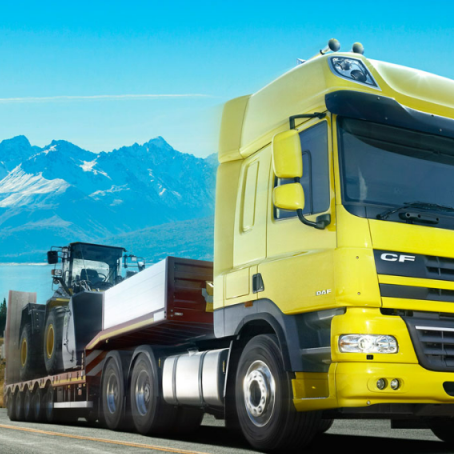
Lowbed trailers have a relatively low loading deck, making them suitable for transporting heavy or tall machinery.
Common cargo includes excavators, bulldozers, construction equipment, and industrial machinery.
Their design helps accommodate certain oversized loads while managing loading height and stability.
The appropriate axle configuration and payload capacity depend on the equipment being transported and the applicable road regulations.
See YOUCAN's Lowbed Trailers.
Tank Semi-Trailers
Tank trailers transport bulk liquids and, in specialized designs, certain gases.
Applications include petroleum distribution, chemical transportation, food-grade liquid logistics, and other industrial operations.
Tank material, compartment design, loading systems, and safety equipment depend on the cargo.
For example, fuel tankers may use carbon steel or aluminum tanks, while certain chemical and food-grade applications require different materials and equipment.
Learn more about YOUCAN's Tank Trailers.
Tipper Semi-Trailers
Tipper trailers use hydraulic lifting systems to discharge suitable bulk cargo.
They are commonly used for sand, gravel, aggregates, and other loose materials in construction, mining, and related industries.
Their design may vary according to loading conditions, discharge direction, cargo density, and road requirements.
YOUCAN offers Tipper Trailers for different bulk transportation applications.
Bulk Cement Semi-Trailers
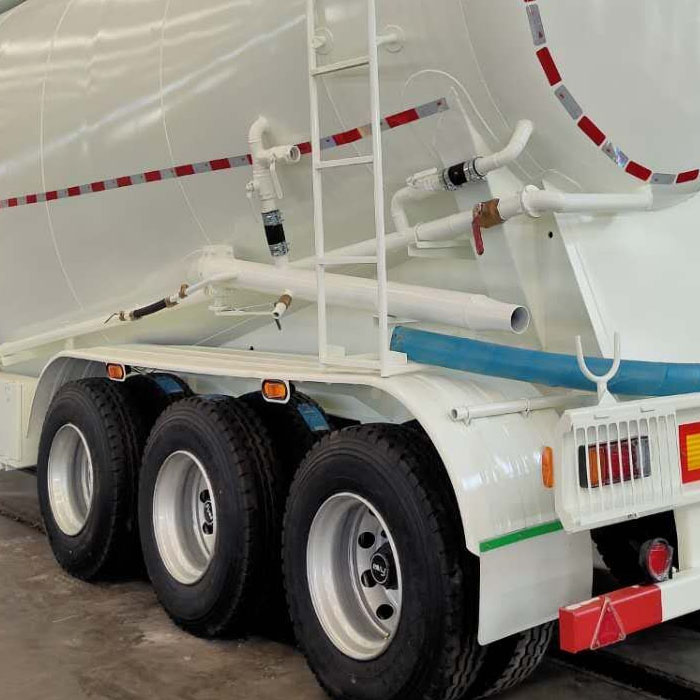
Bulk cement trailers are specialized dry bulk tankers used to transport powdered materials.
Many use pneumatic unloading systems to transfer cement and other compatible powders into storage silos.
Tank volume, material density, aeration equipment, and discharge system design are important selection factors.
Explore the Bulk Cement Trailers category.
Container Chassis
Container chassis are designed to transport standardized shipping containers.
They are widely used in port logistics, intermodal freight operations, and container distribution.
Different chassis configurations can accommodate particular container sizes and operating requirements.
For more information, see YOUCAN's Container Chassis.
Major Applications of Semi-Trailers
Semi-trailers support a broad range of commercial and industrial transportation activities.
Logistics and Distribution
General freight transportation is a major application of semi-trailers.
Dry vans, flatbeds, and container chassis move goods between factories, distribution centers, ports, and customers.
The choice of trailer depends on cargo dimensions, loading methods, protection requirements, and delivery conditions.
Construction and Infrastructure
Construction companies use semi-trailers to transport heavy machinery, structural materials, aggregates, and cement.
Lowbed trailers are suitable for many types of construction machinery, while tipper trailers handle loose materials.
Bulk cement tankers support cement distribution to batching plants and industrial storage facilities.
Energy and Petroleum
The energy sector requires specialized transport equipment for fuel, industrial materials, and machinery.
Fuel tank trailers are used in petroleum distribution, while flatbeds and lowbeds transport certain industrial components and equipment.
Applicable safety standards and cargo requirements are important considerations in this sector.
Agriculture and Food Transportation
Agricultural and food supply chains use trailers to move packaged products, agricultural machinery, bulk commodities, and temperature-sensitive goods.
The required trailer configuration depends on the product and its handling conditions.
Food-grade bulk transportation may require dedicated equipment and appropriate cleaning procedures.
Mining and Heavy Industry
Mining and industrial operations frequently involve heavy equipment and dense materials.
Lowbed trailers, tipper trailers, and other heavy-duty configurations support these transportation needs.
Road conditions, axle loads, payload distribution, and equipment durability are especially important in demanding operating environments.
Regional Analysis of the Global Semi-Trailer Market
Semi-trailer demand differs across regions because of variations in economic activity, infrastructure, freight networks, and vehicle regulations.
North America
North America has an established road freight industry supported by extensive highway networks and large-scale logistics operations.
Dry vans, refrigerated trailers, flatbeds, and specialized equipment serve a broad range of transportation needs.
Fleet replacement, freight activity, equipment financing, and regulatory requirements influence purchasing decisions.
Europe
European semi-trailer operations are shaped by international road freight networks, vehicle regulations, and transport efficiency requirements.
Manufacturers and fleet operators must consider regional rules relating to vehicle dimensions, weights, braking systems, and other technical specifications.
Intermodal transportation and specialized freight requirements also influence trailer selection.
Asia-Pacific
Asia-Pacific includes major manufacturing economies, developing logistics networks, and countries with different levels of infrastructure development.
Demand for semi-trailers is influenced by industrial production, domestic freight movement, construction activity, and international trade.
However, market conditions differ substantially between individual countries, making regional generalizations insufficient for specific purchasing decisions.
Middle East and Africa
Infrastructure development, construction, energy transportation, and industrial logistics are relevant sources of demand in parts of the Middle East and Africa.
Depending on the market, operators may require fuel tankers, bulk cement trailers, flatbeds, lowbeds, or tipper trailers.
High temperatures, long-distance routes, rough roads, and local maintenance conditions can influence equipment specifications.
Buyers should evaluate the intended operating environment rather than selecting a trailer solely on nominal payload or price.
Latin America
Latin American markets include agricultural transportation, mining, manufacturing, construction, and port-related logistics.
Different industries require different trailer configurations, including flatbeds, lowbeds, tankers, and bulk cargo equipment.
Road infrastructure, national regulations, transport distances, and maintenance availability can influence equipment purchasing decisions.
Overall, regional demand should be evaluated using country-specific freight data and operating requirements rather than assuming that global market forecasts apply equally to every location.
Competitive Landscape of the Semi-Trailer Industry
The semi-trailer industry includes large international manufacturers, regional producers, and specialized manufacturers serving particular applications.
Companies compete through product quality, engineering capabilities, manufacturing efficiency, distribution networks, pricing, and after-sales support.
Examples of established industry manufacturers include:
Wabash: A North American manufacturer of trailers and transportation-related equipment.
Great Dane: A manufacturer known for commercial trailers, including dry freight and refrigerated equipment.
Schmitz Cargobull: A European commercial trailer manufacturer offering multiple freight transportation solutions.
Krone: A European trailer manufacturer serving general freight and other commercial transportation applications.
CIMC Vehicles: A manufacturer supplying various semi-trailers and specialized vehicle equipment.
These companies represent different product portfolios and regional markets. Their inclusion does not imply a specific market-share ranking.
For buyers, the largest manufacturer is not necessarily the most suitable supplier.
Purchasing decisions should consider the trailer's intended application, technical specifications, local regulations, spare parts availability, and long-term operating costs.
Specialized manufacturers may also be appropriate for customers requiring particular configurations or export-oriented solutions.
Challenges and Opportunities in the Semi-Trailer Market
The semi-trailer industry faces several challenges that can affect manufacturing costs, equipment demand, and fleet investment decisions.
Raw Material and Component Costs
Steel, aluminum, tires, axles, suspension systems, and braking components are important inputs in semi-trailer manufacturing.
Changes in material prices and component availability can affect production costs and delivery schedules.
Manufacturers must balance cost control with structural quality and equipment reliability.
Differences in Transport Regulations
Semi-trailer requirements vary between countries.
Vehicle dimensions, axle load limits, braking regulations, lighting requirements, and other technical standards may differ across markets.
For international buyers, a trailer suitable for one country may require modification before operating legally in another.
Confirming these requirements before production can reduce the risk of unsuitable equipment.
Freight Demand and Economic Uncertainty
Semi-trailer purchasing is closely connected to transportation activity and business investment.
Changes in manufacturing output, construction activity, consumer demand, and financing costs can influence fleet expansion and replacement decisions.
As a result, market growth may fluctuate rather than follow a consistent annual pattern.
Lightweight Materials and Payload Efficiency
Manufacturers continue to evaluate materials and structural designs that can reduce trailer tare weight while maintaining required strength and durability.
Aluminum is used in some trailer applications where lower empty weight can provide operational benefits.
However, material selection involves trade-offs in cost, corrosion resistance, repairability, and suitability for the intended cargo.
Specialized and Customized Trailer Demand
Transport operators increasingly need equipment suited to specific cargoes, routes, and operating conditions.
For example, heavy equipment transport requires different loading geometry from fuel distribution or powdered cement transportation.
This creates opportunities for manufacturers capable of developing application-specific configurations.
Long-Term Operating Costs
The purchase price is only one part of the total cost of owning a semi-trailer.
Fleet operators must also consider maintenance, tire replacement, fuel-related weight efficiency, downtime, component availability, and resale value.
A trailer with suitable specifications and dependable components may offer better long-term value than one selected only for its initial price.
YOUCAN Trailer: A Professional Semi-Trailer Manufacturer in China
Founded in 1999, YOUCAN Trailer is a China-based semi-trailer manufacturer supplying commercial transportation equipment to customers in international markets.
The company manufactures a range of semi-trailers, including flatbeds, lowbeds, fuel tankers, bulk cement trailers, tipper trailers, and container chassis.
Its product portfolio serves several of the transportation applications discussed in this market overview.
Semi-Trailer Solutions for Different Industries
YOUCAN offers different trailer configurations for freight transportation, construction, industrial logistics, and specialized cargo operations.
For example:
Flatbed trailers support general cargo and industrial material transportation.
Lowbed trailers are designed for transporting heavy equipment.
Fuel tank trailers serve suitable petroleum distribution applications.
Bulk cement trailers transport compatible powdered materials.
Tipper trailers are used for loose construction and bulk cargo.
Container chassis support standardized container transportation.
Customers can explore the company's Semi-Trailer Product Range to compare available categories.
Manufacturing and Customization
YOUCAN operates manufacturing facilities in China and provides semi-trailer configurations for different international operating conditions.
According to its published company information, its manufacturing activities include material processing, welding, surface treatment, assembly, and inspection.
Buyers can learn more about the company's production capabilities through the YOUCAN Factory page.
For international orders, important technical considerations include cargo requirements, axle configuration, suspension, braking equipment, road conditions, and destination-country regulations.
Confirming these specifications before production helps buyers select equipment suited to their operations.
Choosing a Semi-Trailer for Your Fleet
Market forecasts provide useful industry context, but the right semi-trailer purchase depends on practical transportation requirements.
Before requesting a quotation, buyers should identify the intended cargo, required payload, operating routes, destination country, and preferred equipment configuration.
These details help manufacturers evaluate suitable trailer options.
Looking for a semi-trailer manufacturer in China? Contact YOUCAN Trailer to discuss your transportation needs and request product information.
FAQs About the Semi-Trailer Market
1. How Big Is the Global Semi-Trailer Market?
According to a Grand View Research study published through Research and Markets in January 2024, the global semi-trailer market was estimated at USD 20.51 billion in 2022. The same report projected a market value of USD 33.77 billion by 2030. These figures reflect the study's methodology and publication date, and the 2030 value remains a forecast rather than an actual result.
2. What Is the Expected Growth Rate of the Semi-Trailer Market Through 2030?
The 2024-published Grand View Research study projected a compound annual growth rate of 6.6% for the global semi-trailer market from 2023 to 2030. Actual growth may differ because of changes in freight demand, manufacturing activity, economic conditions, and equipment investment. Forecasts should therefore be interpreted as estimates rather than guaranteed outcomes.
3. What Are the Main Factors Driving Semi-Trailer Market Growth?
Important factors include demand for freight transportation, expansion of logistics networks, infrastructure investment, industrial activity, and fleet replacement. Different industries require specialized trailers for transporting general freight, heavy machinery, liquids, and bulk materials. However, these factors affect individual regions and product categories differently.
4. Which Types of Semi-Trailers Are Commonly Used in Different Industries?
Dry vans are commonly used for general freight, while refrigerated trailers transport temperature-sensitive products. Flatbeds carry suitable industrial materials, and lowbeds transport heavy equipment. Tank trailers handle compatible liquids, bulk cement trailers transport powdered materials, and tipper trailers are used for loose construction cargo. The appropriate type depends on the cargo and operating conditions.
5. What Should Buyers Consider When Choosing a Semi-Trailer Manufacturer?
Buyers should evaluate manufacturing experience, product specifications, material quality, customization capabilities, inspection procedures, and after-sales support. It is also important to confirm that the trailer configuration meets local regulations and suits the intended road and cargo conditions. Comparing the total operating cost, rather than only the purchase price, can support better long-term purchasing decisions.
Research Reference
Grand View Research. Semi-trailer Market Size, Share & Trends Analysis Report by Type and Region, 2023–2030. Report summary distributed through Research and Markets, January 9, 2024.