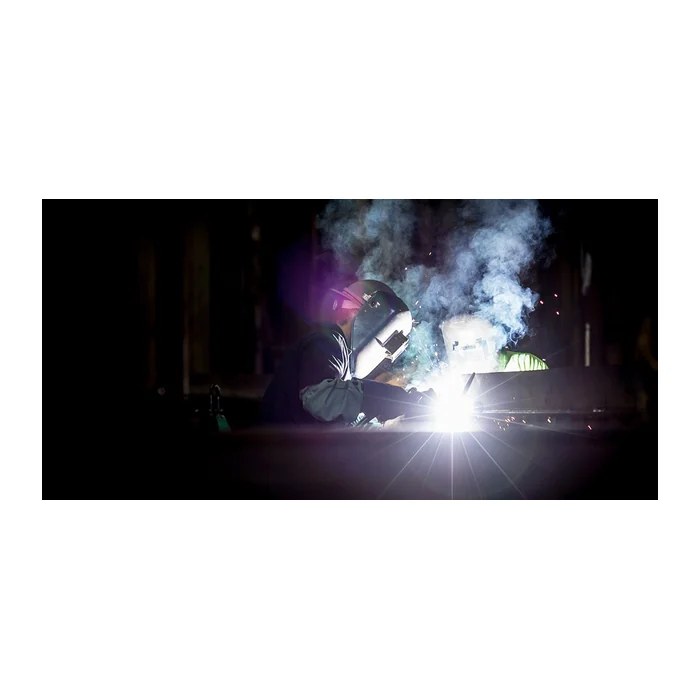
 WhatsApp
 sales@youcantrailer.com
 +8615203709888
How Does YOUCAN Ensure Welding Quality for Semi Trailers?
How Does YOUCAN Ensure Welding Quality for Semi Trailers?
Quick Answer
YOUCAN can control semi trailer welding quality by combining a suitable joint design, qualified welding procedures and personnel, controlled fit-up, stable welding parameters, distortion management, visual inspection, and additional non-destructive testing when the risk or contract requires it. Good welding quality is not proved by a clean photograph alone; it is supported by a repeatable process and evidence tied to the actual trailer.
What Welding Quality Means on a Semi Trailer
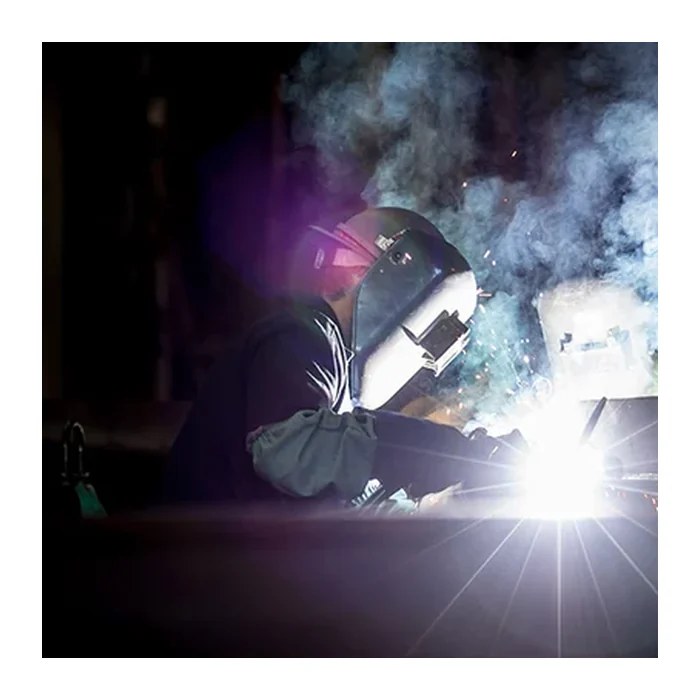
A trailer frame sees repeated bending, vibration, braking loads, twisting, and local stress around supports and attachments. Welding quality therefore includes more than bead appearance. The joint must have the required geometry, fusion, continuity, access, and strength for its design role, while the completed frame must remain within the intended dimensions.
| Control area | What is controlled | Why the buyer should care |
|---|---|---|
| Joint design | Joint type, size, access, and load path | An oversized or poorly located weld is not automatically safer |
| Fit-up | Gap, alignment, cleanliness, and restraint | Poor fit-up creates defects and distortion |
| Procedure | Process, consumables, sequence, and parameters | Repeatability depends on a defined method |
| Personnel | Welder skill and task assignment | The right procedure still needs competent execution |
| Inspection | Visual checks and agreed NDT | Evidence should match the risk of the joint |
| Records | Revision, correction, and release information | Records make quality traceable after delivery |
How Welding Quality Is Controlled
1. Start With the Load Path
The engineering team identifies which joints carry primary structural loads and which attach secondary parts. Main beams, cross-members, suspension brackets, kingpin areas, body supports, and tank attachments should not all be treated as identical. The inspection effort should follow the consequence of failure.
2. Use a Defined Welding Basis
A welding procedure should identify the process, joint preparation, material group, consumable approach, position, and relevant parameters. ISO 3834 and related procedure qualification standards can provide a framework, but the buyer should ask how the supplier applies that framework to the trailer being built.
3. Control Fit-Up Before Arc Start
Fit-up checks are often more valuable than late cosmetic correction. The operator needs clean surfaces, controlled gaps, aligned parts, and enough access to complete the joint. A weld cannot reliably compensate for a badly assembled joint.
4. Manage Heat and Distortion
Welding sequence, restraint, interpass practice, and the order of attachments influence frame straightness. Distortion can change deck height, axle alignment, clearance, and stress distribution. Correction should be controlled because aggressive straightening can create new damage.
5. Inspect in Layers
Visual inspection can identify surface discontinuities, undercut, overlap, spatter, arc strikes, incomplete visible runs, and obvious geometry problems. Where required by the design or contract, NDT such as magnetic particle, dye penetrant, ultrasonic, or radiographic testing may add information. The method should be chosen for the joint and material, not used as a decorative list.
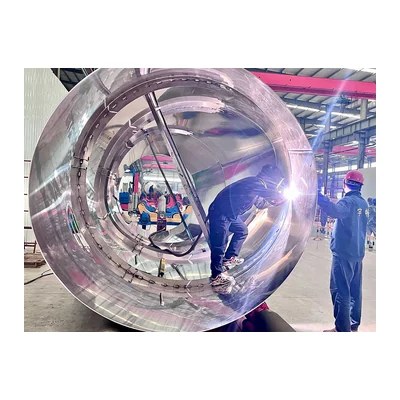
What Buyers Should Request as Welding Evidence
The approved drawing or configuration showing the structural areas that matter.
A clear statement of the welding process and the procedure basis used for critical joints.
The inspection scope, including visual inspection and any agreed NDT.
Photos or records that identify the trailer, joint area, inspection date, and correction status.
A final confirmation that repairs, if any, were re-inspected before release.
Engineering Note: A repair is not automatically a quality failure. The important questions are why it occurred, whether the repair method was controlled, and whether the repaired area was checked again.
Industry Standards and Best Practices
ISO 3834 is commonly used as a reference for welding quality requirements. ISO 9606-1 addresses welder qualification, while ISO 15614-1 provides a framework for welding procedure qualification. These references should be treated as technical tools, not as a claim that every supplier holds every certification.
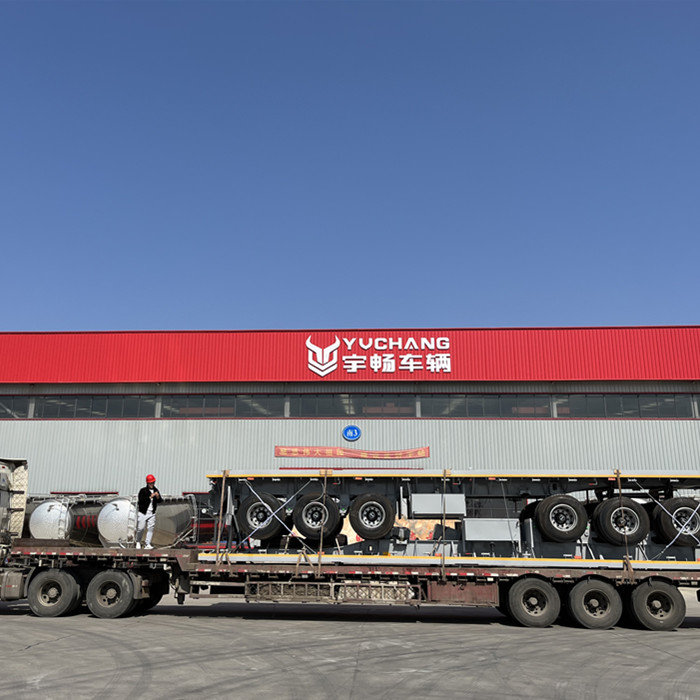
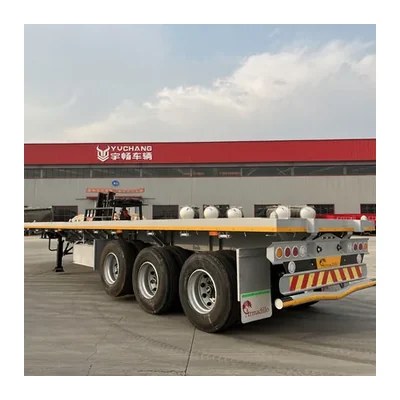
During supplier review, the buyer can inspect the supplier's factory overview and quality control information, then ask how welding evidence is linked to flatbed trailers, lowbed trailers, or tanker structures.
Common Buyer Mistakes
Judging weld quality only by bead appearance or a single production photograph.
Asking for a certificate without asking which joint or process it covers.
Ignoring fit-up, distortion, and structural geometry because the welds look smooth.
Demanding NDT everywhere without matching the method to the joint and risk.
Failing to define how repaired or rejected welds will be handled before shipment.
Key Takeaways
Welding quality begins with the load path and joint design.
Fit-up and heat control are as important as the visible bead.
Inspection should be risk-based and tied to the actual trailer.
Records should identify the trailer, joint, method, and correction status.
Ask how standards become factory procedures rather than collecting names only.
FAQ
Can a buyer verify welding quality from photos?
Photos can show access, fit-up, visible surface condition, and production context, but they cannot prove every internal condition. Ask for process and inspection evidence as well.
Is robotic welding always better?
No. It can improve repeatability on suitable joints, while manual welding remains important for variable geometry and difficult access.
What welding standard should a semi trailer manufacturer follow?
The relevant basis depends on the project. ISO 3834, ISO 9606-1, and ISO 15614-1 are useful welding-quality references, but the contract and destination requirements still matter.
What should happen if a weld fails inspection?
The supplier should identify the defect, control the repair, re-inspect the area, and record the disposition before release.
Do all trailer welds need NDT?
Not necessarily. The method and extent should follow design risk, contract requirements, and the type of joint.
Conclusion
Welding quality is built through engineering, preparation, execution, inspection, and traceability. Buyers who ask about the complete control chain can distinguish a real manufacturing process from a surface-level quality claim.
References
ISO 3834 quality requirements for fusion welding of metallic materials
ISO 9606-1 qualification testing of welders for fusion welding
ISO 15614-1 specification and qualification of welding procedures for metallic materials