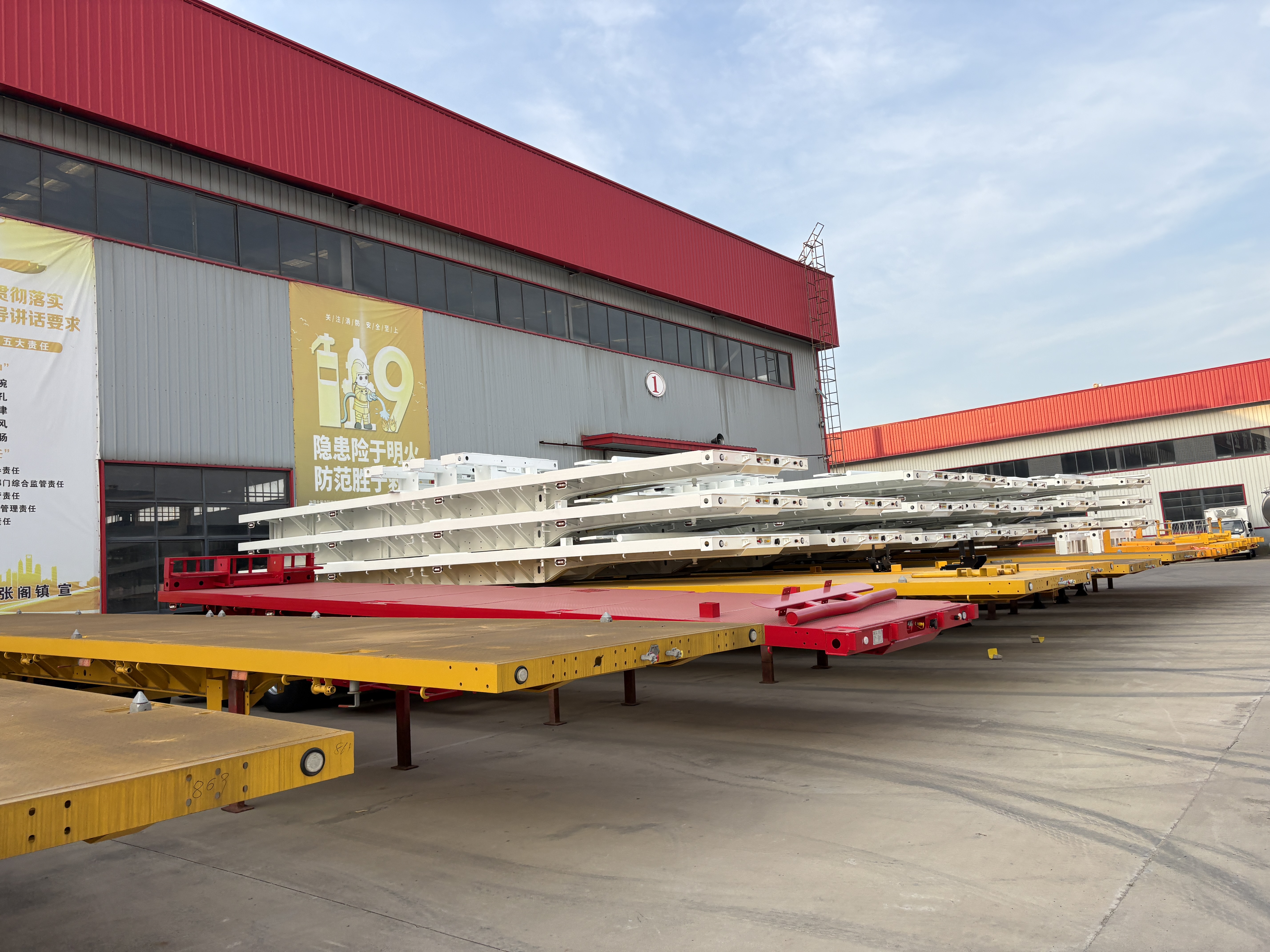
How to Source a 40ft Flatbed Trailer for Container Loads
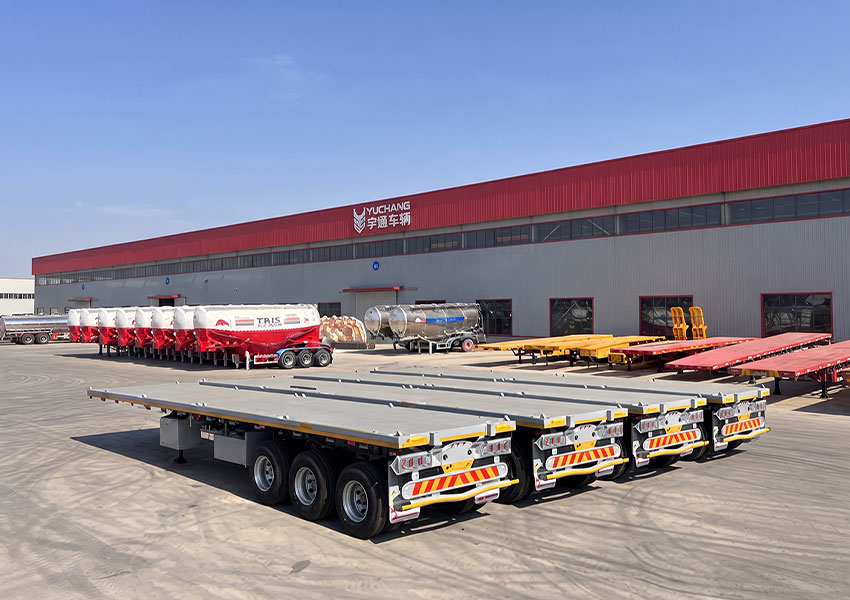
1. Background: Why Container Haulage Buyers Are Rethinking Trailer Specifications
Global container volumes keep growing, and fleet owners, port hauliers and distributors need trailers that are efficient, legal in their market and easy to maintain. A well-specified 40ft flatbed trailer is one of the most flexible ways to move standard ISO containers over road networks.
The pain points are familiar. Buyers face unclear payload figures, axle and suspension choices that do not match local road rules, and incomplete paperwork that delays customs clearance.
Many also find that a trailer designed for one country does not meet the axle spacing or kingpin requirements of another. This guide explains how to avoid those problems when sourcing from an overseas factory.
2. What Is a 40ft Flatbed Trailer?
A 40ft flatbed trailer is a semi-trailer with an open, flat load deck of roughly 12.2 to 13.5 metres. It is designed to carry 40-foot ISO containers, machinery, steel products and other oversized cargo. A tractor unit pulls it through a standard 2-inch or 3.5-inch kingpin and fifth-wheel coupling.
When used for containers, the deck carries ISO-standard twist locks that secure the container corner castings. That is why many buyers search for a 40ft container flatbed trailer and treat it as a core logistics asset.
Core Technical Identity
Frame: I-beam main girders in high-tensile steel, with cross members spaced for even load distribution.
Axles: usually 2 or 3 axles with 13-ton rated axle units.
Suspension: mechanical leaf spring or air suspension.
Braking: dual-line air brakes with ABS where required by the destination market.
Support: heavy-duty landing legs rated for the full kingpin load.
3. Types of Flatbed Trailers for 40ft Container Loads
Not every flat deck suits container work. The comparison below helps you match the structure to the job.
| Type | Typical Length | Key Feature | Best Use |
|---|---|---|---|
| Standard flatbed with twist locks | 12.5–13.5 m | Full flat deck, removable or fixed locks | Mixed cargo and containers |
| Skeletal container trailer | 12.2–12.5 m | Light frame, locks only, low tare weight | Dedicated port and terminal haulage |
| Drop-deck / step-deck | 12–13 m | Lower deck height | High-cube or tall cargo |
| Extendable flatbed | 12–18 m | Telescopic frame | Long, project cargo |
| Interlink combination | Two units | Higher combined payload | Regions that allow link trailers |
For lightweight terminal work, review our Container Chassis. For multi-purpose haulage, our range of Flatbed Trailers offers several deck and axle layouts. Markets that allow combinations may prefer an Interlink Flatbed Trailer.
4. Industry Applications for 40ft Flat Deck Trailers
This trailer class works wherever containers and heavy goods move over land.
Port and terminal logistics: moving import and export containers between quay, yard and rail.
Freight forwarding and distribution: inland delivery of 40ft and 40HQ containers to warehouses and factories.
Steel and construction supply: carrying pipes, beams, rebar and prefabricated parts on the open deck.
Mining and energy projects: hauling modular equipment and containerised power units.
Agriculture and bulk packaged goods: palletised or bagged cargo with tarpaulin coverage.
For oversized equipment above standard height or weight, a Lowbed Trailers option may be the better fit.
5. Why Does Trailer Choice Matter? Value and Business Benefits
The right specification affects operating cost more than the purchase price does. Here is how common technical choices translate into business outcomes.
Lower tare weight: every 500 kg saved can become additional payload on each trip.
High-tensile steel frames: better fatigue resistance means fewer repairs and a longer service life.
Standardised components: axles, brakes and suspension from common brands shorten downtime and ease spare parts sourcing.
Multi-purpose decks: one trailer can carry containers on the outbound leg and general cargo on the return.
Correct local compliance: avoiding re-work at the destination saves time and cost.
6. Buyer's Guide: How to Choose a 40ft Trailer
Use this checklist when comparing quotations from different suppliers.
Selection Checklist
Load capacity: confirm the legal gross vehicle weight in your country. A 40ft container has a maximum gross mass of 30,480 kg. Most tri-axle trailers are built for a payload of about 30 to 40 tons, depending on frame and axle ratings.
Axle layout and spacing: check local limits for axle load and distance between axles.
Kingpin type and height: match your tractor's fifth-wheel and the required deck height.
Twist lock count and position: a standard 40ft layout uses 4 locks. Confirm extra locks if you also carry 20ft containers.
Suspension and tyres: air suspension protects fragile loads, while leaf springs suit rough roads and lower budgets.
Surface protection: shot blasting, epoxy primer and polyurethane topcoat extend life in humid or coastal climates.
Warranty and support: ask for warranty length, spare parts availability and technical help.
Common Buying Mistakes
Choosing on price alone and ignoring tare weight and component brands.
Not checking legal dimensions before ordering.
Skipping the drawing approval stage.
Forgetting a spare tyre, tool kit and a basic Trailer Parts package for the first year.

7. Step-by-Step Guide to Sourcing a 40ft Container Trailer
Define the cargo and route. List container types (40GP, 40HQ), maximum weight, road conditions and regulations at the destination.
Confirm the tractor interface. Record the kingpin size, fifth-wheel height and air-line connectors.
Request a detailed quotation. It should show dimensions, axle brand, suspension, tyre size, lock quantity, paint process and warranty terms.
Approve the general arrangement drawing. Check deck length, overall height, landing leg position and light layout before production starts.
Inspect during production. Review welding, material certificates, paint thickness and brake testing, either in person or by video and photo reports.
Prepare export paperwork. Typical flatbed trailer export documents include the commercial invoice, packing list, bill of lading, certificate of origin and any conformity or registration data your country requires. The VIN should be stamped on the chassis and match all documents.
Choose the shipping method. Options include RoRo, flat rack, open-top or partial disassembly in a container. Confirm which suits your port and budget.
Inspect on arrival. Check the trailer against the specification, test brakes and lighting, and torque wheel nuts before first use.
Safety Precautions
Always lock all twist locks before moving, distribute container weight evenly over the axles, and never exceed the rated payload. Inspect brakes, tyres and locks at regular intervals.
8. Why Choose Us as Your 40ft Flatbed Trailer Manufacturer?
As an experienced 40ft semi flatbed trailer manufacturer, we build to your market's requirements rather than offering a single fixed model. Our engineers work from your tractor data, local regulations and cargo plan.
Custom engineering (OEM/ODM): deck length, axle count, suspension, lock layout, colour and branding.
Quality control: material checks, welding inspection, paint testing and brake and lighting tests before dispatch.
Certification support: test records and documents can be prepared according to your destination market. Please state your requirements when you inquire.
Export experience: help with documentation, VIN marking and loading plans.
Product range: flatbeds, skeletal frames, lowbeds, tippers and tankers, so you can source several trailer types from one supplier. See our Lowbed Trailers and other ranges for fleet planning.
Send us your drawings, container types and target market, and our team will prepare a tailored proposal with a technical datasheet.
9. FAQ About the 40ft Flatbed Trailer
What is the load capacity of a 40ft trailer?
Most tri-axle units are designed for a payload of around 30 to 40 tons. The legal figure depends on the frame, axle ratings and local gross weight limits. A loaded 40ft container can weigh up to 30,480 kg.
Can a flatbed trailer carry both 20ft and 40ft containers?
Yes, if the deck has the right twist lock positions. Specify 20ft and 40ft lock locations when ordering.
What is the difference between a flatbed and a container chassis?
A flatbed has a full flat deck for general cargo and containers. A container chassis uses a lighter frame designed mainly for containers, with a lower tare weight.
Which documents are needed to import a trailer?
Usually a commercial invoice, packing list, bill of lading and certificate of origin. Some countries also require conformity certificates, inspection reports or vehicle registration data.
How long does production take?
Standard specifications often take a few weeks, while customised designs take longer. Confirm the schedule when you approve the drawing.
How should I choose between air and mechanical suspension?
Air suspension gives a smoother ride and better cargo protection. Mechanical suspension is simpler and cheaper to maintain on rough roads.
Ready to specify your trailer? Request a quote or technical datasheet through our inquiry form, by email, or on WhatsApp, and our engineers will recommend a configuration for your container loads.
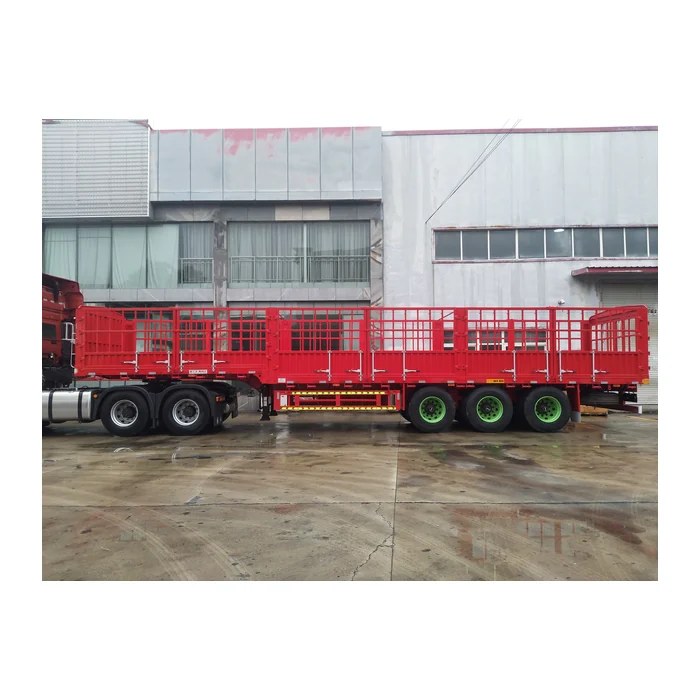
Calculate 40ft Flatbed Trailer Landed Cost
Learn how to calculate the landed cost of a 40ft flatbed trailer, from FOB price to freight, duty and VAT. Request a quote with your destination port.
Read More →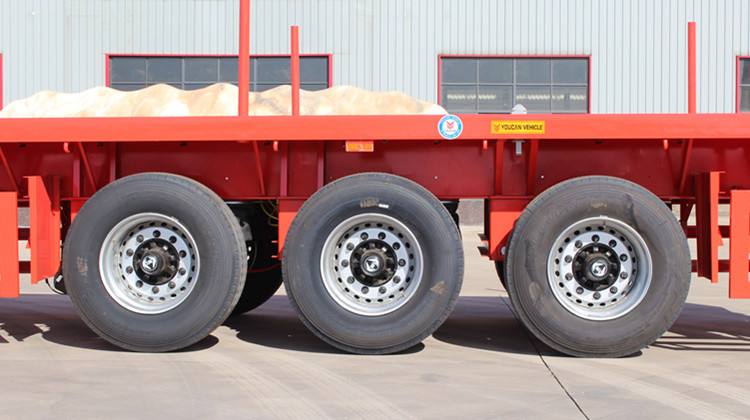
40ft Flatbed Trailer Gooseneck vs Semi Specs Explained
Compare gooseneck and semi designs for a 40ft flatbed trailer: specs, applications, customization and shipping. Request a quote or price list today.
Read More →