What Is a Flatbed Semi Trailer?
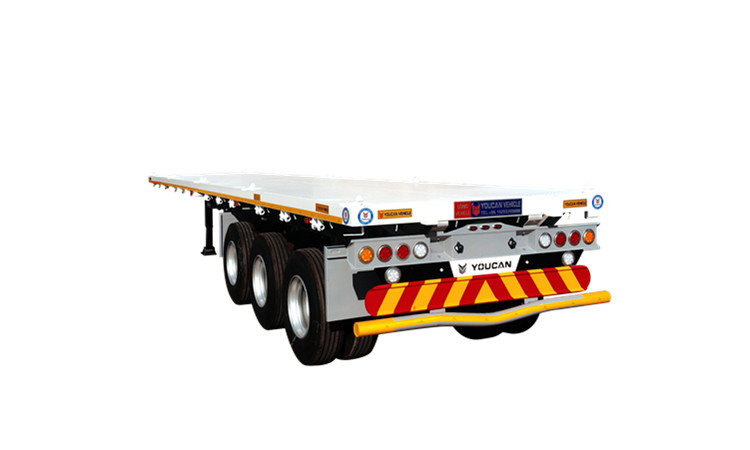
A Flatbed Semi Trailer is a highly versatile, unpowered commercial freight vehicle engineered with an open, level deck and no enclosing walls, roof, or doors. It is designed to be towed by a tractor unit via a fifth-wheel coupling. Because of its open architecture, a Flatbed Semi Trailer allows cargo to be loaded from above using cranes, from the sides using forklifts, or from the rear.
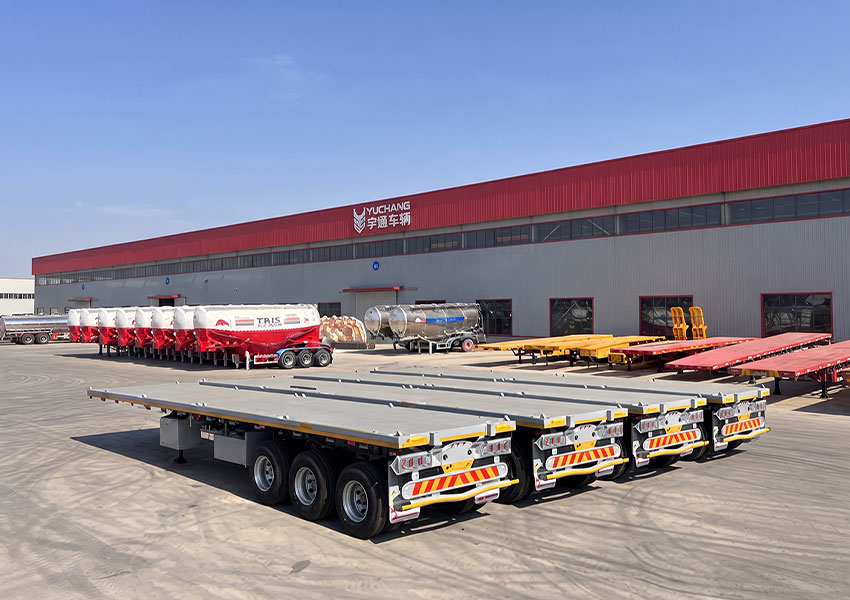
Unlike enclosed van trailers, the primary function of a Flatbed Semi Trailer is to transport cargo that is oversized, irregularly shaped, or requires multi-directional loading access. This includes standard ISO shipping containers, steel coils, timber, construction materials, and heavy industrial machinery. The trailer relies on its heavy-duty structural deck to support the weight of the cargo and its integrated restraint systems to secure it during transit.
How Does a Flatbed Semi Trailer Work?
The operation of a Flatbed Semi Trailer is a coordinated system of load transfer and securement. The process begins with the tractor connecting to the trailer's kingpin. Once at the loading point, the open deck allows unrestricted access.
Cargo is placed on the anti-skid floor, which provides friction to prevent shifting. For standardized shipping containers, the Flatbed Semi Trailer uses heavy-duty twist locks positioned at strategic intervals to lock into the container’s corner castings. For general cargo, operators use chains, straps, binders, and winches attached to lashing points along the side rails to secure the load.
During transit, the payload weight is distributed through the deck and main beams down to the suspension system and axles. The dual-line air braking system synchronizes with the tractor to ensure safe stopping power, while the suspension absorbs road shocks, protecting both the cargo and the structural integrity of the Flatbed Semi Trailer.
Advantages of a Flatbed Semi Trailer
Logistics operators worldwide prefer the Flatbed Semi Trailer for several compelling reasons:
Unmatched Loading Flexibility: The open-top and open-side design eliminates loading bottlenecks. Forklifts can load from the side, and overhead cranes can drop heavy loads directly onto the deck.
Exceptional Cargo Versatility: A single Flatbed Semi Trailer can haul standard containers, steel coils, oversized industrial machinery, timber, and building materials. This reduces the need for specialized fleets and maximizes asset utilization.
Higher Payload Efficiency: With no enclosed walls or heavy roofs, flatbeds have a lower tare weight compared to vans, allowing for higher legal payload capacity.
Simplified Inspections: The open deck makes it easy for drivers and inspectors to verify that cargo is properly secured and that the structural integrity of the deck is intact.
Cost-Effective: Lower acquisition costs, lower maintenance, and the ability to earn revenue across different cargo types make the Flatbed Semi Trailer a highly profitable investment for fleet owners.
Application of Flatbed Semi Trailers
The practical applications of a Flatbed Semi Trailer span across multiple industries:
Intermodal Logistics: Transporting 20ft, 40ft, and 45ft ISO containers between ports, rail yards, and inland distribution centers.
Construction & Infrastructure: Hauling steel beams, concrete panels, rebar, scaffolding, and heavy construction equipment directly to job sites.
Heavy Machinery Transport: Moving excavators, bulldozers, generators, and transformers that cannot fit inside standard enclosed trailers.
Timber and Agriculture: Transporting raw logs, lumber, and bulk agricultural materials.
Emergency & Recovery: Used as utility platforms for moving large, irregularly shaped items during disaster recovery or municipal projects.
Specifications of Flatbed Semi Trailers
When choosing a Flatbed Semi Trailer, buyers must evaluate the following specifications and types to match their operational needs:
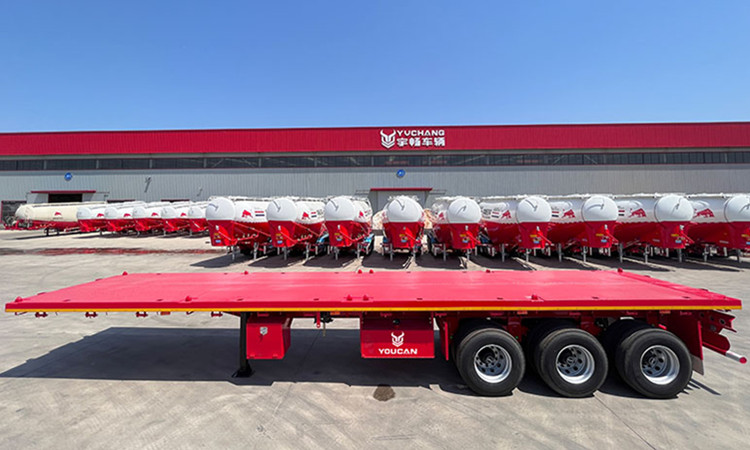
Axle Configurations: Available in 2-axle, 3-axle, and 4-axle setups. A 3-axle configuration is the most common for standard highway loads, while 4-axle or multi-axle setups are required for heavy haulage and specialized transport.
Deck Length: Standard lengths include 20ft, 40ft, 45ft, and 53ft, depending on local regulations and the typical size of the cargo.
Deck Material: Options include high-tensile steel (for maximum durability under rough loading) or aluminum (for weight savings and higher payload). Combination decks offer a balance of both.
Suspension: Mechanical leaf spring suspension is durable and low-maintenance, while air suspension offers a smoother ride and protects sensitive cargo from road vibration.
Securement Features: Options include retractable twist locks, flush-mounted D-rings, stake pockets, and side rails for versatile cargo lashing.
Running Gear & Chassis Engineering
The backbone of any Flatbed Semi Trailer is its chassis. A poorly engineered frame will sag or crack under continuous heavy loads. Quality flatbeds utilize high-tensile steel (such as Q345B or T700) for the main longitudinal beams, fabricated using automated submerged-arc welding to ensure deep penetration and structural integrity.
The running gear must also match the payload. Heavy-duty axles (often 13-ton or 16-ton capacity) are paired with reinforced multi-leaf spring suspensions or airbags. The braking system, typically a dual-line pneumatic circuit with ABS or EBS, is critical for safety. Buyers should ensure the brake chambers and valves are sourced from reputable manufacturers to guarantee reliable stopping power under maximum gross vehicle weight.
Common Buyer Mistakes
Even experienced fleet managers can overlook critical details when specifying a Flatbed Semi Trailer. Here are the most common pitfalls to avoid:
Choosing from a headline capacity or length without defining the real load interface and cargo dimensions.
Comparing component brands without checking compatibility, installation, and local spare parts availability.
Ignoring the loading, unloading, cleaning, or recovery conditions at the final destination, such as the need for specific crane lifting points.
Assuming a factory check proves compliance in every destination market, rather than verifying local road, axle, and registration rules.
Changing the configuration after drawing approval without reviewing load distribution, axle spacing, and clearances.
Failing to account for the trailer's tare weight, which reduces the available legal payload.
What Buyers Should Ask the Manufacturer
To ensure a successful purchase, buyers should ask the manufacturer the following questions before signing a contract:
Which approved drawing or configuration is the quotation based on?
Which dimensions, functions, and interfaces are critical for my specific operation?
How will the trailer be inspected before shipment, and what records will be provided?
Which parts require destination-specific confirmation, such as lighting or braking regulations?
What changes would require an engineering review after order approval?
Export Packaging & Handover
For overseas buyers, the condition in which the Flatbed Semi Trailer arrives is just as important as how it was built. A professional manufacturer applies anti-rust wax to exposed metal surfaces and protects critical electrical components before loading. Depending on the destination port, trailers are shipped via Roll-on/Roll-Off (RORO) vessels, bulk cargo ships, or disassembled into flat-racks. A comprehensive handover package should include the bill of lading, inspection certificates, and operation manuals to ensure a smooth customs clearance and immediate deployment.
Supplier of Flatbed Semi Trailers
Choosing the right partner is just as important as choosing the right equipment. YOUCAN Trailer has been manufacturing heavy-duty semi-trailers since 1999, bringing over 28 years of engineering expertise to the global market. We specialize in providing tailored transport solutions, including the Flatbed Semi Trailer, to customers across Africa, the Middle East, South America, and Southeast Asia.
What sets YOUCAN Trailer apart:
Engineering-Driven Customization: We do not just sell standard models. Our engineering team reviews your cargo, route, tractor, and local regulations to confirm the exact specifications of your Flatbed Semi Trailer before production begins.
Advanced Manufacturing: Our 100,000㎡ facility uses automated CNC cutting, submerged-arc welding, and environmentally controlled painting booths to ensure every trailer is built to withstand the harshest conditions.
Strict Quality Control: Every unit undergoes rigorous inspections, including welding checks, dimensional verifications, and brake testing.
Global Export Support: We handle international shipping (RORO, bulk, or flat-rack), customs documentation, and provide long-term after-sales spare parts support.
Ready to optimize your logistics with a custom-built flatbed semi trailer? Contact the YOUCAN Trailer team today to get a free quote and technical drawings within 12 hours!
FAQ
What should I confirm before buying a flatbed semi trailer?
Confirm the intended cargo or operating material, loading method, route, legal requirements, maintenance capability, and the evidence the supplier will provide before release.
Are trailer specifications universal across countries?
No. Dimensions, axle limits, braking, lighting, hazardous-goods rules, and registration requirements vary by destination and vehicle category.
Is the largest available trailer always the best choice?
No. The correct choice balances usable capacity, load distribution, maneuverability, route limits, operating frequency, and serviceability.
What should be checked during factory inspection?
Check configuration identity, critical dimensions, welds and structure, running gear, brakes, electrical functions, finish, accessories, and the documents required for handover.
Can YOUCAN customize the configuration?
Customization should be based on the cargo, route, tractor, local requirements, and an approved technical specification. The buyer should review the drawing before production.
Which documents should an overseas buyer request?
Request the approved specification or drawing, inspection records relevant to the order, packing or shipping information, and any destination-specific documents agreed in the contract.
References
ISO 9001 quality management systems
UNECE vehicle and component requirements where applicable to the destination market
Local road, axle, dimension, lighting, braking, or hazardous-goods rules confirmed for the buyer's registration path
How Does YOUCAN Ensure Welding Quality for Semi Trailers?
Learn how trailer welding quality is controlled through joint design, fit-up, welding procedures, qualified personnel, inspection, distortion control,...
Read More →
How to Choose the Right Flatbed Semi Trailer?
Choose a flatbed semi trailer by matching the trailer's deck, structural arrangement, cargo restraint system, running gear, loading method, and destin...
Read More →