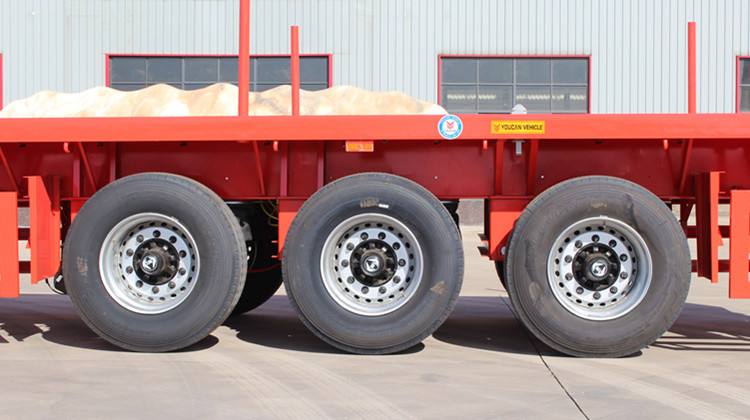
40ft Flatbed Trailer Gooseneck vs Semi Specs Explained
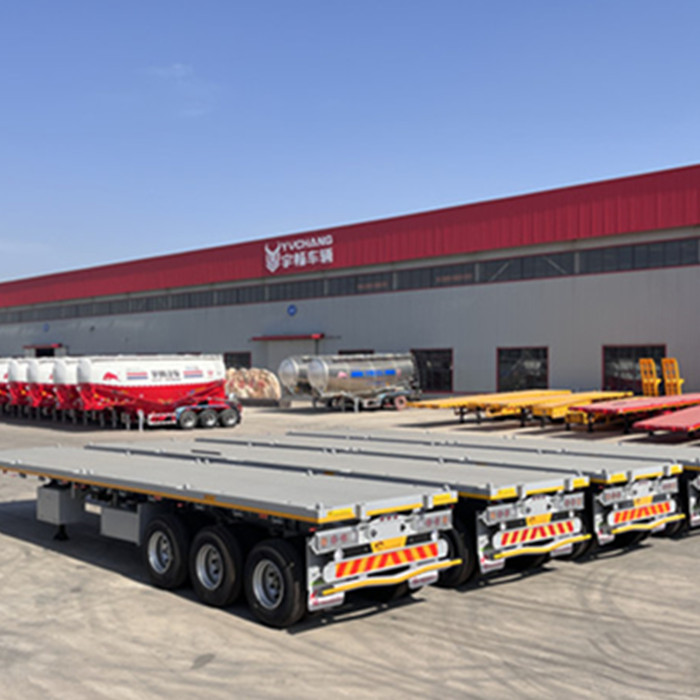
What Is a 40ft Flatbed Trailer?
A 40ft flatbed trailer is an open, level-deck freight trailer with a loading surface of roughly 12.2 meters. It has no roof and no fixed side walls, so cargo can be loaded from the top, the sides or the rear.
This openness is why flatbeds remain a core asset for construction, steel, machinery and project logistics. Cargo that is oversized, heavy or awkward cannot fit into a closed box, and a flatbed carries it with minimal restrictions.
At 40 feet, the deck suits a wide range of cargo, including 12 m steel bars, 40ft containers and palletized industrial goods. It is also short enough to stay maneuverable on regional roads and at job sites.
Types of Flatbed Trailer in the 40ft Class
Most buyers compare designs by coupling method and deck structure. The two most common coupling systems are the semi (fifth-wheel and kingpin) and the gooseneck.
Comparison of Common Designs
| Type | Coupling | Typical Axle Setup | Best For |
|---|---|---|---|
| 40ft semi flatbed trailer | Kingpin and fifth wheel | 2 or 3 axles (13 t each, or heavy-duty) | Highway freight, ports, long-haul cargo |
| 40ft gooseneck flatbed trailer | Gooseneck ball hitch or 5th wheel on a truck bed | Dual tandem axles | Equipment hauling, farm and construction use |
| Deckover flatbed trailer | Gooseneck or pintle | Dual tandem, wheels beneath the deck | Wide loads and maximum usable deck width |
| Extendable or step-deck variant | Kingpin | 2 or 3 axles | Tall or long cargo |
Gooseneck vs Semi Trailer: Key Differences
Towing vehicle: A semi needs a tractor unit. A gooseneck can be pulled by a heavy-duty pickup or a light truck with a bed-mounted hitch.
Payload: Semi designs typically carry 28 to 40 tonnes, depending on axle count. Gooseneck trailers commonly sit in the 10 to 16 tonne range.
Stability: Both put weight over the towing axle, which improves stability compared with bumper-pull designs.
Regulation: Semi trailers follow commercial vehicle rules. Gooseneck rules vary by country, so confirm local requirements before ordering.
For buyers who need heavier capacity, the Interlink Flatbed Trailer format is also worth reviewing.
Key Features and Business Benefits
High-tensile steel main beams: Beams made of steel with a yield strength of around 700 MPa resist bending under concentrated loads. This extends service life and reduces warranty claims.
Reinforced deck with lashing points: Anti-slip decking with D-rings or stake pockets secures cargo safely. This cuts damage and speeds up loading.
Branded axles and air or mechanical suspension: Proven axle brands give predictable braking and tire wear. Maintenance intervals are easier to plan.
Dual-circuit braking with ABS options: This improves safety and helps meet destination-market regulations.
Corrosion protection: Shot blasting, epoxy primer and polyurethane topcoat protect the frame in humid or coastal climates.
Light tare weight: Optimized structures can lower empty weight, which increases the payload per trip.
Industry Applications
These trailers are used wherever bulky or heavy cargo must move reliably between sites.
Steel and metal fabrication: Rebar, pipes, beams and coils, including long steel sections for building projects.
Construction and infrastructure: Precast concrete elements, scaffolding, small excavators and site cabins.
Port and container logistics: A 40ft deck can carry one container with twist locks. For dedicated port work, compare it with a Container Chassis.
Agriculture: Baled hay, farm machinery and irrigation equipment.
Timber and building materials: Lumber packs, bricks, tiles and boards.
Heavy machinery transport: Generators, compressors and wheeled equipment. For taller or heavier machines, a Lowbed Trailers option may be more suitable.
40ft Flatbed Trailer for Sale
We supply standard configurations that can be adjusted to your market. Typical series include:
2-axle semi flatbed: Lower tare weight, suited to markets with strict axle limits.
3-axle semi flatbed: The most popular export choice, with a payload around 35 to 40 tonnes.
Container-ready flatbed: Twist locks fitted for 20ft, 40ft and 45ft containers.
Gooseneck deckover: Dual tandem axles, fold-down or slide-out ramps and a wide deck.
You can browse our full range of Flatbed Trailers. To receive current specifications, request a price list or official catalog and tell us your target market and cargo type.
Buying Guide and Checklist
What to Confirm Before You Order
Cargo and payload: Define the heaviest and longest item you will carry, and add a safety margin.
Local regulations: Check maximum axle loads, overall length, kingpin position and lighting rules in your country.
Towing unit: Confirm the tractor or truck fifth-wheel height and rated capacity.
Axle and suspension brand: Select components with local spare-part availability.
Budget over lifetime: Compare tare weight, maintenance and resale value, not only purchase price.
Warranty and after-sales: Ask for written terms, response times and spare-part supply. Reliable Trailer Parts support keeps downtime short.
Common Mistakes to Avoid
Choosing by price alone and ignoring steel grade and welding quality.
Overlooking local length and axle-load limits.
Forgetting twist locks or lashing points that the cargo requires.
Skipping a review of the drawings before production starts.
Working Principle
A flatbed is a load-carrying frame that transfers weight to the road through axles and suspension. Two longitudinal main beams carry the bending load, and cross members support the deck.
On a semi design, the kingpin locks into the tractor’s fifth wheel. This lets the tractor carry part of the load, while landing legs hold the front when the trailer is parked.
On a gooseneck, a curved neck extends over the tow vehicle’s rear axle and couples to a ball or plate hitch in the truck bed. Placing the load over the axle improves traction and reduces sway.
Braking uses compressed air. The tractor supplies air through service and emergency lines, and the trailer valve applies the brakes in proportion to driver input. If the line is lost, the spring brakes engage automatically.
How Does It Work in Daily Operation?
Setup: Align the tractor, connect the kingpin, attach the air lines and the electrical cable, then raise the landing legs.
Loading: Distribute weight evenly and keep the center of gravity low and centered. Use chains, straps or twist locks to secure the cargo.
Pre-trip check: Inspect tires, lights, brake response and lashing equipment.
Driving: Take wider turns, allow longer braking distances and check cargo tension after the first few kilometers.
Unloading and parking: Lower the landing legs on stable ground, disconnect the lines and chock the wheels.
Maintenance: Grease the fifth-wheel contact area, bearings and suspension points on schedule. Check brake linings, torque the wheel nuts and touch up paint damage promptly.
Customization Options (OEM/ODM)
We build to specification as well as from standard designs. Common custom requests include:
Dimensions: Deck length, width, height, kingpin position and gooseneck length.
Axles and suspension: Axle count, load rating, brand and mechanical or air suspension.
Deck options: Side boards, stake pockets, headboards, winches and toolboxes.
Color and branding: Your paint code, logo and nameplate.
Electrical and compliance: Lighting systems and plug types for your destination market (for example 24V, 7-pin or 15-pin).
We support flexible MOQ, from a single trailer for sample evaluation to container-load orders for distributors. Both OEM and ODM projects start from your drawings or sketches. Related formats such as Interlink Trailers can be quoted in the same project.
Packaging and Shipping
Trailers are exported by RoRo, flat rack, open top or containerized (semi-knocked-down) shipment. The method depends on volume and destination.
Protection: Bright parts are wrapped in moisture-proof film, and axles and cables are padded with anti-collision foam.
Loose parts: Tires, landing legs and accessories are packed in fumigation-free wooden cases or steel frames, which avoids extra treatment at customs.
Lashing: Units are secured with chains and blocks to withstand sea motion.
Documents: We provide a commercial invoice, packing list, bill of lading and certificate of origin. Other documents can be prepared for your market on request.
Small spare-part orders can travel by air or express for urgent replacement.
Why Choose Us as Your Trailer Manufacturer?
Engineering support: Our team reviews your drawings, local regulations and cargo needs before quoting.
Controlled production: Cutting, welding, shot blasting and painting follow documented quality checks, with inspection before shipment.
Short lead times: Standard models can often ship faster than fully custom builds.
Responsive service: Technical questions and spare-part requests are answered promptly across time zones.
Export experience: We support distributors and fleets in many regions, including help with compliance documents.
Frequently Asked Questions
Which 40ft flatbed trailer is best for my business?
For highway freight and heavy loads, a 3-axle semi design is usually best. For equipment hauling behind a pickup or light truck, a gooseneck deckover is more practical. Cargo weight, local regulations and the towing vehicle decide the final choice.
What is the price range?
Prices vary with axle count, steel grade, suspension and options. Standard 2-axle units cost less than heavy-duty 3-axle or container-ready builds. Send your specification for an accurate quotation.
What is the typical lead time?
Standard models usually take around 15 to 30 days after deposit. Customized builds may take longer, depending on design approval and component availability.
How long does a flatbed last?
With correct loading, regular lubrication and rust protection, a well-built flatbed can operate for 10 to 15 years or more.
What warranty is offered?
Warranty terms are agreed in the contract. They typically cover structural and workmanship defects, while components such as axles and tires follow their own suppliers’ policies. Spare parts can be supplied after the sale.
Is operator training needed?
Basic training in coupling, load securing and brake checks is recommended. We provide an operation manual and maintenance guide, and our technical team can answer questions by video call.
To discuss gooseneck or semi configurations, send us your cargo details, target market and any drawings. We will reply with a recommended specification and a quotation. Contact us by email, WhatsApp or through the inquiry form on our website to request a price list or catalog.
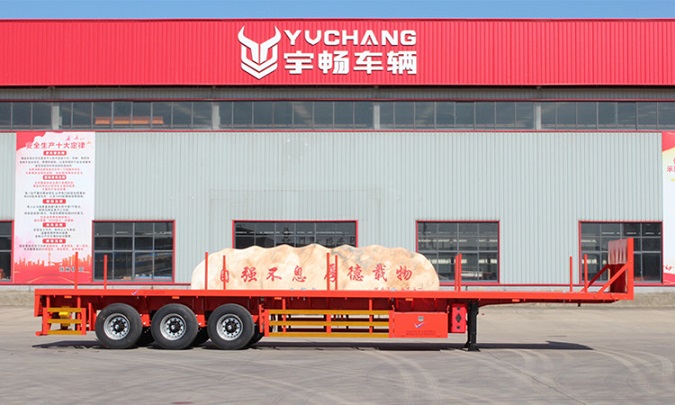
How to Source a 40ft Flatbed Trailer for Container Loads
Learn how to source a 40ft flatbed trailer for container loads: types, load capacity, export documents and a buyer's checklist. Request a quote today.
Read More →