 WhatsApp
 sales@youcantrailer.com
 +8615203709888
Why Does YOUCAN Use Robotic and Manual Welding Together?
Why Does YOUCAN Use Robotic and Manual Welding Together?
Quick Answer
YOUCAN uses robotic and manual welding together because semi trailer production contains both repeatable joints and variable, difficult-to-access joints. Robots are effective when fixtures, geometry, access, and production volume are stable. Skilled manual welders are essential for changing designs, attachment points, repairs, tight spaces, and joints that need real-time fit-up judgment. The best choice is a controlled combination, not an automatic preference for one method.
What Each Welding Method Does Best
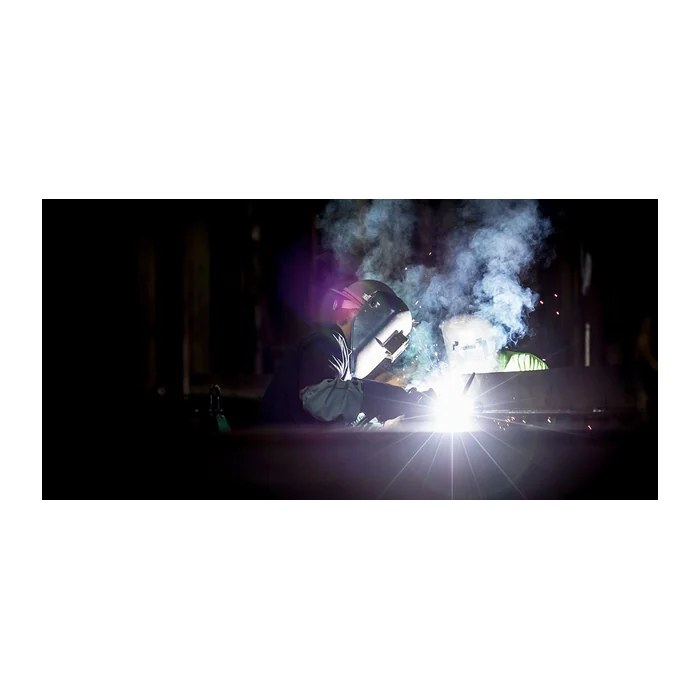
Robotic welding is a production system built around repeatable motion, programmed parameters, fixtures, and consistent parts. Manual welding is a flexible process in which a trained person can adapt to small variations in fit-up, access, sequence, and joint condition. A trailer factory needs both because product variety is rarely uniform across every structural joint.
| Situation | Robotic welding | Manual welding |
|---|---|---|
| Long repeatable joints | Strong fit when fixtures and geometry are stable | Can be slower but remains flexible |
| Variable custom structures | Needs programming and fixture changes | Adapts faster to changing details |
| Tight or hidden access | May be physically difficult | Welder can change position and approach |
| High production repetition | Good repeatability and cycle control | Depends more on individual consistency |
| Repair or correction | Usually not efficient to reprogram | Practical when the repair is controlled |
| Quality risk | Can repeat a wrong setup consistently | Can vary if procedure and supervision are weak |
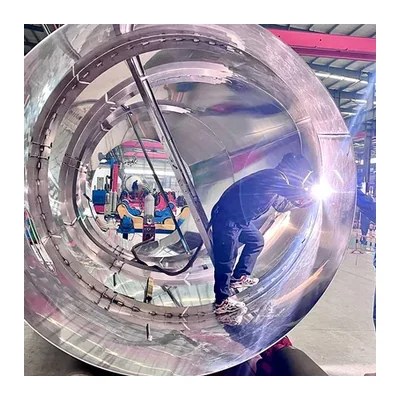
How the Hybrid Workflow Works
1. Select Suitable Joints for Automation
The factory first looks at joint length, geometry, access, fixture repeatability, and expected production volume. A robot is valuable when it can reach the joint consistently and maintain a stable process. A complex joint that changes from order to order may create more setup time than welding time.
2. Build Fixtures That Hold Geometry
Automation is only as reliable as the parts presented to it. Fixtures help locate beams, cross-members, and repeated attachments. They also reduce the chance that a part moves during welding. However, fixture design must still allow inspection and removal without damaging the structure.
3. Use Manual Welding for Fit-Up and Access Variations
Manual welding is useful around brackets, supports, corners, accessory mounts, and customized structures. The welder can recognize whether the gap, angle, or access differs from the standard setup and can stop for correction instead of allowing the robot to repeat a poor condition.
4. Apply the Same Quality Discipline to Both
Robot or human does not replace procedure control. Both methods need correct material, joint preparation, parameters, consumables, inspection, and correction records. A robotic weld can be wrong if the fixture is wrong, just as a manual weld can be wrong if the procedure is ignored.
A Practical Decision Matrix
| Production condition | Recommended emphasis | Reason | Buyer question |
|---|---|---|---|
| High-volume repeated frame modules | More robotic welding | Stable geometry rewards repeatability | How are fixtures and program revisions controlled? |
| Low-volume custom trailers | More manual welding with controlled procedures | The structure changes more often | Who approves changes and inspects the joints? |
| Primary beams and repeated cross-members | Hybrid | Automation can handle repeatable runs while manual work completes connections | Which joints are automated and which are manual? |
| Repair, rework, and final attachments | Manual welding | Access and condition are variable | How are repairs recorded and re-inspected? |
Engineering Note: Automation can repeat a good setup and a bad setup with equal confidence. The factory's setup verification is therefore as important as the robot itself.
What Buyers Should Look For in a Factory
Ask to see how the factory identifies automated and manual welding areas, how fixtures are checked, how program or procedure revisions are managed, and how the finished structure is inspected. A buyer does not need to demand a robot count. The more useful question is whether the selected method fits the joint and produces repeatable evidence.
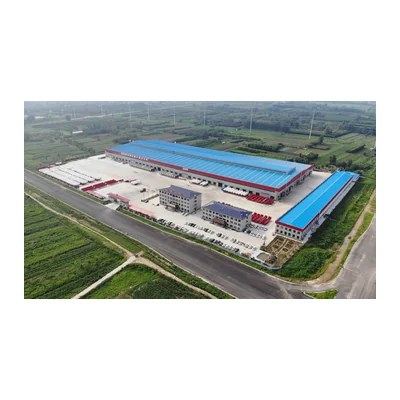
Production capability should be considered with the supplier's factory overview and quality control process. The same logic applies whether the product is a flatbed trailer, a lowbed trailer, or a specialized body.
Common Buyer Mistakes
Assuming a higher level of automation automatically means better quality.
Asking how many robots a factory has instead of asking which joints they improve.
Ignoring fixture maintenance and setup verification.
Treating manual welding as low quality without checking qualification and supervision.
Failing to define how changes and repairs are controlled after the automated stage.
Key Takeaways
Robotic welding suits repeatable geometry, stable fixtures, and recurring joints.
Manual welding is essential for access, variation, customization, and repair.
Both methods need procedures, qualified personnel, inspection, and records.
Fixture and setup control determine whether automation creates value.
A hybrid process is often the practical choice for trailer manufacturing.
FAQ
Is robotic welding stronger than manual welding?
Neither method is automatically stronger. Joint design, procedure, fit-up, heat control, and inspection determine the result.
Why not automate every trailer weld?
Trailer designs contain variable geometry, difficult access, low-volume options, and repairs that may not justify robot setup.
How can a buyer verify robotic welding quality?
Ask which joints are automated, how fixtures and programs are verified, and how the finished joints are inspected.
Does manual welding mean the factory is less advanced?
No. Skilled manual welding is necessary in many high-quality structures, especially when access and customization vary.
What is the main risk of too much automation?
Repeating an incorrect fixture, program, or fit-up condition consistently.
Conclusion
A good trailer factory chooses the welding method around the joint, the product mix, and the required repeatability. Robotic and manual welding work best as parts of one quality system with clear setup control and inspection.
References
ISO 3834 quality requirements for fusion welding of metallic materials
ISO 14732 qualification of welding operators and weld setters for mechanized and automatic welding
ISO 9606-1 qualification testing of welders for fusion welding