Commercial Semi Trailer Body Types and Export Uses Explained for Global Buyers
A commercial semi trailer is a freight-carrying trailer with no front axle. Its front end rests on the fifth wheel of a tractor unit, which carries part of the load. It is the standard road-freight platform for bulk materials, containers, liquids, vehicles and general cargo.
1. What Is a Commercial Semi Trailer?
A semi trailer combines a steel or aluminum chassis, a kingpin for coupling, one to three axle groups, suspension, brakes, landing legs and a cargo body. The body is what makes each trailer suitable for a specific cargo.
Its industrial importance comes from cost per tonne-kilometer. Separating the tractor from the trailer lets one power unit serve several trailers. This raises asset utilization for logistics fleets, mines, construction contractors and fuel distributors.
Core structural elements
- Chassis: main beams, usually high-tensile steel, that carry bending loads.
- Kingpin: typically 2-inch (50 mm) in most markets, with 3.5-inch designs in some regions.
- Running gear: axles, suspension, wheels and air brakes.
- Body: flat deck, tipping box, tank, curtain-sided frame or container locks.
2. Types of Commercial Semi Trailer
The most practical way to classify trailers is by body structure, because it determines the cargo, loading method and legal payload. The table below summarizes the main groups.
| Type | Typical cargo | Loading method | Key advantage |
|---|---|---|---|
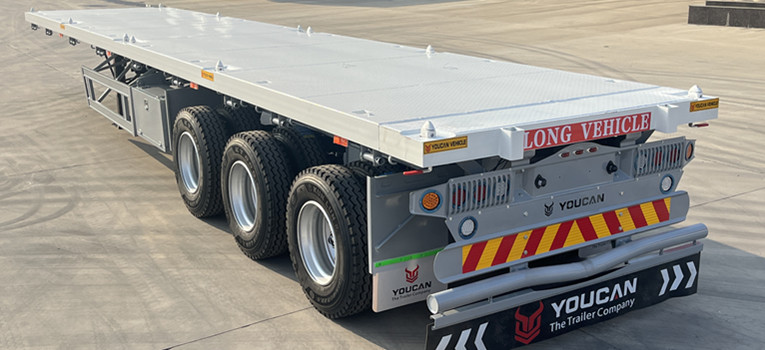
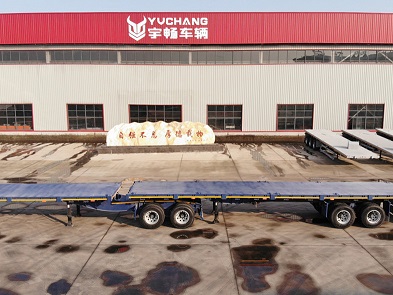
| Flatbed | Steel, pipes, machinery, pallets | Crane or forklift, top and side | Flexible and simple structure |
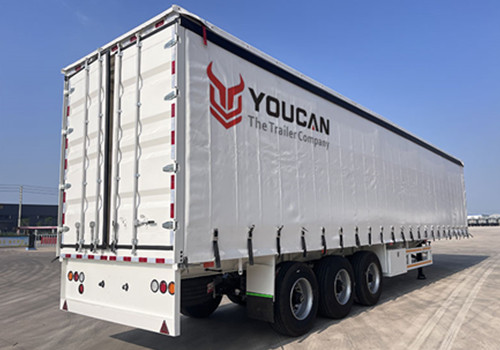
| Curtainsider | Palletized goods, packaged products | Side and rear access | Weather protection with fast side loading |
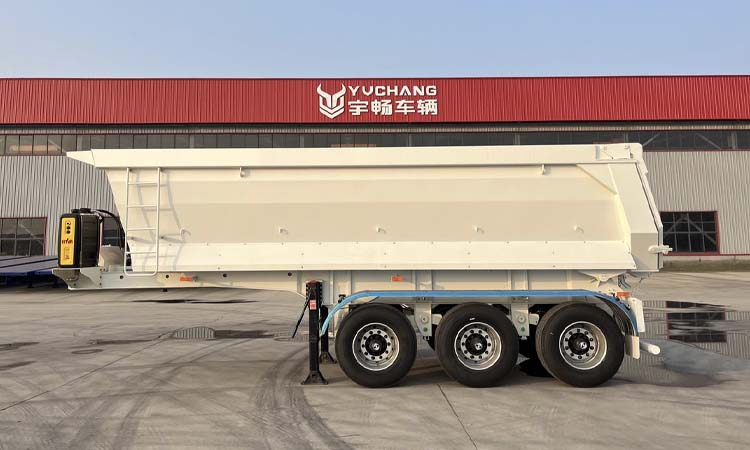
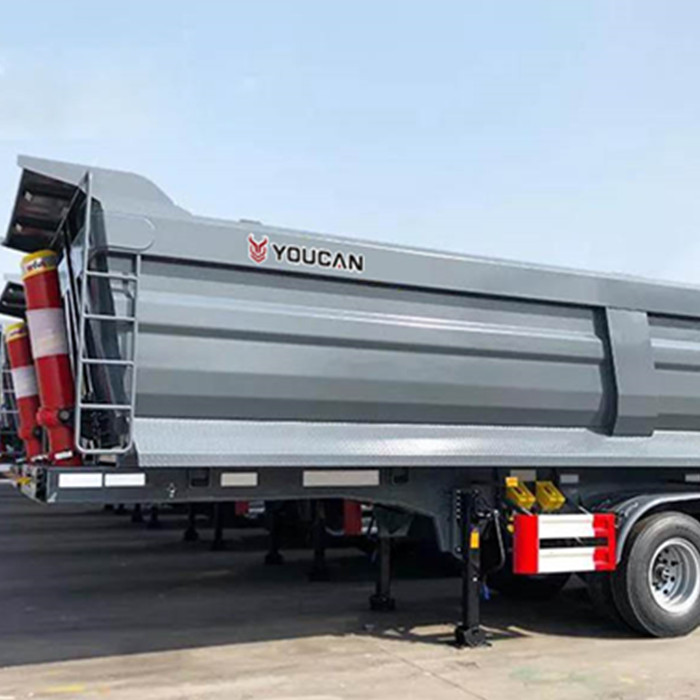
| Tipper (rear or side) | Sand, stone, coal, grain, scrap | Hydraulic tipping | Fast unloading without a dock |
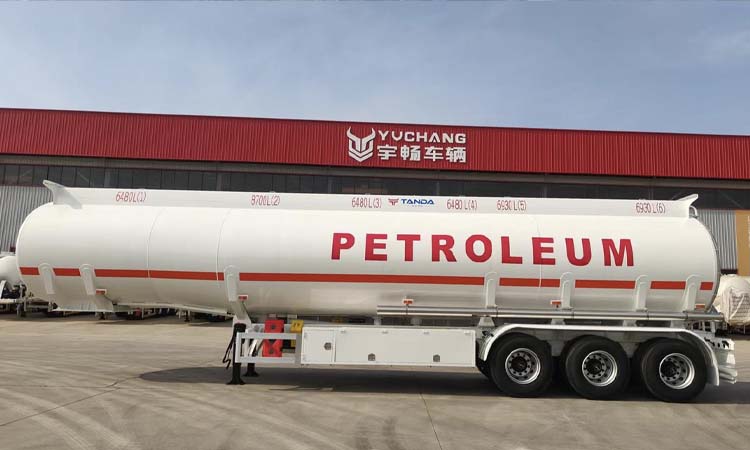
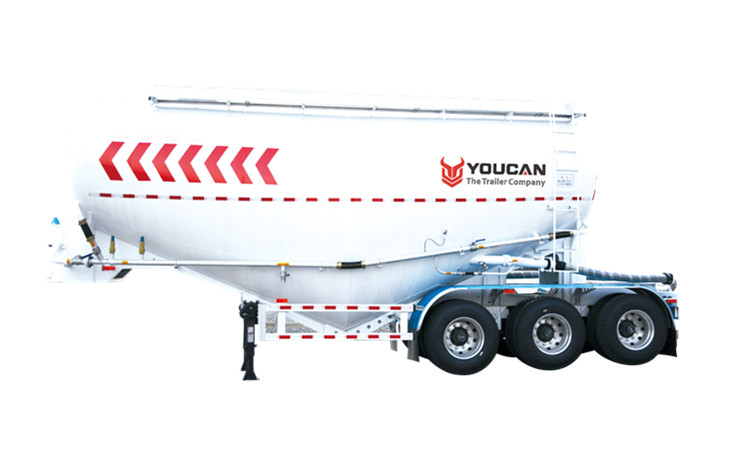
| Tank | Fuel, chemicals, water, cement powder | Pump, gravity or pneumatic | Sealed, bulk transport |
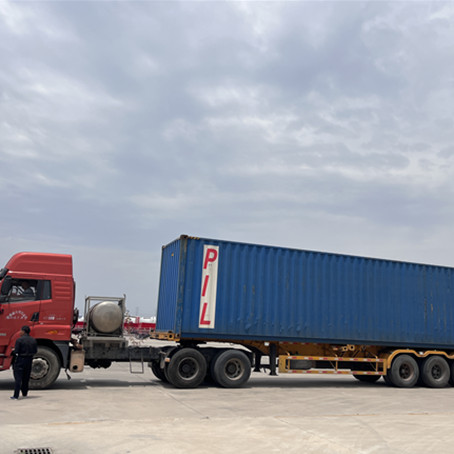
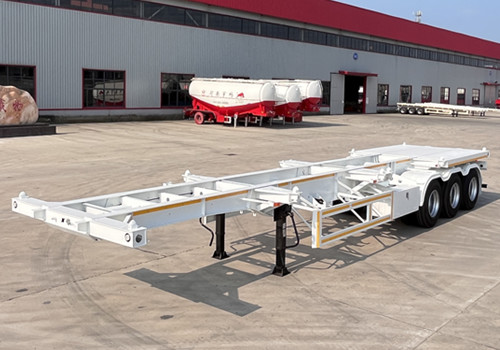
| Container chassis | 20 ft, 40 ft and 45 ft containers | Crane or reach stacker | Light tare weight and twist-lock fit |
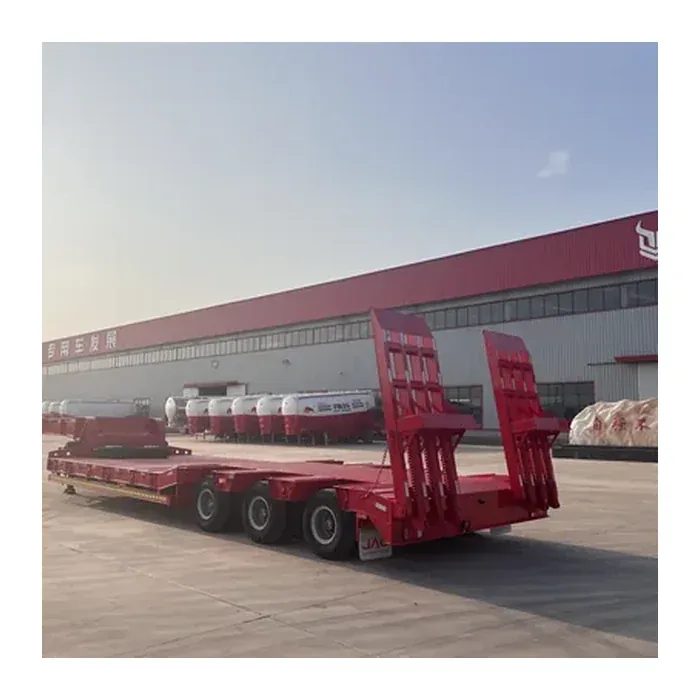
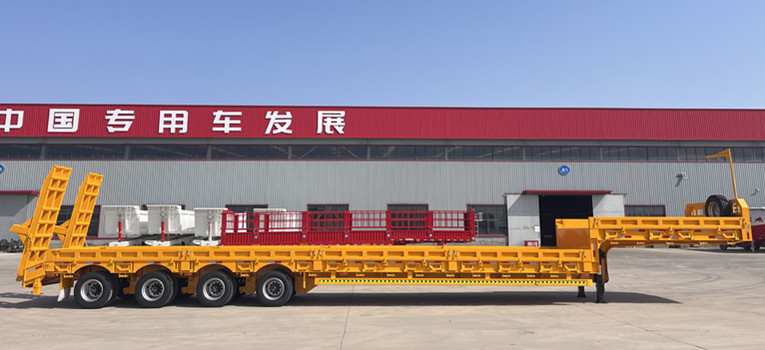
| Lowbed | Excavators, transformers, oversize loads | Ramps or hydraulic ramps | Low deck height for tall equipment |
Choosing between the main families
Our Flatbed Trailers suit mixed industrial cargo. For palletized goods that need rain protection, a Curtainsider is usually the better choice. Bulk operators typically compare rear-tipping and side-tipping designs.
3. Key Features of a Commercial Semi Trailer
- High-tensile steel chassis: a well-designed I-beam structure resists fatigue on rough roads. This extends service life and protects resale value.
- Axle and suspension configuration: two- or three-axle groups with mechanical or air suspension. They spread load evenly and help meet local axle-weight limits.
- Dual-line air braking: ABS or EBS options improve stability in emergency stops and lower accident risk.
- Lightweight design: reducing tare weight increases payload on every trip, which lowers cost per tonne.
- Corrosion protection: shot blasting, epoxy primer and polyurethane topcoat extend life in coastal or chemical environments.
- Standardized wear parts: common tires, bearings and brake components keep maintenance simple and cheap in remote regions.
4. Industry Applications of a Commercial Semi Trailer
Each body type serves distinct sectors. Typical long-tail uses include:
- Construction and mining: tipper semi trailer for sand, aggregate and coal haulage.
- Ports and intermodal logistics: 40 ft container chassis for port-to-warehouse transfers.
- Oil, gas and chemicals: fuel tanker semi trailer for depot-to-station delivery.
- Cement and building materials: powder tank trailers with pneumatic discharge.
- Heavy equipment transport: lowbed semi trailer for excavators and cranes.
- Retail and FMCG distribution: curtain-sided trailers for pallet loads.
- Agriculture: grain and fertilizer hauling during harvest seasons.
For liquid cargo, buyers often review our Tank Trailers range. Port operators usually start with a Container Chassis.
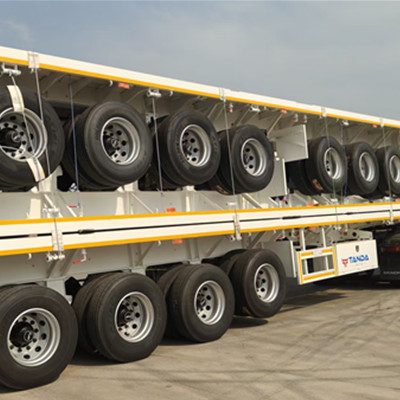
5. Commercial Semi Trailer for Sale
Standard models are usually offered in several configurations. Final specifications are confirmed against your road regulations and cargo.
Common standard configurations
- 2-axle and 3-axle flatbed: 40 ft and 45 ft lengths.
- Tri-axle tipper: body volume typically from 30 to 50 cubic meters.
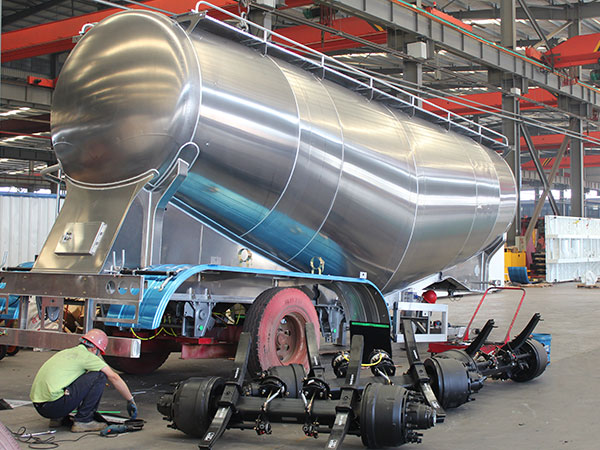
- Tank semi trailer: carbon steel, stainless steel or aluminum tanks, with single or multiple compartments.
- Container chassis: skeleton frames with twist locks for 20 ft, 40 ft or combined loads.
- Lowbed: 2- to 6-axle lines with fixed or detachable gooseneck.
To compare models, request our price list or product catalog with your destination country and cargo type.
6. Buying Guide for a Commercial Semi Trailer
Purchasing checklist
- Cargo and density: define weight, volume and loading method first.
- Legal limits: check maximum length, width, height and axle loads at the destination.
- Tractor compatibility: confirm fifth wheel height, kingpin size and air or electric connectors.
- Material and finish: choose steel grade, aluminum or stainless options according to cargo corrosiveness and weight goals.
- Budget: compare total cost of ownership, not just purchase price.
- Warranty and service: ask for written terms, spare parts availability and remote technical help.
Common mistakes to avoid
- Selecting by price alone and ignoring chassis thickness and weld quality.
- Ordering a body type that does not match the actual loading equipment.
- Overlooking local homologation or inspection requirements.
- Skipping a spare parts package for remote operations.
7. Working Principle of a Semi Trailer
The tractor's fifth wheel locks onto the trailer's kingpin, creating a pivoting joint. Load on the front is carried by the tractor, and the rest is carried by the trailer axles. This allows long vehicles to turn while keeping weight distributed.
The braking system is pneumatic. Compressed air from the tractor releases the spring brakes and pressurizes the service brakes. If air pressure is lost, the spring brakes apply automatically. This is a key safety principle.
8. How Does a Semi Trailer Work in Daily Operation?
- Setup: reverse the tractor under the trailer until the kingpin locks, then connect air and electrical lines and raise the landing legs.
- Pre-trip check: inspect tires, lights, brakes, locks and any hydraulic or discharge components.
- Loading: distribute cargo evenly and secure it according to local rules.
- Operation: for tippers, engage the power take-off and hydraulic lift. For tankers, connect hoses and open valves in sequence.
- Maintenance: lubricate fifth wheel and suspension points, check brake wear and tighten wheel nuts at scheduled intervals.
Operators should be trained in coupling safety and load securing. Genuine wear items are available through our Tipper Trailers support team and parts desk.
9. OEM and ODM Customization Options
Many importers need trailers adapted to a local market. Typical customization includes:
- Dimensions: length, deck height, axle spacing and body volume.
- Colors and branding: RAL paint colors, logos and reflective markings.
- Electrical and air systems: 12 V or 24 V lighting, specific plug standards and ABS or EBS.
- Components: preferred axle, tire, suspension and landing leg brands.
- Special options: toolboxes, spare wheel carriers, ladders, tarpaulin systems or pumps.
We accept OEM drawings and can develop ODM designs from your cargo data. MOQ is flexible and is often discussed per model, so pilot orders are possible.
10. Packaging and Shipping for Export
Trailers are usually shipped in one of three ways: Ro-Ro, flat-rack or open-top container, or bulk or break-bulk vessel. Dismantled or semi-knocked-down loads can reduce freight cost on long routes.
Protection and documentation
- Fumigation-free wooden supports and crates for fragile parts.
- Moisture-proof wrapping and anti-rust oil on bare metal.
- Foam or cardboard protection for lights, glass and gauges.
- Lashing points and photographs before sealing for transparency.
Export paperwork normally includes commercial invoice, packing list, bill of lading and certificate of origin. We can also support documents required by your customs authority. Air and express options are limited to small parts and samples.
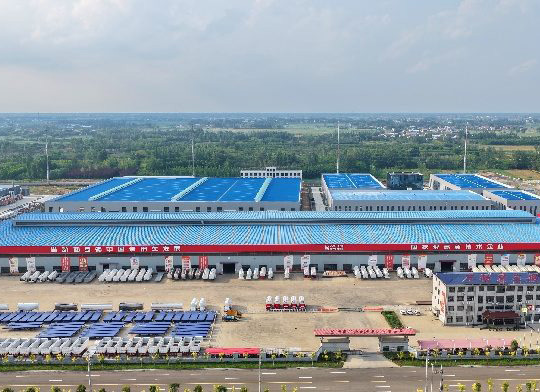
11. Why Choose Us as Your Commercial Semi Trailer Manufacturer?
- Broad product range: flatbed, tipper, tank, container and lowbed models from one source.
- Engineering support: our team reviews cargo, route and regulation data before drawing.
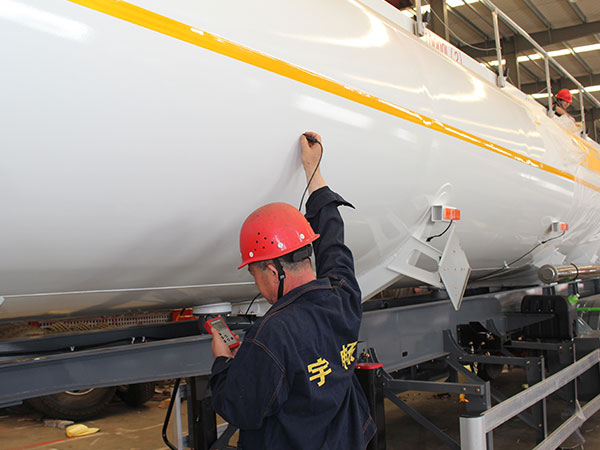
- Quality control: inspection of materials, welding and final assembly, with documents available on request.
- Clear lead times: production schedules are confirmed in the quotation.
- After-sales help: remote technical assistance and spare parts support for overseas users.
Please ask us for the certificates and references relevant to your market so that you can verify them before ordering.
12. FAQ About Commercial Semi Trailer Purchasing
What affects the price of a semi trailer?
Body type, axle count, steel grade, brand of running gear, tank material and options. Tankers and lowbeds are usually more expensive than flatbeds because of their materials and complexity.
What is the typical lead time?
Standard models usually take a few weeks to produce. Custom builds take longer. We confirm the exact schedule in the quote.
How long does a semi trailer last?
With regular maintenance, a well-built trailer often serves for many years. Road conditions, overloading and corrosion exposure have the greatest influence.
What warranty is provided?
Warranty terms cover structure and defects in workmanship. Wear parts, such as tires and brake linings, are treated separately. The duration is stated in the contract.
Do you provide operator training?
We supply manuals and video guidance on coupling, operation and maintenance. Remote support is available for first use.
Can I order a mix of trailer types?
Yes. Mixed orders are possible, and shipping can be consolidated to reduce logistics cost. We can advise on loading plans.
To receive a quote, a catalog or selection advice, send your cargo type, destination country and preferred configuration through the website inquiry form, by email, or by WhatsApp.
Flatbed vs Lowbed: Guide from a China Trailer Manufacturer
Choosing between a flatbed and a lowbed trailer? This guide from a leading China trailer manufacturer compares specs, costs, and applications to help ...
Read More →
How to Audit a Flatbed Trailer Manufacturer?
Learn how to audit a flatbed trailer manufacturer: capability checks, QC steps, certifications, OEM support and export logistics. Ask for a checklist ...
Read More →