Flatbed vs Lowbed: Guide from a China Trailer Manufacturer
In the world of commercial transport and heavy haulage, the choice between a flatbed and a lowbed semi-trailer is fundamental. While both are designed to move heavy loads, their structural differences dictate their ideal applications, operational efficiency, and overall return on investment. As an experienced china trailer manufacturer, we understand that selecting the right asset is the first step toward a profitable and safe operation. This guide provides an in-depth, technical comparison to help procurement managers and fleet operators make an informed decision.
Executive Summary and Quick Comparison Table
For busy decision-makers, the core difference is simple: Flatbed trailers offer versatility for standard-height cargo, while lowbed trailers are specialized for hauling oversized, tall, and heavy equipment. A flatbed's single-level deck allows for easy loading from any side, making it a workhorse for general freight, construction materials, and containerized goods. In contrast, a lowbed (or lowboy) features a "drop deck" that sits much closer to the ground, creating a lower center of gravity and providing the necessary vertical clearance for items like excavators, bulldozers, and large industrial components.
| Feature | Flatbed Trailer | Lowbed Trailer |
|---|---|---|
| Deck Design | Single, continuous flat deck | Multi-level deck with a main "well" lower than the axles |
| Deck Height | Approx. 1.4 - 1.6 meters (55 - 63 inches) | Main deck as low as 0.6 - 0.9 meters (24 - 35 inches) |
| Primary Application | General cargo, palletized goods, containers, steel, lumber | Tall and heavy equipment (excavators, cranes), oversized loads |
| Loading Method | Forklift from side, crane from top, rear loading | Drive-on via ramps or detachable gooseneck (RGN) |
| Payload Capacity | Typically 30 - 60 tons | Can be engineered for 50 - 150+ tons |
| Cost Level | Lower | Higher (due to complex structure and materials) |
| Versatility | High | Low (specialized) |
Understanding Flatbed Trailers: Overview, Pros & Cons
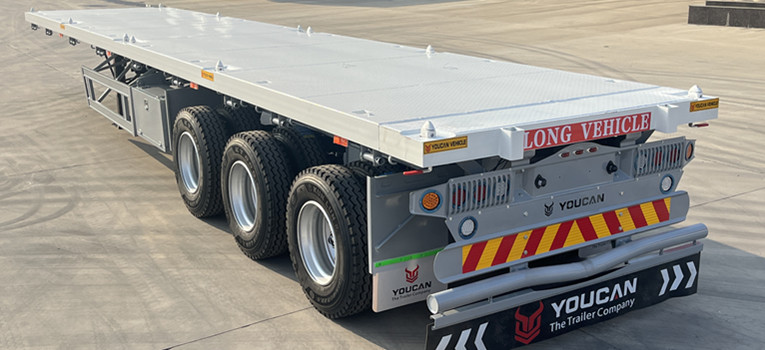
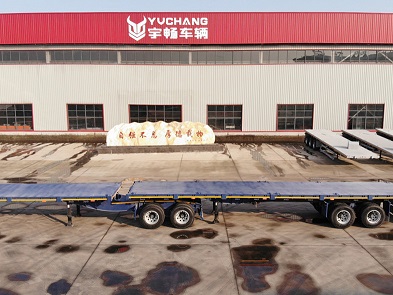
A flatbed trailer is defined by its open, flat body with no roof or sides, providing a simple and unobstructed platform for cargo. This design is its greatest strength, offering immense flexibility in the types of loads it can carry and how they can be secured. Our range of Flatbed Trailers are engineered from high-strength steel like Q345B to ensure durability under demanding conditions.
Pros of Flatbed Trailers
High Versatility: Can transport everything from construction materials and industrial parts to standard shipping containers.
Loading Efficiency: Cargo can be loaded or unloaded from the sides, top, or rear using forklifts or cranes, significantly speeding up turnaround times.
Cost-Effective: Simpler design and construction lead to a lower initial purchase price compared to more specialized trailers.
Lower Tare Weight: Generally lighter than lowbeds, which can translate to better fuel efficiency when running empty or with lighter loads.
Cons of Flatbed Trailers
Height Restrictions: The higher deck means tall cargo may exceed legal height limits on public roads.
Load Security: Cargo must be meticulously secured with straps, chains, or tarps, as there are no walls for containment.
Limited for Top-Heavy Loads: The higher center of gravity makes it less stable for transporting top-heavy or irregularly shaped equipment.
Understanding Lowbed Trailers: Overview, Pros & Cons
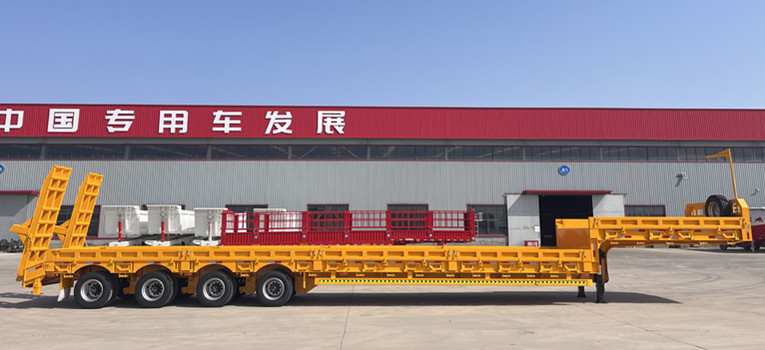
Lowbed trailers, also known as lowboys or step-deck trailers, are purpose-built for heavy and oversized freight. Their key feature is a two-level deck profile with a main section that is significantly lower than the front and rear decks. This design is crucial for legally and safely transporting tall items that would be impossible to move on a standard flatbed. These are essential assets in the construction, mining, and energy sectors.
Pros of Lowbed Trailers
Hauls Oversized Cargo: The primary advantage is the ability to transport cargo exceeding standard height limits, such as excavators, combines, and large machinery.
Enhanced Stability: The extremely low center of gravity provides superior stability, which is critical when moving heavy and expensive equipment.
Safe Equipment Loading: Many Lowbed Trailers feature rear ramps or a removable gooseneck (RGN) system, allowing wheeled or tracked machinery to be driven directly onto the deck.
High Payload Capacity: They are engineered with robust frames and multi-axle configurations to handle extremely heavy loads, often well over 100 tons.
Cons of Lowbed Trailers
Higher Initial Investment: The complex engineering, specialized materials, and hydraulic systems (in RGN models) result in a significantly higher purchase price.
-
Reduced Versatility:While excellent for their intended purpose, they are inefficient for general freight or palletized goods.
-
Ground Clearance Issues:The low deck can be a challenge on uneven terrain, steep inclines, or when navigating railroad crossings.
Core Differences: Flatbed vs. Lowbed (Head-to-Head Analysis)
Performance and Transport Stability
Performance is measured by stability and safety. For tall equipment, a lowbed is unquestionably superior. Its low-slung design minimizes sway and reduces the risk of tipping, especially on turns or uneven roads. A flatbed performs excellently with stable, well-distributed loads like steel coils or lumber, but its higher center of gravity presents a risk with top-heavy machinery.
Versatility and Industry Suitability
A flatbed is the Swiss Army knife of the trailer world, serving logistics, construction, and agriculture with equal competence. It's ideal for businesses with diverse and unpredictable cargo needs. A lowbed is a specialist tool. It is indispensable for heavy haulage companies, construction firms, and equipment rental businesses. Its lack of versatility is offset by its ability to perform tasks no other trailer can, often commanding premium freight rates.
Cost Analysis: Upfront vs. Operational
The upfront cost of a lowbed can be 1.5 to 3 times that of a standard flatbed. This is due to the reinforced frame, complex suspension, and often, hydraulic systems. However, operational costs are more nuanced. While maintenance on a lowbed's hydraulics can be higher, the revenue generated from a single specialized heavy haul can far exceed that of several general freight runs on a flatbed. The ROI for a lowbed is tied directly to securing specialized contracts.
Lifespan and Daily Maintenance
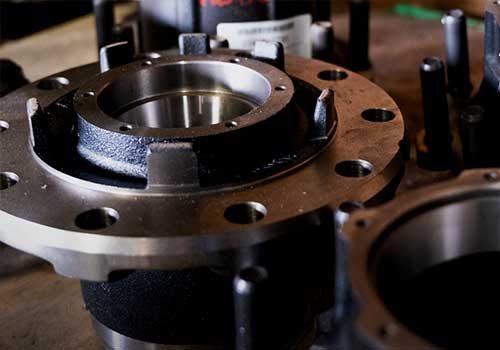
Both trailer types are built for longevity when sourced from a quality manufacturer. Maintenance for both involves regular checks on tires, brakes, lights, and suspension components. Critical Trailer Parts must be inspected daily. Lowbeds require additional attention to their hydraulic lines (if RGN), ramp mechanisms, and the structural integrity of the drop-deck frame, which is under immense stress.
Decision Matrix: How to Choose Between a Flatbed and a Lowbed
Use these clear guidelines to steer your procurement decision.
Choose a Flatbed Trailer if...
Your primary cargo consists of building materials, palletized goods, pipes, or standard containers.
You require fast and flexible loading/unloading from multiple sides.
Your business model relies on high-volume, general freight with quick turnarounds.
Upfront capital investment is a primary constraint.
Choose a Lowbed Trailer if...
You exclusively or frequently transport tall, heavy machinery like bulldozers, cranes, or agricultural equipment.
Safety and stability for high-value, oversized cargo are your top priorities.
Your business operates in the specialized heavy haulage market.
Your routes involve height restrictions that a standard trailer cannot clear.
Customization Options (OEM/ODM Capabilities)
A key benefit of working directly with a manufacturing partner is the ability to specify a trailer for your exact needs. Both flatbed and lowbed models can be customized extensively. Common OEM/ODM options include axle configuration (from 2 axles to 8+), overall length and width, deck material (wood, steel), addition of container twist locks, choice of suspension (air or mechanical), and specific paint and branding to match your fleet.
Packaging and Shipping Guidance for International Buyers
Shipping large semi-trailers internationally requires expertise. We typically ship trailers via bulk carrier or Roll-on/Roll-off (Ro-Ro) vessels for fully assembled units. To reduce shipping costs, we can also ship two or three trailers stacked together. For CKD (Completely Knocked Down) or SKD (Semi Knocked Down) orders, parts are carefully packed in containers, ensuring maximum protection and optimized freight costs. All units are waxed and covered to prevent corrosion from sea air during transit.
Why Source From an Experienced Manufacturing Partner?
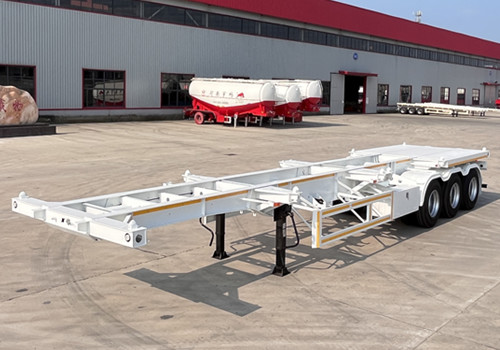
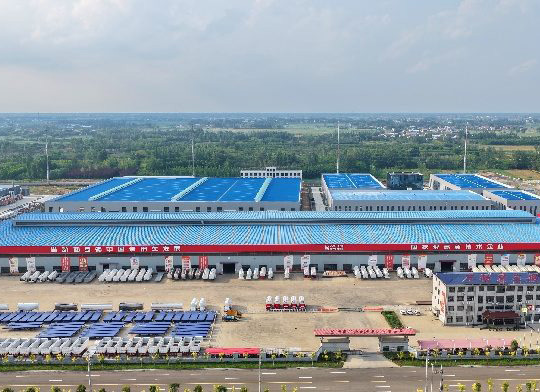
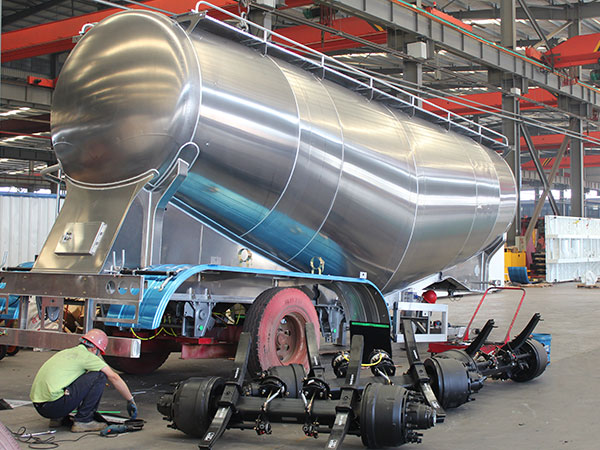
Choosing the right trailer is only half the battle; choosing the right partner is just as critical. With ISO 9001 and CE certifications, our production facilities utilize advanced welding robots and stress analysis software to ensure every trailer meets stringent international standards. From versatile Container Chassis to specialized tankers, our multiple production lines give us the flexibility to deliver high-quality, customized solutions on schedule. Our engineering team provides global technical support to ensure your fleet operates at peak performance.
For detailed specifications or advice on configuring the ideal trailer for your application, contact our engineering team to discuss your project.
Frequently Asked Questions (FAQ)
What is the main advantage of a lowbed trailer's design?
The main advantage is its low deck height, which allows it to transport oversized and tall cargo (like construction machinery) that would exceed legal road height limits on a standard flatbed. This design also provides a lower center of gravity for enhanced stability.
Can a flatbed trailer carry heavy machinery?
Yes, a flatbed can carry heavy machinery, provided the equipment's weight is within the trailer's payload capacity and its height does not violate transport regulations. However, for taller machines, a lowbed is the safer and often only legal option.
Which trailer type offers a better return on investment (ROI)?
The ROI depends entirely on your business model. A flatbed offers a steady ROI through high-volume general freight. A lowbed delivers a higher ROI per job due to the specialized, high-value nature of heavy haulage, but it requires securing those specific contracts to be profitable.
What are the most common customizations for these trailers?
Common customizations include the number and brand of axles (e.g., BPW, FUWA), suspension type (air ride vs. mechanical), trailer length and width, deck flooring material, and the addition of features like container twist locks, side stakes, or hydraulic ramps.
Vetting a China Trailer Manufacturer for Export Success
A comprehensive guide to vetting a China trailer manufacturer. Learn key specs, quality standards, and common mistakes to ensure a successful import p...
Read More →