Calculate 40ft Flatbed Trailer Landed Cost
The ex-works or FOB quotation is only the starting point of what you will actually pay. This guide explains how to build a reliable landed cost for a 40ft flatbed trailer, and covers the technical and commercial points that influence the final figure.
1. What Is a 40ft Flatbed Trailer?
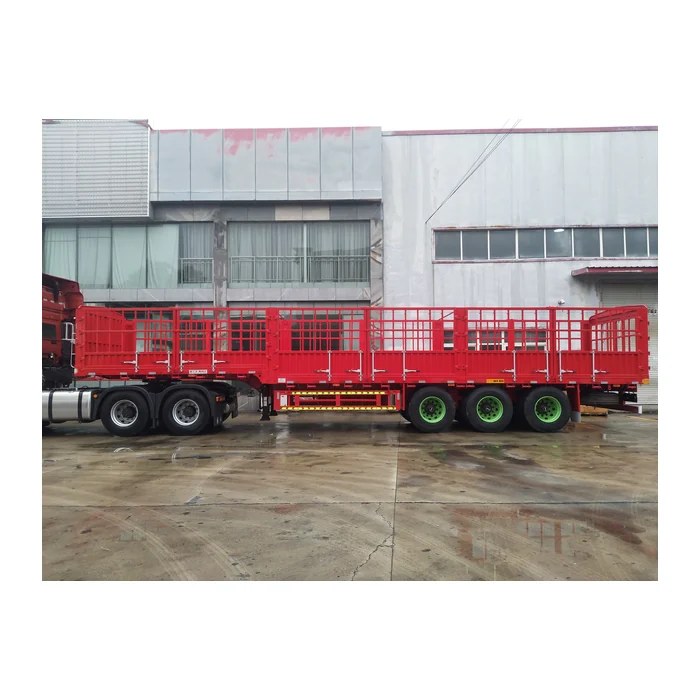
A 40ft flatbed trailer is a semi-trailer with an open, flat load deck of roughly 12.2 to 13.5 metres. It has no roof or side walls. It couples to a tractor unit through a kingpin and fifth wheel, and is built to carry containers, steel, machinery, timber and other heavy or oversized cargo.
Its industrial value is flexibility. Loading from the top, sides or rear is possible, and one chassis can serve several cargo types. This makes it a core asset for logistics fleets, construction suppliers and project cargo operators.
What "Landed Cost" Means
Landed cost is the total expense of getting the trailer onto your yard, road-ready and legally registered. It includes the factory price, international freight, insurance, duties, taxes, port fees and local delivery. Buyers who compare only FOB quotes often underestimate their budget by 40% to 60%.
2. Types of Flatbed Semi-Trailers
The trailer type affects weight, freight volume and duty classification. The main variants are:
| Type | Typical Axle Setup | Best For | Cost Impact |
|---|---|---|---|
| Standard flatbed | 2 or 3 axles | General cargo, steel, pipes | Lowest base price |
| Container flatbed with twist locks | 2 or 3 axles | 20ft and 40ft containers | Slightly higher due to locks |
| Extendable flatbed | 3 axles or more | Long beams, wind blades | Higher, more steel and mechanisms |
| Flatbed with side walls or stakes | 2 or 3 axles | Bulk bagged goods, timber | Moderate, added weight |
| Low-deck / lowbed | 3 axles or more | Excavators, tall machinery | Highest, specialised structure |
For heavy machinery, compare with our Lowbed Trailers. If you operate in markets with road-train style combinations, the Interlink Flatbed Trailer is worth reviewing.
3. Key Features and Their Business Benefits
- High-tensile steel main beams: resist fatigue and deformation, which extends service life and protects resale value.
- Tri-axle configuration with 13-ton axles: supports payloads commonly of 30 to 40+ tons, reducing cost per ton-kilometre.
- Mechanical or air suspension: mechanical leaf springs are cheaper and simple to repair. Air suspension protects delicate cargo and tyres.
- Twist locks and lashing rings: secure containers and loads quickly, cutting loading time and cargo-shift risk.
- Dual-line air brake system with ABS options: improves safety and helps meet regional regulations.
- Anti-corrosion coating: shot blasting, epoxy primer and polyurethane topcoat lower maintenance in humid or coastal climates.
4. Industry Applications
Flatbed semi-trailers are used wherever cargo is heavy, long or irregular. Typical scenarios include:
- Construction and infrastructure: rebar, precast concrete, steel beams and scaffolding transport.
- Port and container logistics: short-haul container transfer between terminals, depots and factories. See also our Container Chassis.
- Mining and energy: pipes, cable drums, transformers and wind turbine components.
- Agriculture and forestry: timber logs, bagged fertiliser and farm machinery.
- Metal fabrication and manufacturing: coils, plates and fabricated structures moving between plants.
5. Flatbed Models Available for Sale
Our standard range covers the most requested export configurations. Buyers can browse the full line on our Flatbed Trailers page.
- 2-axle, 13.5m flatbed: light-duty option for lower axle-load regulations.
- 3-axle, 40ft flatbed with container locks: the most common export model.
- 3-axle, 40ft flatbed with side rails: for loose or bagged cargo.
- Extendable and low-deck variants: for special project cargo.
If you would like a current price list or catalog, tell us your destination country and we will prepare it.
6. Buying Guide and Landed Cost Checklist
Step-by-Step Calculation
Use this formula to answer the common question of how much a 40ft flatbed costs once it arrives:
Landed cost = FOB price + ocean freight + insurance + import duty + VAT/GST + port and customs charges + inland delivery + registration or modification costs.
The table below is an illustration only. It assumes a 40ft flatbed trailer FOB price of USD 10,000, a duty rate of 10% and VAT of 15%. Your actual figures will differ.
| Cost Item | Assumption | Amount (USD) |
|---|---|---|
| FOB price | Quoted by manufacturer | 10,000 |
| Ocean freight | Flat rack or RoRo, assumed | 1,800 |
| Marine insurance | Approx. 0.5% | 60 |
| CIF value | Sum of the above | 11,860 |
| Import duty | 10% of CIF | 1,186 |
| VAT / GST | 15% of CIF + duty | 1,957 |
| Port, THC, brokerage, inland haulage | Estimate | 900 |
| Estimated landed cost | 15,903 |
In this example, the landed cost is about 1.6 times the FOB price.
Factors That Change the Numbers
- Import duty: import duty on flatbed trailers varies by country and is usually assessed under HS code 8716.39. Confirm the rate and any trade-agreement preference with your customs broker.
- Freight: flatbed trailer shipping cost depends on route, season, and whether the unit ships whole or partly disassembled.
- Specification: axle brand, suspension type and tyre grade can move the FOB figure noticeably.
- Warranty and after-sales support: check spare parts availability, for example through a supplier of Trailer Parts.
Common Buying Mistakes
- Comparing quotes with different Incoterms, such as FOB against CIF.
- Ignoring local axle-load, length and lighting regulations, which can force costly modifications.
- Choosing the lowest 40ft flatbed trailer price without checking steel grade and beam thickness.
- Forgetting demurrage, storage and customs inspection fees at the destination port.
- Not requesting a pre-shipment inspection report and photographs.
7. Working Principle
A flatbed semi-trailer transfers load through its deck and main beams to the axles and the tractor's fifth wheel. The kingpin at the front carries part of the weight, and the axle group carries the rest. A well-designed frame spreads stress evenly, so the trailer flexes within safe limits instead of cracking.
Suspension absorbs road shock. The braking system uses compressed air from the tractor to apply the brakes at every wheel. Landing legs support the front when the trailer is parked.
8. How Does It Work in Daily Operation?
- Setup: reverse the tractor under the trailer until the fifth wheel locks onto the kingpin. Connect air lines and the electrical cable, then raise the landing legs.
- Loading: position cargo to keep the centre of gravity low and balanced across axles. Respect the rated payload.
- Securing: lock containers with twist locks, or fasten other cargo with straps, chains and edge protectors.
- Transport: check tyre pressure, lights and brake function before departure and at regular stops.
- Maintenance: grease the fifth-wheel contact point and suspension bushes. Inspect welds, tyres and brake linings on a scheduled basis.
9. Customization Options (OEM/ODM)
Many importers need a trailer adapted to local rules or fleet standards. Available services typically include:
- Custom deck length, width, height and axle count.
- Choice of axle, suspension, tyre and brake brands.
- Paint colour, logo and branding.
- Lighting and electrical plug standards for your market (for example 7-pin or 15-pin).
- Extra toolboxes, spare wheel carriers, headboards and lashing points.
We support OEM and ODM projects and can discuss a flexible minimum order quantity, including trial orders for new distributors. Submit your drawings for a technical review.
10. Packaging and Shipping
Trailers are rarely crated. Instead, preparation focuses on protecting paint, electrical parts and the running gear.
- Exposed components: wrapped in moisture-proof film, with anti-collision foam on lights and air fittings.
- Small parts: packed in cartons or fumigation-free plywood cases and secured to the deck.
- Tyres and wheels: protected against rubbing, and lashed to prevent movement.
Shipping Methods
- Flat rack container: a common method that keeps the trailer as a complete unit.
- RoRo (roll-on/roll-off): suited to ports with RoRo service and often cost-effective for assembled units.
- Break-bulk: useful for oversized variants.
- Knock-down in a 40HQ container: axles and parts are shipped partly disassembled to reduce freight volume. This lowers flatbed trailer shipping cost, but local assembly is required.
We prepare the commercial invoice, packing list, certificate of origin and bill of lading, and can supply other documents your customs authority requires.
11. Why Choose Us as Your Flatbed Trailer Manufacturer?
- Specialist trailer production: we manufacture flatbeds, tippers, tankers and lowbeds. See our General Cargo Semi Trailers as well.
- Quality control: inspections cover steel material, welding, assembly and braking tests before shipment.
- Documentation: certification and test documents can be provided on request.
- R&D and engineering: our team adapts designs to your regional regulations and loads.
- Transparent quotations: we state Incoterms, specifications and included items clearly so you can compare offers fairly.
- Responsive support: technical and after-sales questions are answered promptly, across time zones.

12. Frequently Asked Questions
How much does a 40ft flatbed cost?
The FOB price varies with axle brand, suspension, steel thickness and options. The landed cost is typically 1.4 to 1.7 times the FOB figure once freight, duty, VAT and port charges are added.
How do I calculate the landed cost?
Add FOB price, ocean freight, insurance, import duty, VAT or GST, port and customs fees, and inland delivery. Ask your customs broker to confirm the duty rate for your HS code.
What is the typical lead time?
Standard models usually take about 20 to 35 days after deposit. Customised designs may need longer, depending on drawings and material availability.
What is the expected service life?
With proper loading and maintenance, a well-built flatbed semi-trailer commonly serves 10 to 15 years. Corrosion protection and regular inspection have the biggest influence.
What warranty is offered?
Warranty terms are agreed in the contract and normally cover the structure and workmanship. Wear parts such as tyres and brake linings follow their manufacturers' terms.
Is operator training provided?
We supply operation and maintenance manuals, and can give remote guidance for first-time users.
To receive a landed cost estimate, send us your destination port, required specifications and target quantity through our inquiry form, by email or on WhatsApp, and our team will prepare a detailed quotation.
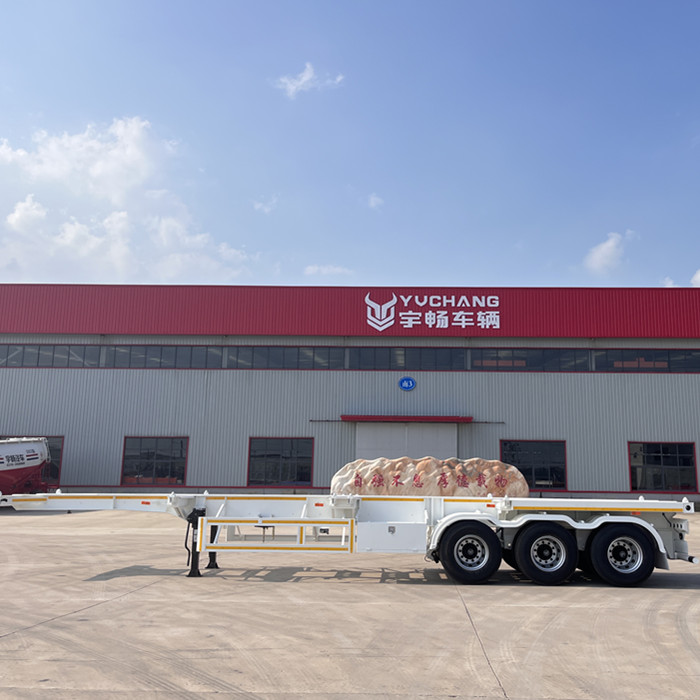
What Is the Difference Between a Flatbed Trailer and a Skeleton Trailer?
Compare the differences between a flatbed trailer and a skeleton trailer to choose the best equipment for your fleet.
Read More →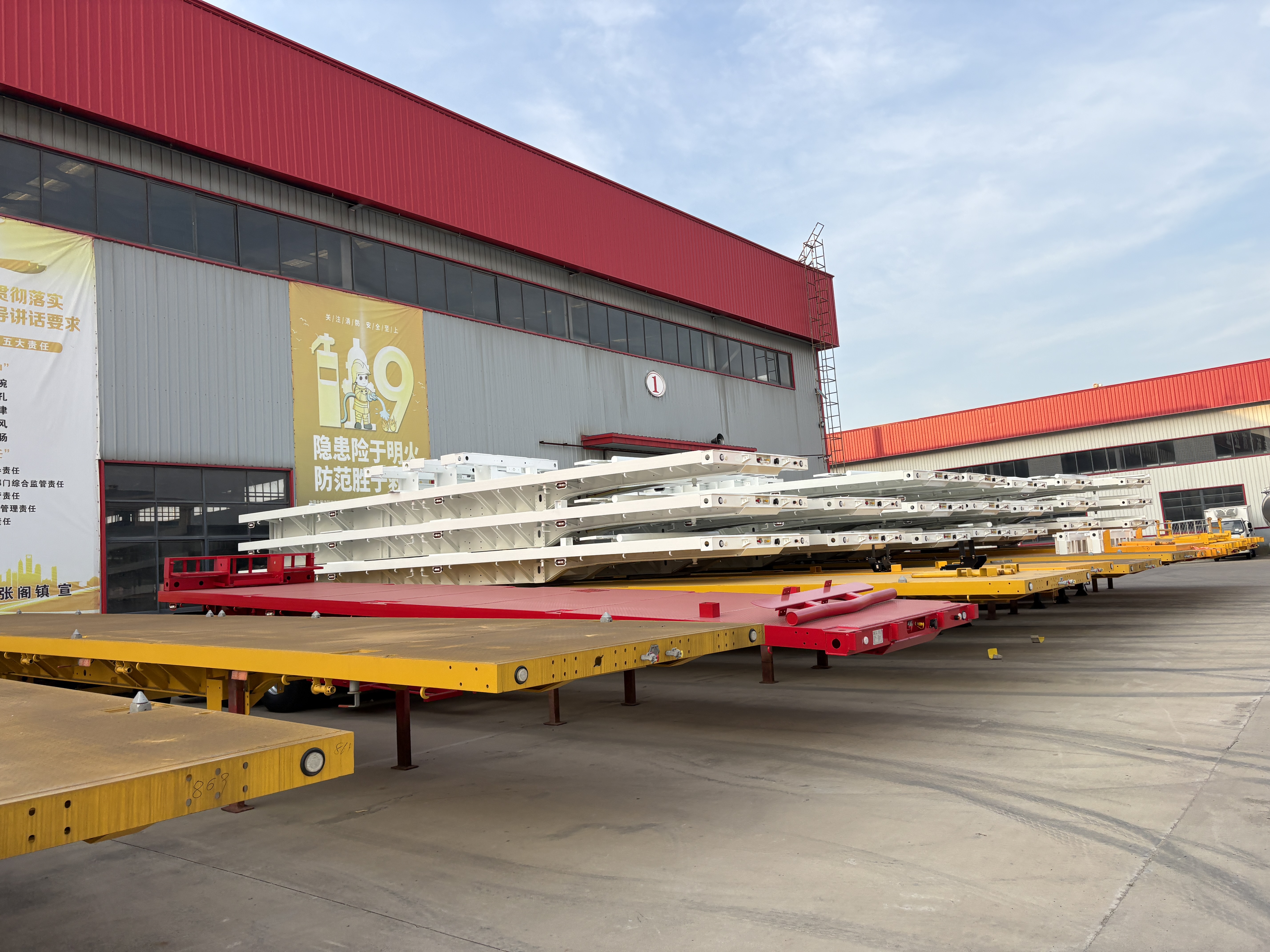
How to Source a 40ft Flatbed Trailer for Container Loads
Learn how to source a 40ft flatbed trailer for container loads: types, load capacity, export documents and a buyer's checklist. Request a quote today.
Read More →