What Is the Difference Between a Flatbed Trailer and a Skeleton Trailer?
Choosing between a Flatbed Trailer and a skeleton trailer comes down to one fundamental question: does your fleet carry only containers, or does it need to haul a mix of cargo types? The two trailer designs look similar from a distance, but their structures, loading methods, and earning potential are very different. YOUCAN Trailer will walk you through the key differences, advantages, applications, and specifications to help you make the right choice for your operation.
What Is a Flatbed Trailer?
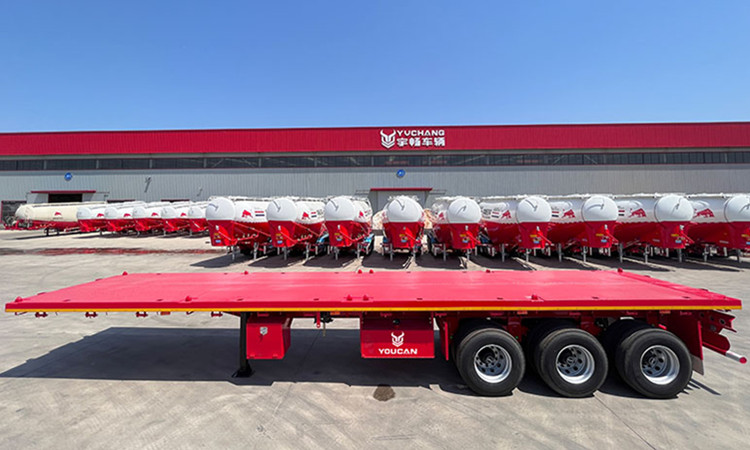
A Flatbed Trailer is a heavy-duty semi-trailer with a continuous, flat loading deck and no enclosing walls, roof, or sides. The open layout allows cargo to be loaded from above with a crane, from the side with a forklift, or from the rear. Flatbed trailers are among the most versatile trailers on the road, handling everything from steel coils and building materials to machinery and, when equipped with twist locks, standard shipping containers. The deck itself—often made of steel or aluminum—provides a full support surface across the entire length of the trailer, which is the defining feature that separates it from skeletal designs.
What Is a Skeleton Trailer?
A skeleton trailer, also called a container chassis or skeletal trailer, is a purpose-built semi-trailer with an open framework and no continuous deck. Instead of a full floor, it uses longitudinal beams, cross members, and twist locks to secure ISO containers at designated support points. The skeletal structure saves weight and lowers the center of gravity, making it the standard equipment for moving containers between ports, rail yards, and warehouses. Because it lacks a deck, a skeleton trailer cannot carry general cargo like pallets, steel bundles, or loose materials—its job is narrowly focused on container transport.

How Does a Flatbed Trailer Work?
A Flatbed Trailer works by presenting a flat, open platform for cargo to rest on. The cargo is placed on the deck—by crane, forklift, or manual loading—and then secured using chains, straps, binders, or other approved restraints. For container transport, the flatbed must be fitted with twist locks at the correct positions; the container sits on the deck and locks into place. Because there are no walls or roof, loading and unloading are fast and unrestricted from any angle. The trade-off is exposure: flatbed cargo is vulnerable to weather, road debris, and requires more attention to securement.
How Does a Skeleton Trailer Work?
A skeleton trailer works through its twist-lock system. The trailer is positioned under a container, typically by a crane or reach stacker at a port or depot. The container is lowered so its corner castings align with the chassis’s twist locks, and the locks are engaged to secure the load. Because the container itself provides the structural “box,” the skeleton trailer only needs to support and lock it in place. This design allows for rapid container interchange—a tractor can drop one loaded chassis and pick up another in minutes. Modern skeleton trailers often include retractable or sliding twist locks to handle 20ft, 40ft, and 45ft containers on the same frame.
Advantages of a Flatbed Trailer
Maximum cargo versatility: Hauls steel, timber, machinery, building materials, and containers with the right fittings.
Fast loading from any direction: Open sides and top allow crane, forklift, or rear loading without obstruction.
Higher utilization potential: A flatbed can earn revenue on mixed freight, not just containers.
Simpler fleet management: One trailer type covers multiple cargo categories, reducing the need for specialized equipment.
Container-capable when equipped: Twist locks can be added to handle standard containers alongside general cargo.
Advantages of a Skeleton Trailer
Lightweight design: Less steel means lower tare weight and more payload within legal limits.
Fast container turnaround: Twist-lock engagement is quick, critical for high-frequency port operations.
Purpose-built container handling: The frame geometry and lock positions are optimized for ISO containers, improving safety and efficiency.
Lower acquisition cost: Fewer materials and simpler construction make skeleton trailers more affordable than decked alternatives.
Better weight distribution for container loads: The skeletal frame places support exactly where containers need it.
Application of Flatbed Trailers
A Flatbed Trailer shines when cargo is varied and unpredictable. Common applications include:
Construction and building materials. Steel beams, rebar, cement bags, bricks, and prefabricated components are loaded directly onto the deck and secured for transport.
Heavy machinery and equipment. Excavators, forklifts, generators, and industrial equipment are driven or lifted onto the flatbed and chained down.
Oversized and irregular loads. Flatbeds handle cargo that won’t fit inside a van—long pipes, structural steel, and abnormally shaped items that require open access.
Mixed freight with occasional containers. Fleets that move general cargo most of the week but need container capability for specific jobs can use a flatbed with twist locks.
Application of Skeleton Trailers
Skeleton trailers are built for one job and do it exceptionally well:
Port and terminal drayage. Moving containers between vessel berths, storage yards, and rail ramps is the skeleton trailer’s core mission.
Rail intermodal transport. When containers arrive by rail, skeleton chassis handle the final leg to warehouses and distribution centers.
Container depots and yards. Empty container repositioning and storage-on-wheels rely on skeletal chassis for efficient handling.
High-frequency container shuttles. Operations that move the same container sizes repeatedly benefit most from the dedicated design and fast twist-lock engagement.
Specifications of Flatbed Trailers and Skeleton Trailers
The table below summarizes the key structural and operational differences between the two trailer types.
| Feature | Flatbed Trailer | Skeleton Trailer |
|---|---|---|
| Loading surface | Continuous deck (steel or aluminum) | Open skeletal frame, no full deck |
| Primary cargo | General freight, machinery, steel, containers (with locks) | ISO shipping containers only |
| Securing method | Chains, straps, binders, twist locks where fitted | Twist locks at designated container points |
| Container capability | Yes, when equipped with twist locks | Yes, purpose-built for containers |
| Non-container cargo | Yes | No |
| Weight | Heavier due to full deck structure | Lighter, minimal material use |
| Typical length | 20ft, 40ft, 45ft, up to 53ft | 20ft, 40ft, 45ft, extendable options |
| Best suited to | Mixed freight, construction, machinery, occasional containers | Port drayage, intermodal transport, container-only operations |
Key specifications to confirm before ordering:
Deck or frame length: matched to your cargo sizes and container configurations
Twist lock positions: fixed or sliding, depending on container sizes you handle
Axle count and load rating: 2-axle, 3-axle, or more, matched to legal axle limits
Suspension type: mechanical leaf spring or air suspension
Deck material (flatbed only): steel for durability or aluminum for weight savings
Tyre configuration: single or dual tyres as permitted in your jurisdiction
Your Trusted Trailer Supplier
As a professional semi-trailer manufacturer established in 1999, YOUCAN Trailer offers a comprehensive range of transport solutions—including Flatbed Trailer, lowbed trailers, fuel tankers, dump trailers, and skeleton container chassis. With over 28 years of production experience, we serve customers across the Middle East, Africa, South America, and Southeast Asia, helping fleet operators find the right equipment for their specific cargo needs.
What sets YOUCAN apart:
Complete fleet solutions. Instead of sourcing from multiple vendors, you can equip your entire operation with YOUCAN. From a Flatbed Trailer for general freight to a dedicated container chassis for port drayage, our diverse product line ensures your axles, suspension, and braking components can be standardized across a mixed fleet.
Engineering-driven customization. Every route and cargo profile imposes different constraints. YOUCAN’s engineering team confirms deck length, twist-lock arrangement, axle configuration, and suspension type before production begins, ensuring the trailer matches the loads you actually carry.
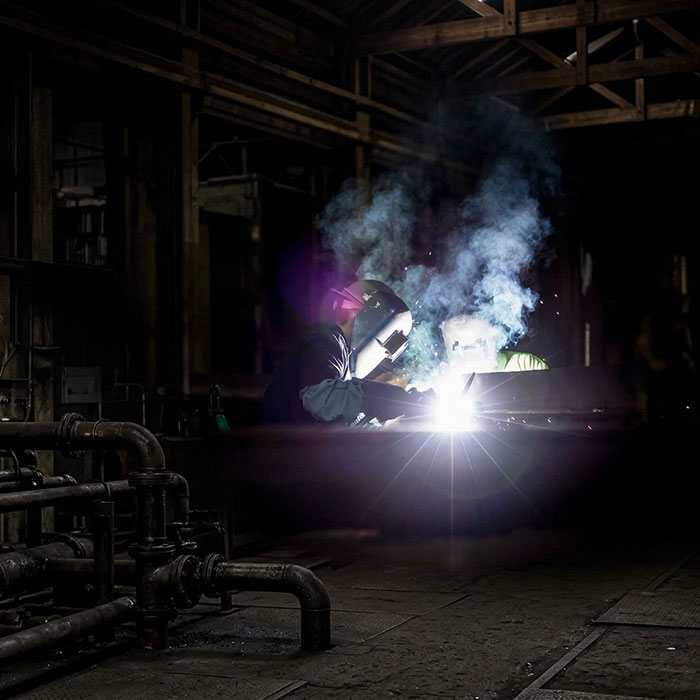
Manufacturing quality. Frames are built with high-strength steel and assembled on advanced automatic welding lines. After welding, structures are shot blasted and finished with epoxy primer and acrylic topcoat for corrosion resistance—critical for port chassis exposed to salt air and flatbeds working in harsh construction environments.
Global export experience. YOUCAN manages container packing, port loading, and export documentation for customers across Africa, the Middle East, and South America, coordinating delivery to your destination port whether you order one unit or a fleet.
To discuss whether a Flatbed Trailer, skeleton trailer, or another specialized trailer fits your operation—and to confirm specifications and destination port—contact the YOUCAN team for a review and quote.
FAQ
Q1: Can a flatbed trailer carry shipping containers?
Yes, when equipped with twist locks at the correct positions and rated for the container’s weight. A Flatbed Trailer with container locks can handle standard ISO containers alongside general freight, giving you flexibility that a skeleton trailer cannot offer.
Q2: Can a skeleton trailer carry non-container cargo?
No. A skeleton trailer has no continuous deck, so it cannot support pallets, steel bundles, machinery, or loose materials. Its twist locks and open frame are designed exclusively for ISO containers.
Q3: Which type is better for frequent port container moves?
A skeleton trailer is the better choice for frequent, standardized container moves. Its purpose-built twist locks, lightweight frame, and fast handling make it more efficient for port drayage and intermodal work.
Q4: Which type offers better fleet utilization?
A Flatbed Trailer generally offers higher utilization because it can earn revenue on multiple cargo types. Skeleton trailers are more efficient for container-only work but sit idle when containers are not moving.
Q5: Does YOUCAN build both trailer types?
Yes. YOUCAN manufactures Flatbed Trailer lines with optional twist locks for container capability, as well as dedicated container chassis for pure container operations. Sharing one supplier lets you standardize components and simplify maintenance across a mixed fleet.
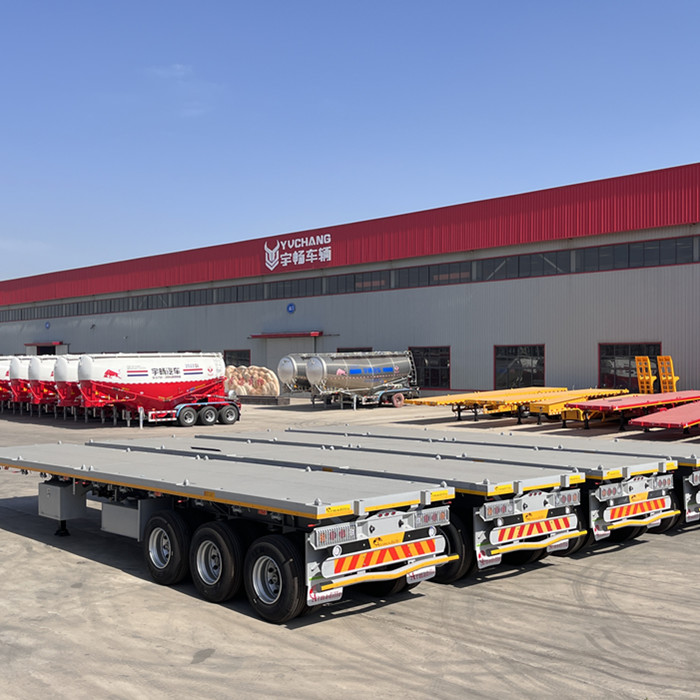
How to Choose the Right Flatbed Semi Trailer?
Choose a flatbed semi trailer by matching the trailer's deck, structural arrangement, cargo restraint system, running gear, loading method, and destin...
Read More →