 WhatsApp
 sales@youcantrailer.com
 +8615203709888
Why Is Q355 Steel Widely Used for Semi Trailer Chassis?
Why Is Q355 Steel Widely Used for Semi Trailer Chassis?
Quick Answer
Q355 steel is widely used in semi trailer structures because it can offer a useful balance of strength, structural efficiency, weight, and cost when the design and welding process are appropriate. It is not a universal answer for every component. The correct choice depends on the load path, fatigue exposure, section geometry, thickness, fabrication method, repair environment, and the buyer's operating requirements.
What Q355 Means in Trailer Engineering
Q355 is a Chinese designation for a family of low-alloy structural steel grades covered by GB/T 1591. The designation is commonly discussed in terms of nominal minimum yield strength, but the buyer should not reduce the decision to one number. The actual grade, delivery condition, thickness range, chemical composition, and certificate basis all matter.
In a semi trailer, material performance is only one part of capacity. Geometry, beam depth, flange and web arrangement, cross-member spacing, weld detail, load distribution, and fatigue behavior determine how the material is used.
| Why buyers consider Q355 | Potential value | What still needs control |
|---|---|---|
| Higher strength than basic structural steel | May support a more efficient design | Thickness, geometry, fatigue, and welding |
| Strength-to-weight opportunity | May reduce unnecessary structural mass | Tare weight must not become the only goal |
| Common engineering familiarity | Easier to integrate into a design basis | Grade and certificate must be verified |
| Suitable for many primary members | Useful for beams and high-load areas | Not every secondary part needs the same grade |

Where Q355 Can Make Engineering Sense
Primary Load-Bearing Members
Main beams, critical cross-members, supports, and other primary members may benefit from a material with a higher strength level when the design uses that capacity correctly. The section still needs enough stiffness and fatigue margin; a stronger grade cannot repair a poorly proportioned beam.
Weight-Sensitive Applications
A lowbed or flatbed buyer may value payload efficiency, but weight reduction should be considered together with deflection, local buckling, weld detail, service repair, and road conditions. The lightest frame on paper is not automatically the best commercial frame.
Controlled Fabrication Environments
Higher-strength steel can require more attention to joint preparation, heat input, procedure selection, and distortion. The factory needs the process discipline to use the grade consistently.
Why Q355 Is Not Automatically Better Everywhere
Secondary brackets, replaceable wear parts, guards, and simple non-critical items may not need the same material grade. Using high-strength material everywhere can increase cost or make repairs less convenient without creating a meaningful benefit. Material selection should follow stress and function.
Engineering Note: A higher steel grade creates an engineering opportunity, not a payload certificate. The final capacity still belongs to the complete design and its operating assumptions.
Buyer Questions About Q355
Which components are specified as Q355, and which use another grade?
What material standard and grade are written in the approved configuration?
How are heat numbers, certificates, or material records handled where required?
Does the welding procedure match the material group and thickness?
What design benefit is expected: strength, weight, stiffness, fatigue margin, or a combination?
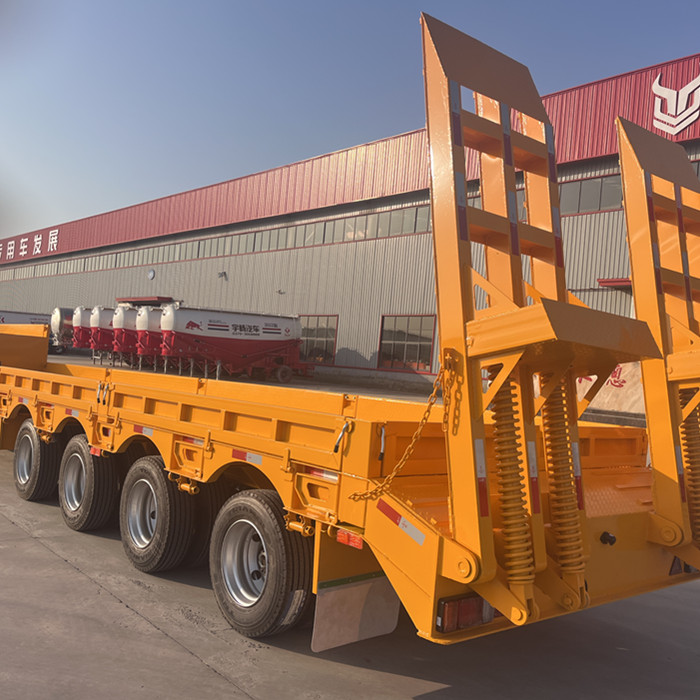
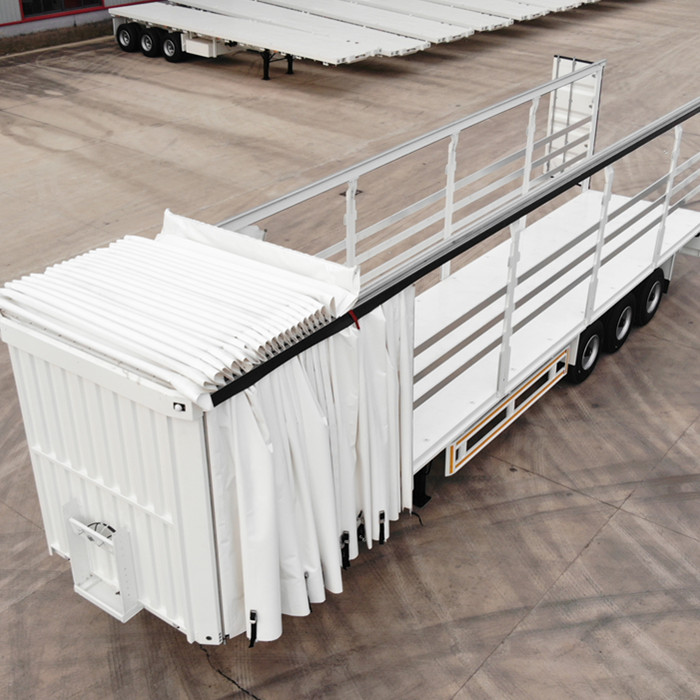
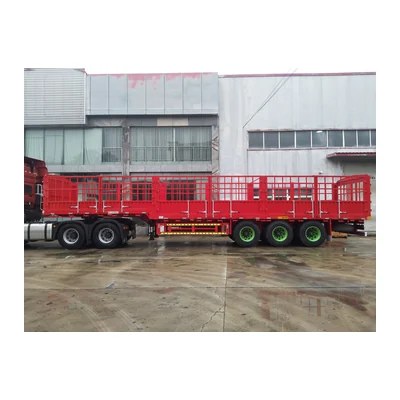
Q355 selection should be discussed alongside the actual flatbed trailers or lowbed trailers duty, not as an isolated marketing phrase. The buyer can also review the supplier's factory overview and quality control process to understand how steel is identified and used.
Common Buyer Mistakes
Assuming Q355 automatically means a trailer is stronger in every respect.
Asking for Q355 without specifying which parts require it.
Ignoring weld procedure, distortion, fatigue, and repair considerations.
Comparing steel grade but not comparing beam geometry and trailer tare weight.
Accepting the grade label without asking how material identity is controlled.
Key Takeaways
Q355 can improve strength-to-weight efficiency when used in the right structural locations.
Material grade does not replace beam geometry, load-path design, or fatigue control.
Different trailer parts may appropriately use different steel grades.
Higher-strength steel requires compatible fabrication and welding discipline.
Ask what engineering result the Q355 choice is intended to create.
FAQ
Is Q355 always better than Q235 for a semi trailer?
No. Q355 may be useful in higher-load or weight-sensitive areas, while the correct grade depends on design, cost, fabrication, and component function.
Can Q355 increase trailer payload?
It may support a more efficient design, but payload depends on the complete trailer, legal limits, axle loads, and operating conditions.
Does Q355 require special welding?
The welding procedure should be suitable for the selected material and thickness. The exact requirements depend on the grade, joint, process, and design.
Should every trailer component be Q355?
Not necessarily. Material selection should follow load, function, fatigue, wear, and repair needs.
How do I verify Q355 steel?
Define the material standard and grade in the order documents and ask for the material evidence appropriate to the project.
Conclusion
Q355 is widely considered because it can help a well-designed trailer use steel efficiently. Its value appears only when the grade, geometry, welding, inspection, and operating conditions are treated as one engineering decision.
References
GB/T 1591 high strength low alloy structural steels
GB/T 700 carbon structural steels
ISO 3834 quality requirements for fusion welding of metallic materials