What Are the Main Components of a Semi Trailer?
What is a Semi Trailer?
A semi trailer is an unpowered commercial freight vehicle designed to be towed by a motorized tractor unit. Unlike a full trailer that has wheels at both the front and rear, a semi trailer has no front axle. Instead, its front end rests on the tractor's fifth wheel coupling, which supports a significant portion of the trailer's weight.
This articulated design allows the tractor to pull the trailer while also supporting part of the load, maximizing payload capacity and maneuverability. A semi trailer is not just a metal box; it is a complex system of structural, mechanical, and pneumatic components working together to move heavy cargo safely across long distances. Understanding these components is essential for fleet owners, mechanics, and logistics managers who want to spec the right equipment and keep it on the road.
The Structural Backbone: Chassis and Main Beams
If the trailer is a body, the chassis is the skeleton. The chassis is the primary load-bearing structure that holds everything together.
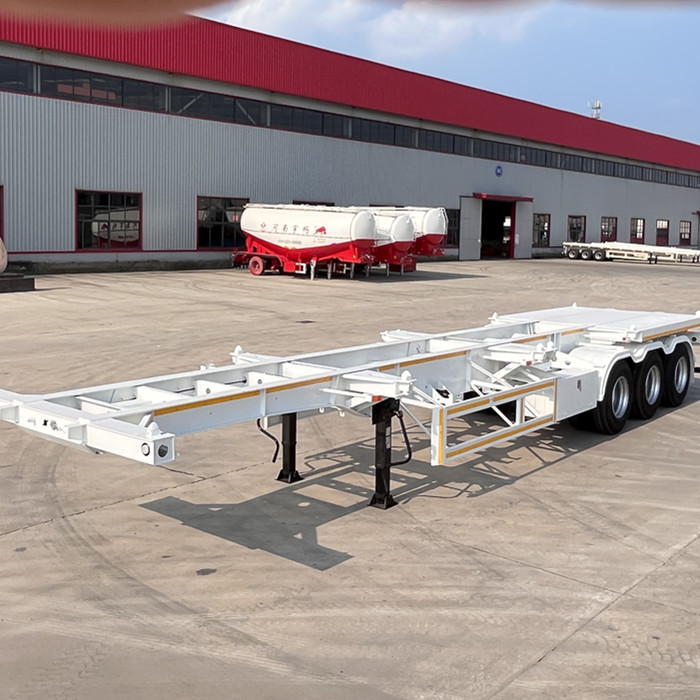
The most critical part of the chassis is the main beams (longitudinal beams). These are usually I-beams made of high-tensile steel (such as Q345B, T700, or T800). They run the entire length of the trailer and carry the weight of the cargo, transferring it down to the suspension and axles.
How the main beams are built matters immensely. High-quality manufacturers use automated submerged-arc welding to join the top flange, bottom flange, and web plate. This ensures deep penetration and prevents the beam from cracking under heavy loads or when driving on uneven roads. Between the main beams, you will find cross-members, which provide lateral support and keep the frame from twisting.
The Deck and Cargo Interface
Depending on the type of trailer, the deck is where the cargo actually sits.
Flatbed Trailers: Use a floor plate, often made of 3mm to 4mm anti-skid checker steel or aluminum. This provides a solid platform and traction for forklifts.
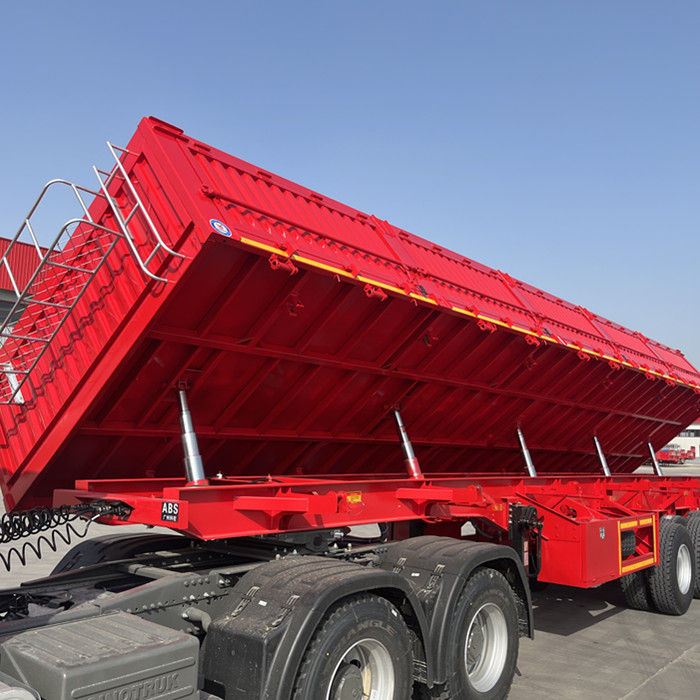
Tipper Trailers: Feature a heavy-duty dump box, usually made of wear-resistant steel (like NM450) to withstand the impact of heavy rocks and gravel.
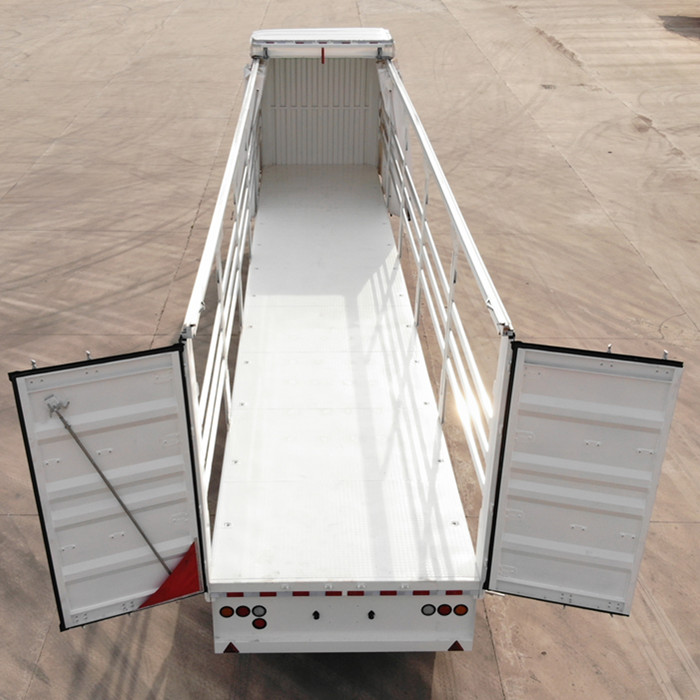
Curtainsiders and Vans: Use a combination of a solid floor (often hardwood or steel), aluminum side rails, and a roof structure to protect cargo from the weather.
The Running Gear: Axles, Suspension, and Wheels
The running gear is what connects the trailer to the road. It absorbs the shock of the road and allows the trailer to roll smoothly.
Axles: The axles are the heavy-duty steel shafts that support the weight of the trailer. Standard axles are often rated for 13 tons or 16 tons (with 20-ton axles used for heavy haulage). Premium brands like FUWA, BPW, or SAF are preferred because they use high-quality bearings and heat-treated spindles that resist wear.
Suspension System: The suspension connects the axles to the chassis. There are two main types:
Mechanical Leaf Spring Suspension: Uses layers of steel springs to absorb road shocks. It is rugged, durable, and cheap to repair, making it ideal for rough terrains and mining sites.
Air Suspension: Uses airbags filled with compressed air. It provides a much smoother ride, protects sensitive cargo, and allows for adjustable ride height. It is commonly used on tankers and long-haul flatbeds.
Wheels and Tires: The tires are the only contact point with the road. The choice of tires (e.g., 12R22.5 or 385/65R22.5) depends on the load, the climate, and the regional road regulations.
The Connection Point: Kingpin and Upper Coupler
The connection between the trailer and the tractor unit is critical for safety. This happens at two main points:
The Kingpin: A heavy-duty, forged steel pin located under the front of the trailer. It locks into the fifth-wheel coupling of the tractor. Standard sizes are 2-inch and 3.5-inch (often interchangeable depending on the fleet's needs).
The Upper Coupler Plate: The reinforced steel plate that surrounds the kingpin and rests on the tractor's fifth wheel. It must be incredibly strong to handle the continuous pushing, pulling, and turning forces.
The Support System: Landing Gear
When the tractor is unhooked, the front of the trailer needs to stand independently. This is the job of the landing gear (also called the support legs).
Most heavy-duty trailers use a two-speed mechanical landing gear (like the JOST brand) that allows the driver to raise or lower the trailer quickly when empty and with high torque when fully loaded. The landing gear must have sufficient static load capacity (often 28 tons or more) to support a fully loaded trailer safely in a yard.
The Braking System: Pneumatic Air Brakes
Safety is paramount, and the braking system is what keeps a 40-ton trailer under control. Standard semi-trailers use a dual-line pneumatic air brake system:
The Supply Line (Emergency Line): Provides constant air pressure to fill the trailer's air tanks. It holds the spring brakes open. If this line is disconnected or cut, the trailer's brakes automatically lock up, stopping the trailer safely.
The Service Line (Control Line): Sends the signal from the driver's foot pedal to the trailer to apply the brakes.
Brake Chambers: These convert air pressure into mechanical force to push the brake shoes against the drums (or calipers against discs).
ABS/EBS: Modern trailers are equipped with Anti-lock Braking Systems (ABS) or Electronic Braking Systems (EBS) to prevent wheel lockup and maintain steering control during emergency stops.
The Electrical System: Wiring and Lighting
The trailer needs power for its lights and safety signals. A 7-pin or 15-pin electrical cable connects the tractor to the trailer.
Lighting: Modern trailers use 24V LED lights for tail lights, brake lights, turn signals, and side markers. LEDs are preferred because they last longer, draw less power, and are more resistant to vibration.
The Wiring Harness: The electrical cables must be securely routed and protected from moisture and debris to prevent short circuits.
Other Essential Components
Mudguards and Side Guards: These protect other road users from debris and spray. In many countries, side underrun guards are a legal requirement.
Toolbox and Spare Tire Carriers: Practical additions for the driver, usually mounted on the chassis.
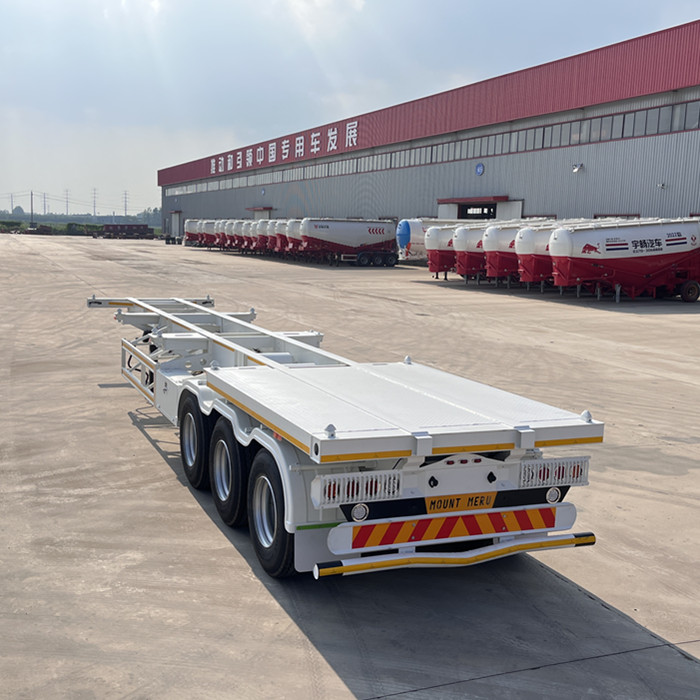
Twist Locks: For container-carrying trailers, these heavy-duty locking mechanisms secure the container to the chassis.
Main Components Summary Table
To help you quickly review, here is a summary of the core components of a semi trailer, their primary functions, and what to look for when buying:
| Component Category | Key Parts | Primary Function | What Buyers Should Check |
|---|---|---|---|
| Structural | Main Beams, Cross-members, Chassis | Carries the weight and absorbs road stress. | Steel grade (Q345B/T700), weld penetration, and beam thickness. |
| Running Gear | Axles, Suspension, Tires | Supports the load, absorbs shocks, and provides traction. | Axle brand (FUWA/BPW), load rating (13T/16T), and spring/air suspension. |
| Connection | Kingpin, Upper Coupler Plate | Locks the trailer to the tractor unit. | Kingpin size (2" or 3.5"), forging quality, and plate reinforcement. |
| Support | Landing Gear (Support Legs) | Supports the trailer when uncoupled from the tractor. | Static load capacity (e.g., 28T) and lifting mechanism (two-speed). |
| Braking | Brake Chambers, Air Lines, ABS | Slows and stops the trailer safely. | WABCO valves, ABS/EBS integration, and brake chamber size. |
| Electrical | Wiring Harness, LED Lights | Powers lights and safety signals. | Waterproof connections, 24V LED, and wire protection. |
Why Component Quality Matters: YOUCAN Trailer’s Approach
When you are buying a fleet, you cannot afford to compromise on components. A trailer might look good on the outside, but if the axles are weak or the welds on the main beam are poor, it will fail quickly in the field.
At YOUCAN Trailer, we have been manufacturing high-quality flatbed trailers, tipper trailers, and a wide range of specialized equipment since 1999. Our engineering team carefully selects every component—from the high-tensile steel used in the main chassis to the branded axles and WABCO braking valves—to ensure maximum durability and safety.
We maintain rigorous quality control protocols at every stage of production. From the first cut of steel to the final brake test, we ensure every component is assembled to perfection. We also understand that no two fleets are the same, which is why we offer extensive customization for your specific cargo, road conditions, and local regulations.
Ready to build a reliable fleet with premium components? Contact the YOUCAN Trailer team today to get a quote and technical drawings within 12 hours!
FAQ
What is the most important component of a semi trailer?
The main beams (chassis) are the most critical structural component. If the main beams fail, the trailer is unsafe to use. However, the braking system is also vital for safety, as it prevents accidents under heavy loads.
What is the difference between mechanical suspension and air suspension?
Mechanical leaf spring suspension is more durable and cheaper to maintain, making it ideal for rough roads. Air suspension provides a smoother ride and is better for fragile cargo and long-haul highway driving.
How often should I replace the kingpin?
The kingpin should be inspected regularly for wear and tear. Depending on the mileage and the weight of the loads, it may need to be replaced every few years. Excessive play in the fifth wheel is a warning sign.
Can I customize the components of my trailer?
Yes. Most manufacturers allow you to choose axle brands (like FUWA or BPW), suspension types, tire sizes, and lighting options. Always confirm the exact specifications before production begins.
What does the emergency (supply) air line do?
The emergency air line keeps the trailer’s spring brakes open. If the line is broken or the trailer detaches, the air pressure drops, and the spring brakes automatically engage, stopping the trailer immediately for safety.
What Is a Container Chassis Trailer?
A container chassis trailer is a specialized semi trailer frame that carries intermodal containers through standardized corner castings and locking de...
Read More →
20ft vs 40ft Container Chassis: How to Choose?
Learn how to choose between a 20ft and 40ft container chassis. Discover the features, types, and buying tips.
Read More →