Source From a Flatbed Trailer Manufacturer Confidently
Selecting the right flatbed trailer manufacturer is a critical business decision that directly impacts your operational efficiency, safety, and return on investment. A high-quality trailer from a reliable supplier ensures your cargo arrives safely, minimizes downtime, and withstands the rigors of heavy-duty use for years. This guide provides a systematic approach for procurement managers and business owners to navigate the sourcing process effectively.
Buyer's Quick Checklist
- Define Load Requirements: Specify maximum payload, cargo type, and dimensions.
- Verify Technical Specs: Check main beam material (e.g., Q345B steel), axle capacity, and suspension type.
- Assess Manufacturer Credentials: Confirm ISO 9001 certification and export experience.
- Evaluate Quality Features: Inspect welding, paint process, and component brands (axles, landing gear, braking system).
- Calculate Total Cost of Ownership (TCO): Look beyond the initial price to include maintenance and parts.
Key Factors & Technical Parameters to Consider
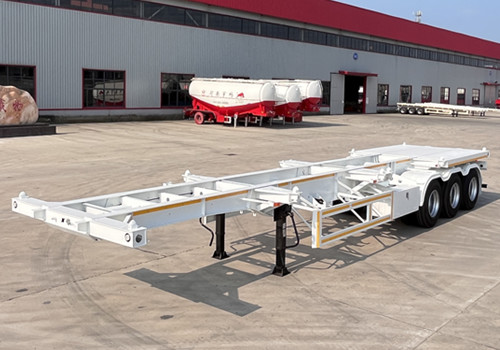
When evaluating a potential supplier, your technical due diligence is paramount. Focus on the core specifications that determine the trailer's performance, durability, and suitability for your application. A professional flatbed trailer manufacturer will provide a detailed specification sheet covering these points.
- Load Capacity (Payload): This is the maximum weight the trailer is designed to carry. Common capacities range from 30 to 80 tons. Be sure to specify your requirement clearly, considering both typical and maximum loads.
- Dimensions: Standard lengths are often 12.5 meters (40 ft) or 13.7 meters (45 ft), with a width of 2.5 meters. However, dimensions can be customized. Ensure the platform size is adequate for your cargo.
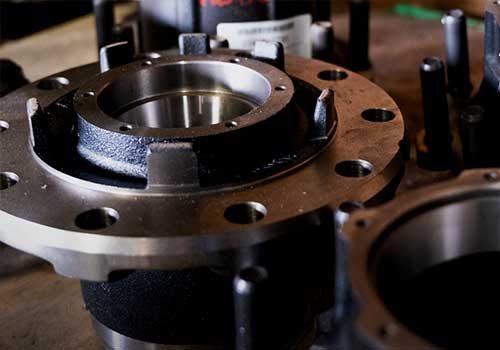
- Axle Configuration and Capacity: The number of axles (typically 2, 3, or 4) and their capacity (e.g., 13-ton, 16-ton) are critical for weight distribution and legal compliance. Reputable brands like BPW or FUWA are industry standards.
- Suspension System: Choose between mechanical suspension (heavy-duty leaf springs) for rugged terrain and heavy loads, or air suspension for smoother rides, better cargo protection, and adjustable height.
- Main Beam Construction: The "I-beam" is the trailer's backbone. Look for high-strength steel like Q345B, manufactured using automated submerged arc welding for superior strength and consistency. The height and thickness of the main beam are direct indicators of its strength.
- Tire and Rim Specifications: Tires must be appropriately rated for the load and intended speed. Common specifications include 12R22.5 or 315/80R22.5, but this can vary based on regional standards and requirements.
Types of Flatbed Trailers: Which One Fits Your Needs?
Flatbed trailers are not a one-size-fits-all solution. Different designs cater to specific cargo types and logistical challenges. Understanding these variations helps you select the most efficient asset for your fleet.
| Trailer Type | Key Specs | Price Level | Best Used For |
|---|---|---|---|
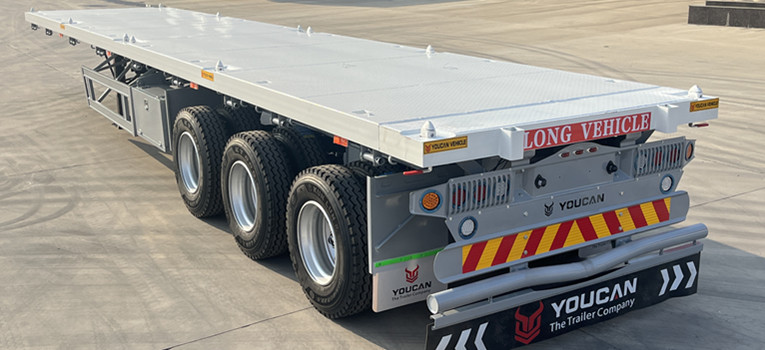
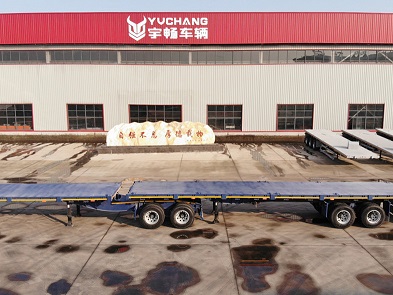
| Standard Flatbed | Fixed length (12.5m-14.6m), 2-4 axles, open deck. | $$ | General cargo, steel coils, lumber, building materials, 20ft/40ft containers. |
| Extendable / Telescopic Flatbed | Adjustable length, can extend to 20m+ for oversized cargo. | $$$ | Wind turbine blades, long pipes, precast concrete beams, and other indivisible long loads. |
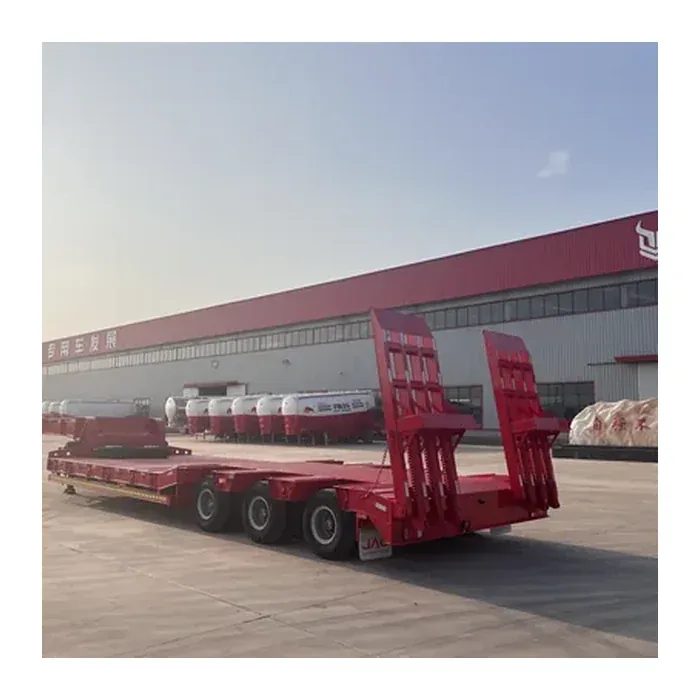
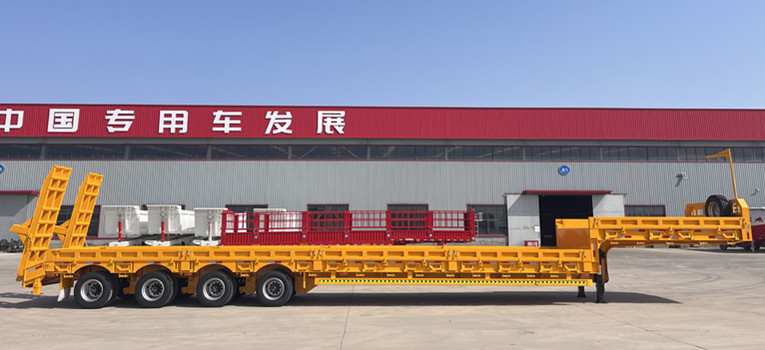
| Step-Deck / Drop-Deck | Features an upper and lower deck, allowing for taller cargo. | $$$ | Transporting equipment, machinery, or other cargo that exceeds standard height limits on a flatbed. Similar to Lowbed Trailers but with a higher deck. |
| Interlink Flatbed | Two separate trailers (e.g., 6m + 12m) linked by a fifth wheel. | $$$$ | High-volume transport in regions allowing B-double configurations, offering flexibility and massive payload capacity. See our Interlink Flatbed Trailer for details. |
Essential Features & Quality Standards
The difference between a trailer that lasts five years and one that lasts fifteen lies in the details of its construction and the quality of its components. A top-tier manufacturer will emphasize these features.
Structural Integrity and Welding
Look for manufacturers that use automated submerged arc welding for the main beams. This process creates a stronger, more uniform, and more durable weld than manual methods. All structural components should be made from high-tensile steel, providing strength without adding unnecessary weight.
Surface Treatment and Painting
A superior paint job is more than cosmetic; it's your first line of defense against rust and corrosion. A proper process involves:
- Shot Blasting: To clean the steel surface and create a profile for better paint adhesion.
- Primer Coat: An epoxy zinc-rich primer to provide excellent corrosion resistance.
- Top Coat: A durable polyurethane topcoat for UV resistance and a high-quality finish.
Component Quality
Even the best frame is let down by poor-quality components. Inquire about the brands used for critical parts.
- Axles: BPW, FUWA, L1 are globally recognized for reliability.
- Braking System: A WABCO ABS or EBS system is a sign of a commitment to safety and quality.
- Landing Gear: JOST or a comparable high-quality brand ensures stability and long service life.
- King Pin: A 2” or 3.5” bolted or welded JOST kingpin is the industry standard.
International Certifications
A credible exporter will hold certifications that attest to their quality management systems. ISO 9001 is the most important one to verify, as it demonstrates a commitment to consistent quality control throughout the production process.
Total Cost of Ownership (TCO) & Budgeting Guide
The purchase price is only one part of the equation. A cheaper trailer may cost you significantly more over its lifespan due to higher maintenance, increased downtime, and lower resale value. When budgeting, consider the full TCO.
- Upfront Cost: The initial purchase price of the trailer.
- Operational Costs: This includes tire wear, brake maintenance, and routine servicing. Higher quality components, like better tires and brakes, last longer and reduce these costs.
- Downtime Costs: A breakdown is expensive, not just in repair bills but in delayed deliveries and potential customer dissatisfaction. Reliability is key.
- Resale Value: Well-built trailers from reputable manufacturers retain a higher resale value, improving your overall ROI when it's time to upgrade your fleet.
To justify the purchase to management, frame it as an investment in operational reliability. A 10-15% higher initial cost for a premium trailer can easily be offset by a 50% reduction in unexpected maintenance and downtime over its first five years of service.
Top Common Buying Mistakes & How to Avoid Them
Navigating the procurement process can be complex. Here are some common traps international buyers fall into and how you can steer clear of them.
- Chasing the Lowest Price: The cheapest offer often comes with compromises in steel quality, component brands, or welding standards. Always compare specifications and TCO, not just the FOB price.
- Ignoring Local Road Conditions: A trailer specified for smooth European highways may not survive on rough, unpaved roads. Be sure to specify heavy-duty suspension and a reinforced chassis if your operating environment is harsh.
- Neglecting After-Sales Support: What happens when you need spare Trailer Parts? A good partner will have a clear process for providing technical support and shipping replacement parts quickly.
- Overlooking Shipping Logistics: Flatbed trailers are large. Discuss shipping methods—typically by bulk carrier or by stacking 2-3 units into a 40ft high-cube container. Ensure the manufacturer has experience with export packing and documentation.
- Vague Specifications: Do not just ask for a "3 axle flatbed." Provide a detailed list of requirements, including payload, dimensions, axle brand preference, and any special features like container twist locks or side stakes.
Customization & OEM/ODM Options
A flexible manufacturer can tailor products to meet your specific operational needs. This goes beyond simple branding and can involve significant engineering adjustments. Common customization options include:
- Custom Dimensions: Adjusting the length, width, or platform height.
- Specialized Fixtures: Adding features like removable side walls, stake pockets, rope hooks, or an increased number of container twist locks.
- Component Specification: Requesting specific brands for axles, tires, or braking systems to match your existing fleet for parts commonality.
- Paint and Branding: Applying your company's specific color scheme (RAL code) and logos for a professional fleet appearance.
Inspection, Packaging & Shipping
For international buyers, understanding the final stages of production and delivery is crucial.
Pre-Shipment Inspection (PSI)
Reputable manufacturers welcome a pre-shipment inspection. You can send your own engineer or hire a third-party service (like SGS, Bureau Veritas) to visit the factory and verify that the completed trailer meets all agreed-upon specifications before final payment and dispatch.
Export Packaging
To save on shipping costs, flatbed trailers are often shipped in a stacked configuration. A common method is to stack three units together, which can then fit inside a single 40ft HQ container. The manufacturer will handle the disassembly (e.g., removing wheels, mudguards) and secure packing to prevent damage during transit.
Shipping Terms
- FOB (Free On Board): The manufacturer is responsible for getting the trailer to the designated port of loading. You handle the ocean freight, insurance, and import process.
- CIF (Cost, Insurance, and Freight): The manufacturer arranges and pays for shipping and insurance to your destination port. You are responsible for import customs clearance and local transport.
- DDP (Delivered Duty Paid): The manufacturer handles everything, including shipping, insurance, customs clearance, and delivery to your final destination. This is the most hassle-free option but typically the most expensive.
Why Partner with Us as Your Manufacturer?
We combine advanced production technology with a deep understanding of the global logistics industry to deliver trailers that are built to perform and last. Our commitment to quality is evident in every stage of our process, from raw material sourcing to final inspection.
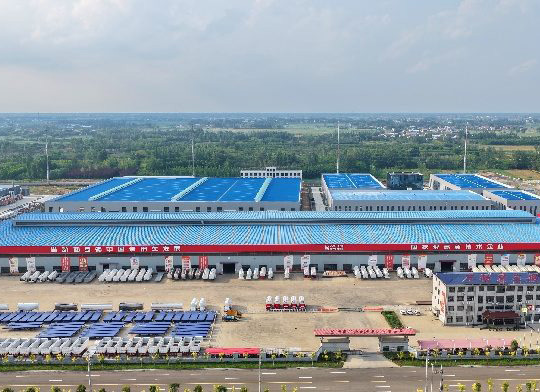
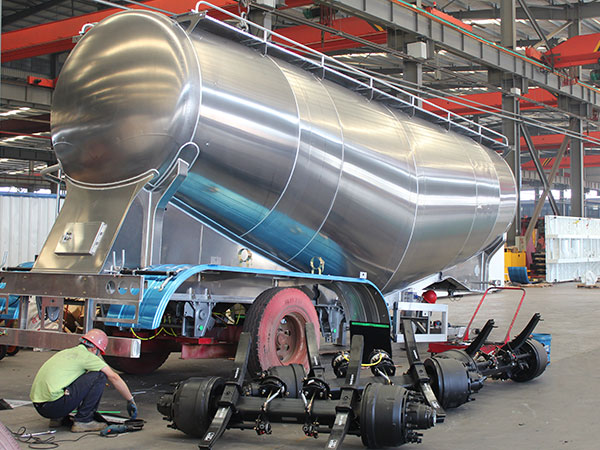
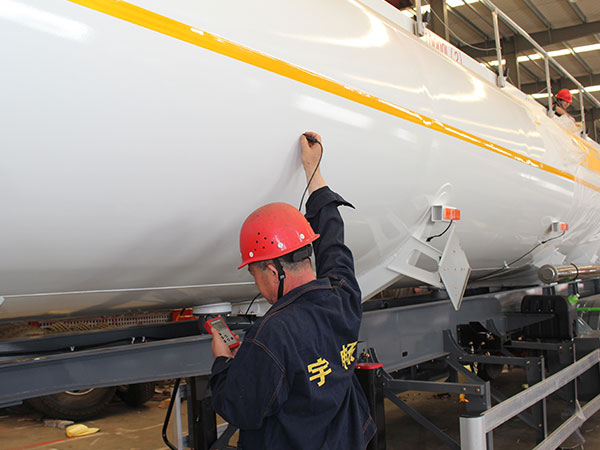
Our factory is equipped with automated welding robots, CNC plasma cutters, and a full-scale shot blasting and painting line to ensure every trailer meets stringent quality standards. We adhere strictly to our ISO 9001 certified quality management system, and our experienced engineering team can work with you to design a custom solution for any transport challenge, whether you need standard Flatbed Trailers or more specialized equipment.
We offer comprehensive warranties, lifetime technical support, and a reliable supply of spare parts to keep your fleet running smoothly. Our logistics team has extensive experience shipping to markets across Africa, Southeast Asia, South America, and the Middle East, ensuring a seamless delivery process.
Discuss your specific hauling requirements with our technical team to get a tailored solution and a detailed quotation.
Frequently Asked Questions (FAQ)
1. What is your Minimum Order Quantity (MOQ)?
Our MOQ is typically one (1) unit. We support businesses of all sizes, from single-unit owner-operators to large fleet procurement projects.
2. What is the production lead time for a flatbed trailer?
Standard production lead time is approximately 25-30 days after receiving the deposit and confirming the technical drawings. This can vary for highly customized orders.
3. What are your warranty terms?
We offer a 12-month warranty on the main frame of the trailer against manufacturing defects. Components like axles and tires are covered by their respective original manufacturer's warranty.
4. What payment terms do you accept?
Our standard payment term is 30% T/T (Telegraphic Transfer) as a deposit, with the 70% balance paid before shipment. We may also consider an irrevocable Letter of Credit (L/C) at sight for larger orders.
5. How do you provide after-sales service?
We provide after-sales support through remote technical guidance via phone or video call. For any necessary replacement parts under warranty or for regular maintenance, we can quickly ship them to you via international courier services like DHL or FedEx.

How to Audit a Flatbed Trailer Manufacturer?
Learn how to audit a flatbed trailer manufacturer: capability checks, QC steps, certifications, OEM support and export logistics. Ask for a checklist ...
Read More →
A Flatbed Trailer Manufacturer's Guide to Customization Trends
Get an expert analysis of the global market from a leading flatbed trailer manufacturer. Learn about material trends, customization, and procurement s...
Read More →