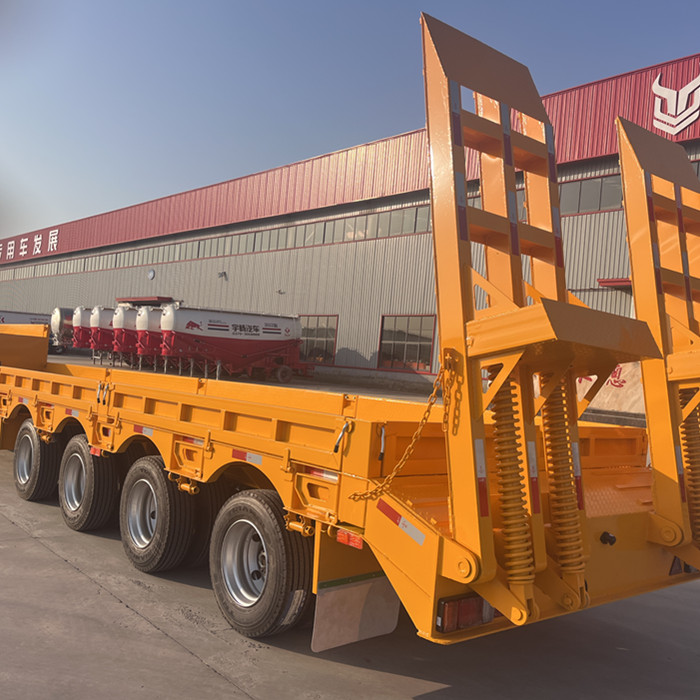
Side Tipper Trailer OEM Specs for Export Buyers
1. Introduction and Factory Overview
A side tipper trailer unloads bulk cargo to the left or right through a hydraulic lifting system. It lets operators discharge on uneven ground, along stockpiles and inside narrow sites where a rear-tipping unit would be unstable or impractical.
We are a trailer manufacturer that builds side-discharge units to OEM specifications for distributors, fleet owners and project contractors. Our export experience covers Africa, Southeast Asia, the Middle East and Latin America. Each build is documented for ISO 9001-aligned quality control and for the conformity and homologation paperwork required in the destination market.
This guide explains the technical choices that matter in procurement: model selection, structure, quality control, customization, packing and payment. Use it as a checklist when you prepare an inquiry.

Why Side Discharge Matters
- Lateral unloading works where overhead obstacles, soft ground or tight lanes limit rear tipping.
- Lower tipping risk on sloped terrain, since the load shifts toward the body's low side with controlled lift angles.
- Faster cycle times for ore, aggregates, grain, coal and fertilizer when continuous truck-to-stockpile loading is needed.
2. Comprehensive Product Portfolio
Our range covers two-, three- and four-axle configurations, with body volumes selected by cargo density and local axle-load law. Our side tipping models are available in steel and in lightweight high-strength alloy bodies. For broader applications, see our full range of tipper trailers.
Model Comparison
| Series / Model | Key Technical Parameters | Application Scenarios |
|---|---|---|
| 2-Axle Side Tipper | Body volume 25-30 m³; payload up to 35 t; single or double hydraulic cylinders | Sand, gravel, farm produce, urban construction sites |
| 3-Axle Side Tipper | Body volume 35-45 m³; payload up to 50 t; 13 t BPW- or FUWA-type axles; 10-12 mm floor plate | Coal, ore, aggregates, quarry haulage |
| 4-Axle Heavy-Duty Side Tipper | Body volume 45-60 m³; payload up to 65 t; reinforced subframe; high-strength steel body | Mining sites, large-scale earthmoving, port bulk transfer |
| Lightweight Alloy Side Tipper | Aluminum alloy body; tare weight reduced by up to 2-3 t | Grain, fertilizer, light bulk cargo where payload efficiency matters |
All values are typical ranges. Final specifications depend on your gross vehicle weight limit, tractor fifth-wheel height, and local regulations.
Standard Configuration Options
- Axle brands, suspension type (mechanical or air) and tire specification
- Single-side or dual-side discharge
- Hydraulic cylinder stages, lift angle and safety support props
- Body steel grade, wall thickness and optional wear liners
- Tarpaulin cover systems, landing gear and lighting configuration
3. Manufacturing Capability and Facilities
Production is organized around cutting, forming, welding, painting and final assembly. This keeps lead times predictable even when order volumes rise.
Core Equipment and Processes
- CNC plasma and laser cutting for body panels, gussets and subframe members to keep dimensional accuracy consistent.
- CNC bending for side walls and floor profiles, which reduces weld seams in high-stress areas.
- Jig-based welding that holds frame geometry and axle alignment within tolerance.
- Shot blasting and multi-layer painting for corrosion resistance in humid, coastal and mining environments.
- Hydraulic and brake test stations for functional checks before release.
Capacity and Lead Time Control
Parallel assembly lines allow repeat orders and mixed-model batches to run together. Production schedules are shared with buyers at order confirmation, and progress photos are sent at key stages: frame completion, body welding, painting and final assembly.
Raw Material Quality Control
Steel plate, axles, suspensions, cylinders and valves are purchased from qualified suppliers. Mill certificates are retained for structural steel, and critical components are traceable to batch records.
4. Quality Control and International Certifications
Quality is managed as a sequence of checkpoints rather than a final inspection alone.
Step-by-Step QC Process
- Incoming material check: verification of steel grade, plate thickness, mill certificates and component specifications.
- In-process inspection: weld quality review, frame straightness and axle alignment measurement, and paint thickness checks.
- Hydraulic system testing: lifting under load, leak checks, lift-angle verification and safety valve function.
- Braking and electrical testing: air-line pressure retention, ABS or EBS function where fitted, and lighting checks.
- 100% pre-shipment inspection: a final walk-around against the order specification, with photos and video available to the buyer.
Compliance Standards
- ISO 9001 quality management practices
- CE conformity documentation where required by the destination market
- RoHS-conscious material and component selection for electrical parts
- Support for local registration documents such as certificates of origin, VIN plates, and homologation files
Third-party inspection by SGS, BV or your nominated agent is welcome before loading.
5. OEM/ODM Customization Capabilities
Many export buyers need a unit that matches local axle-load rules, cargo type and brand identity. Our engineering team works from your drawings or builds a design from your cargo and route requirements.
What Can Be Customized
- Dimensions: body length, width, height, kingpin position and overall length to match local legal limits.
- Structure: floor and side-wall thickness, rib spacing, and the choice between steel and alloy bodies.
- Branding: logos, color schemes, nameplates and decals.
- Surface treatment: epoxy primer, polyurethane topcoat, galvanizing for selected parts, and anti-corrosion undercoating.
- Electrical and pneumatic: 24 V systems, 7-pin or 15-pin plug adaptations, and WABCO-type or equivalent brake components.
Prototyping and Engineering Support
For new designs, we provide 3D models and general arrangement drawings for approval before cutting steel. Design changes are logged and confirmed in writing, which protects both sides during mass production.
6. Export Packaging and Shipping Logistics
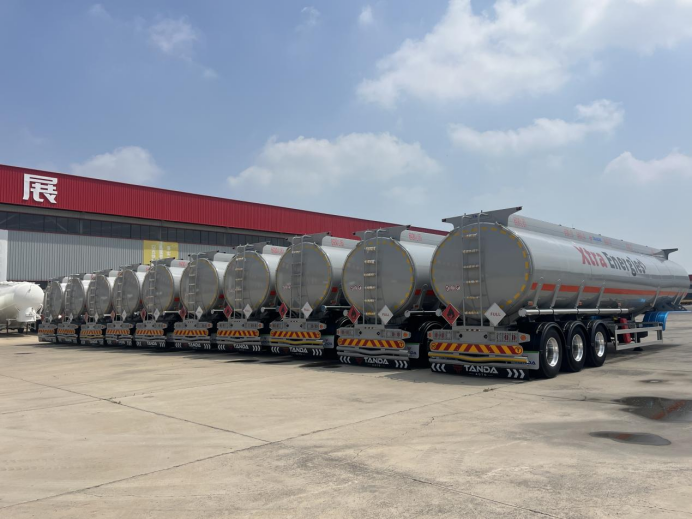
Semi-trailers are usually shipped in one of three ways: RO-RO, flat-rack or open-top containers, or bulk vessel. The right method depends on destination port capability and unit size.
Packaging Standards
- Wheels, axles and loose components protected with moisture and corrosion-resistant film.
- Hydraulic ports capped and exposed threads coated with rust-preventive grease.
- Spare parts, tools and manuals packed in heavy-duty wooden cases with shockproof padding.
- Lashing points and wheel chocks designed for container or deck securing.
Consumable and wear items can be ordered with the trailer. Our trailer parts range covers axles, suspension kits, landing gear and lighting components.
Trade Terms and Export Compliance
- FOB, CFR and CIF are standard. DDP can be quoted for selected destinations.
- Commercial invoice, packing list, bill of lading, certificate of origin and conformity documents supplied with each shipment.
- Assistance with Form E, Form A or other preferential origin certificates where applicable.
7. Global Industries Served and Case Highlights
Key Industries
- Mining and quarrying
- Construction and road building
- Agriculture and grain logistics
- Coal, sand and aggregate distribution
- Port and bulk terminal operations
Operators who need a different discharge method can compare it with a drawbar tipper trailer or with rear tipping semi-trailers.
Case Snippet: Lower Tare Weight for a Bulk Hauler
Challenge: A regional aggregate contractor in West Africa was losing payload to heavy steel trailers and facing frequent floor wear on abrasive cargo.
Solution: We proposed a three-axle unit with a high-strength steel floor, reinforced side-wall ribs, and an optimized subframe. The cylinder mounting points were redesigned for stable lateral lift on uneven quarry ground.
Result: The contractor reported a higher usable payload per trip, fewer floor repairs and a more stable tipping cycle at their stockpile sites. The design was later repeated in a follow-up fleet order.
8. Why Choose Us as Your Manufacturing Partner?
- Factory-direct pricing with no trading-company markup.
- Flexible MOQ, from a single trial unit to multi-unit fleet orders.
- Fast response to technical and commercial inquiries, typically within one business day.
- Engineering support before and after delivery, including installation guidance and spare parts supply.
- Transparent progress reporting with photos and video throughout production.
If you are comparing configurations, our engineers can review your cargo density, axle-load limits and site conditions, and recommend a suitable structure. Send your target payload and destination to request an instant factory-direct quote, or ask to consult with our engineers about your drawings.
9. Procurement FAQ
What is the minimum order quantity?
The MOQ is 1 unit for standard models. Custom designs may require a small batch, depending on tooling and engineering effort. Volume orders receive tiered pricing.
Can I get a sample or reference unit?
Yes. We can supply a single trial unit for evaluation. We can also provide detailed photos, videos and component lists, or arrange a factory visit or live video inspection.
What is the typical lead time?
Standard models typically ship within 20-35 days after deposit and drawing confirmation. Customized or larger orders take longer, and we confirm the schedule when the order is placed.
What payment terms do you accept?
We accept T/T (typically a deposit with the balance before shipment) and irrevocable L/C at sight. Other terms can be discussed for repeat customers.
What warranty do you provide?
Structural components such as the frame and body typically carry a 12-month warranty from the bill of lading date. Purchased parts such as axles, tires and hydraulic components follow the supplier warranty. We supply replacement parts and remote technical guidance during the warranty period.
Send your drawings, cargo type and destination port to our sales engineers, and we will prepare a specification proposal and quotation for your review.

What Is a Rear Tipping Trailer Used For?
Discover the industrial uses, key features, and types of a rear tipping trailer. Learn how these robust dump trailers improve efficiency in constructi...
Read More →
Maximize Quarry Output With a Heavy Duty Tipper
Discover the applications and specifications of a heavy duty tipper for mining, construction, and agriculture. Increase payload and efficiency. Reques...
Read More →