Maximize Quarry Output With a Heavy Duty Tipper
In global industries driven by the efficient movement of bulk materials, operational bottlenecks can significantly impact profitability and project timelines. From mining and quarrying to large-scale construction, the challenge lies in transporting massive volumes of abrasive, heavy, or loose materials reliably and quickly. A robust engineering solution is required to withstand harsh operational environments and deliver consistent performance day after day.
The heavy duty tipper trailer is a cornerstone of modern logistics for bulk solids, engineered specifically for high-capacity, high-frequency haulage. Its design prioritizes structural integrity, payload optimization, and rapid discharge, making it an indispensable asset across a spectrum of demanding sectors.
| Target Industry | Primary Material / Component | Key Benefit / Value Delivered |
|---|---|---|
| Mining & Quarrying | Ores, aggregates, coal, gravel | Maximum payload per cycle, reduced turnaround time |
| Heavy Construction | Soil, sand, demolition debris, asphalt | Rapid on-site material distribution and removal |
| Agriculture | Grain, silage, beets, bulk fertilizers | High-volume harvest transport, improved farm-to-storage logistics |
Core Functional Capabilities & Compatible Materials
The fundamental mechanism of a tipper trailer involves a powerful multi-stage hydraulic cylinder that lifts the front of the trailer body, allowing contents to be discharged by gravity from the rear. The entire system is built upon a high-tensile steel chassis designed to handle extreme torsional and bending stresses during loading, transit, and tipping.
These units are engineered to handle a wide array of materials, particularly those that are abrasive, dense, or difficult to manage with other equipment. Their robust construction makes them suitable for:
- Minerals and Aggregates: Iron ore, bauxite, coal, limestone, sand, and crushed stone.
- Construction Materials: Excavated soil, clay, demolition waste (concrete and brick), asphalt, and large rocks.
- Agricultural Products: Bulk grain (corn, wheat, soy), sugar beets, potatoes, and silage.
- Industrial & Waste Materials: Scrap metal, industrial slag, and municipal solid waste.
Industry-by-Industry Breakdown
The versatility of these trailers is best understood by examining their specific roles within key global industries.
Mining and Quarrying
In mining operations, cycle time is a critical performance indicator. Tipper trailers are deployed to move raw ore from the extraction point to processing plants or stockpiles. Their main advantages include a high payload-to-weight ratio, which maximizes the amount of material moved per trip, and a fast tipping cycle that minimizes vehicle downtime. The use of abrasion-resistant steels like Hardox in the trailer body ensures a long service life despite constant contact with abrasive rock and ore.
Heavy Construction
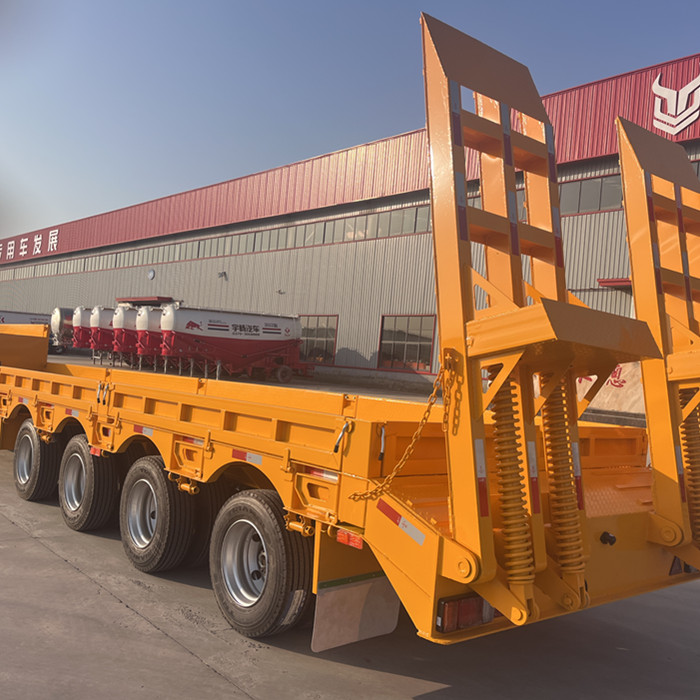
On large infrastructure projects, from highways to dams, tippers are essential for both site preparation and material supply. They efficiently remove vast quantities of excavated earth and bring in foundational materials like sand and gravel. Compared to smaller dump trucks, a semi-trailer tipper significantly reduces the number of vehicle movements required, easing site congestion and lowering fuel consumption. For moving heavy machinery to these sites, specialized Lowbed Trailers are often used in conjunction with the tipper fleet.
Agriculture
During harvest season, speed is crucial to prevent crop spoilage. High-capacity tippers transport huge volumes of grain or produce from the field to silos or processing facilities. Their large volume allows for fewer trips, enabling combines and harvesters to operate continuously. This application often requires trailers with watertight seals and optional grain chutes for controlled unloading.
Waste Management and Recycling
For transporting bulk scrap metal, construction debris, or municipal waste to recycling centers and landfills, the durability of a heavy duty tipper is paramount. The reinforced body and robust chassis can handle unevenly distributed loads and the impact of heavy materials being dropped in during loading, which is a common failure point for less capable vehicles.
Real-World B2B Case Study Scenario
- Problem: A large-scale aggregate quarry was experiencing significant transportation bottlenecks. Its fleet of smaller, rigid dump trucks could not keep pace with the output of its primary crushers, leading to frequent plant stoppages and lost production.
- Technical Challenge: The required solution needed to increase haulage capacity by at least 40% per vehicle, navigate steep haul roads, and withstand the highly abrasive nature of granite aggregate.
- Solution Implemented: The company replaced ten rigid trucks with a fleet of six 50-tonne capacity heavy duty tipper semi-trailers. The trailers were specified with high-tensile U-shaped bodies for cleaner discharge and heavy-duty mechanical suspension for reliability on uneven terrain.
- Measurable Result: The new fleet increased the quarry's material transport capacity by 55%, completely eliminating crusher downtime related to transport delays. The reduction in vehicle numbers also led to a 20% decrease in fuel costs and a 35% reduction in maintenance labor hours.
Application-Based Selection & Specification Matrix
Choosing the correct specifications is critical for performance and longevity. Technical buyers should consider the primary application when defining their requirements. The table below offers a general guide.
| Primary Application | Recommended Payload | Body Material/Shape | Axle/Suspension Type | Key Features |
|---|---|---|---|---|
| Quarrying / Mining | 40 - 70 Tonnes | Hardox 450/500 (U-Shape) | 3/4 Axle Mechanical Suspension | Reinforced chassis, fast-lift hydraulics |
| Construction / Muck Away | 30 - 50 Tonnes | High-Tensile Steel (Rectangular) | 3 Axle Air or Mechanical | Hydraulic or manual tarpaulin cover |
| Long-Haul Agriculture | 25 - 40 Tonnes | High-Tensile Steel / Aluminum | 3 Axle Air Suspension | Grain chute, watertight tailgate seals |
| Scrap Metal / Demolition | 35 - 60 Tonnes | Hardox 450 (Reinforced) | 3/4 Axle Mechanical Suspension | Heavy-duty tailgate locking mechanism |
While these tippers excel at bulk materials, different logistics challenges require other specialized equipment. For example, moving standardized shipping containers is best handled by a dedicated Container Chassis.
Customization & OEM/ODM Capabilities
For unique operational requirements, standard models can be extensively customized. As an OEM/ODM partner, we offer comprehensive engineering support to adapt trailers for niche applications. Customization options include:
- Axle & Suspension Systems: Integration of specific brands like BPW or FUWA, with options for air suspension, mechanical leaf spring, or bogie suspension.
- Body Dimensions & Materials: Custom lengths, heights, and capacities, with a choice of steel grades and thicknesses based on material density and abrasiveness.
- Hydraulic Systems: Specification of HYVA, Penta, or other leading hydraulic cylinder brands, configured for specific lifting speeds and capacities.
- Electrical & Braking: Adaptation to regional standards (e.g., 12V/24V systems, ABS/EBS from WABCO) and custom lighting configurations.
- Specialized Accessories: Addition of automatic tarpaulin systems, onboard weighing systems, custom toolboxes, and specific paint or livery.
Export Packaging, Logistics & Global Shipping
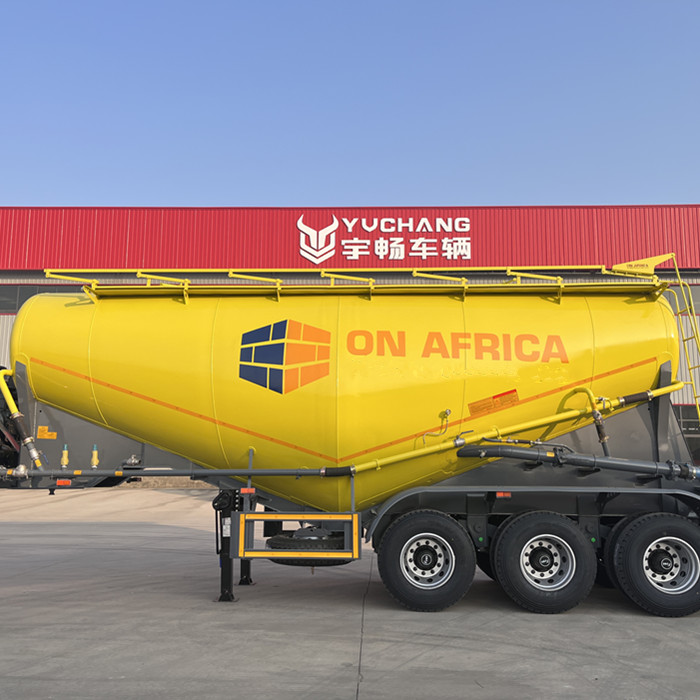
Ensuring that equipment arrives in perfect condition is critical for international trade. Our tipper trailers are prepared for global shipping using stringent export protocols. Trailers are typically shipped via Break Bulk or Roll-on/Roll-off (Ro-Ro) vessels. For some destinations, they can be disassembled to fit into 40ft High-Cube containers.
All wooden packaging materials used comply with ISPM-15 standards to meet international customs requirements. Key components like hydraulic cylinders and brake systems are protected with moisture-proof wrapping and secured to prevent movement during transit. We offer flexible logistics arrangements, including FOB, CIF, and DDP Incoterms, to suit your procurement strategy.
Quality Assurance, Compliance & International Standards
Our manufacturing processes are certified under ISO 9001, ensuring consistent quality control from raw material sourcing to final assembly. All trailers are designed and built to meet or exceed regional safety and transportation standards, with CE marking available for the European market.
Before dispatch, every unit undergoes a rigorous factory acceptance test (FAT) protocol, which includes:
- Weld Integrity Inspection: Non-destructive testing (NDT) on critical chassis and body welds.
- Full-Load Hydraulic Test: The tipping mechanism is tested at its maximum rated capacity to verify performance and safety.
- Brake System and Electrical Checks: Verification of all pneumatic and electrical circuits for flawless operation.
- Dimensional and Paint Finish Inspection: Ensuring all specifications match the client's order and the finish is ready for a harsh working life.
This commitment to quality is consistent across our entire product line, including our versatile Tipper Trailers range.
Frequently Asked Questions (FAQ)
1. What is the typical maintenance schedule for the hydraulic system?
We recommend a daily visual inspection of hydraulic hoses for leaks, a weekly check of the hydraulic oil level, and a full hydraulic oil and filter change every 1,000 hours of operation or annually, whichever comes first.
2. Can the tipper body be made from aluminum to save weight?
Yes, for applications involving less abrasive materials like grain or coal, an aluminum body can be specified. This reduces the trailer's tare weight, allowing for a higher legal payload in regions with strict gross vehicle weight limits.
3. What is the lead time for a custom-configured tipper trailer?
Standard production lead time is typically 30-45 days. For highly customized units involving unique engineering or non-standard components, the lead time may extend to 60-90 days after drawing approval.
4. How is international warranty and spare parts support handled?
We provide a comprehensive 12-month international warranty on the main structure. Key components like axles and hydraulics are covered by their original manufacturer's global warranty. We maintain a stock of critical spare parts and can ship them via express air freight to minimize downtime.
To determine the optimal configuration for your bulk transport needs, please contact our engineering team to request a detailed quote.

Side Tipper Trailer OEM Specs for Export Buyers
Review side tipper trailer OEM specs, QC, customization, packaging and export terms. Submit your requirements to get a factory-direct quote.
Read More →