Improve Intermodal Turns With a 40ft Container Chassis
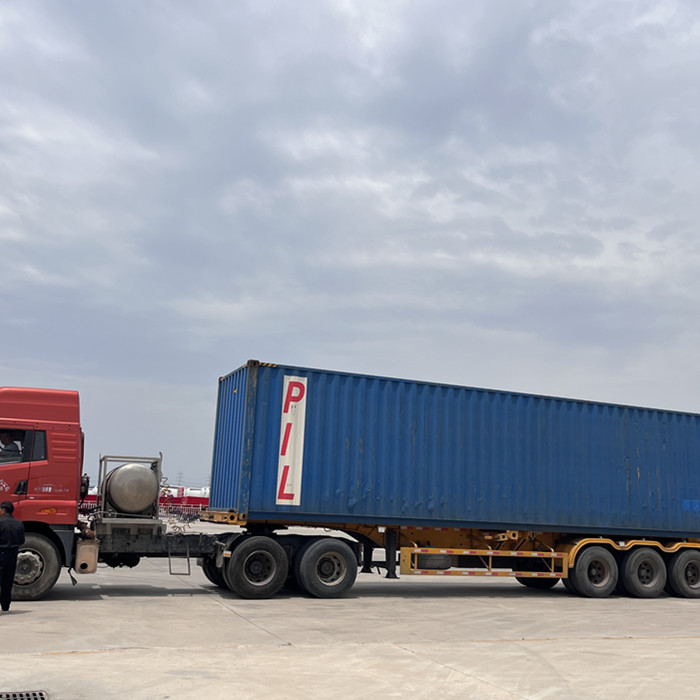
In the complex world of global logistics and supply chain management, efficiency is paramount. The 40ft container chassis, often called a skeletal trailer, stands as a fundamental piece of equipment designed to streamline the movement of goods between ports, railheads, and distribution centers. Its specialized design offers a robust, high-efficiency solution for industries reliant on standardized intermodal container transport, forming the critical link in drayage and hinterland logistics.
| Target Industry | Primary Material / Component | Key Benefit / Value Delivered |
|---|---|---|
| Logistics & Freight Forwarding | High-Tensile Steel (Q345B/Q355B) | Reduced container turnaround time, lower demurrage costs |
| Port & Terminal Operations | Heavy-Duty Axles (BPW/FUWA) | Increased throughput, enhanced operational safety |
| Manufacturing & Distribution | ISO-Standard Twist Locks | Seamless integration with existing supply chains |
Core Functional Capabilities
The primary function of a container chassis is to securely carry an ISO shipping container over the road. Unlike Flatbed Trailers which offer a solid deck, a skeletal trailer features a purpose-built frame structure. This minimalist design reduces tare weight, which maximizes the legal payload capacity and improves fuel efficiency.
Key technical mechanisms include:
- Main Beams: Fabricated from high-strength steel, these are the backbone of the chassis, designed to withstand the dynamic loads of a fully laden container during transit.
- Twist Locks: These standardized locking mechanisms are positioned to secure the container's corner castings to the chassis, preventing any movement or shifting.
- Axle & Suspension System: Typically configured with two or three axles (tandem or tridem), using either mechanical leaf spring or air suspension to manage load distribution and road shock.
- Kingpin: The connection point to the tractor unit's fifth wheel, engineered to meet international standards for universal compatibility.
This equipment is engineered to operate in harsh working environments, from the saline air of coastal ports to extreme temperature fluctuations in continental climates. Protective coatings and high-quality steel ensure long service life even under demanding conditions.
Industry-by-Industry Breakdown
The versatility of the container chassis makes it indispensable across several core sectors. Its application is focused on optimizing the "last mile" of international shipping.
Port Operations and Drayage Services
This is the primary application. Drayage companies use fleets of skeletal trailers to move thousands of containers daily between container ships, port stacking yards, and nearby rail terminals or warehouses. The main operational advantage is speed. A dedicated chassis allows for rapid "drop-and-hook" operations, minimizing driver waiting time and increasing the number of turns per shift.
Manufacturing and Industrial Supply Chains
Large-scale manufacturers rely on these trailers to integrate their production facilities with global supply networks. A 40ft container chassis can be positioned at a loading dock to be filled with finished goods. Once full, it's ready for immediate transport to a port or railhead. This eliminates double-handling of cargo, reduces labor costs, and minimizes the risk of product damage.
Retail and Consumer Goods Distribution
For major retailers, this equipment is crucial for moving imported goods from ports to regional distribution centers (DCs). By using a chassis, a container can be transported directly to a DC's receiving bay, unloaded, and the empty container can then be returned to the port or a container depot, ensuring a fluid and continuous flow of inventory.
Agriculture and Bulk Commodities
While bulk goods are often transported in specialized vehicles like Bulk Cement Trailers, containerization is increasingly common for agricultural exports. Products like grains, beans, and nuts are loaded into 40ft containers with liners. The chassis provides the essential road transport link from the processing facility or farm cooperative to the point of export.
Real-World B2B Case Study Scenario
- Problem: A regional third-party logistics (3PL) provider was experiencing significant financial penalties from demurrage and detention fees at a major port. Their reliance on the port's limited pool of chassis led to an average driver wait time of four hours.
- Technical Challenge: The provider needed a reliable method to retrieve containers within the free time allowed by the shipping lines, regardless of port-owned equipment availability.
- Solution Implemented: The company invested in a dedicated fleet of 20 high-quality 40ft container chassis. This allowed them to dispatch drivers to the port with their own equipment, ready for immediate container mounting.
- Measurable Result: Within three months, the 3PL reduced its average driver wait time to under 45 minutes, effectively eliminating demurrage fees. This translated to a 25% increase in daily container moves per driver and a significant boost in profitability.
Application-Based Selection and Specification Matrix
Choosing the correct chassis configuration is critical for operational efficiency and safety. Technical buyers should consider the following specifications based on their primary application.
| Specification | Standard Duty (Drayage) | Heavy Duty (Specialized Cargo) | Key Consideration |
|---|---|---|---|
| Frame Type | Straight Frame | Gooseneck (for High-Cube containers) | Matches container type to maintain legal height limits. |
| Axle Configuration | Tandem Axle (2 axles) | Tridem Axle (3 axles) | Depends on regional weight regulations and expected max payload. |
| Suspension | Mechanical (Leaf Spring) | Air Ride Suspension | Air ride offers a smoother journey for fragile cargo and allows for height adjustment. |
| Tires | 11R22.5 | Low-profile or Super Singles | Tire choice impacts fuel economy, maintenance, and load rating. |
| Twist Lock Config | Fixed for 1x40ft | Adjustable for 1x40ft, 2x20ft, or 1x20ft (mid-mount) | Versatility for handling different container sizes. Check our general Container Chassis page for options. |
Customization and OEM/ODM Capabilities
Beyond standard models, we offer extensive customization to meet unique operational or regional requirements. For procurement managers and system integrators, these options ensure the equipment is perfectly aligned with your fleet and workflow.
Custom engineering options include:
- Axle and Suspension Brands: Specification of preferred brands like BPW, FUWA, or SAF to align with existing fleet maintenance programs.
- Braking Systems: Integration of ABS or EBS from providers like WABCO for enhanced safety and compliance with regional standards.
- Electrical Systems: Custom voltage configurations (12V/24V) and lighting packages (LED) with country-specific connectors.
- Corrosion Protection: Enhanced paint specifications, hot-dip galvanization, or specialized coatings for operation in highly corrosive environments.
- Additional Features: Installation of toolboxes, spare tire carriers, or specific landing gear models.
Export Packaging, Logistics, and Global Shipping
We ensure every chassis is prepared for safe and secure international transport. Multiple units can be efficiently stacked and secured, often shipping three or four chassis inside a single 40ft high-cube container to reduce freight costs. For larger orders, Roll-on/Roll-off (RoRo) shipping is also available.
Our logistics team manages all aspects of global shipping, offering flexible terms such as FOB (Free on Board), CIF (Cost, Insurance, and Freight), or DDP (Delivered Duty Paid) to suit your procurement strategy. All documentation, including bill of lading, certificate of origin, and packing lists, is meticulously prepared for smooth customs clearance.
Quality Assurance, Compliance, and International Standards
Our manufacturing processes are certified under ISO 9001, ensuring a consistent standard of quality and traceability. Every 40ft container chassis is built in compliance with relevant international standards to guarantee safety and interoperability.
Prior to dispatch, each unit undergoes a rigorous quality control inspection, which includes:
- Welding Inspection: Non-destructive testing on critical welds to ensure structural integrity.
- Dimensional Verification: Checks on kingpin placement, wheelbase, and twist lock positions to ensure perfect alignment.
- Load Testing Simulation: A static load test to verify the frame's capacity and performance under stress.
- Systems Check: Full functional testing of the braking, electrical, and lighting systems.
Frequently Asked Questions (FAQ)
What is the typical lifespan of a 40ft container chassis?
With proper maintenance, a high-quality skeletal trailer can have a service life of 15-20 years or more. Lifespan is heavily dependent on operating conditions, load weights, and adherence to routine maintenance schedules for components like brakes, suspension, and tires.
Can a 40ft chassis carry two 20ft containers?
Yes, but it requires a specific configuration. A "combo" or "extendable" chassis is designed with additional bolsters and twist locks to securely accommodate two 20ft containers (twin-twenties) or a single 40ft container.
What are the main maintenance requirements?
Routine maintenance involves regular inspection of tires for pressure and wear, checking brake adjustments, lubricating moving parts (like slack adjusters and landing gear), and inspecting the frame for any signs of cracks or corrosion.
What is the lead time for a custom order?
Standard model lead times are typically 30-45 days. For highly customized orders involving non-standard components or engineering, the lead time may extend to 60-90 days. We provide a detailed production schedule upon order confirmation.
For detailed technical specifications or to discuss your specific fleet requirements, please contact our engineering team to request a quote.
How to Choose a 40ft Container Chassis for Port Haulage?
A complete B2B buying guide for selecting the right 40ft container chassis. Learn about types, specs, TCO, and common mistakes. Get a quote for your f...
Read More →
40ft Container Chassis Tandem vs Tri-Axle
Compare tandem and tri-axle 40ft container chassis designs for payload, cost, maintenance, and port operations. Request a selection quote.
Read More →