How to Choose a 40ft Container Chassis for Port Haulage?
Selecting the right 40ft container chassis is a critical investment that directly impacts your logistics operation's efficiency, safety, and profitability. A well-chosen chassis minimizes turnaround times at the port, reduces maintenance costs, and ensures the secure transport of valuable cargo. Conversely, an unsuitable or low-quality unit can lead to costly downtime, regulatory fines, and potential damage to goods. This guide provides a comprehensive framework for procurement managers and fleet operators to make an informed purchasing decision.
Buyer's Quick Checklist
- Define Load Requirements: Determine the maximum payload and types of 40ft containers (standard, high-cube) you will transport.
- Select Chassis Type: Choose between standard gooseneck, extendable, or specialized models based on your operational needs.
- Verify Key Specifications: Scrutinize axle capacity, suspension type, main beam material, and twist lock configuration.
- Assess Quality and Compliance: Ensure the chassis meets local road regulations and is built with high-quality components and certified welding.
- Calculate Total Cost of Ownership (TCO): Look beyond the initial price to include maintenance, spare parts, and expected service life.
Key Factors & Technical Parameters to Consider
Evaluating the technical specifications is the most crucial step in the procurement process. These parameters determine the trailer's performance, durability, and suitability for your specific application.
- Payload Capacity & Axle Configuration: The trailer's Gross Vehicle Weight Rating (GVWR) must exceed your heaviest expected load. Axle configuration (2-axle, 3-axle, or 4-axle) is determined by local road regulations and required load distribution. Common axle brands like BPW and FUWA offer reliability.
- Main Beam Construction: The "I" beam is the backbone of the chassis. Look for high-strength steel (like Q345B) and check the welding quality. Submerged arc welding is the industry standard for ensuring deep penetration and structural integrity.
- Suspension System: Choose between mechanical suspension (heavy-duty, lower cost, ideal for rough terrain) and air ride suspension (smoother ride, protects fragile cargo, adjustable height but higher maintenance).
- Twist Lock Configuration: A standard 40ft chassis will have 4, 8, or 12 twist locks. More twist locks provide versatility, allowing the chassis to carry one 40ft container, two 20ft containers, or one 20ft container in the middle. Ensure the locks are made from forged or cast steel for maximum strength.
- Landing Gear: The landing gear must support the fully loaded trailer when uncoupled. Look for reputable brands like JOST and check for a static load capacity of around 80 tons and a dynamic lifting capacity of 25-28 tons.
- Braking System: An effective braking system is non-negotiable for safety. Modern chassis should be equipped with a WABCO valve and an Anti-lock Braking System (ABS) or Electronic Braking System (EBS) to prevent wheel lock-up during hard braking.
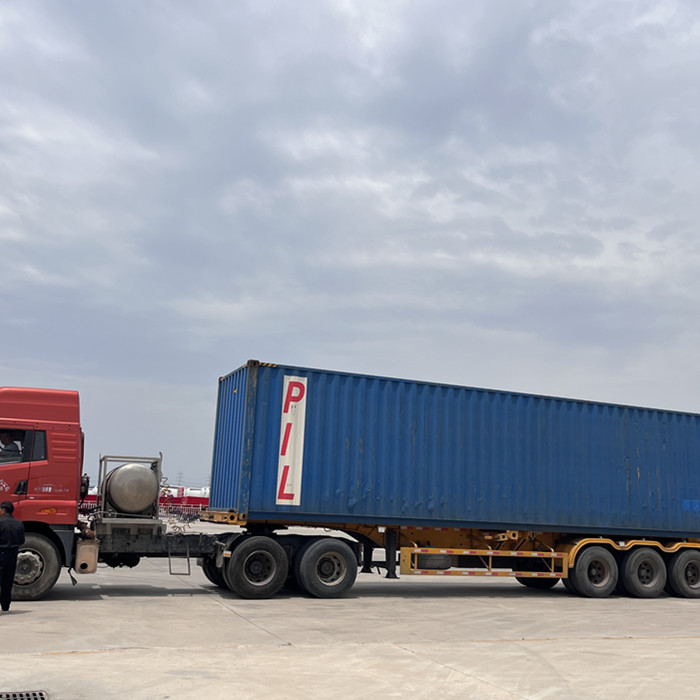
Types of 40ft container chassis: Which One Fits Your Needs?
Container chassis are not one-size-fits-all. Different designs cater to specific operational requirements, from standard port drayage to specialized cargo handling. Understanding these variations is key to optimizing your fleet.
| Chassis Type | Key Specs | Price Level | Best Used For |
|---|---|---|---|
| Standard Gooseneck | Fixed length, gooseneck design for stability, 2 or 3 axles. | $$ | High-volume, dedicated transport of standard and high-cube 40ft containers. The workhorse of port logistics. |
| Extendable / Sliding | Adjustable frame length (e.g., from 40ft to 45ft), often with a sliding bogie. | $$$ | Versatile fleets handling multiple container sizes (20ft, 40ft, 45ft) to maximize asset utilization. |
| Tipper / Tilting Chassis | Equipped with hydraulic cylinders to tilt the container for unloading bulk materials. | $$$$ | Transporting bulk goods like grain, sand, or scrap metal in containers, eliminating the need for specialized unloading equipment. Similar in function to tipper trailers. |
| Lightweight Chassis | Built with high-tensile steel and optimized design to reduce tare weight. | $$$ | Maximizing legal payload in regions with strict weight limits, leading to improved fuel efficiency and profitability per trip. |
Essential Features & Quality Standards
The difference between a reliable chassis and one that causes constant problems often lies in the details of its construction and the quality of its components.
What Differentiates a High-Quality Chassis?
- Welding Quality: Look for clean, uniform, and continuous welds, especially on the main beam and cross members. Automated robotic welding is a sign of a modern, quality-focused manufacturing process.
- Corrosion Protection: A chassis operating in port environments is exposed to salt and moisture. A multi-stage process involving shot blasting followed by an epoxy primer and polyurethane topcoat provides superior, long-lasting protection against rust.
- Component Brands: The use of internationally recognized brands for critical parts like axles (BPW, FUWA), suspension, landing gear (JOST), and braking systems (WABCO) is a strong indicator of overall quality and ensures easier access to trailer parts for future maintenance.
- Electrical System: All wiring should be properly sealed, protected in conduits, and use waterproof connectors (e.g., 24V, 7-pin ISO 1185 standard socket) to prevent electrical failures, a common source of downtime.
Always verify that the manufacturer adheres to international quality management standards like ISO 9001. This certification ensures they have documented and consistent processes for production and quality control.
Total Cost of Ownership (TCO) & Budgeting Guide
A smart procurement strategy looks beyond the initial purchase price. The Total Cost of Ownership (TCO) provides a more accurate picture of the chassis's long-term financial impact.
Upfront Cost: This is the purchase price of the trailer. While tempting, choosing the absolute lowest price often leads to higher long-term expenses.
Ongoing & Hidden Costs:
- Maintenance: Factor in routine costs for tires, brake pads, lubrication, and inspections. Higher quality components typically require less frequent replacement.
- Fuel Consumption: A lighter chassis can lead to significant fuel savings over its lifespan, especially for large fleets.
- Downtime: Every hour a trailer is out of service for repairs is an hour of lost revenue. A reliable chassis from a reputable manufacturer minimizes unexpected downtime.
- Resale Value: Well-built chassis from known brands retain a higher resale value, improving your return on investment when it's time to upgrade your fleet.
When presenting a budget to management, frame the purchase as an investment in operational uptime and efficiency. A 10-15% higher initial cost for a premium chassis can often be justified by a 50% reduction in unplanned maintenance and a longer service life.

Top Common Buying Mistakes & How to Avoid Them
- Focusing Only on Price: The cheapest chassis often uses inferior steel, low-grade components, and poor paint, leading to rust, structural failures, and high maintenance bills within a few years.
- Ignoring Local Regulations: Failing to specify a chassis that complies with local axle weight limits, overall dimensions, and braking standards can result in the vehicle being unusable or subject to heavy fines.
- Overlooking Corrosion Resistance: For port or coastal operations, standard paint is not enough. Insist on a comprehensive anti-corrosion treatment like galvanization or a marine-grade paint system.
- Mismatching Chassis to Application: Using a standard chassis for heavy-duty or off-road tasks can lead to premature failure. Be clear with the supplier about your intended use, including road conditions and load types.
- Neglecting Supplier After-Sales Support: A supplier who is unresponsive or unable to provide technical support and spare parts can turn a minor issue into a major problem. Vet your supplier's support capabilities before purchasing.
Customization & OEM/ODM Options
A reliable manufacturer can offer a range of customization options to tailor the chassis to your exact operational requirements. This flexibility ensures you get a tool that is perfectly suited for your business.
Common customizations include:
- Color and Livery: Painting the chassis in your company's brand colors and adding your logo.
- Additional Fittings: Adding toolboxes, spare tire carriers, or specific document holders.
- Lighting Packages: Upgrading to full LED lighting for better visibility and lower maintenance, or adding specific work lights.
- Structural Modifications: Adjusting the number and position of twist locks, reinforcing specific areas for heavy loads, or adapting the design for specialized containers. We offer a wide range of trailer types, including robust Container Chassis and versatile flatbeds.
Inspection, Packaging & Shipping
For international buyers, understanding the logistics process is vital.
- Pre-Shipment Inspection: Reputable suppliers welcome third-party inspections (e.g., by SGS, BV) before the chassis leaves the factory. This provides an independent verification of the quality and specifications.
- Export Packaging: To save on ocean freight, chassis are typically shipped in a stacked, semi-knocked-down (SKD) manner. Usually, 3 or 4 units are stacked and bundled together, fitting into one 40ft high-cube container. Ensure the supplier properly secures and protects the units to prevent damage during transit.
- Shipping Terms: Clarify the Incoterms used. FOB (Free On Board) means the seller is responsible until the goods are loaded on the vessel. CIF (Cost, Insurance, and Freight) means the seller arranges and pays for shipping and insurance to your destination port. DDP (Delivered Duty Paid) means the seller handles everything, including import clearance and duties.
Why Partner with Us as Your Manufacturer?
Choosing the right manufacturing partner is as important as choosing the right specifications. We are committed to delivering high-performance, reliable, and long-lasting transport solutions. Our state-of-the-art facility utilizes automated welding and advanced production techniques to ensure every chassis meets the highest quality standards.
Our commitment includes strict quality control at every stage, from raw material inspection to final assembly. We offer competitive lead times, comprehensive warranties on our main frames, and lifetime technical support to ensure your fleet remains operational and profitable. Our engineering team works closely with clients to develop customized solutions that solve real-world logistics challenges.
For detailed specifications on our range of skeletal trailers, please contact our team to discuss your requirements.
Frequently Asked Questions (FAQ)
1. What is the minimum order quantity (MOQ)?
Our minimum order quantity for a 40ft container chassis is typically one unit. We support businesses of all sizes, from single-operator fleets to large logistics corporations.
2. What is the standard lead time for production?
The standard production lead time is approximately 25-35 days after receiving the deposit and confirming the technical drawings. This can vary depending on the level of customization and order volume.
3. What warranty do you offer on your chassis?
We provide a comprehensive warranty, which typically includes a 12-month guarantee on the main frame against manufacturing defects. Key components from third-party suppliers are covered by their respective manufacturer warranties.
4. What are your accepted payment terms?
Our standard payment terms are a 30% deposit via T/T (Telegraphic Transfer) to begin production, with the 70% balance paid before shipment. We can also discuss other options like a Letter of Credit (L/C) for larger orders.
5. Do you provide after-sales service and spare parts?
Yes, we offer complete after-sales support. This includes lifetime technical assistance via email or phone and a reliable supply of original spare parts to ensure minimal downtime for your trailers.

A Buyer's Guide to the 20ft Container Chassis
Discover the essential guide to selecting a 20ft container chassis. Learn about types, key features, dimensions, and customization options. Request a ...
Read More →
Improve Intermodal Turns With a 40ft Container Chassis
Discover how a 40ft container chassis optimizes logistics, port drayage, and supply chain efficiency. Learn key specs and applications. Request a tech...
Read More →