





Choosing the right container chassis trailer is critical for operational efficiency
In global logistics and intermodal transport, selecting the appropriate equipment is fundamental to profitability and reliability. The container chassis trailer, or skeletal trailer, is the backbone of port drayage and overland container movement. The primary decision procurement managers face is choosing between an extendable (or telescopic) chassis and a traditional fixed-frame model. This guide provides a detailed, head-to-head comparison to help you determine which design best aligns with your fleet's operational requirements and financial strategy.
While an extendable chassis offers unmatched versatility for handling multiple container sizes, a fixed-frame chassis provides simplicity, lower weight, and reduced maintenance. Understanding the trade-offs in performance, cost, and application is key to making a sound investment.
Executive Summary and Comparison Table
For busy fleet managers, the choice boils down to a single question: Do you need the flexibility to handle various container lengths with a single asset, or do you run predictable, high-volume routes with a uniform container size? Extendable chassis are ideal for dynamic environments like port terminals, where 20ft, 40ft, and 45ft containers are handled daily. Fixed-frame chassis excel in dedicated logistics loops, where maximizing payload and minimizing equipment complexity and cost are the top priorities.
| Feature | Extendable Container Chassis | Fixed Frame Container Chassis |
|---|---|---|
| Container Compatibility | Multiple sizes (e.g., 20ft, 40ft, 45ft) on a single unit | Single, specific size (e.g., 20ft only, 40ft only) |
| Primary Advantage | Operational Versatility | Simplicity & Lower Tare Weight |
| Structural Complexity | Higher (sliding mechanism, locking pins, rollers) | Lower (welded, rigid I-beam frame) |
| Tare Weight | Higher due to additional mechanisms | Lower, allowing for potentially higher legal payload |
| Upfront Cost | Higher | Lower |
| Maintenance Requirements | More frequent; requires inspection of sliders and locks | Less frequent; standard axle, brake, and tire checks |
| Ideal Application | Port drayage, mixed-container fleets, LTL consolidation | Dedicated high-volume routes, weight-sensitive cargo |
Understanding the Extendable Container Chassis
An extendable container chassis features a sliding frame or bogie that allows its length to be adjusted. This mechanism enables a single trailer to safely and legally transport containers of different standard lengths, most commonly 20ft, 40ft, and 45ft ISO containers.
The core mechanism typically involves a pneumatic or manually operated locking pin system that secures the sliding section at predetermined lengths. The driver releases the locks, adjusts the chassis to the desired length to match the container, and re-engages the locks to ensure the frame is rigid and secure for transit.

Pros of an Extendable Chassis
- Unmatched Versatility: A single trailer can handle the work of two or three fixed-length trailers, dramatically improving asset utilization and reducing the need for a larger, more diverse fleet.
- Operational Agility: Drivers can adapt to different job assignments without returning to the yard to switch trailers, saving time, fuel, and labor.
- Reduced Fleet Size: For companies handling mixed container loads, extendable models can lower the total number of trailers needed, reducing capital expenditure and yard space requirements.
Cons of an Extendable Chassis
- Higher Initial Cost: The complex sliding mechanism and additional structural reinforcement make these chassis more expensive to purchase upfront.
- Increased Tare Weight: The sliding bogie and frame components add several hundred kilograms to the trailer's weight, which can slightly reduce the maximum legal payload.
- More Maintenance: Moving parts like rollers, sliders, and locking pins require regular lubrication and inspection to prevent seizure and ensure safe operation.
Understanding the Fixed Frame Container Chassis
A fixed frame container chassis is the traditional, non-adjustable skeletal trailer. It is manufactured to a specific length to carry a single size of container, such as a 20ft, 40ft, or 45ft model. Its design is the epitome of simplicity and strength.
The construction consists of two main I-beams running the length of the trailer, connected by cross-members, with twist locks welded at the precise corner locations for the designated container size. There are no moving parts within the frame, making it an incredibly robust and reliable piece of equipment.
Pros of a Fixed Frame Chassis
- Lower Purchase Price: Simpler design and less material complexity result in a significantly lower upfront investment compared to extendable models.
- Lower Tare Weight: The minimalist design maximizes the potential payload, which is critical for transporting heavy goods.
- Enhanced Durability & Simplicity: With no moving frame parts, there are fewer points of failure, leading to a longer service life with minimal structural maintenance.
- Reduced Maintenance Costs: Maintenance is limited to standard running gear components like axles, brakes, and tires, which are common across most trailer types. Sourcing Trailer Parts is straightforward.
Cons of a Fixed Frame Chassis
- Complete Inflexibility: A 40ft chassis cannot efficiently or safely transport a 20ft container, and vice versa. This lack of versatility requires a dedicated chassis for each container size you handle.
- Lower Asset Utilization: If the demand for a specific container size drops, the corresponding fixed-frame chassis may sit idle, representing an underutilized asset.
Core Differences: Head-to-Head Analysis
Performance and Load Distribution
A fixed frame chassis is inherently optimized for one task. The axle placement and frame geometry are perfectly balanced for the weight distribution of a single, specified container size. This results in excellent stability and predictable handling. An extendable chassis offers good performance, but it relies on the operator to ensure the frame is correctly positioned and locked. Improper adjustment can lead to suboptimal axle loading and handling characteristics.
Versatility and Industry Suitability
This is the most significant point of divergence. The extendable chassis is the clear winner for any operation that lacks predictability. Port operators, third-party logistics (3PL) providers, and drayage companies benefit immensely from the ability to dispatch any driver to any job. In contrast, fixed frame Container Chassis are the preferred choice for manufacturers, distributors, or shipping lines with dedicated, high-volume "closed-loop" routes where the same size container is always used. They function similarly to specialized equipment like Lowbed Trailers, which are built for a specific purpose.
Cost Analysis: Upfront vs. Total Cost of Ownership (TCO)
While a fixed frame chassis is cheaper to buy, the TCO calculation can be more complex. If purchasing an extendable chassis prevents you from buying both a 20ft and a 40ft fixed chassis, the extendable model may offer a better return on investment. You must analyze your operational data: if a single driver frequently handles both 20ft and 40ft containers in a single day, the time saved by not swapping trailers can quickly justify the higher cost of an extendable model. Conversely, if your fleet is large enough to dedicate units to specific tasks, the lower purchase and maintenance costs of fixed frames will result in a lower TCO.
Lifespan and Daily Maintenance
Both chassis types are built from high-strength steel and designed for years of rigorous service. However, the fixed frame has a structural advantage due to its simplicity. Its lifespan is primarily limited by corrosion and wear on the running gear. An extendable chassis introduces mechanical wear points in the sliding mechanism. These areas require diligent cleaning and lubrication to prevent rust and binding, which could eventually require costly repairs. The daily pre-trip inspection for an extendable model must include checking that all locking pins are fully engaged.
Decision Matrix: How to Choose the Right Chassis
Use these scenarios to guide your procurement decision.
Choose an Extendable Container Chassis if:
- Your business operates in a dynamic environment with unpredictable container sizes (e.g., port drayage).
- You prioritize maximum asset and driver utilization over the lowest initial purchase price.
- Your fleet is small to medium-sized, and each trailer needs to be as versatile as possible.
- You need the flexibility to handle standard 20ft and 40ft containers as well as 45ft high-cube units.
Choose a Fixed Frame Container Chassis if:
- You operate predictable, dedicated routes with a single, uniform container size.
- Maximizing payload by minimizing tare weight is a critical business requirement.
- Your primary goal is to minimize upfront capital investment and long-term maintenance complexity.
- You operate a large fleet where dedicating specific units to specific tasks is an efficient strategy, similar to how one might use specialized Flatbed Trailers for specific cargo.
Customization Options (OEM/ODM Capabilities)
Regardless of your choice, a reputable manufacturer can offer a range of customization options to meet specific operational or regional requirements. Both extendable and fixed frame models can be configured with:
- Axle & Suspension: Choose from 2-axle, 3-axle, or even 4-axle configurations with mechanical spring or air ride suspension systems.
- Tire & Wheel Specifications: Select tires and rims that match your fleet's standards for durability and load rating.
- Braking System: Options include standard drum brakes or disc brakes with ABS or EBS for enhanced safety.
- Lighting & Electrical: Specify LED lighting systems and electrical connections (e.g., 7-pin, 12-pin) to comply with local regulations.
- Paint & Branding: Customize the chassis with your company's colors and logos for brand consistency.
Packaging and Shipping Guidance for International Buyers
For international export, container chassis are typically shipped in a stacked configuration to optimize space and reduce freight costs. Two or three chassis can be nested and secured together, allowing them to be loaded as a single unit onto a bulk carrier or RoRo (Roll-on/Roll-off) vessel. To prevent corrosion during ocean transit, key components are treated with a waterproof wax or protective coating. All securing and lashing are done to meet strict international maritime safety standards, ensuring your equipment arrives in pristine condition.
Why Source Your Container Chassis from Us?
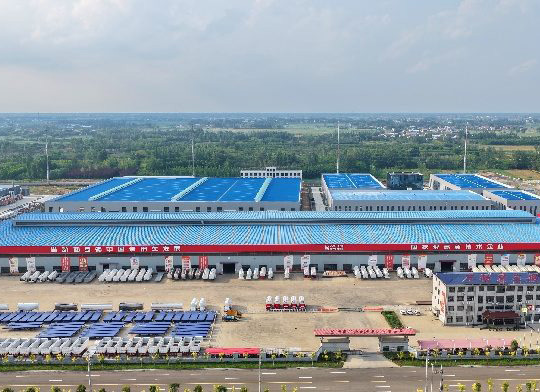
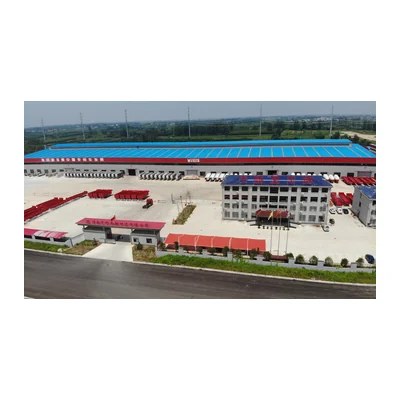
As a leading manufacturer of specialized semi-trailers, we combine advanced production technology with robust engineering to deliver equipment that performs. Our factory is equipped with multi-line production capabilities, allowing us to produce both standard and highly customized chassis efficiently. We utilize high-tensile steel (Q345B and higher grades) and automated welding processes to ensure maximum strength and durability.
With ISO 9001 and CE certifications, our quality management systems are internationally recognized. Our engineering team has extensive experience in designing trailers that meet diverse global standards, from axle load limits to electrical systems. We provide comprehensive technical support and a reliable supply chain for spare parts to ensure your fleet remains operational for years to come.
To determine the ideal chassis configuration for your logistics network, contact our technical team for selection advice.
Frequently Asked Questions (FAQ)
Which container chassis trailer is better for maximizing payload?
The fixed frame container chassis trailer is better for maximizing payload. Its simpler construction results in a lower tare weight, allowing more of the gross vehicle weight limit to be allocated to cargo, which is especially important for heavy commodities.
Can a 40ft fixed chassis carry a 20ft container?
Generally, no. A standard 40ft fixed chassis is not designed to carry a 20ft container safely. It lacks the proper mid-frame twist locks and would result in severe weight imbalance over the axles. The correct equipment is either a dedicated 20ft chassis or an extendable model.
How much more does an extendable chassis cost compared to a fixed one?
The upfront cost for an extendable container chassis is typically 20-35% higher than a comparable fixed frame model. This premium covers the complex sliding mechanism, additional steel, precision engineering, and labor required for its construction.
What is the lifespan difference between the two chassis types?
With proper maintenance, both types can provide over 15-20 years of service. A fixed frame chassis has a simpler structure with fewer failure points. The lifespan of an extendable chassis is highly dependent on the regular maintenance of its sliding mechanism and locking pins.
Is an extendable chassis more difficult for drivers to operate?
It requires a few extra steps, but it is not significantly more difficult for a trained driver. The primary operational difference is the pre-use procedure of adjusting the frame length and visually confirming that all safety locking pins are fully engaged before moving the load.
Reduce Drayage Delays With Container Chassis Trailers
Optimize port container transport with a durable container chassis trailer. Explore our guide on applications, specifications, and how to improve dray...
Read More →
A Guide to 40ft Flatbed Trailer Payloads and Applications
Explore the diverse applications and payload capacities of the 40ft flatbed trailer. Our guide covers industries, specs, and customization. Request a ...
Read More →