





Understanding Payloads and Applications for the 40ft Flatbed Trailer
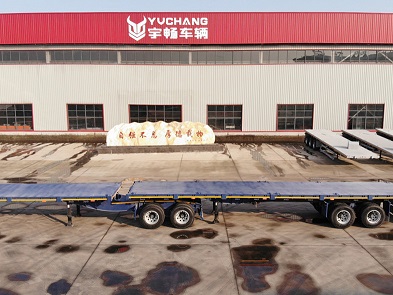
In the world of global logistics and heavy industry, efficiency and versatility are paramount. The 40ft flatbed trailer stands as a cornerstone of transport, prized for its simple, robust design and its capacity to handle a vast range of cargo types. This open-deck platform provides unparalleled flexibility for loading and unloading, making it an indispensable asset across construction, manufacturing, energy, and agricultural sectors. Understanding its capabilities is key to optimizing supply chain operations and ensuring project success.
| Target Industry | Primary Material / Component Hauled | Key Benefit / Value Delivered |
|---|---|---|
| Construction | Structural steel, precast concrete, scaffolding | Handles oversized and non-uniform loads with ease. |
| Manufacturing | Heavy machinery, raw metal stock, large assemblies | Facilitates direct plant-to-site transport for large items. |
| Energy (Oil & Gas) | Large-diameter pipes, drilling equipment, skids | Provides a durable platform for harsh field environments. |
| Agriculture | Farm machinery, irrigation systems, bulk materials | Offers flexibility for seasonal equipment and material moves. |
Core Functional Capabilities and Compatible Cargo
The fundamental advantage of this trailer model lies in its unenclosed design. This allows for cargo that is wide, tall, or irregularly shaped to be loaded from the top, sides, or rear using cranes and forklifts. The deck is engineered for significant point loads and is typically equipped with a robust system of tie-down points, such as stake pockets, D-rings, and rub rails, to secure cargo in compliance with international transport regulations.
The trailer's construction is designed to handle a wide array of materials and working environments. Its adaptability makes it suitable for hauling:
- Construction Materials: Long steel I-beams, rebar bundles, lumber, scaffolding, large precast concrete panels, and culverts.
- Heavy Machinery: Industrial equipment, CNC machines, agricultural tractors, and construction vehicles that fit within weight limits. For heavier equipment, Lowbed Trailers may be a more suitable option.
- Raw & Processed Metals: Steel coils, sheet plates, large-diameter pipes, and fabricated metal structures.
- Palletized & Crated Goods: While often associated with oversized freight, it is also highly efficient for full loads of bagged cement, bricks, roofing materials, and other standard goods.
- Containerized Freight: When equipped with optional twist locks, these trailers can function similarly to a Container Chassis for standard ISO containers.
Industry-by-Industry Breakdown of Applications
The 40ft flatbed trailer's utility is best understood by examining its role within specific industries.
Heavy Construction & Infrastructure
In construction, timelines are critical. This trailer is used to deliver essential structural components directly to the job site. This includes transporting prefabricated bridge sections, long spans of rebar, and large retaining wall blocks. The operational advantage is the reduction in handling; materials can be lifted directly from the trailer deck and placed into position, minimizing on-site storage and labor.
Industrial Manufacturing
For large-scale manufacturing plants, the 40ft platform serves as a vital link in the supply chain. It's used to bring in raw materials like massive steel plates for fabrication and to ship out finished products, such as oversized machinery, pressure vessels, or large-scale HVAC units. This direct transport capability reduces the need for disassembly and reassembly, saving significant time and cost.
Energy & Power Generation
The energy sector relies on durable equipment to transport components to remote and often rugged locations. These trailers are ideal for hauling long sections of pipeline for oil and gas projects, wind turbine tower sections, and heavy-duty electrical transformers. Their simple, resilient design ensures reliability even in harsh field conditions.
Agriculture
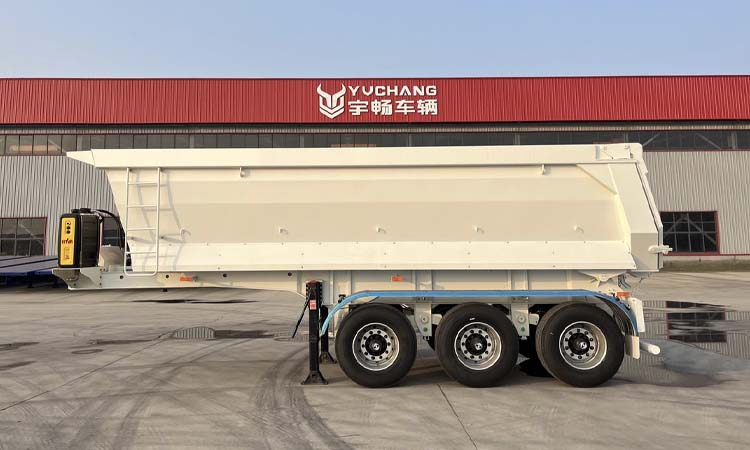
In agriculture, the flatbed is a versatile workhorse. It's used to move large farm implements like combines and tractors between fields or to service centers. It also transports irrigation piping, large hay bales, and bulk seed or fertilizer. This flexibility makes it indispensable for both day-to-day operations and seasonal transport needs. For other agricultural hauling, specialized Tipper Trailers are also common.
Real-World B2B Case Study Scenario
Problem: A wind farm developer needed to transport 35-foot-long base sections for wind turbines from a coastal port to an inland project site, facing a tight construction schedule.
Technical Challenge: The components were not only long but also heavy, requiring a transport solution with sufficient length, a high payload capacity, and numerous securement points to ensure stability over varied terrain.
Solution Implemented: A fleet of heavy-duty 40ft flatbed trailers with reinforced main beams and additional D-ring tie-downs was deployed. The open-deck design allowed for efficient crane loading at the port and unloading at the installation site.
Measurable Result: The use of these trailers allowed the developer to move two base sections per trip, reducing the total number of required transport cycles by 25% compared to using smaller, less capable trailers. This accelerated the project timeline and resulted in significant fuel and labor cost savings.

Application-Based Selection and Specification Matrix
Choosing the right specifications is critical for safety, efficiency, and trailer longevity. Technical buyers should consider the following factors based on their primary application.
| Specification | Standard Duty Option | Heavy Duty Option | Application Guidance |
|---|---|---|---|
| Payload Capacity | 25-30 Tons | 35-50+ Tons | Select based on the maximum weight of your typical cargo. Heavy machinery or dense materials like steel coils require a heavy-duty rating. |
| Suspension Type | Mechanical (Spring) | Pneumatic (Air Ride) | Spring suspension is robust and low-maintenance. Air ride offers a smoother journey, protecting sensitive or fragile cargo from road shock. |
| Deck Material | Hardwood (Apitong) | Steel (Checkered Plate) | Wood decks offer good grip and are cost-effective to repair. Steel decks provide maximum durability for tracked vehicles and heavy point loads. |
| Axle Configuration | 2 Axles (Tandem) | 3+ Axles (Tridem/Quad) | More axles distribute weight over a larger area, increasing legal payload capacity and improving stability, essential for heavy haulage. |
Customization and OEM/ODM Capabilities
For unique industrial requirements, standard trailers may not suffice. We offer extensive customization and OEM/ODM engineering capabilities. This allows procurement managers to specify trailers perfectly suited to their operational needs. Common customizations include:
- Container Twist Locks: For dual-use applications, transporting both general freight and standard ISO shipping containers.
- Custom Tie-Down Points: Specific placement and quantity of D-rings, chain slots, or stake pockets to match recurring cargo types.
- Corrosion Resistance: Special coatings, galvanization, or use of specific alloys for operation in coastal, marine, or chemically aggressive environments.
- Axle & Suspension Upgrades: Integration of lift axles for fuel savings or self-steering axles for enhanced maneuverability in tight spaces.
- Electrical System Matching: Configuration of lighting and braking systems to meet regional standards (e.g., 12V vs. 24V systems, specific connector types).
Export Packaging, Logistics, and Global Shipping
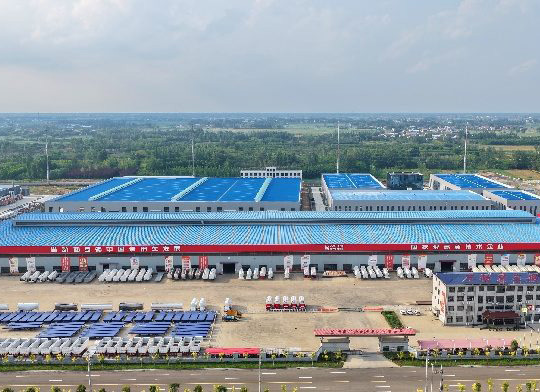
Ensuring your equipment arrives in pristine condition is our priority. Our Flatbed Trailers are prepared for international transit using strict protocols. Trailers are typically stacked (2-3 units high) to optimize container space or shipped via Roll-on/Roll-off (Ro-Ro) vessels. Key components are protected with moisture-proof wrapping, and all wood used in crating complies with ISPM-15 international standards. We offer flexible logistics terms, including FOB, CIF, and DDP, to accommodate your procurement strategy and simplify customs clearance.
Quality Assurance, Compliance, and International Standards
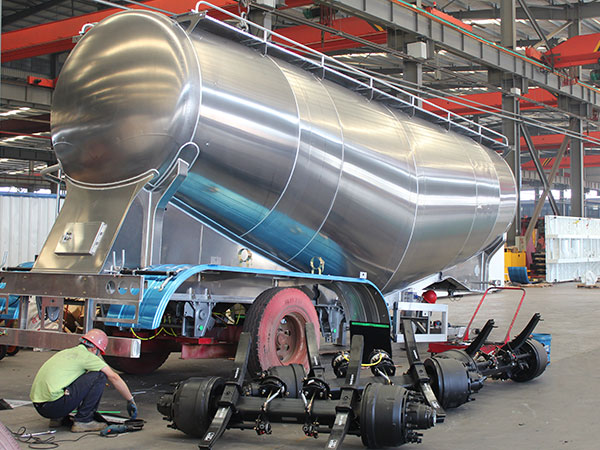
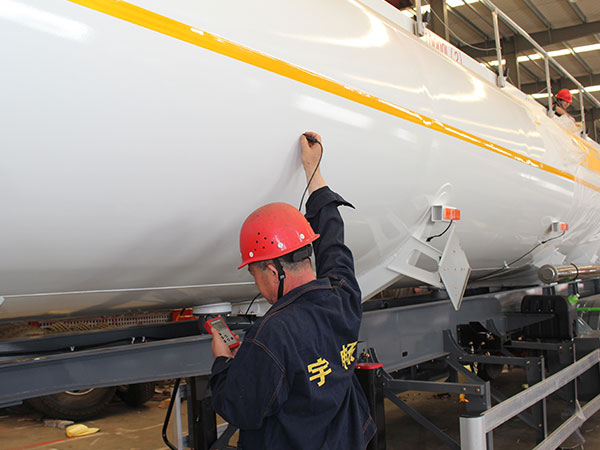
Our manufacturing processes are certified under ISO 9001 to guarantee consistent quality and performance. Every trailer undergoes a rigorous quality control inspection before dispatch. Key factory testing procedures include:
- Weld Integrity Testing: Non-destructive testing (NDT) on critical structural welds.
- Load Simulation: Static load testing to verify the stated payload capacity and structural integrity.
- Brake System Verification: Full system check to ensure compliance with international standards like DOT or ECE.
- Dimensional & Alignment Checks: Precision laser alignment of axles to ensure proper tracking and minimize tire wear.
Frequently Asked Questions (FAQ)
1. What is the typical payload capacity of a 40ft flatbed trailer?
Standard tandem-axle models typically have a payload capacity of 25 to 30 tons (approx. 55,000-66,000 lbs). However, heavy-duty configurations with three or more axles can increase the 40 foot flatbed trailer capacity to 50 tons or more, depending on local regulations.
2. How do I prevent cargo from shifting during transit?
Proper cargo securement is critical. It involves using a combination of high-tensile chains, binders, and straps connected to the trailer's built-in D-rings, stake pockets, and rub rails. The number and type of tie-downs required depend on the cargo's weight, length, and shape.
3. What is the difference between an air-ride and a spring suspension?
A spring suspension is a durable, low-cost mechanical system ideal for rugged applications. An air-ride suspension uses air bags to provide superior cushioning, which is recommended for transporting sensitive, high-value, or fragile equipment that could be damaged by road vibrations.
4. Can you manufacture a trailer to match the electrical system of my country's trucks?
Yes. We routinely configure trailers with electrical systems (lighting, ABS, connectors) to match regional standards across North America, Europe, Australia, and Asia, ensuring plug-and-play compatibility with your fleet.
For detailed specifications or to discuss your unique transport challenges, please contact our engineering team to request a technical data sheet.

Container Chassis Trailer: Extendable vs Fixed Frame
Choosing between an extendable and fixed frame container chassis trailer? This guide compares specs, cost, and applications to help you decide. Reques...
Read More →
Secure Oversize Freight on a 40ft Flatbed Trailer
Learn how to properly select and secure loads on a 40ft flatbed trailer. This guide covers types, applications, and buying criteria for industrial tra...
Read More →