A Heavy Duty Flatbed Is Essential for Efficient Equipment Transport
In global logistics and heavy industry, the efficient and safe movement of oversized, overweight, and non-standard cargo is a critical operational challenge. The heavy duty flatbed trailer stands as a cornerstone solution, offering unparalleled versatility and structural integrity for demanding transport tasks across continents. Engineered for high payloads and harsh conditions, these platforms are indispensable for industries ranging from construction to energy production.
| Target Industry | Primary Material / Component | Key Benefit / Value Delivered |
|---|---|---|
| Heavy Construction | High-Strength Steel (Q345B/Q690D) Frame | Maximum payload capacity for excavators, cranes |
| Energy & Power | Heavy-Duty Axles (BPW/FUWA) | Reliable transport of transformers, turbines |
| Manufacturing | Reinforced Steel Deck | Versatility for machinery, structural steel, coils |
This guide provides a comprehensive technical overview for procurement managers, engineers, and logistics coordinators, detailing the applications, specifications, and customization options that make these trailers a vital asset for any B2B operation focused on heavy haulage.
Core Functional Capabilities and Operating Environments
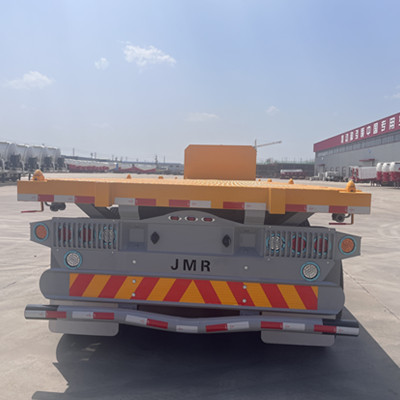
The fundamental purpose of a heavy equipment flatbed trailer is to provide a stable, robust, and open platform for cargo that cannot be transported in an enclosed van or container due to its size, weight, or shape. The design prioritizes strength, load distribution, and accessibility.
Core capabilities are rooted in its engineering:
- Structural Frame: Main I-beams are fabricated from high-tensile steel (such as Q345B or higher grades) to handle extreme stress and prevent deflection under maximum load.
- Suspension Systems: Options include rugged mechanical leaf spring suspensions for off-road durability or advanced air suspensions for smoother transit and adjustable deck height, protecting sensitive cargo.
- Load Security: A matrix of integrated lashing rings, stake pockets, and twist locks provides multiple securement points, ensuring compliance with international cargo safety regulations.
These trailers are engineered to perform reliably in a range of harsh working environments, including:
- Undeveloped construction sites with uneven terrain.
- Extreme temperature zones, from arctic cold to desert heat.
- Corrosive coastal and marine environments.
- High-mileage, cross-border highway routes.
Industry-by-Industry Application Breakdown
The adaptability of these platforms makes them suitable for a diverse set of industries. While general Flatbed Trailers handle a wide range of goods, heavy-duty variants are specified for more demanding tasks.
Heavy Construction
This is the most common application, focused on construction machinery transport. The open deck design is perfect for moving tracked or wheeled equipment between job sites.
- Specific Uses: Transporting excavators, bulldozers, wheel loaders, road rollers, and mobile cranes.
- Operational Advantages: High payload capacity eliminates the need for multiple smaller trucks, reducing fuel costs and transport cycles. Optional hydraulic or mechanical ramps allow for safe and efficient self-loading of machinery.
Energy and Power Generation
The energy sector relies on moving massive, indivisible components for power plants, wind farms, and oil and gas installations.
- Specific Uses: Hauling large power transformers, wind turbine blades and nacelles, pressure vessels, and long sections of pipeline.
- Operational Advantages: Custom-engineered low deck flatbed designs, often called Lowbed Trailers, lower the center of gravity for enhanced stability and provide greater overhead clearance for tall cargo. Extendable frames can be specified to accommodate exceptionally long components.
Manufacturing and Industrial
Factories and processing plants often need to transport large machinery, raw materials, or finished structural components.
- Specific Uses: Moving CNC machines, industrial presses, prefabricated building modules, oversized steel coils, and structural beams.
- Operational Advantages: The flat, unobstructed deck space allows for easy loading by overhead crane. A reinforced floor and strategic cross-member spacing ensure the trailer can handle concentrated loads without structural fatigue.
Logistics and General Freight
For logistics providers, versatility is key. A heavy-duty platform can be used for a wide range of break-bulk and project cargo.
- Specific Uses: Transporting stacked lumber, bagged cement on pallets, large tires, and standard shipping containers (when fitted with twist locks). An Interlink Flatbed Trailer configuration can further increase cargo volume.
- Operational Advantages: The ability to handle diverse load types maximizes asset utilization, ensuring the trailer is always generating revenue instead of waiting for a specific type of cargo.
Real-World B2B Case Study Scenario
- Problem: A large-scale infrastructure contractor was experiencing significant project delays due to inefficient transportation logistics for their 60-ton crawler crane between multiple sites.
- Technical Challenge: The crane's weight and dimensions required a specialized transport solution that could navigate both highways and unpaved site roads while meeting strict road regulations.
- Solution Implemented: A custom-built 4-axle low deck flatbed was engineered with a detachable gooseneck (RGN) for safe, low-angle loading. It featured a high-strength Q690D steel frame, hydraulic suspension for height adjustment, and steerable rear axles for improved maneuverability.
- Measurable Result: The solution reduced crane mobilization and demobilization time by 60%. The contractor cut their reliance on third-party heavy haulage services, resulting in direct logistics cost savings of over 25% annually and improved project timeline adherence.
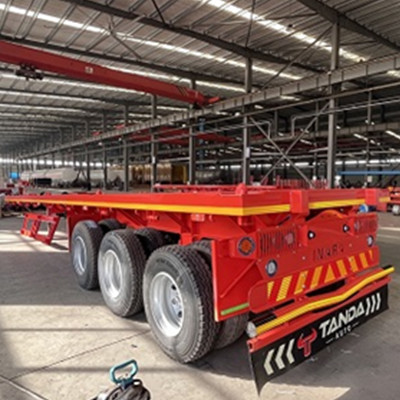
Application-Based Specification Matrix
Selecting the right heavy duty flatbed requires matching specifications to the primary application. This matrix provides guidance for technical buyers.
| Application / Load Type | Recommended Axle Config. | Deck Height | Key Feature | Typical Payload Range |
|---|---|---|---|---|
| General Cargo, Building Materials | 2-3 Axles | Standard (1,400-1,600 mm) | Stake Pockets, Multiple D-Rings | 30-50 Tons |
| Excavators, Wheel Loaders | 3-4 Axles | Standard or Step-Deck | Heavy-Duty Ramps (Mechanical/Hydraulic) | 40-70 Tons |
| Tall Equipment (Cranes, Drill Rigs) | 3-5+ Axles | Low-Deck (850-1,100 mm) | Detachable Gooseneck, Outriggers | 50-100+ Tons |
| Long Loads (Beams, Pipes, Blades) | 3-4 Axles | Standard | Extendable Frame (Telescopic) | 40-60 Tons |
Customization and OEM/ODM Capabilities
Standard models serve many needs, but unique industrial requirements often demand custom engineering. We offer extensive OEM/ODM capabilities to match your specific operational context.
- Component Selection: Specify world-class components, including BPW or FUWA axles, WABCO braking systems, and JOST landing gear and kingpins.
- Structural Modifications: Request custom deck lengths, widths, and extendable sections. Add specialized outriggers for widening the deck to support wider loads.
- Loading Aids: Integrate hydraulic or spring-assisted ramps, hydraulic winches, or a detachable gooseneck for front-loading capability.
- Surface Treatments: Choose advanced anti-corrosion paint systems or hot-dip galvanization for equipment operating in highly corrosive environments.
- Regional Compliance: We engineer lighting, braking, and dimensional specifications to comply with regulations in your target market (e.g., DOT, ECE, ADR). A wide selection of Trailer Parts ensures compliance.
Export Packaging, Logistics, and Global Shipping
Ensuring your asset arrives in pristine condition is paramount. We adhere to strict export protocols.
- Shipping Methods: Trailers are typically shipped via Roll-on/Roll-off (Ro-Ro) vessel or bulk carrier. For regions without Ro-Ro access, we can ship in SKD (Semi Knocked Down) form in 40ft high-cube containers for local assembly.
- Protection: Before shipment, trailers are thoroughly cleaned and coated with wax to protect painted surfaces from saltwater corrosion during ocean transit.
- Logistics Flexibility: We offer a full range of Incoterms, including FOB (Free on Board), CIF (Cost, Insurance, and Freight), and DDP (Delivered Duty Paid), to simplify your procurement process.
Quality Assurance and International Standards
Every trailer is manufactured within an ISO9001-certified quality management system, ensuring traceability and consistency from raw materials to final assembly.
Key factory testing procedures include:
- Weld Inspection: Critical welds undergo ultrasonic and magnetic particle testing to ensure full penetration and integrity.
- Load Simulation: Finite Element Analysis (FEA) is used in the design phase, and physical load tests are performed to verify payload ratings.
- System Checks: The pneumatic braking system, electrical circuits, and any hydraulic components are tested for flawless operation before dispatch.
- Dimensional Verification: All critical dimensions are checked against the approved engineering drawings to guarantee compliance.
Frequently Asked Questions (FAQ)
What is the typical lifespan of a heavy duty flatbed trailer?
With proper maintenance, our heavy duty trailers are designed for a service life of 15-20 years or more. Lifespan is dependent on operating conditions, load cycles, and adherence to the recommended maintenance schedule.
What are the primary maintenance requirements?
Routine maintenance includes regular lubrication of all grease points (suspension, landing gear), checking tire pressures and wear, inspecting brake performance, and examining the frame for any signs of stress or corrosion. A detailed maintenance manual is provided with each unit.
Can you accommodate special axle spacing regulations for different countries?
Yes. Our engineering team can design axle configurations (tandem, tridem, quad) and spacing to comply with specific regional road laws and weight distribution requirements, such as those in North America, Europe, or Australia.
What is the typical lead time for a customized trailer?
Lead time varies based on design complexity and component availability. Standard models may be available more quickly, while highly customized units typically require 60-90 days for engineering, fabrication, and testing before shipment.
For detailed specifications or to discuss your unique transport challenges, please submit your drawings for a technical review.
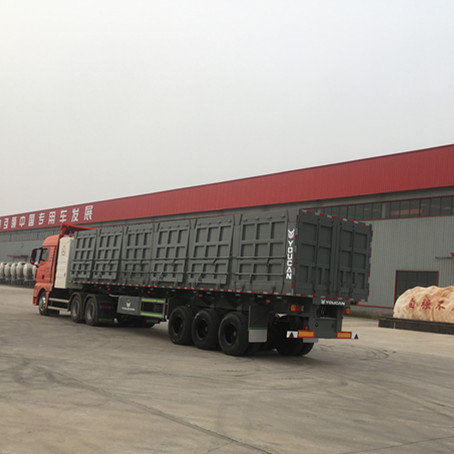
A Steel vs Aluminum Deck Comparison for Your Flatbed Semi Trailer
Choosing between steel and aluminum for your flatbed semi trailer deck? This guide compares durability, payload, cost, and maintenance to help you dec...
Read More →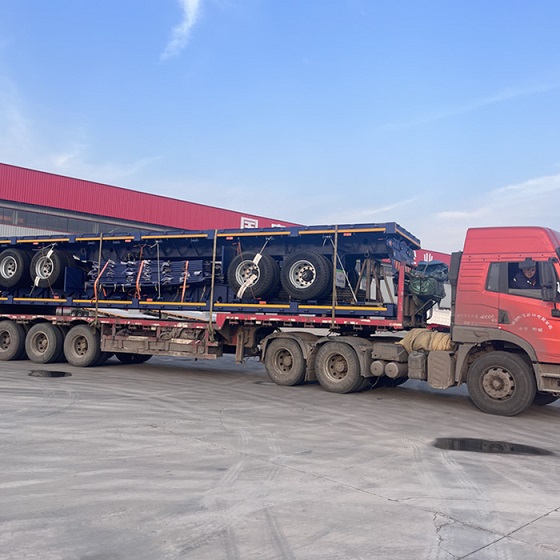
Heavy Duty Flatbed Axle Ratings & Export Market Trends
Sourcing a heavy duty flatbed for export? Understand key market trends, axle ratings, and compliance to make a strategic procurement decision. Get a q...
Read More →