What Is a Flatbed Truck Trailer Used For?
The flatbed truck trailer is a cornerstone of global logistics and heavy industry, prized for its exceptional versatility and efficiency. Its simple, open-deck design provides an unobstructed platform, making it the ideal solution for transporting a wide array of cargo that would be difficult or impossible to load into an enclosed van or container. From construction sites to manufacturing plants, this workhorse of the road facilitates the movement of essential goods and materials that drive economies worldwide.
| Target Industry | Primary Material / Component | Key Benefit / Value Delivered |
|---|---|---|
| Construction & Infrastructure | Steel Beams, Precast Concrete, Lumber | Easy loading and transport of oversized, heavy items. |
| Logistics & General Freight | Palletized Goods, Machinery, Containers | High payload capacity and fast side-loading/unloading. |
| Agriculture & Forestry | Farm Equipment, Baled Hay, Logs | Unrestricted access for irregularly shaped cargo. |
Core Functional Capabilities & Compatible Cargo
The fundamental function of a flatbed trailer is to provide a stable, expansive surface for securing and transporting goods. Unlike enclosed trailers, their open nature allows for loading and unloading from the top, sides, and rear using cranes, forklifts, or other heavy equipment. This flexibility is critical for handling unconventional or oversized loads.
Structurally, they are built with high-tensile steel main beams and cross-members to support immense weight, paired with a durable deck made of hardwood, steel, or a combination. This robust construction makes them suitable for a vast range of cargo types, including:
- Construction Materials: Structural steel I-beams, rebar cages, large-diameter pipes, scaffolding, and stacks of lumber or drywall.
- Heavy Machinery: Excavators, bulldozers, agricultural tractors, forklifts, and industrial manufacturing equipment. For extremely heavy or tall equipment, specialized Lowbed Trailers may be a more suitable option.
- Oversized & Irregular Cargo: Prefabricated building modules, wind turbine components, large tanks, and other project-specific freight.
- Palletized & Crated Goods: Bagged cement, bricks, stone, crated machinery parts, and general freight that benefits from quick side-loading.

Industry-by-Industry Breakdown
The adaptability of the flatbed trailer allows it to serve numerous sectors. Below is a breakdown of its deployment in key global industries.
Construction & Infrastructure
In the construction sector, flatbeds are indispensable. They are the primary means of moving raw materials and prefabricated components from fabrication shops to job sites. Their ability to carry long items like steel girders and concrete wall panels without height restriction is a key operational advantage. This direct-to-site delivery reduces material handling and accelerates project timelines.
Logistics & General Freight
For third-party logistics (3PL) providers and freight companies, flatbeds offer a flexible asset that can handle diverse client needs. They are perfect for "less-than-truckload" (LTL) shipments where multiple types of cargo are consolidated. The ease of side-loading with a forklift significantly reduces turnaround times at busy distribution centers compared to backing into a dock with an enclosed trailer. This makes them an efficient part of the broader General Cargo Semi Trailers fleet.
Agriculture & Forestry
The agricultural industry relies on flatbeds for moving bulky, irregularly shaped items. This includes transporting new tractors and combines from dealerships to farms, hauling large bales of hay or cotton, and moving irrigation pipes. In forestry, they are used to transport logs from harvesting sites to sawmills, providing a rugged and reliable solution for rough terrain.
Energy & Oilfield Services
In the energy sector, from oil and gas exploration to renewable power generation, flatbeds are critical for moving heavy-duty equipment. They transport drill pipe, pumps, generators, and components for wind turbines and solar farms to often remote locations. Their robust build ensures they can withstand the demanding conditions of these industrial environments, complementing other specialized vehicles like the Specialized Liquid Tanker.
Real-World B2B Case Study Scenario
- Problem: A large-scale modular home manufacturer was experiencing significant production delays caused by transportation bottlenecks. Their finished modules were too wide for standard transport methods.
- Technical Challenge: The modules required a transport platform that was not only wide enough but also offered exceptional torsional rigidity to prevent damage during transit over uneven roads.
- Solution Implemented: The company procured a fleet of custom-built flatbed truck trailers featuring extendable outriggers for extra width, reinforced main frames, and an air-ride suspension system for a smoother journey.
- Measurable Result: The new trailers eliminated the transport bottleneck, reducing module transit damage by over 90%. This enabled the company to increase its delivery capacity by 35%, directly boosting revenue and client satisfaction.
Application-Based Selection & Specification Matrix
For procurement managers and engineers, selecting the right trailer specifications is crucial for safety, efficiency, and regulatory compliance. This matrix provides guidance on matching trailer configurations to common applications.
| Specification | Standard Duty | Heavy Duty | Specialized / Project Cargo |
|---|---|---|---|
| Typical Length | 40 ft - 48 ft (12.2m - 14.6m) | 48 ft - 53 ft (14.6m - 16.2m) | 53 ft+ (16.2m+), often extendable |
| Axle Configuration | 2 Axles | 3 or 4 Axles | 5+ Axles (multi-axle, steerable) |
| Max Load Capacity | 20 - 30 tons | 30 - 60 tons | 60 - 100+ tons |
| Deck Material | Hardwood, Steel Overlay | Apitong Hardwood, High-Strength Steel | High-Tensile Steel (e.g., Q345, T700) |
| Primary Application | General freight, palletized goods | Construction materials, machinery | Oversized equipment, wind energy |
Customization & OEM/ODM Capabilities for Niche Applications
Standard flatbed trailers meet many needs, but unique industrial requirements often demand custom-engineered solutions. As an OEM/ODM manufacturer, we provide extensive customization options to ensure your trailer is perfectly suited for its task. Key modifications include:
- Dimensional Adjustments: Custom lengths, widths, and deck heights to accommodate specific cargo or comply with regional regulations.
- Load Securement Systems: Addition of container twist locks, extra stake pockets, sliding winch tracks, and heavy-duty D-rings for maximum cargo safety.
- Structural Reinforcement: Thicker main beams, additional cross-members, and reinforced suspension mounting points for handling concentrated or extreme loads.
- Suspension & Axles: Choice of mechanical spring suspension for durability or air-ride suspension for fragile cargo, with various axle brands and capacities. We also offer a full range of Trailer Parts for maintenance and upgrades.
- Custom Finishes: Application of specific RAL paint codes for corporate branding and specialized anti-corrosion coatings for marine or chemical environments.
Export Packaging, Logistics & Global Shipping Guidance
We specialize in international export, ensuring your equipment arrives safely and ready for deployment. Our logistics process is designed for global buyers.
Packaging: To optimize shipping costs, trailers can be shipped in bulk via Ro-Ro (Roll-on/Roll-off) vessels or stacked and containerized. For container shipping, trailers are often shipped in Semi-Knocked Down (SKD) form, with components like landing gear and tires packed separately to maximize space. All exposed steel surfaces are waxed or covered to prevent saltwater corrosion during ocean transit.
Logistics: We are proficient in handling various Incoterms, including FOB (Free On Board), CIF (Cost, Insurance, and Freight), and DDP (Delivered Duty Paid), providing flexibility for your procurement process.
Quality Assurance, Compliance & International Standards
Every trailer we manufacture undergoes a rigorous quality assurance protocol to meet stringent international standards. Our commitment to quality ensures reliability and a long service life.
- Compliance & Certifications: Our manufacturing facilities are ISO 9001 certified. Trailers can be built to comply with regional standards such as DOT (USA), ADR (Europe), and others upon request.
- Factory Testing Procedures: Before dispatch, each unit is subject to a comprehensive inspection, including weld integrity checks (NDT), dimensional verification against approved drawings, and functional testing of braking systems (e.g., WABCO ABS), lighting, and landing gear. Static load testing is performed to confirm payload capacity ratings.
Frequently Asked Questions (FAQ)
What is the typical payload capacity of a 3-axle flatbed trailer?
A standard 3-axle flatbed trailer typically has a payload capacity ranging from 40 to 60 tons, depending on its structural design, axle rating, and local road transportation laws.
What routine maintenance is required for a flatbed trailer?
Regular maintenance includes checking tire pressure and wear, inspecting brake systems and air lines, lubricating moving parts like the landing gear, and examining the deck and frame for any signs of structural fatigue or damage.
Can you manufacture a trailer to meet my country's specific legal dimensions?
Yes, we offer complete customization services to engineer and build trailers that comply with the specific length, width, height, and axle weight regulations of your country or region.
What is the manufacturing lead time for a custom order?
Standard lead times for custom-built trailers typically range from 30 to 60 days. This can vary based on the complexity of the design, material availability, and current production schedules.
For detailed technical datasheets or to discuss your specific heavy transport requirements, please submit your drawings for a quote.
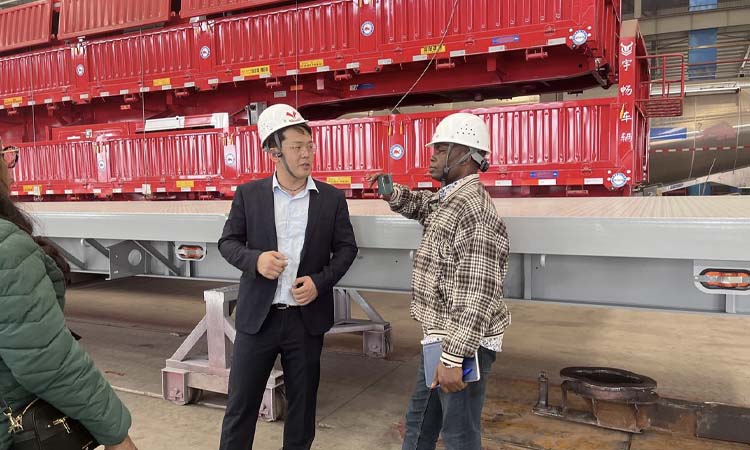
How to Choose a Flatbed Semi Trailer for Heavy Cargo
Learn how to choose a flatbed semi trailer for heavy cargo: key specs, types, TCO, common mistakes and export shipping. Request a quote or selection a...
Read More →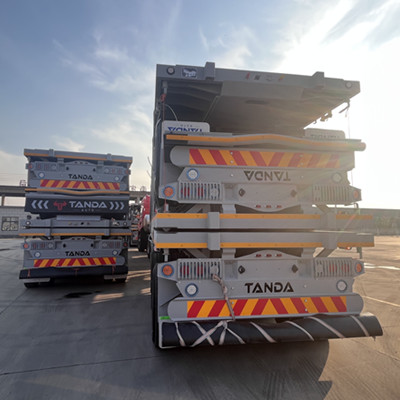
How to Choose a Heavy Duty Flatbed for Steel Coils?
Choose a heavy duty flatbed for steel coils with this buyer's guide to payload, axles, coil cradles, TCO and export shipping. Ask for selection advice...
Read More →