
 WhatsApp
 sales@youcantrailer.com
 +8615203709888
Bulk Cement Trailer for Saudi Cement Plants | YOUCAN
Bulk Cement Trailer Solutions for Cement Plants in Saudi Arabia
28 CBM pneumatic cement tanker: engineering, compliance, and Saudi-market configuration guidance.
Executive Summary
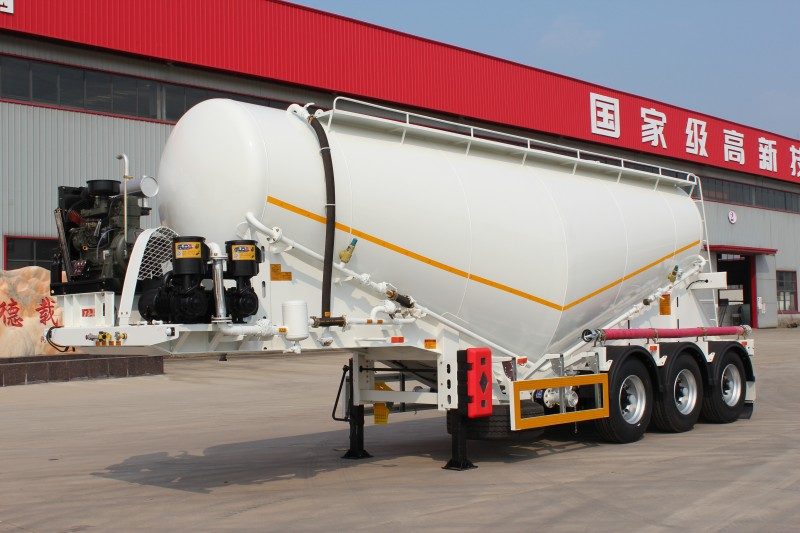
For cement plants in Saudi Arabia, a 28 CBM bulk cement trailer is often a practical solution for transporting dry bulk cement between production plants, silos, terminals, ready-mix concrete facilities, distribution yards, and large construction projects. The trailer should be selected by payload calculation, route distance, unloading method, tractor compatibility, SASO/SABER import requirements, and long-term maintenance conditions, not by tank volume alone.
A suitable Saudi-market configuration normally includes a reinforced tank and chassis structure, Q355 steel in key load-bearing areas, 3x13T axles, air suspension, reliable pneumatic unloading, heat-resistant air and brake components, and an anti-corrosion paint system. This article explains how Saudi cement buyers can evaluate trailer design from an engineering perspective before confirming a purchase specification.
Quick Answer
Saudi cement plants usually need a bulk cement trailer that can carry dense dry powder safely, unload consistently, and meet import documentation requirements before shipment. For many Saudi applications, a 28 CBM pneumatic bulk cement trailer with Q355 structural steel, 3x13T axles, air suspension, a properly matched compressor system, and corrosion-resistant surface treatment gives a practical balance between payload control, highway stability, unloading efficiency, and maintenance planning.
Recommended Specification Snapshot
| Item | Recommended Direction | Buyer Checkpoint |
|---|---|---|
| Trailer type | 28 CBM pneumatic bulk cement trailer | Confirm cargo density and legal payload before final tank volume. |
| Typical cargo | Bulk cement and compatible dry powder materials | Confirm material flow behavior, moisture sensitivity, and unloading site conditions. |
| Main structure | Reinforced tank support and chassis with Q355 steel in key load-bearing areas | Ask which parts use Q355 and how welds are inspected. |
| Axles | 3x13T axle configuration | Confirm axle brand, tire rating, kingpin load, tractor match, and route limits. |
| Suspension | Air suspension | Confirm Saudi fleet preference, local service support, air system quality, and ride-height requirements. |
| Unloading | Pneumatic discharge system | Match compressor capacity, air lines, valves, discharge pipe, hose length, and silo connection. |
| Surface protection | Shot blasting before primer and topcoat | Confirm paint specification, film thickness control, and shipping protection. |
| Compliance focus | SASO/SABER readiness | Confirm HS code, product category, certificate process, and importer requirements early. |
Project Background
Saudi Arabia has one of the most active cement and construction environments in the Middle East. Large-scale housing, industrial, infrastructure, logistics, energy, and development projects create continuous demand for cement movement. According to the Saudi Press Agency, Saudi cement and clinker exports exceeded 8.48 million tons in 2023, and the Kingdom's cement production capacity exceeded 80 million tons annually from 20 factories.
For cement plants, the transportation task is not limited to moving material from point A to point B. Bulk cement logistics must keep dry powder protected from moisture, maintain stable unloading performance, reduce residue inside the tank, and keep the trailer available for repeated trips. A delay at the discharge site can affect ready-mix supply, silo inventory, plant scheduling, and project delivery.
Saudi Arabia's operating environment also creates specific engineering requirements. High ambient temperature, long highway routes, desert dust, heavy axle loads, intensive fleet utilization, and formal import compliance all affect trailer selection.
Industry Background
Cement manufacturing requires stable outbound logistics. After cement is produced and stored in silos, it may be transported to ready-mix plants, construction sites, distribution terminals, export terminals, or industrial customers. In this environment, the trailer works as a mobile extension of the plant's bulk handling system.
Fleet utilization is also important. A trailer serving a cement plant may run repeated trips over long highway distances. Components such as axles, suspension, brake chambers, air valves, tires, landing gear, manholes, discharge valves, and hose connections must be chosen for frequent operation, not only for initial appearance.
Local Transportation Challenges in Saudi Arabia
High Temperature
High ambient temperature affects tires, brake systems, air lines, seals, paint aging, and driver operation. Buyers should pay attention to heat-resistant hoses, reliable brake components, suitable tire selection, and a coating system that tolerates outdoor operation.
Long-Distance Transport
Long highway distances increase vibration exposure, tire heat, brake use, and fuel sensitivity. The trailer needs good axle alignment, stable suspension, a durable king pin area, reinforced tank supports, and reliable landing gear.
Desert Dust
Dust can affect valves, air connections, brake components, electrical plugs, and operator access areas. Valve placement, hose box design, walkway access, and pressure gauge visibility all matter.
SASO and SABER Import Requirements
Import compliance should be discussed before production, not after the trailer is finished. Buyers should confirm requirements with their Saudi importer, customs broker, and approved conformity assessment body.
Maintenance Availability
Many semi trailer buyers and fleet operators in Saudi Arabia prefer air suspension, especially for highway operation and modern tractor-trailer combinations. Confirm air bag quality, height control valves, shock absorbers, axle alignment, brake components, and local service support.
Recommended Trailer Solution
For cement plants in Saudi Arabia, the recommended baseline solution is a 28 CBM bulk cement trailer designed for dry cement transport, pneumatic unloading, high-temperature highway operation, air-suspension highway performance, and SASO/SABER import readiness.
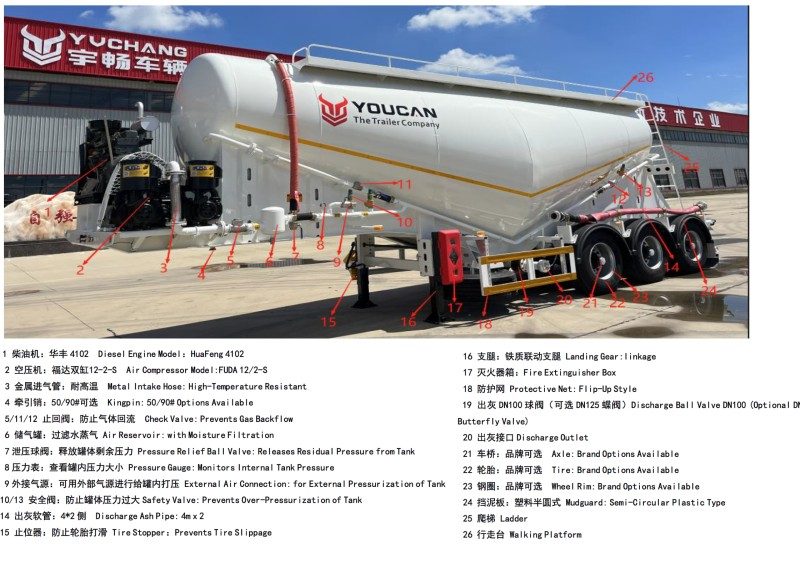
The 28 CBM volume is important. Bulk cement is dense, so a very large tank is not always the best answer. A larger tank may create a mismatch between tank volume, legal payload, axle load, tractor capability, and route restrictions.
Recommended Configuration
Trailer type: 28 CBM pneumatic bulk cement trailer.
Typical cargo: Bulk cement and similar dry powder cargo, subject to material compatibility.
Tank design: Dry bulk tank with suitable slope, manholes, aeration system, discharge pipeline, pressure gauge, safety valve, and inspection access.
Structural steel: Q355 steel in key load-bearing chassis and support areas where higher strength is needed.
Axles: 3x13T axles as a common baseline for load distribution and serviceability.
Suspension: Air suspension for Saudi-market fleet preference, highway stability, ride control, and axle load management.
Braking system: Reliable pneumatic braking matched with the tractor and local road requirements.
Unloading system: Pneumatic unloading with compressor compatibility confirmed before production.
Landing gear: Heavy-duty landing gear suitable for plant yards, loading areas, and parking operation.
Paint system: Shot blasting before primer and topcoat, with a corrosion-resistant coating system suitable for heat, dust, and outdoor exposure.
Safety equipment: Reflective tape, lights, ladders, walkway, pressure safety components, hose storage, tool box, and spare tire carrier according to buyer requirements.
Engineering Design Logic
Why 28 CBM Instead of a Larger Tank?
Tank volume should match cargo density and legal payload. Cement is heavier than many dry bulk materials. If a buyer chooses a very large tank only because it looks more productive, the trailer may exceed axle load or tractor limits before the tank is fully used.
Why Q355 Steel?
Q355 structural steel is commonly used in heavy-duty trailer structures because it offers higher yield strength than ordinary Q235 steel. Strength is important at the chassis, tank support points, suspension brackets, king pin area, landing gear mounting area, and other places that experience repeated vibration and load transfer.
Why 3x13T Axles?
A 3x13T axle configuration is a common baseline for cement tanker trailers because it provides practical load distribution, service familiarity, and replacement-part availability. Axle capacity should not be treated as permission to overload.
Why Air Suspension?
Air suspension is widely preferred in the Saudi semi trailer market. It can improve ride control, help maintain more stable axle loading, reduce shock transfer to the tank structure, and support compatibility with modern tractor-trailer operating habits.
28 CBM vs. Larger Tankers
| Option | Possible Advantage | Main Risk | Best Fit |
|---|---|---|---|
| 28 CBM | Better match for dense cement and controlled payload planning | Lower volume for low-density powder cargo | Cement plant routes where payload discipline and compliance are important. |
| 35-40 CBM | More volume for some dry bulk materials | May exceed practical payload if used with dense cement | Buyers with confirmed cargo density, route limits, and tractor capacity. |
| 45 CBM | Higher volume for lighter dry powder applications | Easy to over-specify for dense cement | Markets where volume is useful and legal payload is verified. |
Why Pneumatic Unloading Design Matters
Bulk cement trailers do not simply "tip and dump" material. Cement must be fluidized and discharged through air pressure. The unloading result depends on tank geometry, internal slope, aeration pads, pressure control, air compressor capacity, discharge pipe diameter, valve quality, hose condition, and operator procedure.
Why Anti-Corrosion Preparation Matters
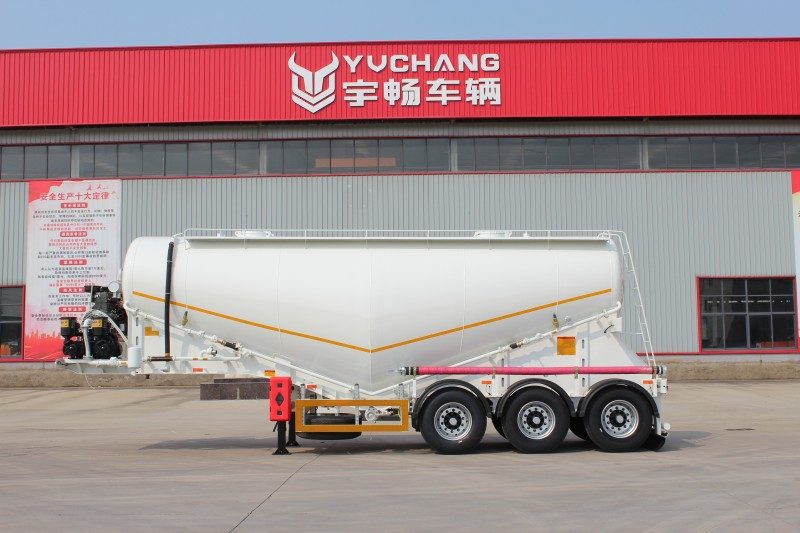
Trailers can face cement dust, outdoor storage, washing, coastal humidity, road contaminants, and scratches during operation. Surface preparation strongly affects paint life. ISO 12944 is a useful technical reference for discussing corrosion protection of steel structures by protective paint systems.
Why SASO Planning Should Start Early
SASO compliance should not be treated as a document problem at the end of production. Buyers should confirm the applicable Saudi technical regulation, product category, HS code, required certificates, shipment certificate process, and supporting documents before ordering. Useful references include SASO's Certificates of Conformity page and the Saudi national platform's shipment certificate service.
Manufacturing and Quality Assurance
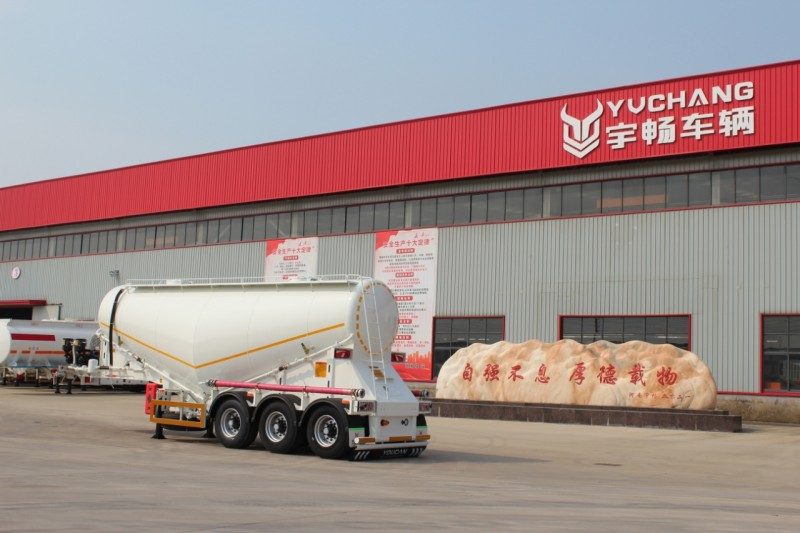
A bulk cement trailer's performance depends heavily on manufacturing quality. A low price cannot compensate for weak welding, poor surface preparation, inaccurate tank assembly, or an unreliable discharge system.
Export Experience
Based on YOUCAN's export experience, overseas cement trailer buyers usually need more than a standard product quotation. They need a specification that matches their country, route, cargo, tractor, import process, and maintenance capability.
For Saudi Arabia, common buyer concerns include high temperature, long-distance transport, SASO/SABER documentation, pneumatic unloading performance, air suspension durability, paint protection, and spare parts planning. Useful customization discussions include tank volume and payload calculation, tractor compatibility, compressor compatibility, axle and suspension brand options, heat-resistant components, paint and marking requirements, tool/hose box design, and documentation support.
Buyer Recommendations
Specification Checklist
Cargo type: bulk cement, clinker powder, fly ash, or other dry powder materials.
Cargo density and target payload.
Required tank volume, with 28 CBM as the benchmark.
Main routes, distance, road conditions, and loading yard space.
Tractor model, horsepower, fifth-wheel height, king pin requirement, air lines, and electrical connection.
Air compressor source, airflow, pressure, and discharge speed expectation.
Loading method at the cement plant.
Unloading site, silo connection height, hose length, and site safety rules.
Saudi import requirements, including SASO/SABER process and shipment documentation.
Preferred brands for axle, air suspension, landing gear, tires, valves, and brake components.
Paint color, logo, side protection, reflective tape, and safety accessories.
Spare parts package for the first year of operation.
Warranty scope, inspection method, and after-sales communication process.
Questions to Ask Trailer Suppliers
What is the trailer tare weight, and how is payload calculated?
Which areas use Q355 steel, and why?
What is the tank plate thickness and chassis structure?
How is the internal aeration system arranged?
What compressor capacity is required for efficient unloading?
Which axle, air suspension, brake, tire, landing gear, and valve brands are included?
What air suspension brand or specification is used, and are replacement parts available locally?
What shot blasting and painting process will be used?
What documents can be provided for SASO/SABER preparation?
What inspection photos or reports will be provided before shipment?
Common Purchasing Mistakes
Choosing tank volume without checking cement density and legal payload.
Comparing prices without comparing steel grade, axle brand, suspension type, discharge system, and paint process.
Ignoring compressor compatibility until the trailer arrives.
Assuming SASO documentation can be solved after production.
Choosing special parts that are difficult to replace locally.
Not requesting pre-shipment inspection photos.
Not preparing spare valves, hoses, seals, brake components, lights, and wear parts.
Why YOUCAN Trailer
YOUCAN Trailer, operated by Henan Yuchang Vehicle Manufacturing Co., Ltd., was established in 1999. For international buyers, the value of working with a trailer manufacturer is the ability to connect product design with country conditions, cargo characteristics, import requirements, and maintenance expectations.
For Saudi cement plant projects, YOUCAN can support buyers with trailer configuration discussions, 28 CBM tank design, Q355 structural options, 3x13T axle configuration, air suspension selection, pneumatic unloading layout, paint system planning, component options, and export documentation support.
Conclusion
A 28 CBM bulk cement trailer can be a strong solution for cement plants in Saudi Arabia when the design is matched to cargo density, long-distance transport, high temperature, pneumatic unloading requirements, SASO/SABER documentation, and maintenance planning.
The recommended engineering baseline includes Q355 steel in key structural areas, 3x13T axles, air suspension, reliable pneumatic unloading, proper tank geometry, shot blasting before painting, corrosion-resistant coating, and practical spare parts support.
Saudi cement buyers should not choose a trailer by price or tank volume alone. A better approach is to prepare a technical project brief, confirm compliance requirements early, and discuss the trailer configuration with an experienced manufacturer before production begins.
FAQ
Discuss Your Saudi Cement Trailer Project
Share your route distance, cargo density, tractor model, unloading site, SASO/SABER requirements, and preferred component brands with the YOUCAN engineering team. You can also send drawings, silo photos, tractor specifications, and preferred component brands through the Contact YOUCAN page.