How to Specify a 40ft Flatbed Trailer for Export
Choosing the right transport equipment is a critical investment that directly impacts your operational efficiency, safety, and profitability. A well-specified 40ft flatbed trailer ensures your cargo arrives securely, minimizes downtime, and delivers a strong return on investment. An incorrect choice can lead to regulatory fines, premature wear, and costly operational delays. This guide provides procurement managers and logistics directors with the essential knowledge to make an informed purchasing decision.
Buyer's Quick Checklist
- Verify Load Capacity: Match the trailer's payload capacity (e.g., 40, 50, 60 tons) to your typical cargo weight.
- Select Axle Configuration: Choose between 2, 3 (most common), or 4 axles based on local weight regulations and load distribution needs.
- Choose Suspension Type: Decide between robust mechanical suspension for rough terrain or smoother air suspension for fragile goods.
- Confirm Main Beam Steel Grade: Ensure high-strength steel (like Q345B) is used for the main I-beams for maximum durability.
- Specify Container Locks: Determine the number and position of twist locks needed for securing 20ft and 40ft containers.
Key Factors & Technical Parameters to Consider
When drafting your technical requirements, focus on the core specifications that define the trailer's performance and longevity. Overlooking these details can result in a trailer that is unfit for your application.
- Payload Capacity: This is the maximum weight the trailer is designed to carry. Standard models typically handle 40-50 tons, while heavy-duty versions can be engineered for 60 tons or more. Always specify a capacity that slightly exceeds your heaviest planned load for a safety margin.
- Axle and Suspension System: The axle configuration is crucial for legal compliance and stability. A tri-axle (3-axle) configuration is the most common and versatile for a 40ft flatbed. Mechanical leaf spring suspension is durable and low-maintenance, ideal for challenging road conditions. Air suspension offers a smoother ride, protecting sensitive cargo and reducing road wear, but requires more maintenance.
- Main Beam (Chassis) Construction: The chassis is the backbone of the trailer. Insist on high-tensile steel, such as Q345B, for the main longitudinal beams. The height and thickness of the "I" beam are critical indicators of strength. Look for suppliers who use submerged arc welding for deep, consistent, and strong welds.
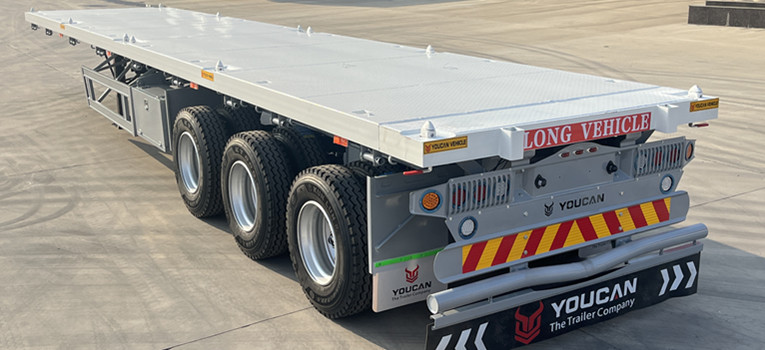
- Platform or Deck: The standard deck is a 3mm or 4mm thick checkered steel plate, providing excellent grip and durability. For certain applications, a wooden floor may be specified. Ensure the cross-members supporting the floor are adequately spaced and sized.
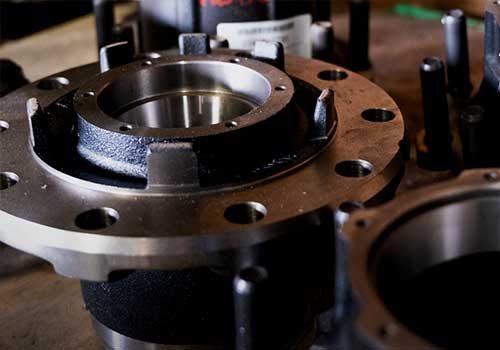
- Tires and Rims: Specify tire size (e.g., 12R22.5) and ply rating based on your load and road conditions. Reputable tire brands improve safety and longevity. Ensure the rims and axles are from well-known manufacturers like FUWA or BPW for reliable performance and parts availability.
- King Pin: The king pin connects the trailer to the tractor truck. It must be compatible with your fleet's fifth wheels. The most common sizes are 2-inch (50mm) and 3.5-inch (90mm), and they are typically of a bolted, interchangeable design from brands like JOST.
Types of 40ft Flatbed Trailers: Which One Fits Your Needs?
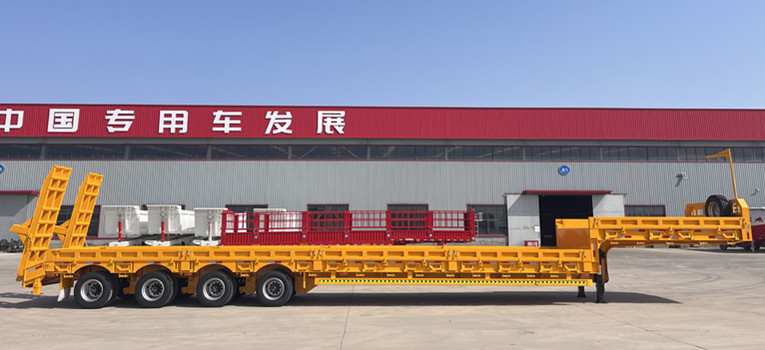
While the basic platform design is universal, several variations exist to serve different logistics needs. Understanding these differences ensures you select the most efficient tool for your cargo. For highly specialized cargo, you may need to look at alternatives like Lowbed Trailers for heavy equipment.
| Trailer Type | Key Specs | Price Level | Best Used For |
|---|---|---|---|
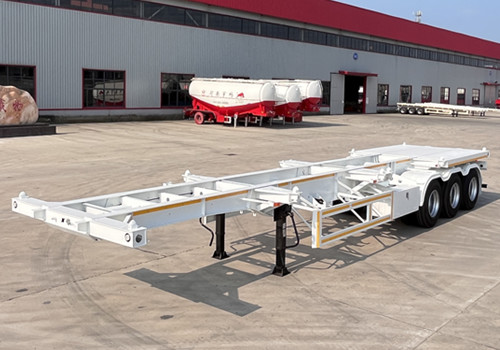
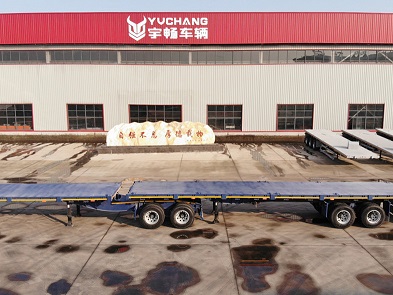
| Standard Flatbed | Open deck, 8-12 container twist locks | $$ | ISO containers (20ft, 40ft), steel coils, bagged cement, general break-bulk cargo |
| Flatbed with Sidewalls | Removable or fixed side panels (600mm-800mm height) | $$$ | Loose cargo like grain, sand, or agricultural products that need containment |
| Interlink Flatbed | Two flatbed units (e.g., 20ft + 40ft) connected by a fifth wheel | $$$$ | High-volume transport in regions allowing B-double or road train configurations |
| Extendable Flatbed | Telescopic frame that extends in length | $$$$$ | Oversized, non-divisible loads like wind turbine blades, long pipes, or bridge beams |
Essential Features & Quality Standards
The difference between a reliable trailer and a problematic one often lies in the details of its construction and the quality of its components.
Components That Define Quality
- Welding Technology: Look for manufacturers using automated submerged arc welding for the main chassis beams. This process creates stronger, more uniform welds than manual welding, reducing the risk of stress fractures.
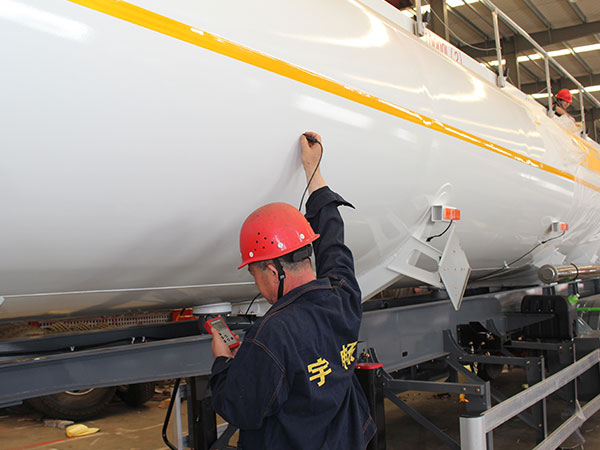
- Surface Treatment: A high-quality paint job is your first line of defense against rust. A proper process involves complete shot blasting of the steel to create a clean, coarse surface, followed by an epoxy zinc-rich primer and a durable polyurethane topcoat.
- Braking System: A reliable braking system is non-negotiable for safety. WABCO ABS or EBS systems are the industry standard, providing superior control and stability during emergency braking.
- Electrical System: All wiring should be sealed and protected against water and corrosion. LED lighting is now the standard, offering longer life, better visibility, and lower power consumption compared to traditional bulbs.
Ensure your supplier complies with international quality management standards like ISO 9001. This certification indicates that the manufacturer has established and follows strict quality control processes from raw material sourcing to final inspection.
Total Cost of Ownership (TCO) & Budgeting Guide
The initial purchase price is only one part of the total cost. A savvy buyer evaluates the Total Cost of Ownership (TCO) to understand the trailer's true financial impact over its lifespan.
Upfront Cost: This is the FOB (Free On Board) price of the trailer. It's influenced by steel prices, component brands (e.g., BPW vs. FUWA axles), and customizations.
Shipping & Import Costs: This includes ocean freight, insurance, import duties, taxes, and local port charges. Your supplier should be able to provide an estimate for CIF (Cost, Insurance, and Freight) to your nearest port.
Operational & Maintenance Costs:
- Tires: A major recurring expense. Higher quality tires cost more initially but last longer and are more resistant to blowouts.
- Brakes: Regular replacement of brake linings and drums is essential for safety.
- Suspension: Mechanical suspensions require periodic greasing and spring replacement, while air suspensions may need airbag or valve replacements.
- Downtime: A cheap, poorly built trailer will spend more time being repaired than on the road earning revenue. This is the biggest hidden cost.
To justify the purchase, calculate the ROI based on expected revenue per trip, utilization rate, and the trailer's expected service life. A durable, well-built trailer may cost 10-15% more upfront but can deliver a significantly better ROI through lower maintenance costs and higher uptime.
Top Common Buying Mistakes & How to Avoid Them
- Ignoring Local Regulations: Every country has specific laws regarding maximum vehicle length, width, height, and axle load limits. Procuring a trailer that doesn't comply with your country's regulations is a costly error. Always provide your supplier with your local transport authority's guidelines.
- Prioritizing the Lowest Price: The cheapest offer often comes with compromises in steel quality, component brands, welding techniques, and paint. These shortcuts lead to structural failures, rapid corrosion, and frequent breakdowns. Focus on value and TCO, not just the initial price.
- Overspecifying or Underspecifying: Don't pay for a 60-ton capacity if you only ever haul 30 tons. Conversely, don't buy a standard trailer for heavy-duty work. A detailed analysis of your typical cargo will help you specify the right capacity and features.
- Neglecting Spare Parts Availability: Choose a trailer built with components from internationally recognized brands. This ensures that you can easily source replacement Trailer Parts in your local market, minimizing downtime.
- Poor Supplier Vetting: Work with an experienced manufacturer with a proven track record of exporting to your region. Check for customer testimonials, case studies, and their ability to provide comprehensive technical support.
Customization & OEM/ODM Options
A key advantage of working directly with a manufacturer is the ability to customize the trailer to your exact operational needs. Common customization options include:
- Container Twist Locks: Specify the exact number (4, 8, 12) and type (retractable or fixed) to match your container transport needs.
- Headboard: A reinforced front headboard can be added for extra safety when carrying cargo that could shift forward.
- Toolboxes and Spare Tire Carriers: Add storage for tools, straps, and a spare tire to prepare your drivers for any situation on the road.
- Paint Color and Livery: Have your trailers painted in your company's brand colors and apply your logo for a professional fleet appearance.
- Structural Modifications: For unique applications, the chassis can be reinforced, or specific fixtures can be added to secure specialized cargo. An Interlink Flatbed Trailer is an example of a significant structural modification for specific markets.
Inspection, Packaging & Shipping
For international orders, a clear understanding of the logistics process is vital.
- Pre-Shipment Inspection (PSI): Before the final payment is made, insist on a detailed PSI report from the factory, including photos and videos of the completed trailer. You can also hire a third-party inspection service (like SGS or Bureau Veritas) for an independent assessment.
- Packaging and Shipment Method: 40ft flatbed trailers are typically shipped via bulk cargo ship or Ro-Ro (Roll-on/Roll-off) vessel. To save on freight costs, manufacturers often stack 2 or 3 trailers together. The top trailers will have their wheels removed and be placed upside down on the bottom one. Ensure all loose parts are securely packed.
- Understanding Shipping Terms:
- FOB (Free On Board): You are responsible for arranging and paying for the ocean freight and insurance from the port of origin.
- CIF (Cost, Insurance, Freight): The supplier arranges and pays for shipping and insurance to your destination port. You handle import clearance and local transport.
Why Partner with Us as Your Manufacturer?
As a specialized manufacturer with years of export experience, we understand the demands of global logistics. We offer more than just a product; we provide a complete transport solution.
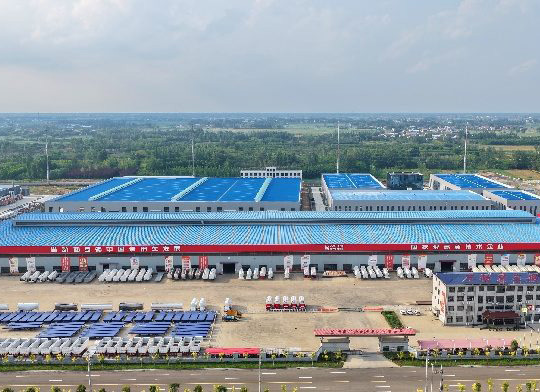
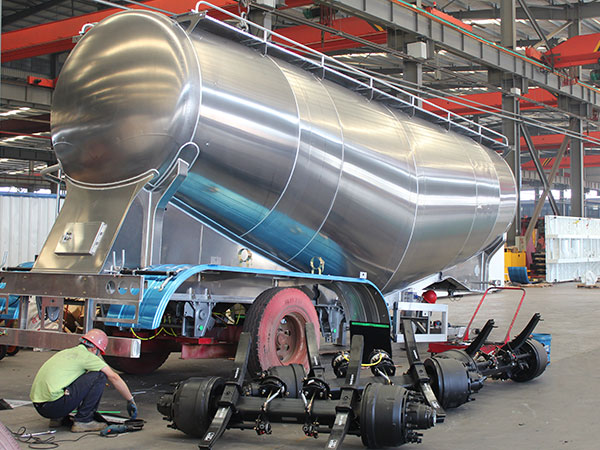
Our factory utilizes advanced production lines with automated welding and painting systems to ensure consistent quality and durability. Every trailer undergoes a rigorous multi-point quality control inspection before it leaves our facility. We stand behind our products with a comprehensive warranty on the main frame and provide lifetime technical support to all our clients. Our engineering team works with you to design a trailer that meets your precise specifications and complies with your local regulations, ensuring a smooth import process and long-term operational success.
To begin configuring a trailer for your fleet, send us your technical requirements for a detailed quotation.
Frequently Asked Questions (FAQ)
What is the Minimum Order Quantity (MOQ)?
The minimum order quantity for our semi-trailers is typically one (1) unit. We support businesses of all sizes, from single-truck owner-operators to large fleet managers.
What is the production lead time?
Standard production lead time for a 40ft flatbed trailer ranges from 25 to 40 days, depending on the level of customization and current order volume. We will provide a precise delivery schedule upon order confirmation.
What are your warranty terms?
We typically offer a 12-month warranty on the main frame against manufacturing defects. Key components like axles and landing gear are covered by their original manufacturer's warranty.
What payment terms do you accept?
Our standard payment terms are 30% T/T (Telegraphic Transfer) deposit to begin production, with the 70% balance payable before shipment. For larger orders, we can also discuss payment by irrevocable Letter of Credit (L/C) at sight.
How do you provide after-sales service?
We provide comprehensive after-sales support through email, phone, and video calls. We can supply all necessary spare parts for the lifetime of the trailer and provide technical drawings and guidance for maintenance and repairs.
Global Curtainsider Semi Trailer Market Trends & Analysis 2024
Explore the latest global market trends for the curtainsider semi trailer. Get expert analysis on procurement, technology, and compliance. Request a q...
Read More →
40ft Flatbed Trailer: Trends in Modular Load Handling
Explore the latest market trends for the 40ft flatbed trailer, from modular designs to high-strength materials. Get strategic procurement advice for y...
Read More →