
How to Choose a Curtainsider Semi Trailer
1. Introduction and Executive Summary
A well-specified curtainsider semi trailer shortens loading times, protects cargo from weather and lowers cost per tonne-kilometre. A poorly matched one leads to overweight fines, damaged curtains and idle downtime.
This guide gives procurement managers, fleet owners and distributors a clear framework for comparing specifications, types, quality standards, costs and export logistics before placing an order.
Buyer's Quick Checklist
- Payload and axle configuration that match your road regulations and typical cargo weight.
- Internal dimensions that suit your pallets, packaging and loading method.
- Curtain material and roof design suited to your climate and loading equipment.
- Running gear brands (axles, suspension, brakes) with spare parts available in your market.
- Documented quality control and certifications such as ISO 9001 and CE where applicable.
- Total cost of ownership, not only the ex-works price.
2. Key Factors and Technical Parameters to Consider
Start with the operating profile: cargo type, route, loading equipment and local legal limits. These decide almost every specification below.
- Payload and gross vehicle weight (GVW): Common tri-axle models are built for roughly 39 to 45 tonnes GVW. Lower tare weight means more payload, but never at the expense of frame strength.
- Dimensions: A typical length is 13.6 m, with an internal width near 2.45 m. Internal height varies from standard (about 2.7 m) to mega-volume designs. Check against local length and height limits.
- Chassis and frame material: High-tensile steel I-beams are the usual choice for heavy cargo. Aluminium components cut weight but raise the price.
- Curtain and roof system: Coated PVC fabric in the range of 650 to 900 g/m² is common. Check tear strength, UV resistance, buckle and strap quality, and whether you need a sliding roof for top loading.
- Running gear: Axle brand and capacity (for example 13 tonnes per axle), mechanical or air suspension, drum or disc brakes, ABS/EBS, tyre size and landing legs.
- Kingpin and coupling: Confirm the kingpin size (2-inch or 3.5-inch) and height to match your tractor units.
3. Types of Curtainsider Semi Trailers and Which One Fits Your Needs
Most buyers compare a handful of configurations. The right one depends on cargo density, loading method and weight sensitivity. If you are still deciding between formats, our Curtainsider range and our General Cargo Semi Trailers are useful starting points. For open, heavy or oversized loads, Flatbed Trailers may be a better fit.
| Type | Key Specs | Price Level | Best Used For |
|---|---|---|---|
| Standard tri-axle curtainsider | 13.6 m, steel frame, side curtains, fixed roof | Medium | Palletised goods, general freight, regional haulage |
| Sliding-roof curtainsider | Roof slides or lifts, side curtains | Medium to high | Top loading by crane or overhead gantry |
| Lightweight curtainsider | Aluminium or optimised steel parts, lower tare weight | High | Bulky, low-density cargo and weight-sensitive operations |
| Mega-volume curtainsider | Increased internal height, low-profile deck | Medium to high | Light, voluminous cargo such as packaging and consumer goods |
| Curtainsider with sideboards | Drop-side boards plus curtain | Medium to high | Mixed loads, loose or bagged cargo, flexible operations |
4. Essential Features and Quality Standards
Two trailers can look identical and perform very differently after two years on the road. The differences are in the details below.
- Welding and frame design: Look for consistent, full-penetration welds on stress points, plus a documented structural design.
- Surface protection: Shot blasting, primer and polyurethane topcoat extend frame life, especially in humid or coastal regions.
- Curtain rails and posts: Smooth-running rollers, strong rails and tension systems make daily use easier and reduce curtain wear.
- Cargo securing: If you operate in Europe, ask whether the body can be built to meet EN 12642 XL for load securing.
- Braking and lighting: Buy ABS/EBS systems and lighting that comply with your destination market's rules.
Certifications to Request
Ask for ISO 9001 quality management certification for the factory, and CE or the relevant type approval documents for your market. Confirm these in writing, together with material certificates for steel and test records for axles and brakes. Requirements vary by country, so check your homologation rules first.
5. Total Cost of Ownership (TCO) and Budgeting Guide
The purchase price is only part of the cost. A realistic budget covers the whole service life.
Upfront Costs
- Trailer price (ex-works) and options such as air suspension, disc brakes or sliding roof.
- Sea freight, insurance, import duties, homologation and registration.
Ongoing and Hidden Costs
- Tyres and brakes: The largest recurring wear items.
- Curtains and fittings: Curtains are consumables. Keep quality Trailer Parts in stock to reduce downtime.
- Fuel consumption: Lower tare weight and good aerodynamics reduce fuel use.
- Maintenance labour and inspections: Easily accessible components cut service time.
ROI Advice for Management
Present the purchase as cost per trip, not cost per unit. Compare extra payload per trip, faster turnaround from side loading, fewer cargo claims and a longer service life. Even a modest payload gain or one fewer repair stop per quarter can justify a higher-spec model.
6. Top Common Buying Mistakes and How to Avoid Them
- Chasing the lowest price. Thin steel, cheap curtains and unbranded axles raise lifetime costs. Compare specifications line by line.
- Over-specifying. Features you will not use add weight and cost. Match options to real operations.
- Ignoring local regulations. Dimensions, axle loads, lighting and brake systems must suit the destination country.
- Overlooking spare parts availability. Choose running gear brands that your local workshops can service and supply.
- Neglecting supplier support. Confirm warranty terms, technical documentation and response times before ordering.
7. Customization and OEM/ODM Options
Experienced manufacturers can adapt standard models to your market and brand. Typical options include:
- Dimensions and axle layout: Length, height, deck configuration and axle count.
- Curtain colour and logo: Custom fabric colours, printed branding and reinforced strap points.
- Running gear selection: Preferred axle, suspension and brake brands, kingpin size and tyre specification.
- Structural modifications: Sideboards, sliding roof, toolboxes, spare wheel carriers, lashing rings and pallet stops.
- Electrical adaptation: 24V systems, connector types and lighting to suit local rules.
If your operation also uses multi-trailer combinations, see our Interlink Trailers for compatible designs.
8. Inspection, Packaging and Shipping
Pre-Shipment Inspection
Before dispatch, inspect weld quality, paint finish, curtain operation, brake function, lighting, tyre pressure and dimensions against the signed specification. Buyers can attend the inspection or appoint a third-party inspector. Request photos and a written inspection report.
Export Packaging
Trailers are commonly shipped by Ro-Ro, flat rack or in containers when partly dismantled. Good export practice includes protective wrapping for painted surfaces, secured curtains, and fumigation-free or properly treated wooden supports for loose components. Small parts should be packed in labelled, moisture-proof cartons or crates.
Shipping Terms
- FOB: The seller delivers the trailer on board at the origin port. The buyer arranges freight and insurance.
- CIF: The seller covers freight and insurance to the destination port. Import clearance remains with the buyer.
- DDP: The seller manages delivery including duties and taxes. It is convenient but needs careful quotation and country-specific checks.
9. Why Partner with Us as Your Manufacturer?
When you source a curtainsider semi trailer from us, you work directly with a manufacturer focused on durable, export-ready designs. Our process includes:
- In-house fabrication and assembly with controlled welding, surface treatment and final testing.
- Strict QC at each stage, from incoming steel checks to pre-shipment inspection.
- Clear delivery schedules with regular production updates.
- Warranty coverage and technical support, including help with spare parts and operating guidance.
- Engineering support to adapt designs to local regulations and cargo needs.
Send us your cargo type, target market and preferred running gear, and our team will recommend a suitable specification with a detailed quotation. You can also submit your drawings or request a spec sheet.
10. Frequently Asked Questions (FAQ)
What is the minimum order quantity (MOQ)?
Many buyers start with a single trailer for evaluation, while volume orders receive better pricing. MOQ can depend on the model and customization level, so confirm it with our sales team.
What is the typical lead time?
Standard models usually take a few weeks to produce, and customized builds take longer. The exact time depends on specifications and current production schedules, and we confirm it in the quotation.
What warranty is provided?
Warranty terms cover manufacturing defects in the structure and workmanship. Purchased components such as axles and tyres typically carry their own manufacturer warranties. Your contract will state the exact period and scope.
What payment terms are accepted?
Common terms are a deposit by T/T with the balance before shipment, or an irrevocable L/C at sight. We can discuss options that suit your order size and country.
What after-sales service is available?
We provide technical documentation, parts supply and remote troubleshooting. Contact us with your trailer serial number and a description or photos of the issue, and our team will advise on the next step.
To compare specifications or get selection advice, send us your cargo details and target market, and we will prepare a tailored quotation.
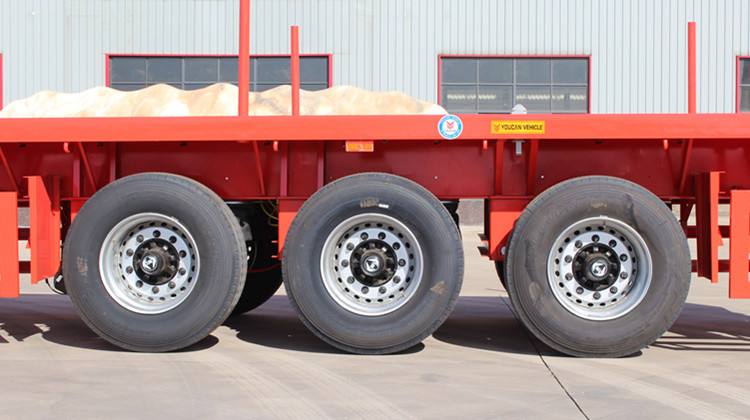
40ft Flatbed Trailer Gooseneck vs Semi Specs Explained
Compare gooseneck and semi designs for a 40ft flatbed trailer: specs, applications, customization and shipping. Request a quote or price list today.
Read More →
Curtainsider Semi Trailer Standard vs Mega Body
Compare standard and mega curtainsider semi trailer bodies for height, capacity, cost, and freight use. Request a specification quote.
Read More →