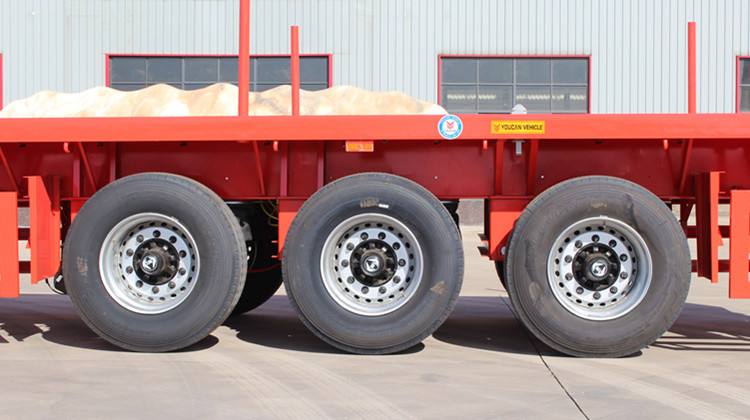
Curtainsider Semi Trailer Standard vs Mega Body
A curtainsider semi trailer is selected primarily for fast side access, weather protection, and efficient palletized freight handling. The key purchasing decision is usually whether a standard-height body or a mega-height body delivers the best balance of cubic capacity, loading compatibility, route clearance, and operating cost.
For most international fleets, the standard body is the practical general-purpose choice where legal height limits, dock dimensions, and mixed freight dominate. A mega body is usually more suitable for high-volume, low-density cargo, double-stack-compatible pallet systems, and routes that can accommodate greater overall vehicle height.
1. Executive Summary and Quick Comparison Table
Standard and mega curtain-sided trailers use the same basic loading principle: flexible side curtains run on roof and bottom rails, allowing forklifts to access cargo from either side. The principal difference is body geometry. A mega design lowers the chassis and floor height to create a taller internal loading space without necessarily exceeding maximum legal road height.
Buyers should compare usable internal height rather than external body height alone. Floor construction, tyre profile, suspension travel, roof design, local maximum vehicle height, and fifth-wheel height all affect the final available loading volume.
| Comparison Factor | Standard Curtainsider Trailer | Mega Curtainsider Semi Trailer |
|---|---|---|
| Key specifications | Typical internal height of approximately 2.60 to 2.75 m, depending on market specification | Typical internal height of approximately 2.90 to 3.05 m, subject to chassis and legal-height requirements |
| Working mechanism | Side curtains, sliding roof options, conventional deck and running gear | Same curtain system with lower deck height, often using low-profile tyres and optimized suspension |
| Loading speed | Fast side loading for standard pallets, crates, bagged cargo, and general freight | Equally fast side loading with greater vertical clearance for tall or double-stacked loads |
| Precision requirement | Less sensitive to yard gradients and dock-height variation | Requires closer attention to route clearance, ramp angles, and coupling height |
| Cost level | Generally lower acquisition and replacement-part cost | Usually higher due to specialized deck, tyre, suspension, and roof configuration |
| Maintenance | Conventional tyre, suspension, curtain, and roof maintenance | Similar curtain maintenance, with additional attention to low-profile tyres and underbody clearance |
| Ideal application | Mixed general cargo, regional distribution, palletized goods, and dock-based logistics | High-cube freight, automotive components, packaging, light manufactured products, and volumetric transport |
2. Understanding the Standard Curtainsider Trailer
Overview and operating principle
A standard curtainsider trailer combines a fixed front wall, rear doors, roof structure, and retractable PVC side curtains. The curtains are tensioned by buckles or ratchets and slide along rails to expose the load bed for rapid forklift access. Internal load restraint commonly includes side boards, vertical posts, lashing rings, straps, and roof-mounted or floor-mounted securing systems.
The standard-body configuration normally uses a conventional deck height and tyre size. It is designed to offer broad compatibility with warehouses, loading docks, ferry services, workshops, and road networks where clearance margins can be limited.
Advantages
- Broad route compatibility: Suitable for markets with strict bridge, terminal, warehouse, and tunnel height limits.
- Lower procurement complexity: Common components simplify sourcing of tyres, curtains, posts, lights, and body hardware.
- Stable operating profile: Conventional deck height can offer practical loading and maneuvering characteristics.
- Flexible cargo use: Suitable for palletized consumer goods, industrial supplies, paper products, bagged materials, and crated equipment.
- Lower entry cost: Usually the more economical selection for mixed-load fleets and first-time fleet expansion.
Potential limitations
- Lower usable volume than a mega configuration on the same overall trailer length.
- May not accommodate tall cages, high pallet stacks, or high-cube return loads efficiently.
- Can result in more trips when freight is volume-limited rather than weight-limited.
3. Understanding the Mega Curtainsider Semi Trailer
Overview and operating principle
A mega curtainsider semi trailer is a high-volume curtain-sided platform engineered around a reduced deck height. The lower floor enables a larger curtainsider internal height while maintaining compliance with the maximum overall vehicle height permitted in the operating region.
This result is commonly achieved through a low-deck chassis layout, reduced-profile tyres, selected axle and air-suspension configurations, and a carefully matched tractor fifth-wheel height. Some models also use a liftable or sliding roof to accommodate top loading and tall freight units.
Advantages
- Higher cubic capacity: The increased vertical space can improve payload utilization for light but bulky freight.
- Double-stack potential: Where cargo dimensions and restraint procedures allow, taller internal space may support two pallet levels.
- Fewer volume-limited journeys: Greater capacity can reduce trips for packaging, automotive components, textiles, foam, and similar freight.
- Competitive contract logistics value: Particularly useful where customers pay for high-volume transport capacity.
- Improved loading flexibility: Tall roll cages, large cartons, and assembled but lightweight components can be handled more easily.
Potential limitations
- Higher initial cost due to the specialized chassis and running gear arrangement.
- Reduced underbody clearance can increase exposure to damage on poor roads, ramps, and uneven loading yards.
- Low-profile tyre availability and replacement cost should be verified in the destination market.
- Route surveys are essential where bridges, roof canopies, ferry decks, and warehouse doors have limited clearance.
4. Core Differences Between Standard and Mega Bodies
Performance and output quality
For transport equipment, output quality is measured by cargo protection, load security, turnaround time, and usable freight volume rather than production precision. Both body types can provide rapid side access and comparable curtain weather resistance when specified with quality PVC fabric, proper roof sealing, reinforced buckles, and correctly tensioned side curtains.
The mega version provides a clear advantage when freight cubes out before it reaches legal gross vehicle weight. However, its extra height delivers little commercial benefit for dense goods such as metal products, beverages, tiles, bagged minerals, or heavy machinery. In these cases, payload weight limits are reached before the additional volume is used.
Versatility and industry suitability
A standard body is typically the most versatile choice for general haulage. It can carry common pallet sizes, bundled materials, cartons, machinery parts, and return freight while fitting typical loading sites. Buyers needing other general transport configurations can also assess General Cargo Semi Trailers for enclosed and open freight requirements.
A mega body is better aligned with lightweight industrial cargo. Typical users include automotive supply chains, packaging manufacturers, consumer-goods distributors, furniture producers, textile operations, and third-party logistics providers. Where side access is not required and loads are containerized, a Container Chassis may offer a more suitable intermodal alternative.
Cost analysis
The standard version generally has a lower purchase price because it uses more conventional chassis geometry, tyre sizes, and service parts. Its lower capital requirement can make it preferable for fleets with variable routes, limited annual mileage, or uncertain cargo profiles.
A mega configuration can cost more initially, but its return depends on cube utilization. The relevant calculation is not simply trailer price; it is the cost per cubic meter delivered, the number of trips avoided, customer loading patterns, and the percentage of journeys where the extra height is actually filled.
Neither design has a direct electricity cost. Operating cost differences are primarily related to tyre replacement, suspension maintenance, aerodynamic specification, weight, road condition, and fuel use. A correctly utilized mega body can improve freight economics, while an underutilized one can add capital cost without delivering measurable return.
Lifespan and daily maintenance requirements
Both configurations can provide long service life when the chassis is protected against corrosion, curtains are cleaned and tensioned correctly, and load restraint equipment is inspected routinely. Galvanized components, sealed electrical connectors, quality paint systems, and appropriate axle servicing intervals are important in export fleets.
Mega trailers require closer monitoring of low-clearance areas, tyre condition, air-suspension settings, and coupling height. Daily checks should include curtain tears, buckle operation, roof movement, rear-door locking, tyre pressure, lights, brake connections, and lashing equipment. Damage caused by forklifts, poorly secured cargo, or low overhead structures should be corrected promptly.
5. Decision Matrix for Selecting the Right Body
Choose a standard curtainsider trailer if
- Your fleet carries mixed, medium-density cargo across varied customer sites.
- Warehouse door heights, ferry routes, bridges, or local regulations limit overall vehicle height.
- Procurement budget and common spare-part availability are major decision factors.
- Your cargo rarely requires more than conventional pallet stacking height.
- You operate on rough roads, steep loading ramps, or sites where deck clearance is important.
Choose a mega body if
- Your freight is volume-limited and consistently lightweight relative to legal payload capacity.
- You need increased mega trailer capacity for tall pallets, cages, cartons, or automotive packaging.
- Your route has been checked for height restrictions and your tractor fifth-wheel height is compatible.
- You can support low-profile tyre servicing in the countries where the equipment will operate.
- Higher loading volume can reduce transport cycles or improve contract profitability.
For buyers asking which curtainsider trailer body is best, the answer depends on the cargo cube-to-weight ratio and the operating route. A standard trailer is generally the safer all-purpose investment; a mega body is the more efficient specialized solution for consistent high-cube freight.
6. Customization Options for OEM and ODM Supply
Both body types can be adapted to local legislation, fleet practices, and cargo-handling requirements. The most effective specification process starts with the intended tractor model, fifth-wheel height, legal axle limits, maximum overall height, cargo dimensions, and typical loading method.
- Dimensions: Overall length, deck length, curtainsider internal height, width, rear opening, and kingpin setting.
- Chassis configuration: Two- or three-axle layouts, axle brands, air or mechanical suspension, lift axle, and tyre specification.
- Cargo restraint: Lashing rings, side boards, pallet stops, movable posts, straps, anti-slip flooring, and load-lock systems.
- Body features: Sliding roof, reinforced curtains, printed curtains, rear-door type, roof bows, internal lighting, and toolbox arrangement.
- Regional compliance: Lighting, conspicuity markings, braking connections, mudguards, electrical plugs, and local voltage requirements for auxiliary equipment.
- Branding: Fleet colors, curtain graphics, identification plates, and documentation packages.
For operations carrying different cargo categories, it may also be practical to combine curtain-sided units with Flatbed Trailers or an Interlink Flatbed Trailer where open-deck loading is required.
7. Packaging and Shipping Guidance
Large trailers are normally shipped by roll-on/roll-off vessel, bulk carrier, deck cargo arrangement, or containerized knock-down shipment when the design permits. Unlike small industrial equipment, a completed trailer is not usually packed in a wooden case. Fumigation-free wooden cases may be used only for loose spare parts, tools, or sensitive accessory kits.
Export preparation should include anti-corrosion treatment on exposed metal surfaces, protective wrapping for lamps and vulnerable fittings, secured loose components, locked or restrained landing gear, and clear shipping marks. Brake lines, electrical cables, curtain hardware, and roof mechanisms should be protected against vibration and saltwater exposure.
Before dispatch, buyers should confirm shipping dimensions, gross shipping weight, port handling capability, lashing points, import documentation, and destination technical requirements. Photographic inspection records and a pre-shipment checklist improve handover control for international deliveries.
8. Why Source From Us as Your Manufacturing Partner
A reliable trailer manufacturing partner should provide more than a catalog specification. Procurement teams should expect documented drawings, confirmed material grades, axle and suspension details, welding-quality controls, load-restraint options, and traceable component information before production begins.
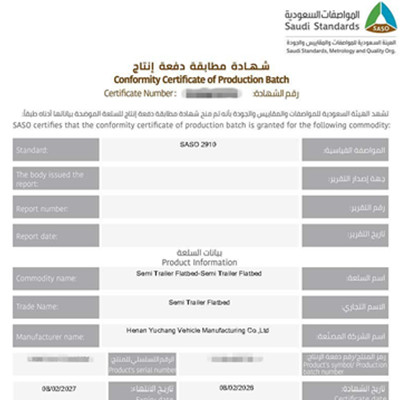
For international projects, evaluate factory capacity across chassis fabrication, body assembly, surface preparation, painting, electrical installation, and final inspection. Ask whether ISO-based quality procedures, CE-related conformity requirements where applicable, and destination-market compliance documentation can be supplied for the exact configuration ordered.
Multi-line manufacturing capability is valuable when a buyer needs standard bodies, mega bodies, and complementary transport equipment in the same procurement program. Equally important is practical technical support: loading drawings, spare-parts lists, operating manuals, maintenance recommendations, and responsive assistance during commissioning and fleet operation.
9. Frequently Asked Questions
Can a standard curtainsider trailer be upgraded into a mega body later?
Usually not economically. A true mega body requires a lower deck and matched chassis, tyre, suspension, and coupling-height design. Replacing only the curtain structure will not create the required internal height safely or legally.
Which body type provides the faster return on investment?
A mega body can provide faster return when its added volume is used consistently on high-cube cargo lanes. A standard body generally offers better return for mixed freight, dense cargo, variable routes, and fleets that prioritize lower purchase cost.
Does a mega trailer always carry more payload by weight?
No. Mega designs increase cargo volume, not necessarily legal payload weight. Gross combination weight, axle limits, tractor weight, and local regulations still determine the maximum cargo weight.
What internal height should buyers specify?
Specify the height based on actual cargo dimensions, pallet stacking method, forklift clearance, roof-bow position, and regional overall-height rules. Confirm the usable clear height at the lowest roof point, not only the nominal body height.
Are sliding roofs necessary for curtain-sided trailers?
A sliding roof is useful for crane loading, top loading, or tall freight that cannot be loaded through the rear. It adds flexibility but also introduces additional hardware, maintenance requirements, and cost, so it should be selected only when the loading process requires it.
Contact our engineering team to request a specification quote for your required body configuration.
===
How to Choose a Curtainsider Semi Trailer
A practical buying guide to choosing a curtainsider semi trailer: specs, types, costs, certifications, shipping and FAQs. Request a quote or selection...
Read More →