




Cut Unloading Time With a Bulk Cement Trailer
1. Introduction and Overview
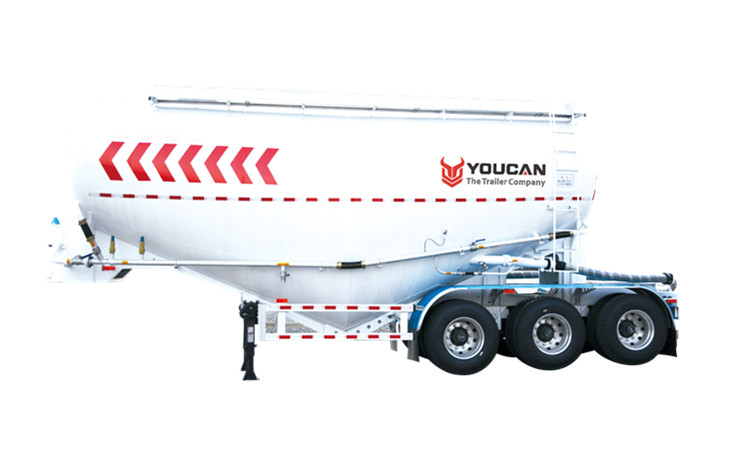
A bulk cement trailer is a pressure-rated tank trailer that carries dry powders in loose form and discharges them pneumatically. It replaces bagged handling, which is slow, labor-intensive, and prone to dust loss. Used correctly, it is a practical choice for ready-mix plants, precast yards, mining operations, and large infrastructure sites.
It is not the right tool for every job. Small projects that consume only a few tonnes a week may be better served by bags or small silos. High-volume buyers, however, usually find that moving to bulk delivery lowers cost per tonne and shortens site turnaround.
| Target Industry | Primary Material / Component | Key Benefit / Value Delivered |
|---|---|---|
| Ready-mix and precast concrete | Portland cement, slag powder | Fast silo filling, less dust, fewer delivery trips |
| Road and bridge construction | Cement, lime, fly ash for soil stabilization | Continuous supply to mobile mixing plants |
| Mining and tunneling | Cement, bentonite, backfill binders | Reliable delivery to remote sites |
| Energy and power | Fly ash, gypsum, limestone powder | Enclosed transport of fine by-products |
| Building materials manufacturing | Mineral powders, dry-mix components | Consistent quality and lower packaging cost |

2. Core Functional Capabilities and Compatible Materials
How Pneumatic Discharge Works
The tank is loaded from the top through one or more manholes, or through a closed loading line. At the destination, compressed air from an onboard compressor or blower pressurizes the vessel. Air also passes through fluidizing pads at the base of the tank, which keeps the powder loose and flowing.
The aerated material then moves through the discharge pipe and hose into the receiving silo. Typical working pressure is around 1.5 to 2.0 bar, and discharge rates commonly fall between 40 and 60 tonnes per hour, depending on material, hose length, and silo height.
Compatible Materials
- Ordinary Portland cement and blended cements
- Fly ash (Class F and Class C)
- Ground granulated blast-furnace slag powder
- Hydrated lime and quicklime powder
- Gypsum powder and limestone filler
- Silica fume and other fine mineral powders
- Dry-mix mortar components and bentonite
Working Environments
- Hot, dusty climates that require sealed hatches and good filtration
- Humid or coastal regions where moisture protection and corrosion resistance matter
- Steep or unpaved site access that calls for suitable axle and suspension setups
- Cold regions where air-line moisture traps and drains prevent freezing
3. Industry-by-Industry Breakdown
Ready-Mix and Precast Concrete
Batching plants rely on a steady supply of cement and supplementary cementitious materials. Pneumatic tankers fill plant silos directly, with no bag opening or forklift movement. For bulk cement delivery to batching plants, operators gain shorter dwell times at the gate and cleaner yards.
- Where deployed: silo filling, supplementary material feed, and emergency restocking
- Advantages: faster turnaround, lower dust emissions, reduced packaging waste
Road, Bridge, and Infrastructure Construction
Soil stabilization and cement-treated base work consume large quantities of cement and lime. Moving these powders in bulk supports mobile mixing and spreading equipment without constant bag handling. A tank unit with a robust frame suits long hauls to project corridors.
- Where deployed: stabilization trains, mobile batching plants, and site storage silos
- Advantages: continuous supply, predictable scheduling, fewer labor hours
Mining, Tunneling, and Backfill
Underground and open-pit operations use cement-based backfill and grouting. Remote sites make delivery reliability critical. Bulk delivery of cement for mine backfill allows large volumes to reach paste plants without double handling.
- Where deployed: backfill plants, grouting stations, shotcrete batching
- Advantages: high payload per trip, sealed transport that protects material from rain
Energy and Power Generation
Coal-fired and biomass plants produce fly ash, while desulfurization systems use limestone and gypsum. Enclosed pneumatic transport of fly ash to cement plants or disposal sites reduces airborne dust and supports environmental compliance. Operators who also move liquids on site often compare this equipment with tank trailers built for other cargo types.
- Where deployed: ash collection silos, limestone feed, by-product removal
- Advantages: closed-loop handling, consistent loading, lower environmental risk
Dry-Mix Mortar and Building Materials
Manufacturers of tile adhesives, plasters, and mortars buy cement and fillers in volume. Bulk delivery to plant silos cuts packaging cost and supports automated dosing lines.
4. Real-World B2B Case Study Scenario
The following is an illustrative scenario based on typical operating conditions, not a named customer result.
- Problem: A regional precast manufacturer received cement in 1-tonne bags. Two forklift operators spent several hours per delivery cutting bags and feeding a hopper.
- Technical challenge: The plant had an existing 60-tonne silo but no safe, dust-controlled way to fill it. Delivery windows were narrow because trucks waited in the yard.
- Solution: The company switched to a 35 m³ bulk cement trailer with an onboard compressor and a 6-inch discharge line. A simple filter and vent were added to the silo top.
- Result: Unloading dropped from roughly 3 hours to about 45 minutes per load. Labor on receiving fell by around two-thirds, and cement waste from torn bags was largely eliminated.
5. Application-Based Selection and Specification Matrix
Choosing the correct configuration depends on payload rules, material density, and discharge conditions. The table below offers a starting point for technical buyers.
| Application Scenario | Suggested Tank Volume | Discharge Setup | Key Considerations |
|---|---|---|---|
| Urban ready-mix delivery | 30 to 35 m³ | Compressor or PTO blower, 4 to 5 in. line | Maneuverability, noise limits |
| Highway and long-haul cement transport | 35 to 45 m³ | Higher-capacity blower, 5 to 6 in. line | Axle load limits, weight reduction |
| Fly ash and light powders | 40 to 50 m³ | Enhanced fluidization | Lower bulk density, larger volume needed |
| Mining and remote sites | 30 to 40 m³ | Robust compressor, extra hose length | Heavy-duty suspension, rough-road frame |
| Weight-sensitive markets | Per local limits | Standard pneumatic | Consider aluminum cement trailers to raise payload |
Key Parameters to Confirm Before Ordering
- Working pressure: match the tank rating to the discharge equipment
- Material density: cement is about 1.3 to 1.5 t/m³, while fly ash is lighter
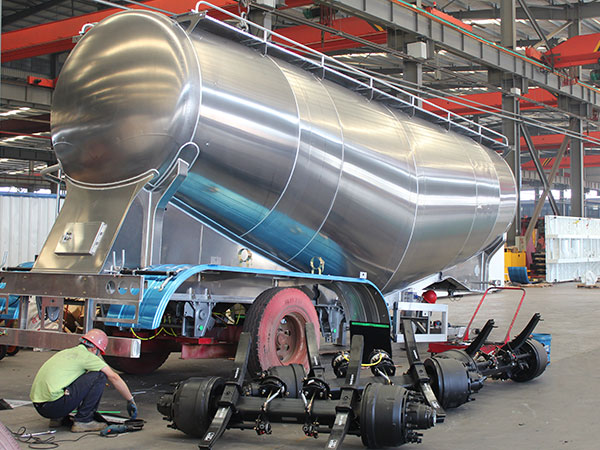
- Tank material: carbon steel for cost efficiency, aluminum for lower tare weight
- Axle configuration: two or three axles, depending on legal axle loads
- Silo height and hose run: longer or higher lifts need more air volume
6. Customization and OEM/ODM Capabilities for Niche Applications
Standard layouts do not fit every market. A capable manufacturer can adapt the design to local regulations and site needs.
- Tank design: single or multi-compartment layouts, different fluidization patterns, and interior coatings for abrasive or aggressive powders
- Corrosion protection: sandblasting, epoxy primer, polyurethane topcoat, or hot-dip galvanized components for coastal regions
- Power options: PTO-driven blowers, diesel-engine compressors, or electric units matched to regional supply such as 380V or 480V
- Fittings: custom coupling types, hose lengths, and discharge outlet sizes
- Chassis choices: axle brands, suspension type, king pin size, and lighting standards for the destination country
- Branding: custom colors, logos, and tool boxes for distributors and fleet owners
Spare components also matter for uptime. Many buyers pair delivery with a stock of tank trailer parts such as valves, gaskets, and air filters.
7. Export Packaging, Logistics, and Global Shipping Guidance
Packaging Standards
Large tank trailers are usually shipped in one of three ways, depending on destination and port facilities:
- Roll-on/roll-off (RoRo): the assembled unit is driven aboard, with wheels chocked and lashed
- Flat rack or open-top container: used when the trailer is partially disassembled
- Break-bulk: suitable for oversized units that exceed container dimensions
Loose parts such as hoses, compressors, and tools should be packed in ISPM-15 compliant wooden crates with moisture-proof wrapping. Exposed machined surfaces and fittings benefit from rust-inhibiting coatings or film.
Trade Terms and Compliance
- FOB: the buyer manages ocean freight and insurance
- CIF: the seller arranges freight and insurance to the destination port
- DDP: available for selected markets, with duties and delivery handled by the seller
Buyers should confirm local homologation rules, axle-load limits, vehicle dimension limits, and import documentation before shipment. Typical paperwork includes a commercial invoice, packing list, bill of lading, and certificate of origin.

8. Quality Assurance, Compliance, and International Standards
Because the tank is a pressure vessel, design and inspection records are central to buyer confidence. Reputable manufacturers typically work under an ISO 9001 quality system and design vessels to recognized pressure standards. Depending on the destination, buyers may also request conformity with regional vehicle approvals such as ECE or local type approval.
Typical Pre-Dispatch Tests
- Weld inspection: visual checks and non-destructive testing on tank seams
- Pressure test: hydrostatic or pneumatic testing above rated working pressure
- Leak test: hatches, valves, and discharge lines checked under pressure
- Discharge trial: verifying airflow, fluidization, and flow rate
- Braking and lighting checks: air system, ABS where fitted, and electrical circuits
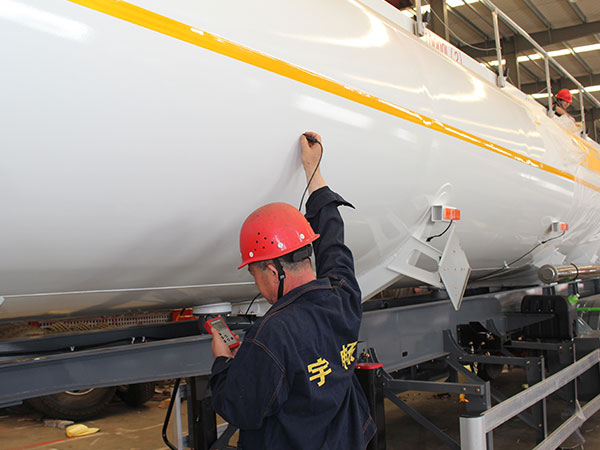
- Coating inspection: paint thickness and adhesion measurements
Ask for test reports, material certificates, and inspection photos as part of the order documentation.
9. Frequently Asked Questions and Call to Action
How often should the unit be serviced?
Inspect filters, air lines, and valves before each trip. Plan a fuller service of the compressor or blower, gaskets, and suspension components every 3 to 6 months, or according to operating hours and road conditions.
Can one trailer carry different powders?
Yes, but cross-contamination must be controlled. Clean the tank thoroughly between materials, and avoid mixing cement with lime or additives unless the process allows it.
What affects unloading time most?
Air supply capacity, hose length, silo height, and material fineness have the biggest influence. A properly sized blower and well-maintained fluidizing pads often make the largest difference.
What is the typical lead time for custom builds?
Standard configurations usually take less time than custom ones. Lead time depends on chassis components, certification needs, and production schedule, so confirm it in writing when quoting.
What warranty and after-sales support is available?
Terms vary by supplier. Ask for a written warranty covering the tank and chassis, remote technical support, and a clear route for sourcing bulk cement trailers parts and service documentation in your region.
Next Step
If you are comparing options for a specific plant, route, or material, send us your payload limits, destination country, and target discharge rate. We can provide selection advice, a technical datasheet, or a quotation for your bulk cement trailer requirement.

Choosing Your Chemical Tank Trailer Stainless Steel vs FRP
Compare stainless steel vs. FRP chemical tank trailer options. This guide covers performance, cost, and maintenance to help you choose the right tanke...
Read More →