Two bulk tankers can carry the same amount of powder and still behave very differently. One empties almost completely in minutes, the other leaves a layer of material behind. One stays steady on a mountain road, the other feels top-heavy. The difference is the structure of the tank. This guide explains the three main bulk tanker structures, what each one is good at, and how to choose the right one for your cargo, your roads and your budget.
What Is a Bulk Tanker Structure?
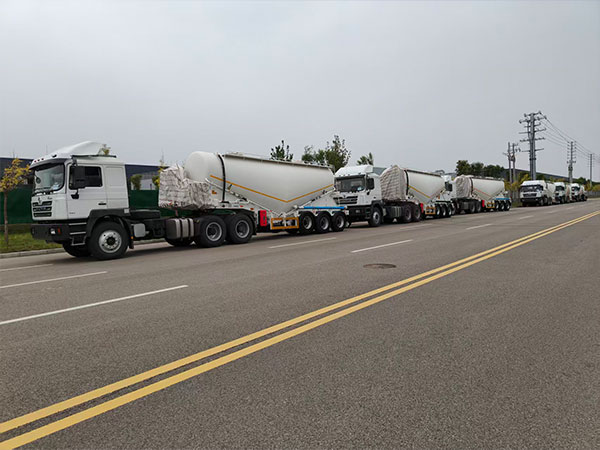
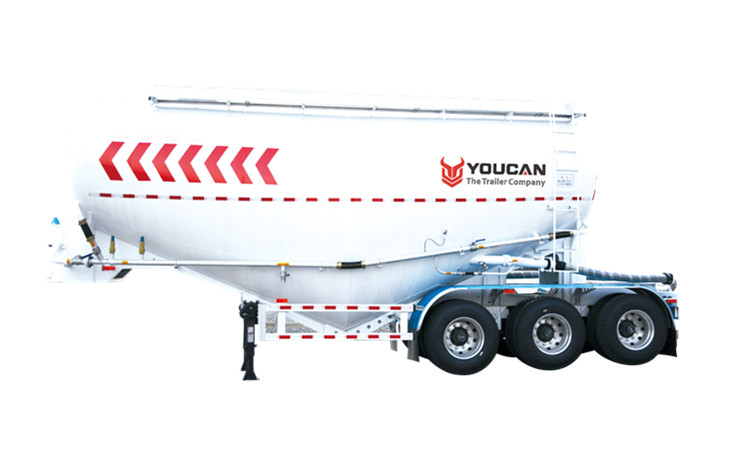
A bulk tanker is a sealed tank semi-trailer that carries dry powder, such as cement, fly ash, lime powder or flour, and unloads it with compressed air. The "structure" is the shape of the tank and the way its bottom is built, because that decides how the powder moves towards the outlet.
There are three common designs:
Horizontal tank, a long round tank lying flat along the trailer
Hopper (funnel) tank, with a bottom shaped like one or more funnels
Tilt tank, where the front of the tank is raised to unload
All three use the same basic principle. Compressed air is fed into a chamber at the bottom of the tank and loosens the powder so it flows. When the pressure reaches its rated value, the discharge valve opens and the material moves along the pipe into the customer's silo. The tanker can push material more than 15 metres upward and more than 5 metres along the pipe. What changes from one structure to another is how easily the powder reaches the outlet.
Horizontal Tank Structure
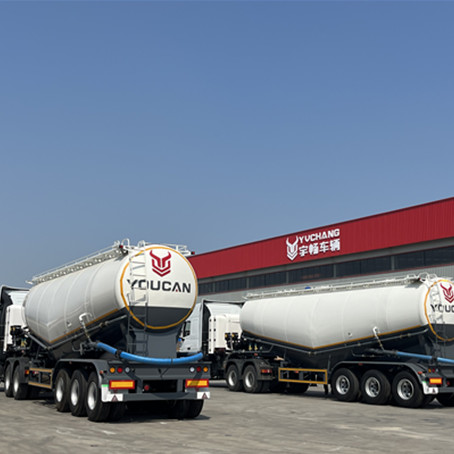
The horizontal tank is the classic bulk tanker. It is a long, round tank that lies flat on the frame, with a gentle slope toward the discharge outlet.
What it does well. Because the tank sits low, the trailer has a low centre of gravity. That makes it stable on the road, in corners and under braking. It also offers a large capacity for its size, and the build is simple, so it is easy to produce, inspect and repair.
Where it falls short. Powder has a longer way to travel to the outlet, and the slope is shallow. Some material can stay behind after discharge, especially with damp or sticky powders.
Best for. Cement and fly ash, which flow well when fluidised. It is a sensible choice for routes with rough roads, long distances or hilly ground, where stability matters more than the last few percent of residue.
Hopper (Funnel) Tank Structure
A hopper tank has a bottom shaped like one or two funnels. The sides slope steeply toward the outlet, so powder slides down naturally and the air only has to help it along.
What it does well. The steep slopes push the powder toward the outlet, so very little is left in the tank. Unloading is fast, and the tank makes good use of its volume. This design suits a wider range of materials, including powders, granules and lumpy products.
Where it falls short. The tank is taller than a horizontal one, so the centre of gravity is higher. On poor roads or steep descents the driver has to be more careful. The structure is also a little more complex to build.
Best for. Powdered chemicals, flour and other materials that must be fully emptied to avoid waste or contamination. It also suits operators who unload many times a day and want to keep turnaround time short.
Tilt Tank Structure
In a tilt tank, a hydraulic system raises the front of the tank to a steep angle during unloading. Gravity then does most of the work, and the powder slides down to the outlet.
What it does well. Unloading is quick and thorough, even for materials that tend to stick. The inside of the tank is simple, with few corners, which makes it easier to clean. It can carry powders, granules and lumps, so one trailer can serve several kinds of cargo.
Where it falls short. It has more moving parts, so the purchase cost is higher, and the hydraulic system needs regular care. The tank must be raised on firm, level ground, which limits where it can unload.
Best for. Fleets that carry different materials and clean the tank often, or cargos that do not flow easily and would otherwise leave a lot of residue.
Side-by-Side Comparison
| Feature | Horizontal | Hopper (Funnel) | Tilt |
|---|---|---|---|
| Stability on the Road | Very good, low centre of gravity | Good, but higher | Moderate |
| Residue After Unloading | Some, especially with sticky powder | Very little | Very little |
| Unloading Speed | Good | Fast | Fast |
| Cargo Range | Mostly cement and fly ash | Powders, granules and lumps | Powders, granules and lumps |
| Cleaning | Basic | Easier | Easiest |
| Complexity and Cost | Lowest | Medium | Highest |
No structure is best everywhere. The right choice depends on what you carry, where you drive and how often you unload.
Match the Structure to Your Cargo
Start with the material, because it drives everything else.
Cement and fly ash. These flow well under air, so a horizontal tank usually does the job at the lowest cost. Our bulk cement trailers cover this use, with steel tanks from 28 m³ up to the 52–71 m³ class.
Flour and fine chemicals. These need to be emptied completely, both to avoid waste and to prevent contamination between loads. A hopper tank or a tilt tank is the better fit.
Granules and lumpy materials. Material that does not flow freely benefits from steep slopes or a tilting action, so hopper and tilt tanks are the usual choices.
Moisture-sensitive powders. Whatever the structure, the tank must stay sealed, with tight hatch seals and a clean interior, because damp powder forms lumps and blocks the pipes.
Match the Structure to Your Terrain
Where you drive matters as much as what you carry.
On steep slopes, bad roads or long routes, choose a design with a low centre of gravity. A horizontal tank gives the steadiest ride, and the extra stability reduces the risk of tip-overs and spills. If you carry heavy loads downhill, pay equal attention to braking and axle count.
On good paved roads, you have more freedom to choose a taller hopper or a tilt design, and you can focus on fast, clean unloading.
For tight unloading sites, check the height of the silo, the space around the outlet and whether a tilt tank has enough clearance to raise its front.
Tank Material and Air System
Structure is only part of the picture. Two other choices matter just as much.
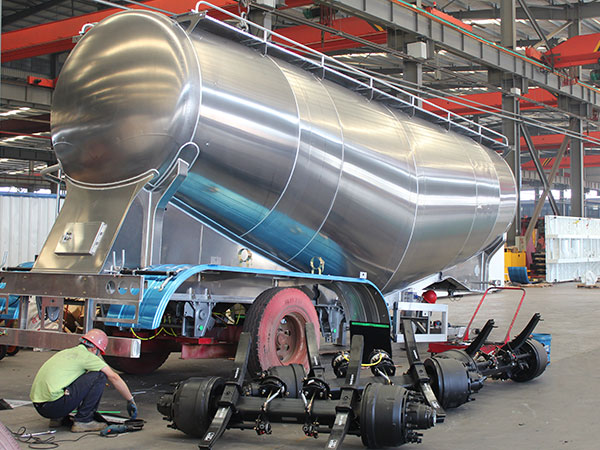
Steel or aluminum. Steel is strong, economical and easy to repair almost anywhere. Aluminum is lighter, so the trailer can carry more powder per trip, but it costs more to buy. Our range includes aluminum bulk cement semi-trailers for operators who care about payload.
The air system. The compressor can be driven by the tractor engine through a power take-off, or by a separate diesel engine on the trailer. Our 40–52 m³ steel bulk cement trailer is a good example of the second approach. It is a three-axle trailer with a 5 mm tank shell, 13-ton axles, a diesel engine driving the compressor, a 125 mm butterfly discharge valve, dual-line braking with ABS and mechanical suspension. A trailer with its own engine can unload without depending on the tractor, which is handy when tractors are swapped between jobs.
What to Think About Before You Buy
Run through this list before you ask for a quotation:
What will you carry? Cement, fly ash, flour, lime or granules? Note particle size and moisture.
How often do you unload? Many drops per day favour fast, clean emptying.
What are your roads like? Rough or hilly routes favour a low centre of gravity.
What are the weight limits? Volume is not payload. Check legal gross weight and axle load limits in the destination country.
How will you power the compressor? Tractor power take-off or an engine on the trailer?
What is the silo height and connection size? The outlet and air pressure must suit the site.
Who will service it? Choose axles, valves and hoses that your local workshop can handle.
Different markets bring different priorities. Heat and dust in the Middle East put more demand on seals, paint and air filters. Long, rough roads in Africa favour simple, robust builds that are easy to repair. Mountain routes in South America call for good brakes and stability, and humid conditions in Southeast Asia make moisture protection especially important. Always confirm local rules before you finalise a specification.
YOUCAN: Your Trusted Semi Trailer Manufacturer in China
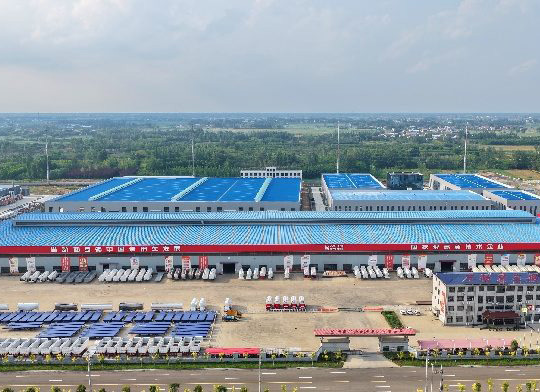
YOUCAN Trailer is the semi-trailer brand of Henan Yuchang Vehicle Manufacturing Co., Ltd., based in Shangqiu City, Henan Province, China. The company has been building trailers since 1999 and works from a 100,000 square metre manufacturing facility. In 2023 it was recognised as a National High-Tech Enterprise for technical innovation.
Our trailers go to customers in the Middle East, Africa, South America, Southeast Asia and Central Asia, and we serve buyers in more than 50 countries. We have built bulk cement trailers for demanding projects, including cement plants in Saudi Arabia. Our values are quality, partnership, responsibility and continuous improvement, and we believe that long-term business is built on reliable products and honest cooperation. You can read more on our about page.
Not sure which tank structure fits your cargo and roads? Send us the material you carry, your target volume, destination country and tractor details through our contact page. Tell us what you carry, and we will suggest a suitable configuration. Our team will reply within 24 hours.
Frequently Asked Questions
What are the main bulk tanker structures?The three most common are horizontal, hopper (funnel) and tilt tanks. They differ in stability, residue after unloading, cargo range and cost.
Which structure is best for cement?A horizontal tank is the usual choice. Cement flows well under air, and the low centre of gravity gives a stable, economical trailer.
Why do hopper tanks leave less residue?The steep internal slopes push the powder toward the outlet, so little is left behind.
Can one tanker carry different materials?Yes, if the tank is thoroughly cleaned between loads and the material is suitable for the tank. Hopper and tilt tanks are easier to clean.
Can the structure and configuration be customised?Tank volume, material, axle count, suspension and the air system can be adjusted to your needs. Tell us your cargo and destination, and we will confirm what suits your project.
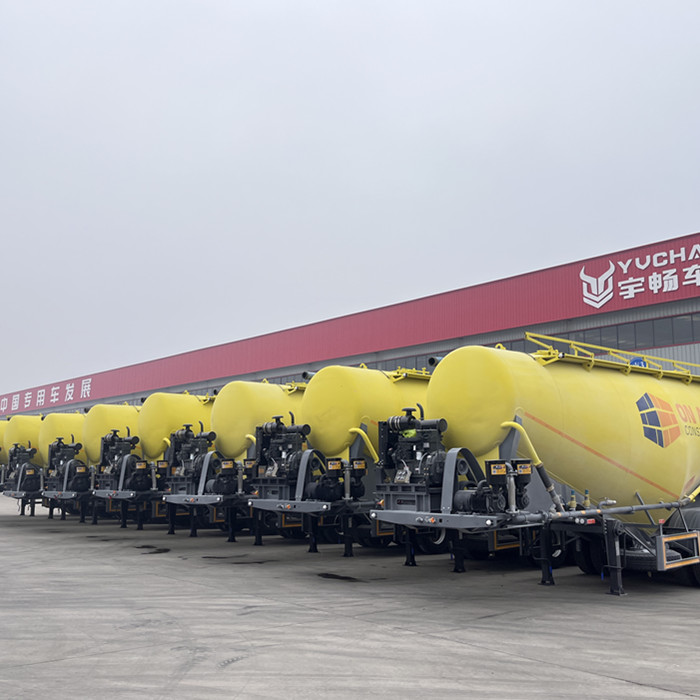
3 axle bulk cement hauler trailer
Need a durable 3 axle bulk cement hauler trailer? YOUCAN offers custom pneumatic tankers for fast unloading. Get a quote!
Read More →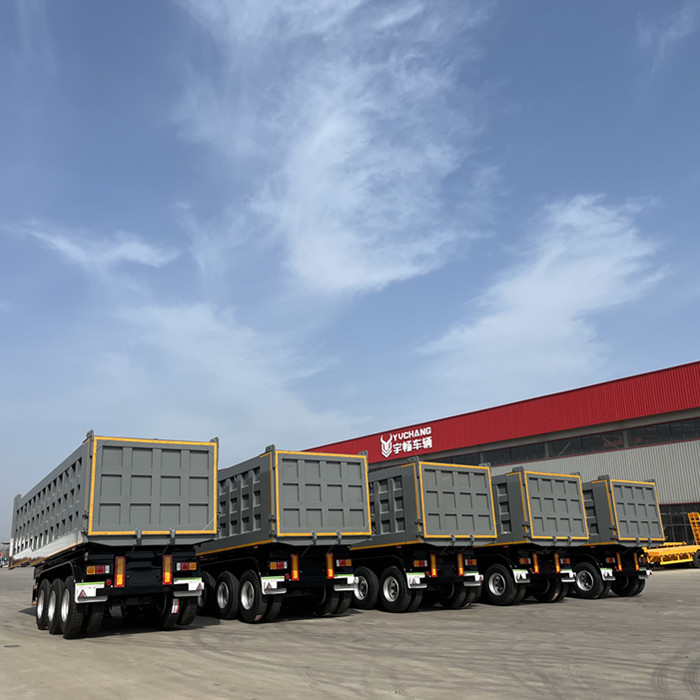
What is a dump semi-trailer
Tipper trailers are mainly used to transport sand, stones, gravel, coal, construction waste.At youcan We have dumper and tipper trailers of various ty...
Read More →