
Improve Intermodal Uptime With an ISO Container Trailer
In the complex global supply chain, efficiency and reliability are paramount. An iso container trailer, often referred to as a skeletal trailer or container chassis, is a cornerstone of intermodal freight transport, providing the critical link between ports, rail hubs, and final destinations. Engineered for durability and versatility, this equipment is the unsung hero that enables seamless movement of goods across manufacturing, logistics, and heavy industry sectors.
| Target Industry | Primary Material / Component | Key Benefit / Value Delivered |
|---|---|---|
| Logistics & Port Operations | High-Strength Steel (Q345B/T700) | Maximized container throughput, reduced cycle times |
| General Manufacturing | ISO-Standard Twist Locks | Secure, standardized transport for raw materials/finished goods |
| Construction & Project Cargo | Heavy-Duty Axles & Suspension | Reliable performance on unimproved and job site terrain |
This guide provides an in-depth technical overview for procurement managers, engineers, and fleet operators, covering core capabilities, industry-specific applications, and critical selection criteria to help you specify the right chassis for your operational demands.
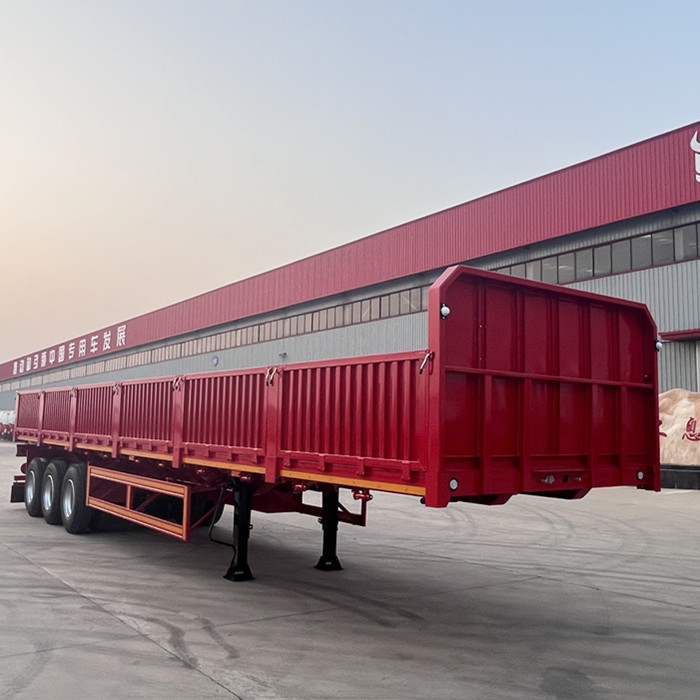
Core Functional Capabilities & Design
The primary function of a container chassis is to securely carry and transport ISO-standard shipping containers. This is achieved through a purpose-built frame equipped with standardized locking mechanisms.
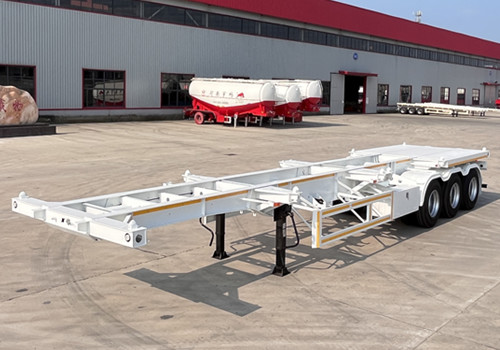
The core of the design is a lightweight yet incredibly strong steel frame, which minimizes tare weight to maximize payload capacity. Key mechanisms include the ISO twist locks, which engage with the container's corner castings to prevent any movement during transit. Modern designs are highly adaptable, often featuring sliding bogies or multiple lock positions to accommodate various container sizes on a single chassis.
Compatible Loads and Operating Environments
This equipment is engineered to handle demanding conditions and a range of standard container types. Its robust construction ensures long-term performance and asset longevity.
- Container Sizes: Standard 1x20ft, 2x20ft, 1x40ft, 1x45ft, High Cube (HC) containers.
- Structural Materials: Primarily fabricated from high-strength low-alloy (HSLA) steels like Q345B or higher-tensile grades like T700 for optimized strength-to-weight ratios.
- Harsh Environments: Available with specialized coatings (e.g., hot-dip galvanization, 2-pack epoxy paint) for superior corrosion resistance in saline/coastal environments or regions with heavy road salt usage.
- Extreme Temperatures: Components such as seals, air lines, and grease are specified to perform reliably in both arctic and desert climates, ensuring global operational readiness.
Industry-by-Industry Application Breakdown
The versatility of the ISO container chassis makes it indispensable across numerous sectors, each leveraging its core benefits for specific operational advantages.
Logistics and Freight Forwarding
This is the most common application, forming the backbone of port drayage and "first/last mile" logistics. Trailers shuttle containers between container ships, rail terminals, and distribution centers. The main operational advantage is speed. Quick loading and unloading via twist locks, without the need for cranes to transfer cargo itself, dramatically reduces vehicle turnaround time. A well-designed Container Chassis fleet is essential for any high-volume logistics hub.
Heavy Manufacturing and Assembly
Factories use container chassis to manage just-in-time (JIT) supply chains. Raw materials, sub-assemblies, and components arrive in containers and are moved directly to the production line or a nearby staging area. After production, finished goods are loaded into containers on-site and transported out. This minimizes material handling, reduces the need for extensive warehouse space, and creates a streamlined, container-based workflow from supplier to customer.
Construction and Infrastructure Projects
On large construction sites, containers are frequently used as mobile offices, secure storage for tools and equipment, or for transporting modular building components. A rugged container trailer, often equipped with robust mechanical suspension, can navigate semi-improved roads to deliver these containers precisely where they are needed. This provides project managers with unparalleled flexibility and security for site assets.
Agriculture and Bulk Goods
While specialized Bulk Cement Trailers are used for powders, many agricultural products like grains, beans, and produce are increasingly shipped in standard containers fitted with liners. An ISO container trailer provides the transport solution for moving these bulk containers from farms or processing facilities to ports for export, ensuring the integrity and security of the cargo.
Real-World B2B Case Study Scenario
- Problem: A regional distribution center faced significant yard congestion, with prime movers waiting for specific container sizes to become available for transport, creating a bottleneck.
- Technical Challenge: The existing fleet consisted of fixed-length 40ft chassis, which were inefficient for handling the high volume of 20ft containers that also needed to be moved.
- Solution Implemented: The company invested in a fleet of versatile combination ISO container trailers capable of carrying 1x40ft or 2x20ft containers. This flexibility allowed any available truck to haul any waiting container load.
- Measurable Result: Yard turnaround time was reduced by 30%. The fleet's operational flexibility increased daily container processing capacity by 15% without adding more prime movers, directly improving profitability.
Application-Based Selection & Specification Matrix
Selecting the correct specifications is crucial for maximizing ROI and ensuring operational safety. Use the following matrix as a guide for your technical requirements.
| Application Scenario | Recommended Axle Config. | Suspension Type | Key Frame Features |
|---|---|---|---|
| Port Drayage (High-Cycle) | 2 or 3 Axles | Mechanical Spring | Reinforced gooseneck, solid frame, multiple twist locks |
| Long-Haul Highway | 3 Axles (Tandem or Tridem) | Air Ride | Lightweight high-tensile steel, aerodynamic features, sliding bogie |
| Rough / Uneven Terrain | 3 Axles Heavy-Duty | Heavy-Duty Mechanical | Thicker main beams, reinforced cross-members, robust kingpin plate |
| Versatile / Mixed Use | 3 Axles | Air Ride or Mechanical | Extendable/combo frame for 20ft, 40ft, and 45ft containers |
Customization & OEM/ODM Capabilities
Standard models serve many needs, but unique operational challenges often require custom-engineered solutions. We offer extensive OEM/ODM capabilities to match your specific requirements.
- Axle & Suspension Brands: Specify world-class components from manufacturers like BPW, FUWA, or SAF to match existing fleet standards and parts inventories.
- Braking Systems: Integration of ABS or EBS systems from providers like WABCO for enhanced safety and compliance with regional regulations.
- Electrical Systems: Custom wiring harnesses and multi-voltage LED lighting systems (12V/24V) to meet North American, European, or Australian standards.
- Tires & Rims: Selection of specific tire brands, sizes, and rim types (steel or aluminum) to optimize for load, longevity, or fuel efficiency.
- Finishing: Custom paint colors, corporate livery application, and advanced anti-corrosion treatments like hot-dip galvanizing for extended asset life. Many components are also available in our extensive Trailer Parts catalog.
Export Packaging, Logistics & Global Shipping
Ensuring your equipment arrives in perfect condition is a priority. Our logistics team utilizes proven methods for international shipments. Skeletal trailers are typically shipped in stacks (2 or 3 units nested together) to optimize space in 40ft High-Cube containers or on flat rack containers.
All wooden packaging materials are ISPM-15 compliant for hassle-free customs clearance. We offer flexible shipping terms, including FOB, CIF, and DDP, to streamline your procurement process and manage global logistics with precision.
Quality Assurance, Compliance & International Standards
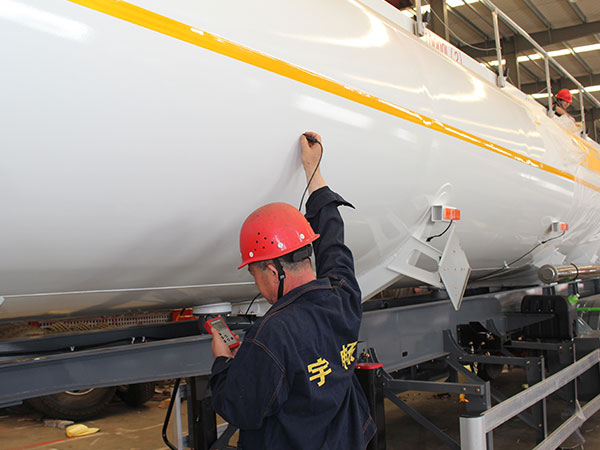
Every trailer is manufactured within a strict quality management system certified to ISO 9001 standards. Our commitment to quality is verified through a multi-stage inspection process before dispatch.
- Welding Inspection: Critical welds undergo non-destructive testing (NDT) to ensure full penetration and structural integrity.
- Dimensional Accuracy: Chassis are checked against engineering drawings to guarantee alignment and proper fitment of containers.
- Load Testing: Static load tests are performed to verify the chassis meets or exceeds its rated payload capacity.
- System Checks: Comprehensive functional tests of the braking, electrical, and locking systems are conducted before the unit is approved for shipment.
Frequently Asked Questions (FAQ)
What is the typical lead time for a custom order?
Standard model lead times are typically 4-6 weeks. For highly customized units involving unique engineering or non-standard components, the lead time may extend to 8-12 weeks. We provide a detailed production schedule upon order confirmation.
What are the primary maintenance requirements?
Regular maintenance involves checking tire pressure, lubricating the twist locks and landing gear, and inspecting brake systems and suspension components. We provide a comprehensive maintenance manual with detailed schedules and procedures for all key Tank Trailer Parts and chassis components.
Can you accommodate different kingpin sizes?
Yes. We can fit our trailers with standard 2-inch (50mm) or 3.5-inch (90mm) bolted or welded kingpins to match your fleet's prime movers.
What is the warranty coverage for international customers?
We offer a comprehensive international warranty covering the main frame for a period of 12-24 months against manufacturing defects. Major components like axles and suspensions are covered by their respective original manufacturer's global warranty.
For detailed specifications or to discuss your specific application needs, please contact our engineering team to request a quote.
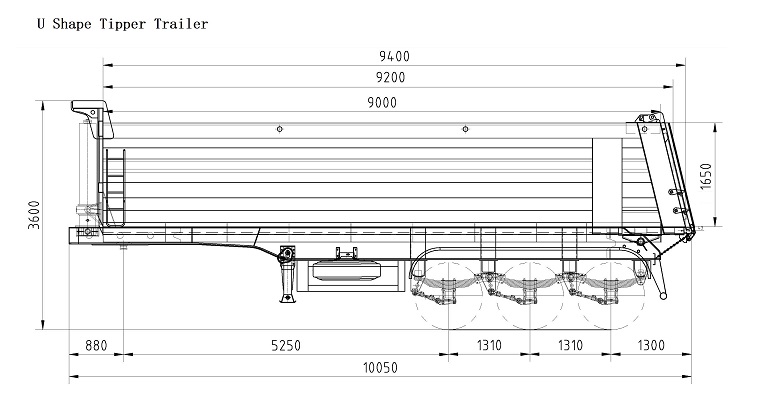
How to Choose an ISO Container Trailer for Port Haulage?
A comprehensive guide for B2B buyers on selecting the right ISO container trailer. Learn about specs, types, TCO, and common mistakes. Contact us for ...
Read More →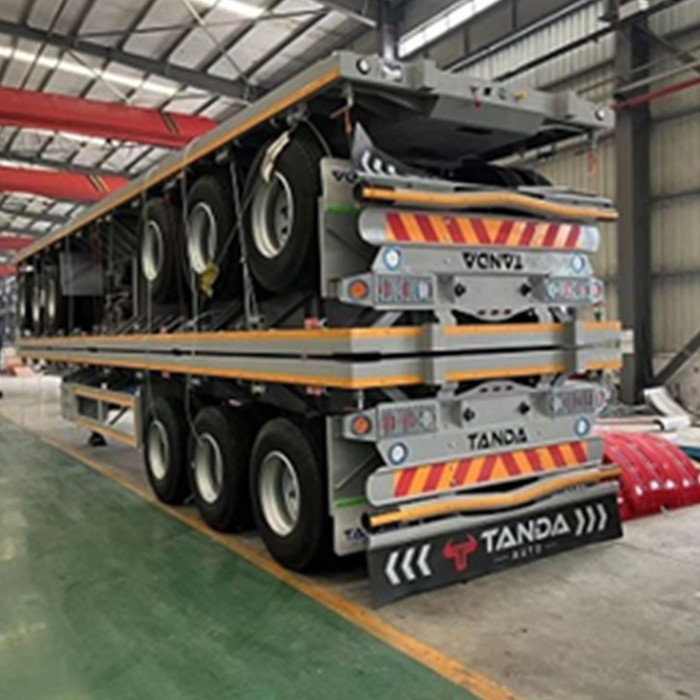
ISO Container Trailer OEM Specs for Export Fleets
Manufacturer of high-performance ISO container trailers. Explore our OEM specs for 20ft, 40ft, and custom skeletal chassis built for global export. Re...
Read More →