 WhatsApp
 sales@youcantrailer.com
 +8615203709888
How Are Trailer Frames Designed for Heavy-Duty Applications?
How Are Trailer Frames Designed for Heavy-Duty Applications?
Quick Answer
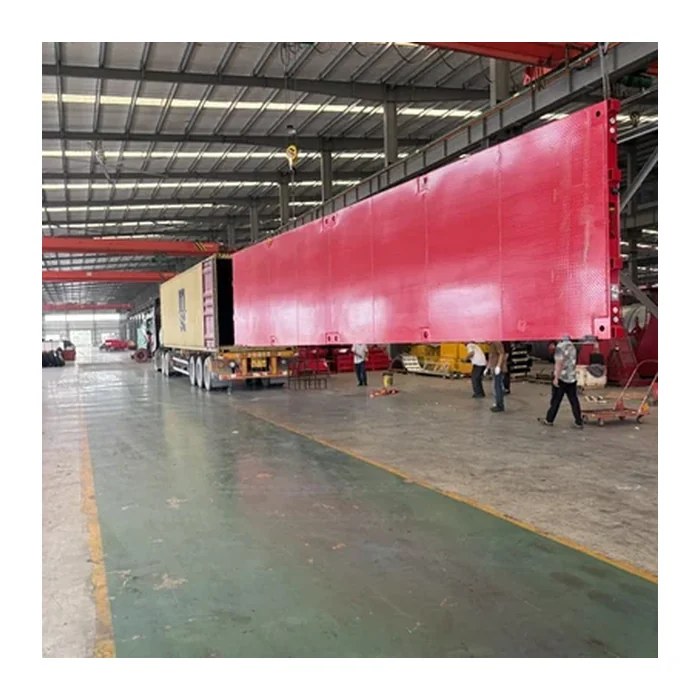
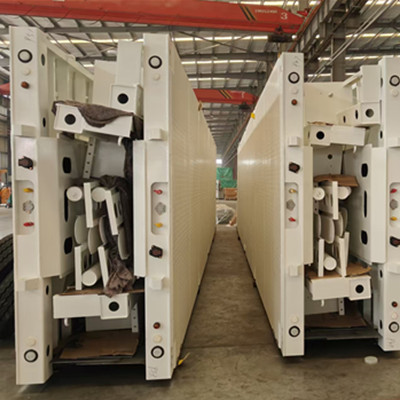
Heavy-duty trailer frames are designed around the expected load path, repeated road loading, impact, deflection, ground clearance, axle arrangement, and repair environment. Engineers review main-beam sections, web and flange behavior, cross-members, reinforcement transitions, suspension brackets, kingpin structure, weld details, and corrosion protection. Heavy duty does not simply mean adding plate everywhere; it means putting strength and durability where the operation actually needs them.
What Makes a Frame Heavy Duty
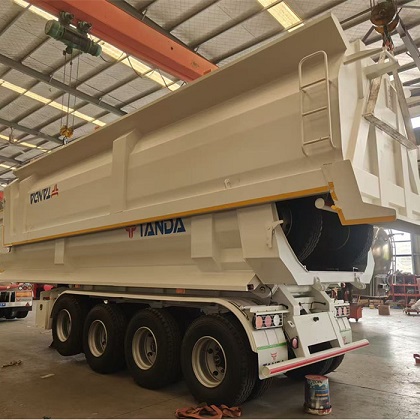
A heavy-duty application may involve high payload, concentrated machinery, rough roads, frequent loading cycles, construction sites, mines, or limited service infrastructure. Each condition changes the frame design. A trailer can be heavy in total mass but poorly suited to impact, while a lighter frame can perform well if the load path and operating limits are correct.
| Frame area | Design concern | What buyers should ask |
|---|---|---|
| Main beams | Bending, shear, buckling, and fatigue | What load and span assumptions were used? |
| Cross-members | Load transfer and deck support | How does the spacing match the cargo? |
| Suspension brackets | Repeated concentrated forces | How are bracket welds and transitions controlled? |
| Kingpin area | Tractor connection and front-frame forces | Is the front structure matched to the tractor? |
| Reinforcement transitions | Stress concentration and local stiffness | Are changes gradual and inspectable? |
| Clearance and underside | Ground impact and service access | Can the trailer be maintained in the real route? |

How Heavy-Duty Frame Design Is Developed
Define the Operating Envelope
The engineer needs payload, cargo footprint, loading points, speed, road quality, turning conditions, tractor connection, expected cycle frequency, and service environment. A design for public highways is not automatically suitable for mine roads or construction sites.
Select a Section Strategy
The main beams may use different web and flange arrangements, depths, reinforcement, and cross-member patterns. The objective is to carry load with adequate stiffness and fatigue margin while keeping the trailer serviceable and within its legal envelope.
Control Local Details
Cracks often begin at details rather than at the middle of a long straight beam. Abrupt changes in stiffness, short termination welds, poorly supported brackets, holes, and tight corners can create local stress. Good design makes transitions smoother and leaves inspection access.
Plan the Welding Sequence
Large frames can distort as heat is added. Fixtures, sequence, restraint, and measurement help preserve geometry. The design and manufacturing team should consider how the frame will actually be built, not only how it looks in a drawing.
Include Repair and Corrosion Access
A heavy-duty frame works in the field, where dirt, impact, and limited tools are real. Drainage, access, replaceable wear parts, protected lines, and inspectable joints support longer service life.
Heavy-Duty Design Decision Matrix
| Application | Frame priority | Trade-off |
|---|---|---|
| Heavy machinery on controlled roads | Local support and deck stiffness | Extra reinforcement may add tare weight |
| Rough construction routes | Fatigue, impact tolerance, clearance, and repairability | A very light design may have less abuse margin |
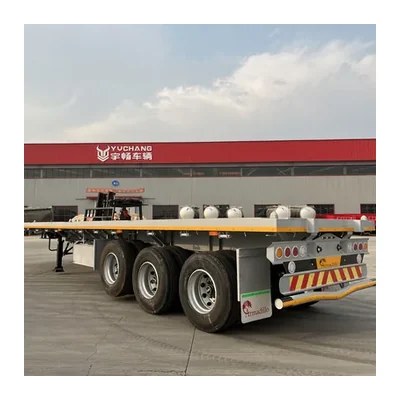
| Long-distance highway haulage | Weight efficiency, legal axle distribution, and fatigue | Overbuilding reduces payload opportunity |
| Mining or remote service | Robust details and accessible replacement parts | Component commonality may matter more than peak specification |
Engineering Note: Heavy-duty design should be measured against the harshest normal operating condition, not an extreme condition that would make the trailer too heavy to earn money.
Use the intended product application, such as a lowbed trailer or flatbed trailer, as the starting point. The supplier's quality control process should show how frame geometry and welds are checked before the trailer is released.
Common Buyer Mistakes
Equating heavy duty with maximum plate thickness.
Giving the supplier a payload number without cargo footprint or route conditions.
Ignoring fatigue and local bracket details.
Adding reinforcements without checking weight, clearance, and repair access.
Failing to ask how the frame is held straight during fabrication.
Key Takeaways
Heavy-duty frame design starts with the operating envelope.
Main beams, cross-members, brackets, and transitions must work as one system.
Fatigue and local details matter as much as nominal material strength.
Manufacturing fixtures and welding sequence influence the final frame.
Robustness must be balanced with tare weight, legal limits, and serviceability.
FAQ
What is the most important part of a heavy-duty trailer frame?
There is no single part. Main beams, cross-members, supports, joints, suspension brackets, and the front structure share the load path.
Does a heavy-duty trailer need thicker steel everywhere?
No. Selective reinforcement and good geometry can provide better efficiency than making every component thicker.
How does rough road use change the frame?
It increases the importance of fatigue, impact tolerance, clearance, protected equipment, and accessible repair.
Can a heavy-duty frame be lightweight?
Yes, if the design uses suitable materials and geometry without sacrificing fatigue, stiffness, durability, or serviceability.
What should I send a manufacturer for a heavy-duty design?
Cargo mass and footprint, route, loading method, tractor, speed, road conditions, duty cycle, and service expectations.
Conclusion
A heavy-duty frame is an engineered response to repeated real-world loads. Buyers should ask where the frame is strengthened, how the details are welded and inspected, and whether the final weight still makes sense for the intended business.
References
ISO 3834 quality requirements for fusion welding of metallic materials
GB/T 1591 high strength low alloy structural steels
UNECE vehicle construction and approval requirements where applicable