 WhatsApp
 sales@youcantrailer.com
 +8615203709888
How Are Trailer Dimensions and Tolerances Verified?
How Are Trailer Dimensions and Tolerances Verified?
Quick Answer
Trailer dimensions and tolerances are verified by comparing the approved drawing with measurements taken from defined datums using suitable, calibrated or controlled tools. The inspection should separate legal envelope dimensions, functional clearances, connection points, structural geometry, and ordinary fabrication tolerances. There is no single tolerance that fits every trailer dimension; the correct value depends on the feature's purpose and the agreed specification.
Why Dimension Control Is More Than Measuring Length
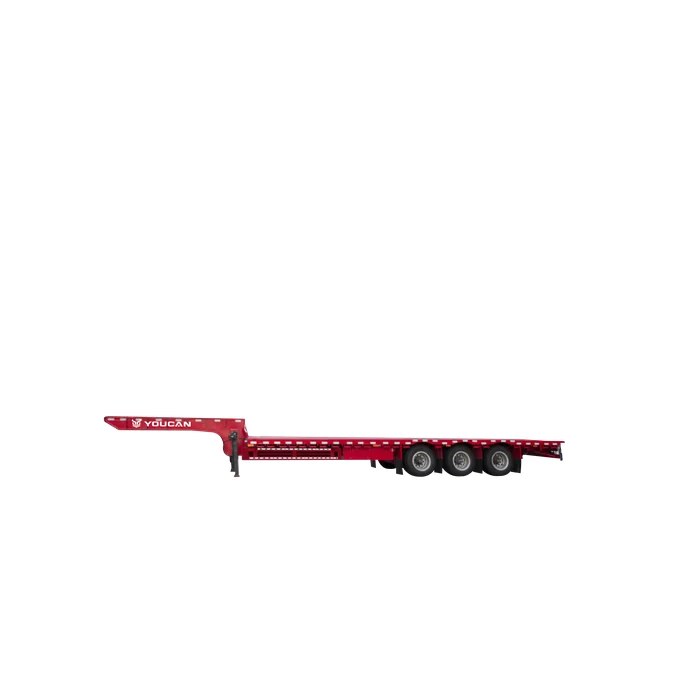
A trailer can have the correct overall length and still create problems if the kingpin location, axle alignment, deck height, ramp position, container lock, or body clearance is wrong. Measurement therefore needs a map. The buyer and supplier should agree which dimensions are critical, where the datum is, and which tool or method will be used.
| Dimension group | Why it matters | Typical verification |
|---|---|---|
| Overall envelope | Road legality, shipping, and route clearance | Tape, laser, or controlled reference measurement |
| Kingpin and axle locations | Tractor fit and load distribution | Drawing datum and measured coordinates |
| Deck or body height | Loading, clearance, and center of gravity | Level reference and height measurement |
| Width and side clearances | Legal envelope and cargo fit | Multiple points, not one edge |
| Cross-member and support positions | Load transfer and equipment fit | Drawing comparison and visual check |
| Doors, ramps, locks, and access | Actual operation and interference | Operate through full movement |
How Verification Should Be Performed
1. Define the Datum
A datum is the reference from which measurements are taken. Without it, two people can report different results because they started at different edges, surfaces, or centerlines. The drawing should identify the relevant reference system for critical dimensions.
2. Prepare the Trailer and Tools
The trailer should be on a suitable surface, with tires and suspension in the agreed condition. Tools should be appropriate for the feature and their resolution should be adequate for the tolerance being checked. A highly precise instrument cannot compensate for a poor setup.
3. Measure Functional Features First
Check kingpin, axle, deck height, ramp, lock, body, and connection points before spending time on low-risk cosmetic dimensions. A small error in a functional feature may create more trouble than a larger variation in a non-critical edge.
4. Repeat Important Measurements
Critical dimensions should be repeated or checked from more than one point to detect setup error, frame twist, or local distortion. Record actual values, not only pass or fail.
5. Link Measurements to Release
When a result is outside the agreed tolerance, the inspection record should identify whether correction, engineering review, concession, or rejection is required. Do not silently round a value until it fits.

Legal Dimensions vs Fabrication Tolerances
Legal dimensions are governed by the destination market and vehicle category. Fabrication tolerances describe how accurately a feature is built around the design. They are related but not interchangeable. A trailer can be inside a fabrication tolerance and still need a destination-specific review, while a legal dimension may require a stricter control point than a general workshop tolerance.
Engineering Note: Tolerance should be set by function. A loose tolerance on a hidden bracket may be acceptable, while a small error at the kingpin, axle line, ramp, or container lock can change whether the trailer works.
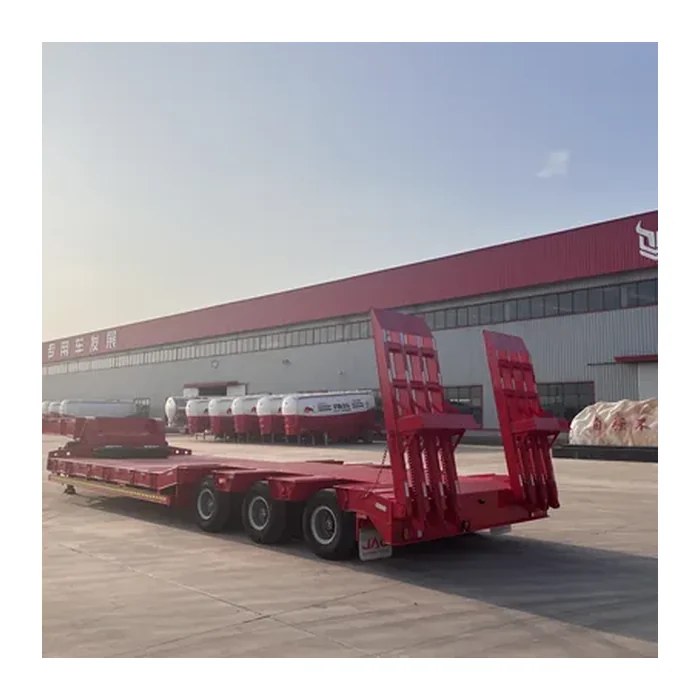
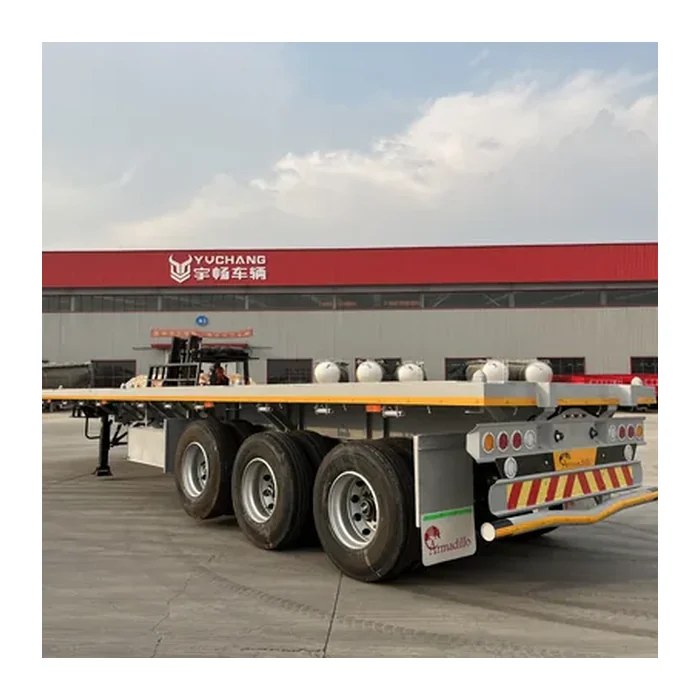
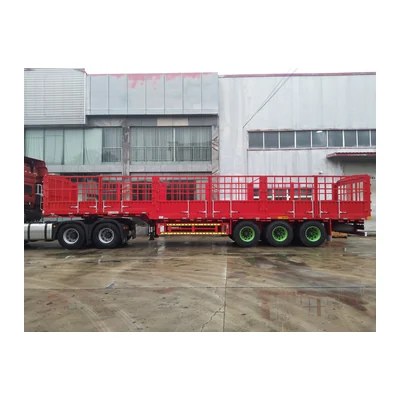
Buyers should ask the supplier to connect measurements to the actual flatbed trailers, lowbed trailers, or other configuration, and to preserve the drawing revision in the quality control file.
Common Buyer Mistakes
Measuring from different datums and comparing the results as if they were identical.
Checking only overall length and width.
Using a tool whose resolution is weaker than the required tolerance.
Measuring a trailer on an unsuitable surface or in an uncontrolled condition.
Accepting a rounded pass/fail result without recording actual values.
Key Takeaways
Define datums before measuring.
Separate legal envelope, functional dimensions, and fabrication tolerances.
Prioritize kingpin, axle, deck height, clearances, locks, and access points.
Use appropriate tools and record actual values.
Tie out-of-tolerance results to a documented release decision.
FAQ
What is the most important trailer dimension?
It depends on the use, but connection points, axle locations, deck height, clearance, and legal envelope are usually more consequential than a decorative edge.
Are trailer tolerances universal?
No. They depend on the drawing, feature function, manufacturing method, legal requirements, and contract.
Do I need calibrated measuring tools?
The tool should be suitable and controlled for the required accuracy. The project may require calibration or verification records.
Can a trailer be corrected after measurement?
Often yes, but the correction should be engineered, documented, and re-measured before release.
Should dimensions be checked before or after painting?
Critical structure and geometry are best controlled throughout production; final checks should confirm the delivered condition.
Conclusion
Dimension verification is a disciplined comparison between an approved design and a real trailer. When the buyer defines datums, prioritizes functional features, and records actual values, tolerance discussions become much clearer and more useful.
References
ISO 2768 general tolerances where applicable to non-specific dimensions
ISO 9001 quality management systems
Destination-market legal dimensional requirements confirmed for the vehicle and route