 WhatsApp
 sales@youcantrailer.com
 +8615203709888
A client from Colombia visited Youcan Trailer to inspect cement tanker trailers
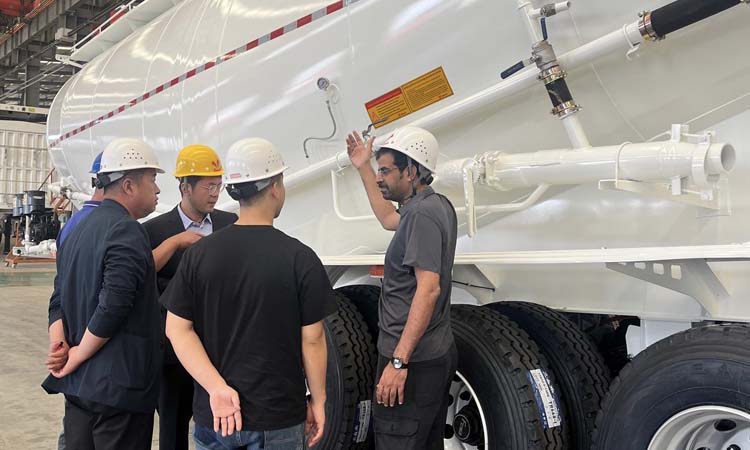
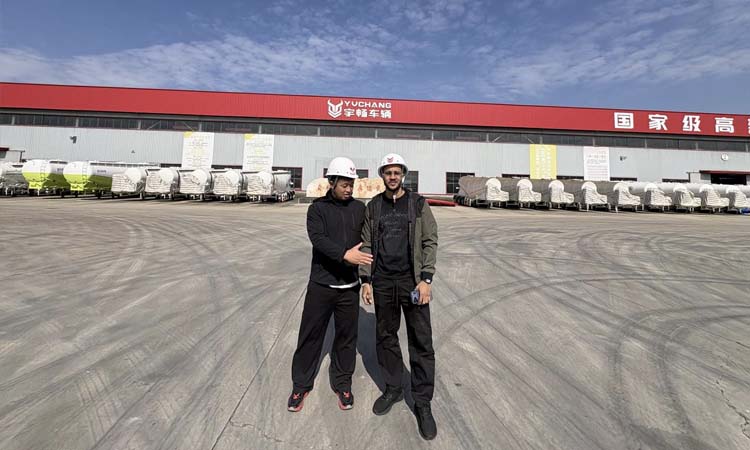
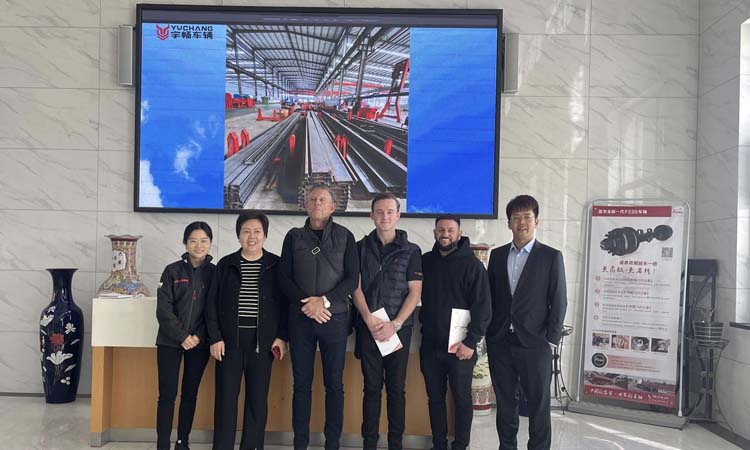
In August 2026, Youcan Trailer welcomed an engineering team and executive procurement managers representing a leading South American infrastructure contractor based in Colombia to its advanced manufacturing headquarters. The primary purpose of this multi-day visit was to conduct a comprehensive technical evaluation, structural audit, and pre-shipment performance inspection for a custom-ordered fleet of heavy-duty cement tanker trailers, engineered specifically for high-efficiency powder transport across demanding road conditions in South America.
Accompanied by Youcan Trailer's senior pneumatic systems engineers and international trade directors, the Colombian delegation completed an exhaustive tour across every major phase of the manufacturing workflow. The delegation closely observed raw material preparation featuring automated CNC plasma cutting, vessel shell fabrication utilizing automated submerged-arc welding, precision frame alignment, high-volume automated shot-blasting surface treatment, and localized pneumatic discharge system assembly.
During the hands-on quality validation process, the Colombian engineers thoroughly tested vessel pressure holding capabilities, air compressor performance, fluidized bed air distribution, and axle suspension stability under simulated maximum payload conditions. Impressed by the factory's advanced production scale, precise craftsmanship, and strict adherence to international quality management protocols, the Colombian client expressed complete confidence in Youcan Trailer and finalized technical approvals for their ongoing fleet expansion project.
What is a Cement Tanker Trailer?
A cement tanker trailer (also commonly referred to as a pneumatic powder trailer) is a specialized commercial freight vehicle engineered specifically for the enclosed transport and rapid pneumatic discharge of dry powder materials such as cement, fly ash, lime powder, and mineral dust.
Unlike traditional open freight trailers or flatbeds that haul bagged goods, a cement tanker utilizes a fully sealed, high-pressure vessel hull paired with an internal fluidization system to transport unpackaged bulk powders safely without weather damage or environmental dust pollution.
Structurally, the trailer features a curved cylindrical or V-shaped tank shell fitted with top loading manholes, internal fluidized bed aeration pads, and a dedicated pneumatic piping manifold at the bottom. By connecting an onboard or tractor-driven air compressor, compressed air aerates the dense powder inside the tank, transforming it into a fluid-like state. This design allows forklift-free, automated unloading directly into elevated storage silos, drastically reducing loading dock turnaround times, eliminating manual handling costs, and optimizing overall bulk material dispatch efficiency across construction and industrial supply chains.
How Does a Cement Tanker Trailer Work?
The operation of a cement tanker trailer relies on a seamlessly integrated system of pneumatic pressure differential dynamics, internal fluidization engineering, and heavy-duty structural chassis mechanics:
Fluidized Bed Aeration & Pneumatic Discharge
To unload cargo, compressed air generated by an auxiliary diesel-driven air compressor or tractor PTO system is injected into the plenum chamber at the bottom of the vessel. The air passes upward through porous fabric aeration pads (fluidized beds), aerating the settled powder particles so they suspend in air and behave like a liquid. Once internal vessel pressure reaches the operational threshold (typically 0.2 MPa), discharge valves are opened, and the internal pneumatic pressure forces the suspended powder smoothly out through the discharge hose into recipient storage silos.Vessel Structural Geometry & Material Evacuation
The vessel interior is designed with V-shaped or W-shaped bottom hopper slopes directing cargo toward the central discharge outlets. This specialized internal geometry lowers the vehicle's center of gravity while maximizing material flow velocity during unloading operations. Continuous automated submerged-arc welding preserves structural vessel integrity, absorbing dynamic torsional twisting forces and pressure fluctuations during highway travel and off-road site delivery.Structural Coupling & Road Performance
The trailer connects to the towing tractor unit via a forged 2-inch or 3.5-inch alloy kingpin locked tightly within the prime mover's fifth wheel jaw assembly. During transit, payload weight is scientifically distributed between the tractor’s drive axle group and the trailer’s rear multi-axle suspension bogie. High-capacity dual-line pneumatic braking circuits equipped with WABCO ABS/EBS anti-lock valves ensure rapid, stable stopping power across steep downhills and challenging terrain.
Types & Specifications of Youcan Trailers
As a globally recognized trailer manufacturer, Youcan Trailer designs, engineers, and fabricates a comprehensive portfolio of heavy-duty commercial transport equipment engineered to meet international highway standards. Within our bulk transport segment, we build specialized units ranging from heavy-duty carbon-steel models like our Bulk Cement Tank Semi-trailer series and extended-capacity Bulk Cement Trailers to light-weight alloy variants like an Aluminum Bulk Cement Tank Semi-trailer.
Specifically within our cement tanker trailer lineup, configurations include:
| Tanker Model | Vessel Volume | Shell Material | Axle Configuration | Primary Applications |
|---|---|---|---|---|
| V-Type Carbon Steel Tanker | 30 m³ – 45 m³ | High-Strength Q235B / Q345B Steel | 3 Axles (FUWA/BPW) | Portland Cement, Fly Ash, Mineral Powder, Lime |
| W-Type Large Volume Tanker | 45 m³ – 60 m³ | Reinforced Q345B Structural Steel | 3 / 4 Axles | Light Bulk Powders, Flour, High-Volume Dry Materials |
| Aluminum Alloy Pneumatic Tanker | 35 m³ – 50 m³ | High-Grade 5083 Aluminum Alloy | 3 Axles (Air Suspension) | Weight-Sensitive Routes, Food-Grade Powder, Chemical Dust |
| Heavy-Duty Off-Road Tanker | 30 m³ – 40 m³ | Heavy-Duty Thick Steel Plate | 3 Axles (Reinforced Bogie) | Mining Operations, Rough Construction Sites |
Technical Specifications Overview
Tank Shell Thickness: 4 mm – 6 mm high-strength steel plate or 5 mm – 7 mm aluminum alloy.
Dish Head Thickness: 5 mm – 7 mm spun steel dish heads designed for uniform pressure distribution.
Air Compressor System: 10 m³/min to 14 m³/min dual-cylinder compressor powered by a dedicated diesel engine or tractor PTO shaft.
Discharge Performance: Unloading speed of 1.2 to 1.5 tons/min; working pressure of 0.2 MPa; test pressure of 0.3 MPa; residual cargo rate under 0.3%.
Pneumatic Piping & Valves: 4-inch discharge hose with quick-coupling fittings, cast steel check valves, and pressure relief safety valves.
Key Components of a Cement Tanker Trailer
The operational longevity, pressure safety, and discharge efficiency of a cement tanker trailer depend directly on the manufacturing quality of its primary component assemblies:
Pressure Vessel Shell & Dish Heads
The pressure vessel is formed using automated CNC plate rolling and submerged-arc welding processes. Built with internal baffle reinforcements, the hull is engineered to absorb structural flexing and maintain pressure integrity under maximum payload stress.Air Compressor & Power Drive Assembly
An onboard high-volume air compressor delivers continuous airflow to aerate cargo and pressurize the vessel hull. Power is supplied either by an independent auxiliary diesel engine mounted on the front chassis platform or via a tractor PTO drive connection.Aeration Canvas & Fluidized Bed
The internal fluidized bed utilizes heavy-duty, wear-resistant synthetic fabric canvas to ensure even air distribution across the hopper bottom. Air control manifolds feature individual isolation valves to adjust airflow across front and rear tank compartments during unloading.Safety Relief Valves & Pressure Gauges
Dual safety relief valves automatically bleed off excess pressure if internal vessel conditions exceed safe working parameters (0.22 MPa), protecting site operators and preserving structural equipment safety during pneumatic discharge.Running Gear & Sub-Frame Chassis
The pressure tank rests on a high-tensile steel sub-frame welded continuously to the vessel belly. Premium 13-ton or 16-ton forged axles, multi-leaf spring or air suspension units, and heavy-duty landing gear support static and dynamic loads.
Advantages of Youcan Trailer Cement Tanker Trailers
Fleet operators across international logistics markets select Youcan Trailer pneumatic units due to several key technical and operational performance advantages:
Fast Unloading & Low Residual Rate: Optimized air chamber geometry and fluidization canvas deliver rapid discharge speeds up to 1.5 tons per minute with residual cargo rates below 0.3%, cutting dock downtime.
High-Strength, Low-Tare Engineering: By utilizing premium Q345B steel and 5083 aluminum alloys, Youcan trailers reduce dead vehicle weight while increasing maximum legal payload capacity without compromising structural safety margins.
Rigorous Leakage & Pressure Validation: Every completed vessel undergoes 0.3 MPa hydrostatic and pneumatic pressure testing to guarantee 100% airtight welds and seam integrity before painting.
Superior Surface Finish & Corrosion Resistance: All structural steel chassis undergo automated shot-blasting to Sa 2.5 cleanliness standards to eliminate scale and rust, followed by electrostatic application of anti-corrosive epoxy primers and heavy-duty polyurethane topcoats for long-lasting weather protection.
Applications of Cement Tanker Trailers
Thanks to their enclosed design and efficient pneumatic discharge capabilities, cement tanker trailers play a critical role across diverse commercial transport sectors:
Infrastructure & Road Construction: Delivering bulk cement, fly ash, and ground slag directly to concrete batching plants, bridge construction sites, and highway paving projects.
Mining & Heavy Industry Operations: Transporting lime powder, mineral dust, and tailing reagents used in mineral processing plants and industrial smelters.
Building Material Logistics: Supplying dry-mortar blending facilities, tile adhesive manufacturers, and precast concrete fabricators with raw materials.
How to Choose the Right Cement Tanker Trailer
When selecting a cement tanker trailer for your commercial transport fleet, consider the following technical evaluation steps:
Calculate Material Density & Cubic Capacity
Match vessel volume to the specific gravity of target materials (e.g., cement at ~1.2–1.5 t/m³ vs. fly ash at ~0.9 t/m³) to ensure optimal volume utilization without exceeding axle load limits.Verify Compressor & Power Drive Specifications
Choose between an independent diesel engine setup for complete fleet versatility or a tractor PTO connection to minimize vehicle tare weight and maintenance requirements.Inspect Pressure Ratings & Safety Features
Ensure the vessel carries verified pressure test certificates, double safety relief valves, heavy-duty cast steel discharge valves, and durable pressure monitoring gauges.Choose Shell Materials Based on Routes
Select carbon steel for rugged durability on rough terrain or aluminum alloy for weight-sensitive highway routes with strict payload enforcement.Select a Certified Manufacturer
Partner with an established manufacturer holding ISO 9001 quality management certifications, automated production facilities, and a proven global track record in custom export engineering.
Why Choose Youcan Trailer?
Youcan Trailers specialize in fuel tank trailers, bulk cement trailers, flatbed trailers, lowbed trailers, dump trailers, and customized transport solutions for customers worldwide.
Youcan Trailer is a premier trailer manufacturer established in 1999 with over 28 years of dedicated engineering mastery, supplying high-performance commercial haulage equipment to logistics operators across more than 50 countries worldwide. Driven by state-of-the-art manufacturing infrastructure—featuring automated CNC plasma cutting, submerged-arc beam welding, full-coverage shot-blasting halls, and climate-controlled painting booths—our plant maintains rigorous ISO 9001 quality assurance standards across every single build.
Commercial fleet operators globally rely on Youcan Trailer not only for exceptional structural durability under severe transport conditions, but also for our tailor-made engineering flexibility, seamless international export coordination, and dedicated long-term after-sales spare parts support.
Ready to upgrade your commercial fleet with high-efficiency transport solutions tailored to your operational needs? Contact the Youcan Trailer engineering team today to request a free, customized quote and technical drawing within 12 hours!
FAQ
Q1: What is the minimum order quantity (MOQ) for Youcan cement tanker trailers?
A: Our standard MOQ is 1 unit, making our manufacturing services accessible for single fleet replacement units as well as large-scale commercial fleet procurement.
Q2: How long does pneumatic unloading take for a 40m³ cement tanker trailer?
A: Under standard operating pressure (0.2 MPa), a 40m³ tanker carrying approximately 50 tons of cement completes unloading in about 35 to 45 minutes.
Q3: Can Youcan Trailer build aluminum alloy cement tanker trailers?
A: Yes. We manufacture premium aluminum alloy dry bulk tankers that reduce tare weight by 2 to 3 tons compared to equivalent steel models, increasing legal payload capacity.
Q4: How do Youcan cement tanker trailers prevent moisture contamination during transport?
A: Our tankers feature pressure-sealed top manholes, heavy-duty rubber hatch gaskets, and integrated air-water separators in the pneumatic piping to ensure zero moisture ingress.
Q5: What international shipping options are available for exporting trailers?
A: We organize safe and cost-effective international sea freight using Roll-on/Roll-off (RORO) vessels, break-bulk cargo ships, or Flat-Rack container packaging depending on destination port requirements.