What Is a Tank Trailer?
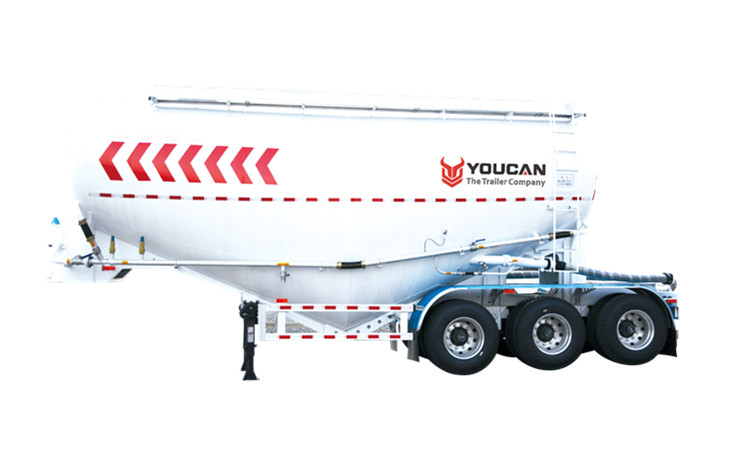
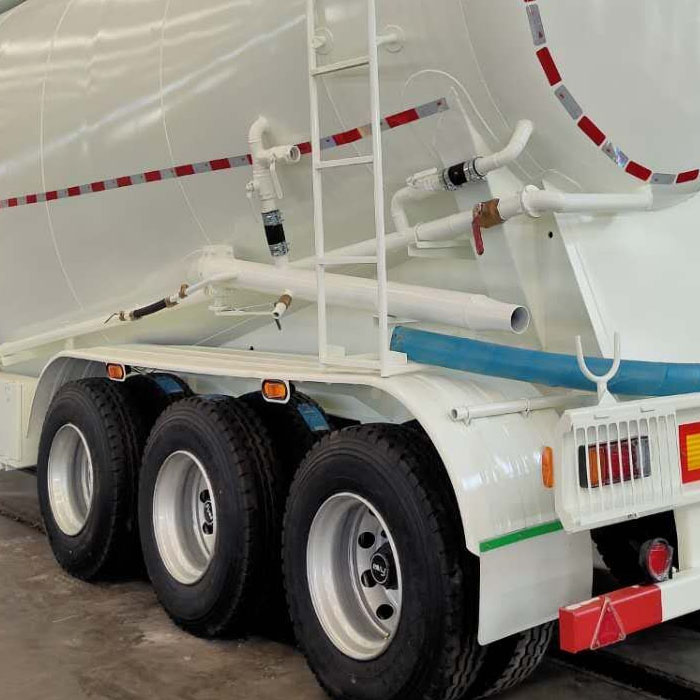
A tank trailer, also known as a tanker trailer, is a specialized trailer designed to transport liquids or certain gases in bulk. It typically consists of a tank body mounted on a supporting structure, along with axles, suspension, braking equipment, and cargo loading and unloading systems.
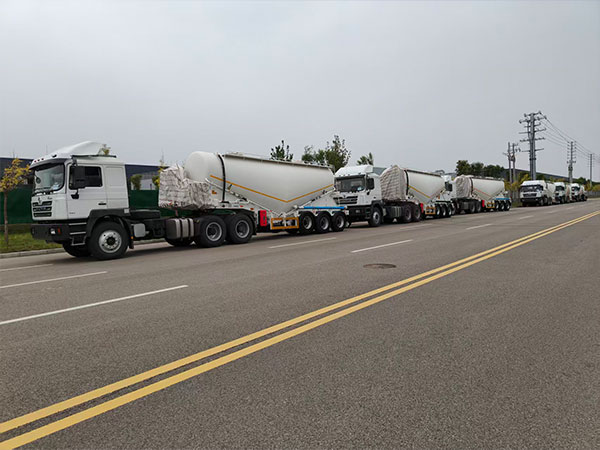
A tank semi-trailer is a common configuration. Its front section connects to a tractor through a fifth-wheel coupling, while the rear is supported by its own axle group.
Tank trailers are generally classified according to the cargo they transport. Common types include:
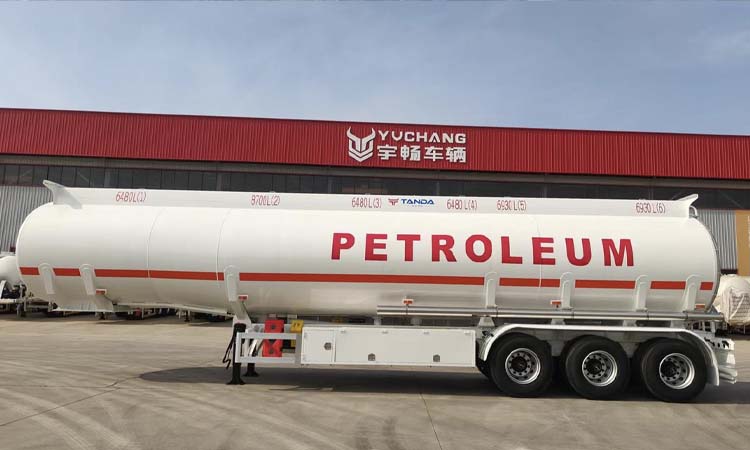
Fuel tanker trailers: Designed to carry petroleum products such as gasoline and diesel.
Chemical tank trailers: Built for specific industrial chemicals, with materials and safety systems selected according to the cargo.
Food-grade tank trailers: Used for transporting suitable liquid food products, including milk, edible oils, and other food ingredients.
Bitumen tank trailers: Designed to transport bitumen, often using insulation and heating systems to maintain suitable unloading conditions.
Gas tank trailers: Specialized pressure vessels or cryogenic systems designed for particular gases.
Each category has different technical requirements. Tank trailers intended for hazardous liquids, food products, or pressurized gases cannot be treated as interchangeable equipment.
For available models and configurations, explore YOUCAN's Tank Trailers. Key Features of Tank Trailers
Tank trailers are engineered to transport bulk cargo while managing the mechanical forces, operating conditions, and safety requirements associated with the product being carried.
Although specifications vary, several structural features are common across many designs.
Tank Body and Construction Materials
The tank body is the main cargo-containing component. Its material must be compatible with the transported substance and suitable for the expected operating conditions.
Common materials include:
Carbon steel: Often selected for certain petroleum products and industrial liquids because of its strength and relatively economical manufacturing cost. Corrosion protection may be necessary depending on the cargo.
Aluminum alloy: Commonly used for fuel transportation where reducing trailer weight is an important consideration.
Stainless steel: Frequently used for food-grade liquids and selected chemicals because of its corrosion resistance and suitability for hygienic cleaning when properly specified.
Material selection should consider chemical compatibility, corrosion resistance, weight, cleaning requirements, and applicable regulations.
Tank Capacity and Compartment Design
Tank trailer capacity varies according to the cargo, vehicle configuration, and legal weight limits.
For example, YOUCAN offers fuel tanker configurations with nominal capacities such as 36,000, 40,000, 45,000, and 46,000 liters.
Some fuel tanker trailers contain multiple separate compartments, allowing operators to transport different compatible fuel grades in one journey while keeping them separated.
Internal baffles or other approved anti-surge arrangements may also be used to reduce liquid movement during acceleration, braking, and turning.
However, compartment design must account for liquid surge, structural requirements, and the intended loading conditions. A partially filled tank can present different stability challenges from a fully loaded one.
Loading, Unloading, and Safety Equipment
Tank trailers use equipment selected for the cargo and operating requirements.
Depending on the design, this may include:
Manholes or dedicated loading connections
Discharge valves and piping
Emergency shut-off systems
Pressure and vacuum protection
Vapor recovery connections
Overfill prevention equipment
Grounding or bonding provisions
Cargo-specific hoses and couplings
For fuel tanker trailers, properly specified valves, vapor-handling equipment, and emergency systems are especially important because gasoline and other petroleum products can present fire and environmental hazards.
Not every feature is standard on every trailer. Buyers should confirm the required equipment before placing an order.
Chassis, Axles, and Suspension Systems
The running gear supports the tank and its cargo while transferring loads to the road.
Tank semi-trailers may use different axle configurations depending on their capacity, operating region, and legal requirements.
Mechanical and air suspension systems are both used in commercial trailers. The appropriate choice depends on road conditions, load distribution, maintenance requirements, and operational preferences.
Braking systems, tires, landing gear, and the fifth-wheel coupling must also be selected according to the vehicle's approved specifications.
How Does a Tank Trailer Work?
A tank trailer transports bulk liquid inside a sealed or otherwise appropriately contained tank system. Its operating process generally involves loading, pre-departure checks, transportation, and unloading.
The exact procedures depend on the cargo and the trailer's design.
Step 1: Loading the Cargo
Liquid is transferred into the tank through a suitable loading connection.
Fuel tankers may use top-loading or bottom-loading systems, depending on the terminal infrastructure and vehicle configuration.
Before loading, operators must verify that the cargo is compatible with the tank, that the correct compartment is selected, and that loading limits will not be exceeded.
Cargo density, temperature, available expansion space, and maximum permitted vehicle weight must all be considered.
Step 2: Securing the Tank
After loading, the operator checks the relevant closures, valves, connections, and safety systems.
The objective is to prevent unintended leakage or release during transportation.
Depending on the cargo, additional checks may include grounding equipment, vapor-control connections, pressure protection, and transport documentation.
Step 3: Transporting the Liquid
During transportation, the tractor pulls the tank semi-trailer while its axle and suspension systems support and distribute the load.
Liquid cargo can move inside the tank as the vehicle accelerates, brakes, or turns. This movement, often called liquid surge, can affect vehicle handling.
Tank geometry, compartments, baffles where fitted, load distribution, and appropriate driving practices help manage these effects.
Safe operation also depends on maintaining suitable speed, following applicable transport regulations, and inspecting the vehicle regularly.
Step 4: Unloading at the Destination
At the delivery location, the cargo is transferred into a receiving tank or other approved storage system.
Depending on the trailer and cargo, unloading may use gravity, a transfer pump, or a specialized pressure-based system.
For example, certain fuel tanker configurations use gravity discharge or pumping arrangements, while some specialized liquid tankers require dedicated equipment.
Operators must follow cargo-specific unloading procedures, including any necessary grounding, vapor management, pressure control, and emergency precautions.
Main Advantages of Tank Trailers
Tank trailers provide several operational advantages for businesses that regularly transport bulk liquids.
Efficient Bulk Transportation
Tank trailers allow substantial quantities of liquid cargo to be moved in a single journey.
Compared with transporting the same product in numerous small containers, bulk transportation can reduce handling operations and simplify loading and delivery logistics.
The actual efficiency depends on shipment volume, route conditions, terminal facilities, and vehicle utilization.
Flexible Cargo Configurations
Different tank materials, capacities, and compartment arrangements allow transport operators to select equipment for their specific cargo.
For example, a multi-compartment fuel tanker can deliver separate fuel grades during the same trip, provided the compartments and operating procedures meet the applicable requirements.
This flexibility is particularly useful for fuel distributors serving multiple retail stations.
Reduced Handling Requirements
Bulk liquid transport reduces the need to repeatedly handle individual drums or containers.
When suitable loading and unloading equipment is available, this can simplify transfer operations and reduce manual handling.
However, safe transfer procedures and compatible equipment remain essential.
Better Payload Efficiency
Material selection can influence the trailer's empty weight.
An aluminum fuel tanker may have a lower tare weight than a comparable carbon steel design, potentially allowing a higher legal payload.
Nevertheless, the actual payload depends on axle limits, gross vehicle weight restrictions, cargo density, and the complete vehicle configuration.
Application-Specific Safety Design
Purpose-built tank trailers can incorporate features intended to manage the hazards associated with particular cargoes.
These may include compartment separation, anti-surge structures, emergency valves, pressure protection, and vapor-handling systems.
Such equipment helps manage operational risks when correctly designed, maintained, and used. It does not eliminate the need for trained operators or regulatory compliance.
Common Applications of Tank Trailers
Tank trailers are used in industries where liquids must be transported efficiently between production facilities, storage terminals, distributors, and end users.
Fuel and Petroleum Distribution
Fuel transportation is one of the most common applications of tank semi-trailers.
Fuel tankers transport products such as gasoline and diesel between refineries, storage depots, distribution terminals, industrial facilities, and filling stations.
Depending on the delivery requirements, a fuel tanker may have one compartment or several independently operated compartments.
Multi-compartment designs are particularly useful for distributors that need to deliver different fuel grades to several locations.
YOUCAN provides a range of fuel tanker configurations, including carbon steel and aluminum models. Buyers can review the available options in the Tank Trailers product range. Chemical Transportation
Chemical tank trailers transport compatible liquid chemicals used in manufacturing and industrial processing.
Because chemicals differ in corrosiveness, toxicity, flammability, and other properties, the tank material and equipment must be selected for the specific substance.
Some applications require stainless steel tanks, specialized linings, particular sealing materials, or additional safety systems.
Chemical compatibility and regulatory requirements should always be confirmed before selecting a trailer.
Food and Beverage Transportation
Food-grade tank trailers are used for bulk transportation of products such as milk, edible oil, and suitable liquid food ingredients.
These trailers commonly use stainless steel tanks designed to support hygienic handling and cleaning.
Depending on the cargo, they may also require insulation, temperature management, sanitary fittings, or dedicated cleaning procedures.
A food-grade tanker should meet the applicable food-contact and hygiene requirements for its intended market.
Bitumen Transportation
Bitumen tank trailers are designed to transport viscous petroleum-based materials used in road construction and other industrial applications.
Because bitumen handling depends strongly on temperature, these trailers may use insulation and heating systems to maintain suitable conditions for unloading.
The heating method, operating temperature, and tank specifications must be selected according to the bitumen grade and transport requirements.
How to Choose the Right Tank Trailer
Choosing a tank trailer requires more than comparing prices or nominal capacities.
The correct configuration depends on the cargo, operating environment, transport regulations, and long-term maintenance requirements.
The following factors should be reviewed before purchasing.
Identify the Cargo Type
Start by confirming exactly what the trailer will transport.
For fuel transportation, determine whether the cargo includes gasoline, diesel, or other petroleum products.
For chemicals, obtain the relevant product specifications and safety data sheets. These help identify material compatibility, hazards, and handling requirements.
Food-grade liquids and bitumen have different requirements again.
A tank trailer should never be selected solely because it has sufficient volume.
Calculate the Required Capacity
Tank capacity is commonly expressed in liters or cubic meters.
However, the maximum amount of cargo that can legally be transported depends on more than tank volume.
Consider:
Cargo density
Trailer tare weight
Permitted gross vehicle and combination weight
Axle load restrictions
Required filling limits and expansion space
Weight distribution between the tractor and trailer
For example, 40,000 liters of a liquid with a density of 0.85 kg/L has a mass of approximately 34,000 kg, excluding the weight of the trailer itself.
This illustrates why the nominal tank volume cannot be treated as the legal payload.
Select the Appropriate Tank Material
Carbon steel, aluminum, and stainless steel each have advantages and limitations.
Carbon steel can be an economical option for compatible cargoes, but corrosion protection may be required.
Aluminum is often considered for fuel transport where lower tare weight is valuable.
Stainless steel is commonly selected for food-grade products and certain chemicals, although the specific stainless steel grade must be compatible with the cargo.
Compare material options based on the intended liquid, operating conditions, maintenance needs, and total ownership cost.
Evaluate Axle Configuration and Road Conditions
The trailer's axle configuration should suit both the payload and the regulations of the destination country.
A three-axle tank semi-trailer may be appropriate for many operations, but it is not automatically the best choice for every market.
Buyers should review:
For operations involving rough roads or demanding environments, the running gear and structural configuration deserve particular attention.
Check Safety Standards and Local Regulations
Tank trailers must comply with the applicable vehicle and cargo transport regulations in the countries where they will operate.
Requirements may address tank construction, testing, braking systems, hazardous-goods equipment, vehicle dimensions, axle loads, and inspection procedures.
For dangerous goods, additional requirements may apply to tank approval, labeling, documentation, and driver qualifications.
Regulatory frameworks differ between countries. Buyers should confirm the relevant standards and required approvals before production rather than assuming that one configuration is suitable for every market.
Evaluate Manufacturer Experience and Support
A reliable manufacturer should be able to discuss the technical requirements of the intended application and provide clear product specifications.
Before placing an order, request information about:
Tank material and nominal capacity
Compartment layout
Axle, suspension, and braking specifications
Loading and unloading equipment
Safety systems and applicable compliance documentation
Production inspection and testing arrangements
Spare parts and after-sales technical support
It is also useful to confirm drawings, inspection requirements, delivery arrangements, and the final approved configuration in writing.
Working directly with an experienced manufacturer can make it easier to discuss custom specifications and resolve technical questions before production begins.
YOUCAN Trailer: A Professional Semi-Trailer Manufacturer in China
Founded in 1999, YOUCAN Trailer is a China-based semi-trailer manufacturer supplying transport equipment to customers in international markets.
The company manufactures several types of semi-trailers, including fuel tankers, bulk cement trailers, flatbeds, lowbeds, and dump trailers.
Its tank trailer range includes fuel tanker configurations made from carbon steel and aluminum, as well as specialized liquid tanker categories for other applications.
Fuel Tanker Options for Different Transport Needs
YOUCAN offers fuel tanker models with different capacities, compartment arrangements, and running gear configurations.
Examples listed in its product range include:
36,000L aluminum fuel tanker with three axles and six compartments
40,000L carbon steel fuel tanker with four compartments
45,000L aluminum fuel tanker with three axles and six compartments
46,000L aluminum fuel tanker configurations
These examples illustrate available product options rather than universal specifications. Final configurations should be confirmed against the customer's cargo, intended operating country, and approved technical requirements.
Manufacturing and Quality Control
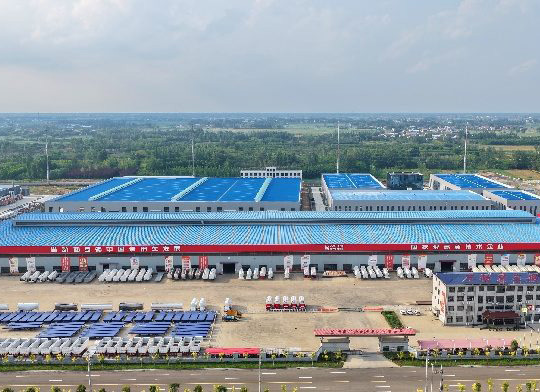
YOUCAN operates manufacturing facilities in China and provides customized semi-trailer solutions for international buyers.
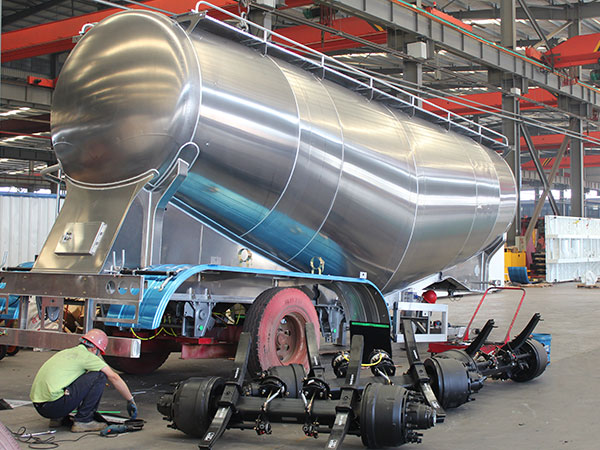
Its published manufacturing process includes material preparation, welding, surface treatment, assembly, and inspection.
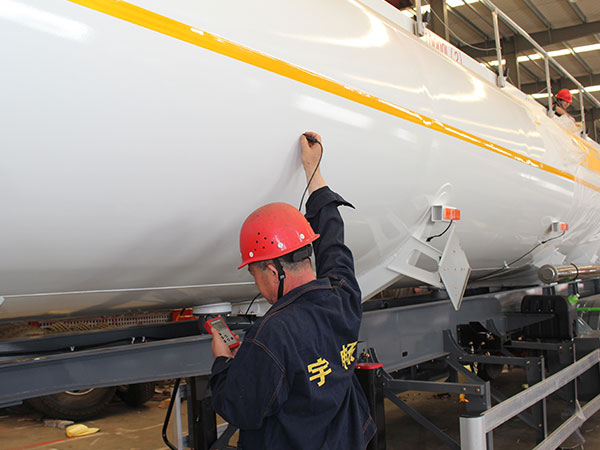
The company's quality control system covers incoming materials, production inspections, welding, dimensional checks, painting, final assembly, road testing, and delivery approval.
Discuss Your Tank Trailer Requirements
Whether you are purchasing fuel tankers for a distribution fleet or evaluating a specialized liquid transport solution, selecting the right specifications is essential.
When requesting a quotation, provide the intended cargo, required capacity, destination country, preferred tank material, and any specific operating requirements.
This information helps the manufacturer evaluate suitable configurations and identify technical questions before production.
Looking for a tank trailer manufacturer in China? Contact YOUCAN Trailer to discuss your project and request a quotation. FAQs About Tank Trailers
What Is the Difference Between a Tank Trailer and a Tank Semi-Trailer?
Tank trailer is a general term for a trailer designed to transport bulk liquids or certain gases. A tank semi-trailer is a specific configuration that connects to a tractor through a fifth-wheel coupling and relies partly on the tractor to support its weight. Tank semi-trailers are widely used in commercial bulk liquid transportation.
What Is the Typical Capacity of a Tank Trailer?
Tank trailer capacity varies significantly by cargo type, design, and market. Many road fuel tanker semi-trailers have nominal capacities in the tens of thousands of liters. YOUCAN lists fuel tanker models with capacities such as 36,000L, 40,000L, 45,000L, and 46,000L. The actual permitted cargo quantity depends on liquid density, filling limits, trailer weight, and local road regulations.
What Materials Are Used to Manufacture Tank Trailers?
Common tank materials include carbon steel, aluminum alloy, and stainless steel. Carbon steel is used for compatible petroleum and industrial liquids, aluminum is popular in certain fuel transport applications, and stainless steel is widely used for food-grade liquids and selected chemicals. The correct material depends on cargo compatibility, corrosion resistance, weight, and cleaning requirements.
How Do You Maintain a Tank Trailer?
Regular maintenance includes checking the tank body for damage or leakage, inspecting valves and seals, examining hoses and fittings, and servicing the braking, suspension, and tire systems. Cargo-specific equipment must also be inspected and maintained according to applicable requirements. Cleaning, testing, and inspection intervals depend on the cargo, trailer design, manufacturer instructions, and local regulations.
Can Tank Trailers Be Customized for Different Cargo Types?
Yes. Tank trailers can be manufactured with different materials, capacities, compartments, loading systems, and safety equipment. However, customization must be based on the intended cargo and applicable standards. A trailer designed for one substance should not be used for another without confirming material compatibility, cleaning requirements, equipment suitability, and regulatory approval where required.